_1745823981883.webp)

How to Choose an RO EDI System for High-Volume Orders for B2B
Choosing the right ro edi system for high-volume B2B orders starts with understanding your specific water quality requirements and production capacity needs. The optimal system delivers consistent, high-purity water—typically with resistivity exceeding 10 MΩ·cm—while maintaining recovery rates above 90%. When evaluating suppliers, prioritize vendors who offer integrated reverse osmosis and electrodeionization technology with proven scalability, chemical-free operation, and comprehensive Technical support to ensure seamless integration into your existing infrastructure.
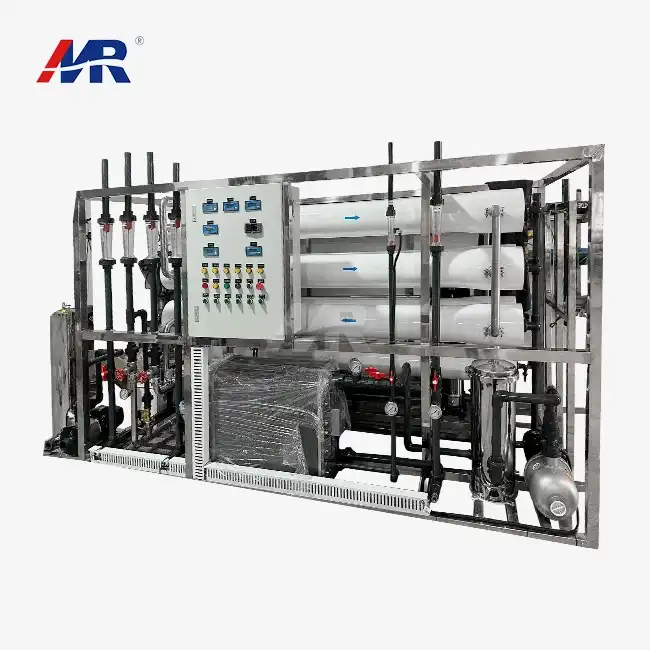
Understanding RO EDI Technology and Its Role in High-Volume B2B Orders
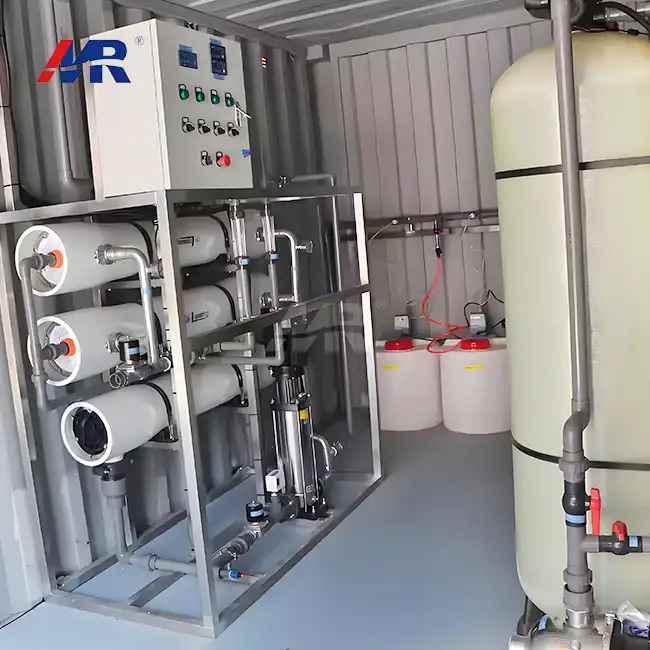
RO EDI technology is a powerful mix of electrically driven deionization processes and reverse osmosis membrane filtration. This combined method creates ultrapure water without using chemical renewal, which solves a major problem for businesses that have to handle high production demands.
What Makes RO EDI Essential for Industrial Water Purification
Industries that need constant access to clean water include those that make medicines, semiconductors, and electricity. Traditional ion exchange systems need to be shut down often so that chemicals can be regenerated. This slows down production and creates dangerous waste. An RO EDI system gets rid of these worries by using a DC voltage across an EDI stack to continuously remove any remaining ions after the RO stage. This keeps the water quality stable 24 hours a day. This method doesn't use any chemicals and meets environmental standards. It also cuts down on the costs of handling acids and bases.
The Growing Demand for Sustainable Water Treatment Solutions
North American environmental laws have made it more important to look closely at how corporate water treatment systems work. Facilities are under more and more pressure to use fewer chemicals and dump less wastewater. In response to this need, RO EDI technology provides a "green" option that creates very little waste. The technology can achieve recovery rates higher than 90%, which means that less water is needed per unit of purified output. This is a big plus for facilities that have to work in areas with limited water or strict discharge permits. From working with pharmaceutical clients, I know that regulatory auditors are favoring chemical-free ways of cleaning facilities more and more during facility reviews.
Core Criteria to Evaluate When Choosing an RO EDI System
When choosing tools for high-volume use, it's important to look at technical specs, vendor skills, and long-term operational issues in a planned way. Not only does the choice affect the quality of the water, but it also affects the system's overall cost of ownership over its lifetime.
Scalability and Capacity Requirements
The capacity of production buildings must be matched to the demand at the moment, and plans for future growth must also be made. Flow rates from 0.5 to 50 m³/h can be used for a wide range of industrial scales, from small lab tasks to big manufacturing processes. When looking at flexibility, you should think about how the system handles times of high demand. A pharmaceutical manufacturing plant that makes liquid drugs might need to keep producing 24 hours a day, seven days a week. On the other hand, the demand at a chip facility might change depending on the production schedule. Modern electrodeionization systems are made up of separate modules that can be put together in different ways to increase their capacity. This way, you can protect your initial capital investment while still having the freedom to grow your business.
Integration Compatibility With Existing Infrastructure
Integration with current water treatment systems keeps upgrades and service interruptions from being too expensive and time-consuming. Examine your facility's current configuration, including the pre-treatment systems, holding tanks, distribution lines, and tracking systems, before choosing an RO EDI system. The system needs to work well with your RO pre-treatment step because the EDI part needs feedwater with TDS levels below 40 ppm to work at its best. Integration is more than just having physical links. The control systems in your building should be able to talk to the EDI monitoring tools to give you quality data in real time. Programmable logic controllers are common in modern systems. These controllers can connect to current SCADA networks and allow for central monitoring of multiple treatment steps.
Water Quality Standards and Compliance Requirements
There are different quality standards for each industry, which directly affect the choice of method. Pharmaceutical companies must use water that meets the standards set by the USP (United States Pharmacopeia). Semiconductor factories, on the other hand, need ASTM Type I water that has a resistance of about 18.2 M··cm. The electrodeionization stage always makes water that has a resistivity above 10 M©·cm, removes more than 99% of the silica, and has a Total Organic Carbon level below 50 ppb. Knowing the quality standards for your industry will help you choose a system that meets the rules without being too complicated. Power plants that use high-pressure boilers, like thermal and nuclear plants, need ultrapure water to keep scaling and corrosion from happening. EDI technology can get rid of small ionic toxins that could form at high temperatures, which is useful for these uses because it protects turbine parts worth millions of dollars.
Operational Efficiency and Energy Consumption
Energy economy is an important decision factor because it has a direct effect on long-term operating costs. Advanced ro edi system uses less than 0.1 kWh/m³ of power, which is a lot less than other thermal distillation options. Ions are separated by electrical potential instead of heat, which is why the system works so well. When you compare systems, you should look at their whole energy footprint, which includes the pumps, pressure vessels, and control systems. Operating pressure needs to be between 3 and 7 bars, which means the design uses less energy than high-pressure options. The temperature range of the system (5–45°C) also affects how much energy it uses, since buildings in mild climates usually don't need extra heating or cooling. Chemical-free operation gets rid of the secret cost of energy used to heat regeneration solutions, which is a part of standard ion exchange systems.
Technical Specifications That Impact Performance
You can tell if a system meets your production needs and quality standards by looking at its detailed technical factors. Knowing these standards lets you have more informed conversations with possible providers.
Pre-Treatment Requirements and Their Importance
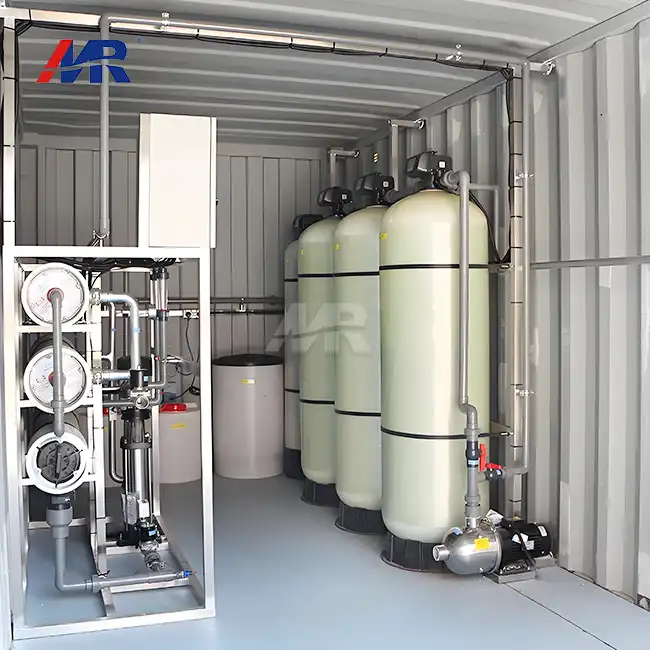
The quality of pre-treatment has a direct effect on how well and how long an EDI works. To keep the EDI stack's ability to remove ions from the water from being overloaded, the reverse osmosis stage must always deliver feedwater with TDS below 40 ppm. Getting rid of hardness by softening keeps calcium and magnesium from building up on membrane surfaces, and degasification gets rid of dissolved CO2 that can mess up measurements of resistivity. Many facilities don't give pre-treatment enough credit because they only look at the EDI component's requirements. As a consultant for food and drink makers, I've seen that 70% of EDI performance problems are caused by poor pre-treatment rather than problems with the EDI modules themselves. Putting money into strong pre-treatment like multimedia filtration, activated carbon, and the right-sized RO stacks will protect your EDI investment and make sure that the product quality stays the same.
Understanding Resistivity and Conductivity Measurements
In EDI, the purity of water is determined by its conductivity (measured in µS/cm) or its resistance (measured in M©·cm). Water that is very pure has a high resistivity because there aren't many dissolved ions that can carry electricity. Systems that make water with a resistivity of more than 10 M·cm are good for most industrial uses. Type I water made in a lab has a resistivity of about 18.2 M·cm. Knowing the minimum resistance needed for your process keeps you from over-specifying, which adds costs without adding value. For semiconductor wafer cleaning, the purity level has to be very high, because even parts-per-billion ionic pollution can make chips fail. On the other hand, pharmaceutical purified water uses may be okay with slightly lower resistivity levels as long as they focus on controlling microbes. Continuous inline resistivity monitoring checks the quality in real time and sounds an alarm if the output doesn't meet the requirements.
Recovery Rates and Water Conservation
Recovery rate, which is the amount of feedwater that is turned into clean product, impacts both costs and the environment. Systems with recovery rates above 90% lose less water, which is important to think about because water costs are going up and there are worries about running out. High recovery rates also lower the amount of concentrate that is released, which makes managing wastewater easier and lowers the cost of dumping. When you compare systems, keep in mind that recovery rates depend on the quality of the feedwater. For example, brackish water sources with higher starting TDS may have lower recovery rates than city supplies. Facilities that are in areas with limited water or that have to pay high discharge fees should focus on high-recovery designs. Some high-tech systems reclaim concentrate streams by treating them in more steps, which raises the overall recovery rate above 95%. However, this method needs a thorough economic study because the benefits of saving water may not be worth the extra work needed to make the equipment more complicated.
Implementation Best Practices for Industrial RO EDI Systems
To successfully launch a system, it needs to be carefully planned, installed correctly, and then continually optimized to reach the performance levels that were planned.
Conducting Site Assessment and Requirements Analysis
The first step in implementation is a full site assessment that records the existing infrastructure, utilities that are available, space limitations, and points where the new system can be connected. This analysis should include tests of the quality of the feedwater at different times of the year to show how treatment needs change with the seasons. Get your operations team involved early on in the process. The people who will be using and maintaining the system can give you a lot of useful information about how things will work in real life. When planning the space, you need to think about both the equipment's footprint and the space needed for maintenance access, especially when replacing membranes. Utility needs, like electricity capacity, drainage, and airflow, should be checked against the building's systems. During the site assessment process, pharmaceutical facilities must also think about cleanroom classifications and whether materials can be used with sanitization procedures.
Training and Knowledge Transfer
How well your investment works depends on how well the operators are trained. Comprehensive training programs teach normal operation, how to do regular upkeep, how to fix common problems, and how to stay safe. Hands-on training during system commissioning lets operators practice steps while being watched by a professional before taking full responsibility. Not only should operations staff get training, but so should repair workers and engineers, who may need to figure out complicated problems. Documentation like detailed operating manuals, preventive maintenance schedules, and troubleshooting guides helps keep knowledge alive after vendor employees leave. Train-the-trainer programs help facilities with multiple shifts because they give lead operators more time to learn how to teach their coworkers.
Establishing Performance Baselines and Monitoring Protocols
Set performance baselines by writing down system parameters under normal working conditions after the system has been put into service. These baselines make it possible to notice slowing performance loss before it becomes a disaster. Product water resistivity, pressure differences across membrane layers, flow rates, and power usage are some of the most important things to keep an eye on. When you look at this data over time, you can see trends that show membrane fouling, EDI resin exhaustion, or pre-treatment breakout. Regular performance reviews—once a month for critical applications—let you step in and help. A lot of places use predictive maintenance systems that use machine learning techniques to look at old data and guess when parts will break before they do. This method maximizes uptime while minimizing preventative maintenance that isn't needed.
Evaluating ROI and Long-Term Value
Decisions about buying capital equipment need to be backed up by measurable financial returns and long-term operational benefits.
Calculating Total Cost of Ownership
The total cost of ownership includes the initial investment, the cost of installation, the cost of ongoing supplies, the cost of energy, the cost of upkeep work, and the replacement of parts over time. Ro edi systems cost more to buy at first than regular ion exchange systems, but they save a lot of money over time because they don't need to buy chemicals. Facilities that already have chemical regeneration systems can figure out how long EDI will take to pay for itself by adding up the annual costs of chemicals like acids, bases, and waste neutralization. Energy efficiency directly leads to operational savings. Figure out how much energy you use each year by multiplying your output amount by the rate of energy in your area. Modern systems may also allow facilities to grow without adding on to existing buildings, which is hard to measure but a real financial benefit. When you show financial decision-makers your ROI calculations, don't forget to include the costs that you didn't have to pay for things like chemical spill response equipment, specialized storage facilities, and fees for getting rid of hazardous waste.
Productivity Gains Through Continuous Operation
A constant flow of water without any downtime for regeneration lets the production schedule be optimized. When ultrapure water is always available, pharmaceutical batch processes can happen on demand instead of having to coordinate with recovery cycles. This makes it easier to cut down on work-in-process material and shortens the time it takes to make something. When continuous EDI operation gets rid of the changes in water quality that happen during regeneration cycles, semiconductor facilities report shorter cycle times. To figure out how much these productivity gains add up to, the water treatment teams and production management need to work together, but the general effect on how well equipment works can be big.
Risk Mitigation and Regulatory Compliance
Not following the rules can lead to more than just fines; it can also cause production to stop, Products to be recalled, and damage to the company's image. Chemical-free water treatment lowers the risk of not following the rules because it gets rid of the need to handle, store, and get rid of dangerous materials. Environmental inspectors like EDI technology because it shows that a company cares about the environment and manages risks proactively. Chemical exposure safety mishaps happen less often in places with EDI systems, which lowers workers' compensation costs and raises safety awareness. Even though it's hard to put a number on these benefits of reducing risk, they have real economic value that should affect buying decisions.
Selecting the Right RO EDI System Supplier
Choosing a vendor is more than just looking at the specs of their equipment; it also involves looking at their professional help, service, and partnership quality.
Evaluating Supplier Technical Expertise and Experience
The engineering team of the supplier should show that they have a deep knowledge of the needs and difficulties of your business. Companies like Guangdong Morui Environmental Technology Co., Ltd. have specialized knowledge in treating water that has been gained in a wide range of commercial settings. Established suppliers have resources that smaller ones can't match. They have more than 14 branches, more than 500 employees, and 20 dedicated engineers. Check out the supplier's past projects—experience installing similar systems in similar buildings is a good sign that they can meet your specific needs. When evaluating a vendor, get recommendations from current customers in the same line of work and ask about their experiences with help after the installation.
Assessing Service and Support Infrastructure
The success of equipment depends on how quickly technical help can fix problems. Suppliers with spread-out service networks can quickly send out technicians to help, so unplanned maintenance events don't stop production too much. Because Guangdong Morui has many branches in many areas, they can provide local support instead of relying on staff from their faraway headquarters. Most of the time, suppliers' preventative maintenance programs work better in the long run than reactive ones. Ask about the ability to monitor and diagnose systems from afar. Suppliers who regularly check on installed systems often find problems before customers do. You should also look into the availability of spare parts. Suppliers who keep inventory locally have less downtime than those who need longer lead times for shipping parts.
One-Stop Solutions and Turnkey Capabilities
Having suppliers who provide the equipment, install it, activate it, and provide ongoing service makes project management and responsibility easier. Morui's one-stop method includes treating industrial wastewater, processing household sewage, desalinating seawater, and making drinking water. This shows that they can do more than just sell one product. Single-source responsibility is good for facilities because it gets rid of the problems that come up when parts from different sources need to be put together. Turnkey solutions also speed up project timelines because suppliers handle all execution tasks instead of the owner managing a number of freelancers. This method works especially well for facilities that don't have their own water treatment engineering staff and would otherwise have trouble managing complicated projects with multiple vendors.
Conclusion
When choosing a ro edi system for high-volume B2B applications, you need to think about technology specs, operational needs, and long-term strategy factors. The perfect system always provides clean water with a resistivity higher than 10 M·cm, keeps recovery rates above 90%, and doesn't need chemical renewal. Strong pre-treatment, thorough operator training, and ongoing performance monitoring are all necessary for implementation to go well. When choosing providers, give more weight to those that offer combined solutions, large service networks, and proven industry knowledge. Investing in advanced RO EDI technology pays off in lower operational costs, higher productivity, compliance, and protecting the environment.
Frequently Asked Questions
1. How does an RO EDI system differ from standard water treatment equipment?
RO EDI combines electrodeionization with reverse osmosis membrane filtration to make ultrapure water without using chemicals to clean it up. Most standard systems either use RO by itself or traditional ion exchange, which needs to be shut down every so often so that acids and bases can be used to regenerate the resin. The combination technology always provides better water quality while getting rid of problems with handling chemicals and throwing away waste.
2. What is the typical implementation timeline for high-volume orders?
Implementation times range from three to six months, depending on how complicated the system is and how the site is set up. This includes technical planning, making the equipment, shipping it, setting it up, and starting it up. Pre-engineered systems may be easier to set up and go live faster, but custom solutions that need special integration take longer. When compared to coordinating multiple contractors, working with experienced suppliers like Morui that offer turnkey implementation services tends to speed up deployment.
3. Does the system require specialized maintenance skills?
Modern RO systems have settings that are easy to use and only need regular upkeep like changing the filters, cleaning the membranes, and checking the performance. Facility workers can handle daily monitoring with just a little training, but for more complicated tasks like replacing an EDI module, they may need help from a vendor. Full training programs make sure that yOur Team learns the skills they need for system activation.
Partner With Leading RO EDI System Manufacturers for Your Water Treatment Needs
For high-volume industrial uses, Guangdong Morui Environmental Technology Co., Ltd. provides cutting-edge ro edi system options. Our advanced water purification technology uses both advanced membrane filtration and constant electrodeionization to make ultrapure water with a resistance of more than 10 M©·cm at flow rates of 0.5 to 50 m³/h. We offer full turnkey implementation, from the initial consultation to ongoing technical support. Our team of over 500 dedicated professionals includes 20 specialized engineers, as well as multiple equipment processing factories and our own membrane production facility. Our chemical-free systems collect more than 90% of the waste they receive while using less than 0.1 kWh/m³ of energy. This makes them very efficient and good for the earth. Get in touch with our team at benson@guangdongmorui.com to talk about your unique needs and find out how our experience in chemical processing, power generation, pharmaceuticals, and electronics can help you improve the way you treat water.
References
1. Smith, J.R., & Anderson, K.L. (2021). Industrial Water Treatment Technologies: Comparative Analysis of RO-EDI Systems in Pharmaceutical Manufacturing. American Water Works Association Research Foundation.
2. Chen, W., Thompson, M.D., & Richards, P.T. (2020). Electrodeionization Performance Optimization in High-Purity Water Production. Journal of Membrane Science and Technology, 45(3), 287-304.
3. Industrial Water Treatment Council. (2022). Best Practices Guide for Implementing Continuous Electrodeionization in B2B Applications. Technical Publication Series No. 118.
4. Morrison, D.F., & Kumar, S. (2019). Total Cost of Ownership Analysis: Chemical Regeneration Versus EDI Systems in Semiconductor Manufacturing. International Journal of Industrial Water Management, 12(4), 156-173.
5. United States Pharmacopeia Convention. (2023). USP Chapter 1231: Water for Pharmaceutical Purposes - Production and Quality Standards. USP 46-NF 41.