_1745823981883.webp)

How to Choose a 15T/H Ultrafiltration System for Industrial Use
Selecting a 15T/H ultrafiltration system is a choice that will impact your plant’s uptime, water cost, and product quality for the next decade. I have specified membrane skids for industries, bottling lines, and municipal facilities in Asia, South America, and Africa for years and have seen purchasers pay double for equipment that looked the same on paper but did not operate in the real world of feed water. This guide contains all the technical and commercial considerations you need to verify before you place a purchase order for a 15T/H ultrafiltration system to avoid expensive rework later.
Author: Shihai Su, senior application engineer of water treatment, Guangdong Morui Environmental Technology Co., Ltd.
Shihai has collaborated with factory owners, plant engineers, and procurement teams in over 30 countries to develop membrane-based water treatment systems for the food, pharmaceutical, electronics, and municipal sectors. Environmental engineering abilities commissioning ultrafiltration and reverse osmosis skids from 2T/H pilot units to 500T/H municipal facilities.
What Is a 15T/H Ultrafiltration System and How Does It Work?
A 15T/H ultrafiltration system is a membrane skid that filters 15 tons, or around 15,000 liters of water, each hour. The system employs hollow fiber membranes with a porosity of 0.01 to 0.1 microns to physically remove suspended solids, bacteria, colloids, and most viruses without the need of chemical coagulation. Low-pressure raw water is supplied into the membrane module, flows through the fiber wall, and is discharged as cleaned permeate for further processing.
Core Filtration Mechanism
Ultrafiltration is not a sand or cartridge filter, which are depth filters; it is a fine physical barrier. The hollow fiber bundle is cycled with the feed water over or through it. Particles bigger than the size of the membrane pores remain on the reject side, and clean water passes through the wall. With this, a 15T/H ultrafiltration system can provide a constant output quality despite the source water turbidity varying significantly.
Inside-Out vs Outside-In Flow Configuration
Inside-out modules push water into the fiber lumen and are more appropriate for cleaner feed sources with fewer suspended particles. Outside-in modules deliver water on the outside of the fiber, giving increased solid loading and quicker air-scour cleaning. The design of the 15T/H ultrafiltration system is based on your raw water supply.
What Water Quality Can a 15T/H UF System Treat?
A properly constructed 15T/H ultrafiltration system is capable of handling a broad range of source water types, from municipal tap water, shallow groundwater, river water, and brackish water to processed wastewater. The membrane eliminates 99.9% of suspended particles, pathogens, and most protozoa. Does not remove dissolved salt. Partner with reverse osmosis or ion exchange if low conductivity water is needed.
Turbidity and Suspended Solids Limits
Most hollow fiber uf membranes can manage feed water turbidities of up to 100 NTU in the short term; however, continuous operation at over 30 NTU will decrease the time between chemical cleanings. Before the membrane skid, a 15T/H ultrafiltration system is usually equipped with coarse strainers and multi-media filters to remove grit, oil, and big particles that might damage or clog the pores of the fibers.
Silt Density Index as a Design Benchmark
The SDI is a measure of the rate at which a water sample can foul a reference filter, and it is used to predict how a membrane would function after months of usage. As a general rule, feed water with SDI < 5 is suitable for the 15T/H ultrafiltration system to maintain consistent flow. However, a higher SDI value necessitates further pretreatment such as coagulation or a plate settler before to the membrane step.
How Does Ultrafiltration Compare With Reverse Osmosis?
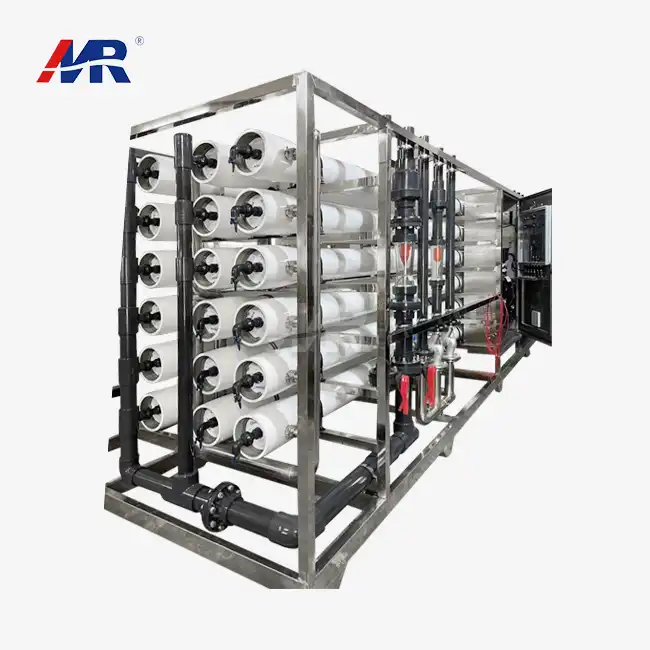
Ultrafiltration and reverse osmosis are two different problems. If you mix them, you will lose more than you are permitted to. UF removes particles, pathogens, and colloids. Dissolved minerals flow through the membrane. RO removes dissolved salts, most of the organic molecules, and nitrates. It has a thick, non-porous membrane and substantially higher working pressure compared to UF.
| Parameter | Ultrafiltration | Reverse Osmosis |
|---|---|---|
| Pore size / mechanism | 0.01–0.1 micron physical sieving | Dense membrane, dissolved salt rejection |
| Operating pressure | 0.1–0.3 MPa | 0.8–2.5 MPa |
| Removes | Suspended solids, bacteria, colloids, viruses | Dissolved salts, nitrates, most organics |
| Does not remove | Dissolved ions and salts | Very little; near-complete rejection |
| Energy use | Low | Moderate to high |
| Typical role | Pretreatment or standalone clarification | Desalination and mineral removal stage |
Most industrial purposes either utilize one or the other. UF is used before RO. Most of the sites that I have been to utilize a 15T/H ultrafiltration system to prevent clogging of downstream ro membranes, hence increasing the life of the RO membranes and reducing the need for chemical cleaning drastically.
Which Industries Need a 15T/H Ultrafiltration System?
Medium-scale ultrafiltration systems for industrial, food processing, pharmaceutical, electronic, and municipal utility applications are of interest to us. Nearly two-thirds of the world's water consumption is linked to commercial supply chains, with the industrial, culinary, and pharmaceutical sectors being among the biggest consumers, according to the UN World Water Development Report 2026.
Food and Beverage Production
Low turbidity water is required by bottled water and beverage companies prior to reverse osmosis polishing. For medium-sized bottling plants, ultrafiltration systems from 15 tonne/hr capacity upwards are ideal. It removes germs and particulate matter. But it also keeps the flavor that is peculiar to the final product.
Pharmaceutical and Biotechnology Plants
UF and RO were coupled to generate GMP-grade filtered water for injectable and topical use. The 15T/H ultrafiltration system is typically used by pharmaceutical customers as a pretreatment to a double-pass RO and EDI train to meet USP or Ph. Eur. purified water conductivity limits.
Electronics and Semiconductor Fabrication
Ultrapure water used for wafer washing and cleaning chips requires very low particle counts. UF, RO, and EDI remove both particles and dissolved ions. For fabs with low wafer counts, a 15T/H ultrafiltration system is the workhorse pre-treatment step.
Municipal Water Plants and Wastewater Reuse
Municipal utilities are switching from traditional sand filtration to hollow fiber UF to meet more severe turbidity and pathogen removal requirements. In water-constrained areas, water reuse initiatives often use a mix of UF and membrane bioreactors at the wastewater treatment plants. UN News said that the FAO 2025 AQUASTAT Water Data Snapshot has shown that, in the last decade, the amount of renewable water available per person has decreased by seven percent, from 5,719 cubic meters to 5,326 cubic meters.
Power, Petrochemical, and Marine Applications
Water for thermal power plants: The boiler feed water has to be of very high purity. This helps prevent scaling and rust in the turbines. Petrochemical operators employ UF for pre-treatment of oilfield reinjection water. A 15T/H ultrafiltration system may offer appropriate treatment capacity for big industrial water treatment applications. The small-sized UF-RO skids are used on ships or offshore sites to convert salt water to potable water during extended trips.
What Are the Key Components of a 15T/H UF System?
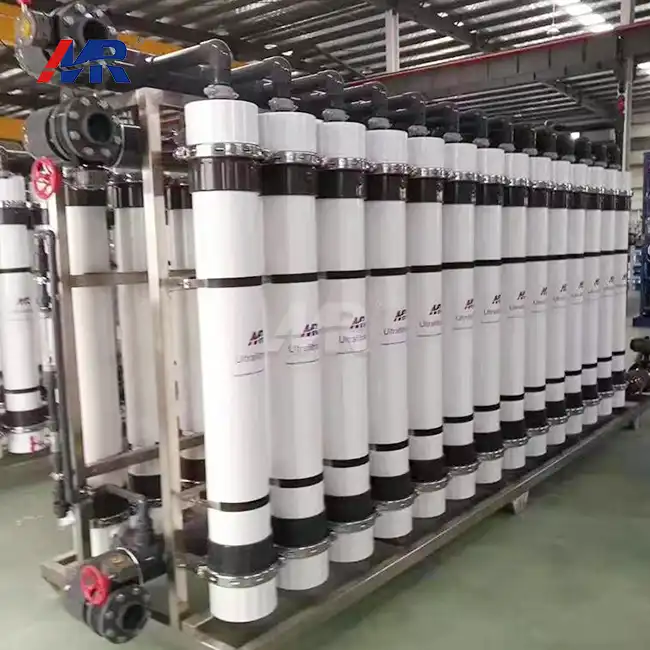
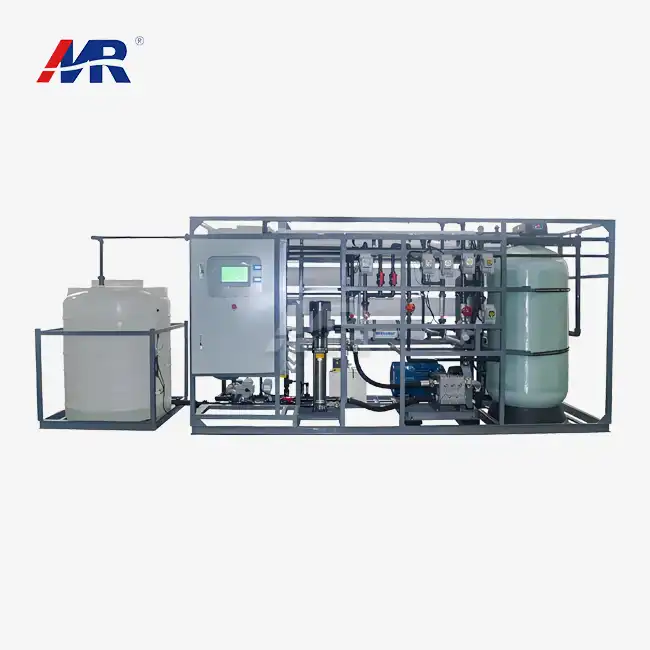
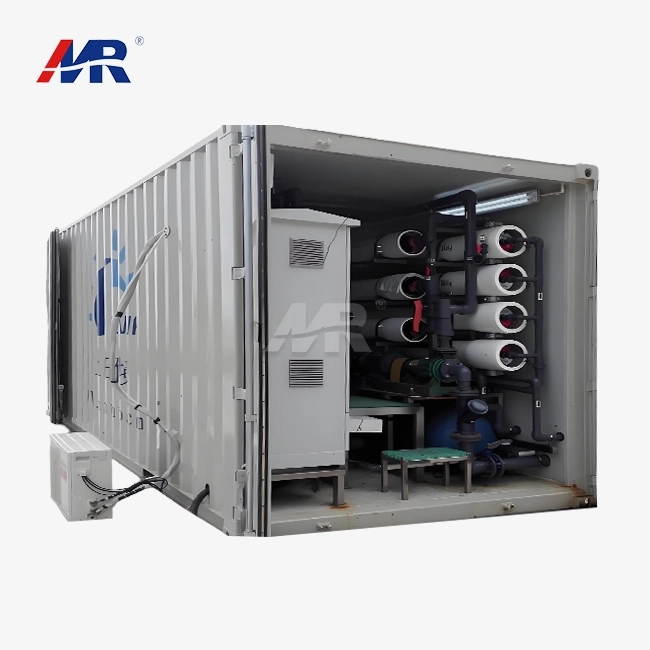
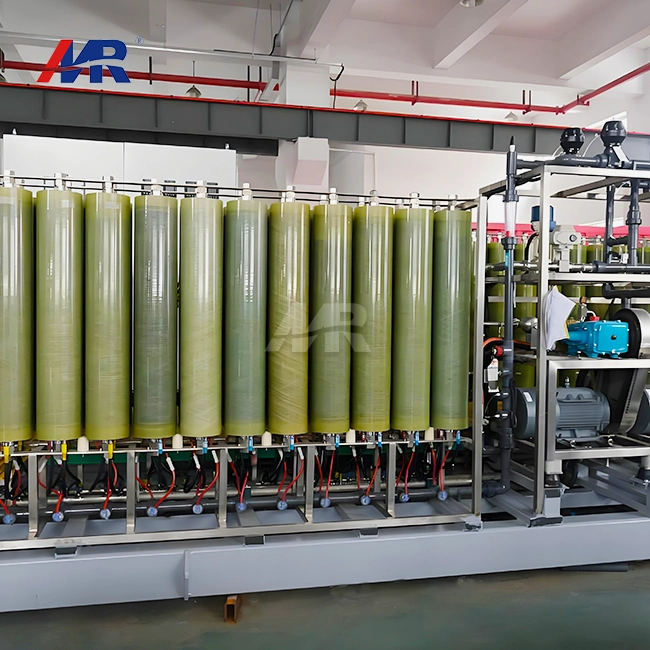
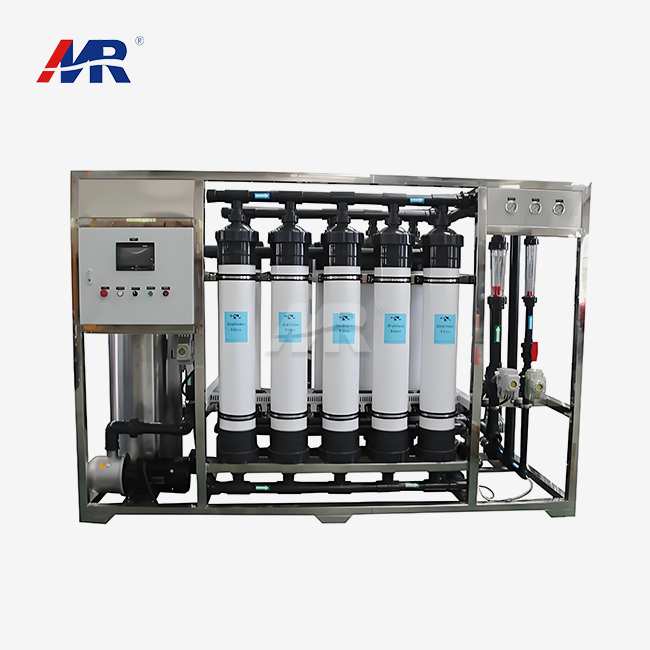
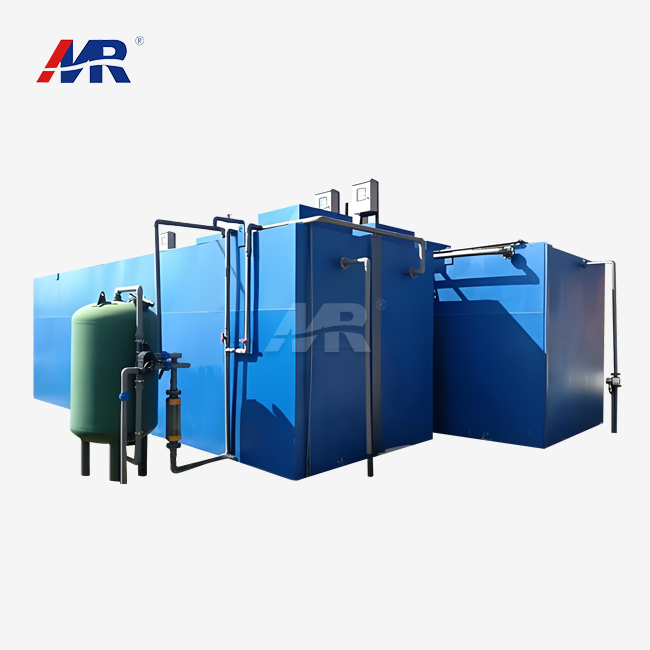
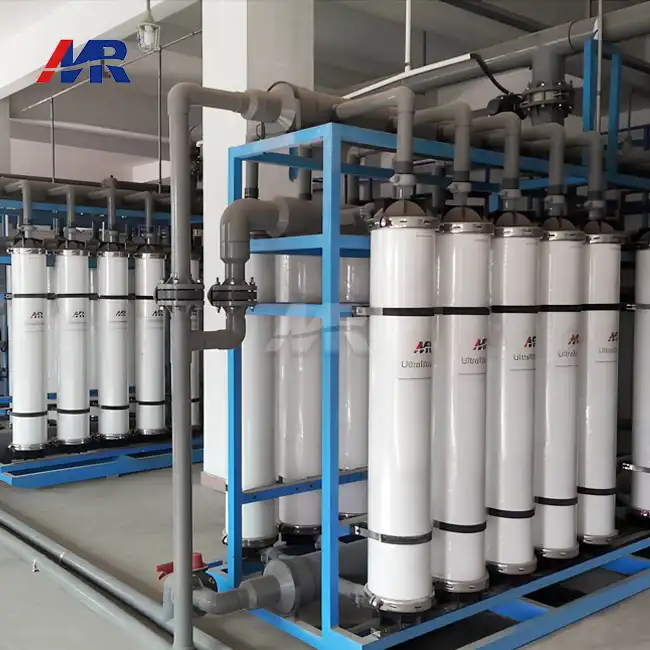
The 15T/H ultrafiltration system is not only a bundle of hollow fibers. The skid is a single working unit for continuous industrial usage with integrated pretreatment, membrane modules, automation, and cleaning features.
Pretreatment Stage
Before reaching the membrane, the water passes through coarse strainers and multimedia filters that remove sand, grit, and large organic particles. This approach saves fiber walls from mechanical damage and increases the interval between chemical cleanings on a properly operated 15T/H ultrafiltration system.
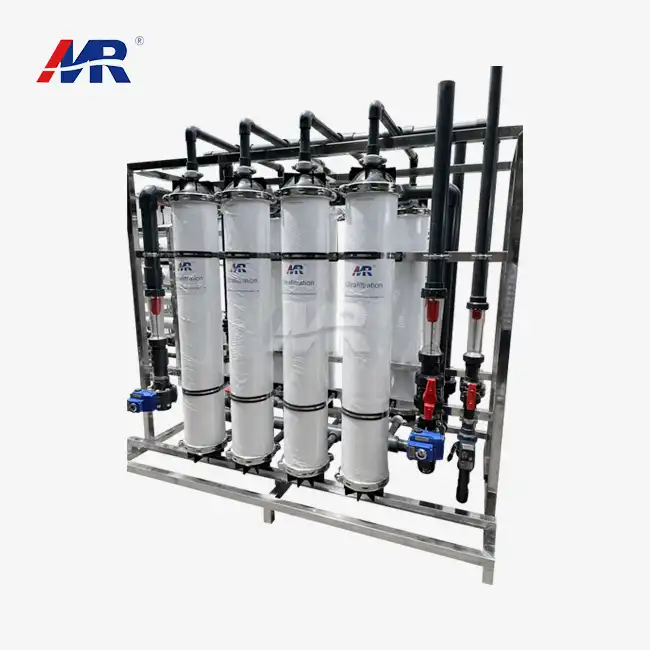
Hollow Fiber Membrane Modules
The filtration core is made of hollow fiber membranes of PVDF, usually packed in pressurized cartridges with a surface area of 200 to 250 m², as used in a 15T/H ultrafiltration system. The modular skid design provides a high surface-to-volume ratio and allows for simple capacity expansion in the future.
PLC Control and HMI Interface
A touchscreen programmable logic controller is used to automatically manage filtration cycles, backwash timing, and air scouring. The 15T/H ultrafiltration machine automatically repeats the run parameters programmed by the operators without human intervention, 24/7.
Integrated Clean-In-Place System
The integrated CIP tank with chemical dosing pumps is utilized to recover the membrane flux if transmembrane pressure increases caused by biological or organic fouling. If this component is missed, it will have to be cleaned manually, increasing the labor cost and downtime over the service life of the machine.
Instrumentation and Sensors
Flow meters, pressure gauges, and turbidity sensors in a 15T/H ultrafiltration system provide real-time data to the PLC, which may automatically alter flux as raw water quality varies throughout the day.
How Much Water Can a 15T/H Ultrafiltration System Produce?
Rated output is net production, not the rate at which the raw feed is drawn from the source. The ultrafiltration system of 15T/H capacity must pump a bit more than 15 tons/hour of raw water to compensate for backwash cycles, when a part of the treated water is returned to clean the fibers.
| Parameter | Typical Value |
|---|---|
| Rated net capacity | 15 tons per hour |
| Membrane type | Hollow fiber PVDF |
| Pore size | 0.01–0.1 microns |
| Operating pressure | 0.1–0.3 MPa |
| Filtration area | 200–250 m² |
| Recovery rate | Up to 95% |
| Power consumption | 0.1–0.2 kWh/m³ |
| Particle/bacteria removal | 99.9% |
| Dimensions | Customizable to site footprint |
Recovery Rate and Daily Output
A 15T/H ultrafiltration system operating almost continuously with 95% recovery may generate about 340 to 350 tons of treated water over a 24-hour production day, taking into account backwash and CIP rest intervals.
Sizing for Peak Demand, Not Just Average Flow
Plants that size closely to average demand can run short during peak shifts. Engineers increase the raw water pumps and install a buffer tank so the net output is constant at 15T/H even with backwash cycles running in the background.
Balancing Feed Pumps and Product Water Storage
A raw water input pump just over nominal capacity maintains net output stable during every backwash period. The Ultrafiltration Equipment skid coupled to a treated water storage tank smoothes out short demand spikes on the factory floor so downstream equipment never suffers a pressure decrease even when the membrane cycle temporarily stops for cleaning.
What Feed Water Conditions Affect UF System Performance?
Feed water chemistry is the single biggest factor affecting membrane life expectancy and cleaning frequency. Raw water testing before buying equipment helps to avoid mismatches in specifications and early membrane failure.
Here are the most important feedwater parameters when you place your order:
- Turbidity and total suspended solids: The increased particle input leads to greater rates of membrane fouling and shorter periods between backwash cycles. Thus, plants using river or wastewater need a lower design flux of roughly 60 to 80 LMH than cleaner groundwater sources, which are in the range of 80 to 100 LMH.
- pH and temperature range: Hollow fiber PVDF membranes can withstand a pH range of about 2-11 and perform best between 5°C and 40°C. However, major deviations from this band might damage the fiber material and decrease its mechanical lifespan over several cycles.
- Oil, grease, and organic loading: Petrochemical and food processing wastewater often includes oil films, which coat the membrane surface and resist conventional backwashing. Prior to the ultrafiltration step, an oil-water separator is introduced to ensure the integrity of the fiber.
- Iron, manganese, and scale minerals: Dissolved iron is oxidized by contact with oxygen and precipitates in the membrane pores. Thus, the iron-rich groundwater sources need to be aerated and pre-oxidized before entering the UF skid.
These four tests are the baseline water analysis that each plant must complete before buying a 15T/H ultrafiltration system or selecting other ultrafiltration equipment, and missing any one of them will increase the risk of early membrane replacement.
Which Membrane Type Is Best for a 15T/H UF System?
The membrane material influences the chemical resistance, washing tolerance, and durability of the fibers under everyday industrial stress. The mid-capacity UF market is dominated by two materials: PES and PVDF.
PVDF Membranes
PVDF is the benchmark for severe industrial applications that significantly exceed the performance of most other polymers in chlorine, acids, and caustic cleaners. A pilot-scale investigation of PVDF hollow fiber ultrafiltration treating steel industry effluent reported that reducing module packing density about quadrupled attainable permeability under an operational flow of 65 LMH. This sort of chemical and mechanical resilience is the reason why Morui’s own 15T/H ultrafiltration system has a hollow fiber PVDF membrane as the standard configuration.
PES Membranes
PES membranes are very hydrophilic and have minimal initial fouling propensity, which makes them suitable for cleaner process water applications such as pharmaceutical preparation. PES often costs less upfront but tolerates a restricted spectrum of strong cleaning chemicals compared with PVDF throughout a multi-year service life.
Choosing Based on Application
PVDF is preferred for chemical endurance in heavy industrial activity, saltwater pretreatment, and wastewater reuse, particularly when integrated into an ultrafiltration system. Cleaner municipal or pharmaceutical-grade source water may operate effectively on either material; thus, the ultimate selection frequently comes down to overall cost of ownership rather than raw filtering performance.
Module Configuration and Fiber Bundle Density
Fiber packing density within each module influences both filtering area and cleaning efficiency. The lower packing density provides more room for air bubbles to scrub the fiber surface during a backwash, reducing buildup and allowing a 15T/H ultrafiltration system to maintain a stable flux for a longer period of time between chemical cleanings when feed water contains oil, grease, or heavy organic loading.
What Factors Determine the Cost of a 15T/H UF System?
Sticker price rarely reflects the true cost of running a 15T/H ultrafiltration system across its working life. Buyers who compare only the upfront quote frequently overpay in energy and membrane replacement costs within the opening three years of operation.
| Cost Factor | What Drives It |
|---|---|
| Membrane material and area | PVDF vs PES, total m² of fiber installed |
| Automation level | PLC/HMI sophistication, remote monitoring |
| Pretreatment scope | Strainers, multimedia filters, oil separators |
| Energy consumption | Pump efficiency, use of VFDs |
| Membrane lifespan | Typically 3 to 7 years depending on feed water |
| CIP and chemical use | Cleaning frequency tied to fouling rate |
| Installation and shipping | Skid footprint, site conditions, freight distance |
Total Cost of Ownership vs Capital Price
And comparing quotations for an ultrafiltration plant based on lifetime energy usage, anticipated membrane durability, and pump performance provides a far better picture than comparing sticker pricing alone. Variable frequency drives on feed pumps may significantly decrease power consumption during partial-load operation, which adds up over years of continuous operating time.
Real Case Study: Bottled Water Plant in Southeast Asia
A Vietnamese regional bottled water manufacturer upgraded an outdated sand filtration line with a Morui 15T/H ultrafiltration system with downstream RO polishing. Raw river water has an average SDI of 6.8 with seasonal turbidity increases of 40 NTU. After installing the UF pretreatment stage with a PVDF hollow fiber membrane, the plant’s SDI stabilized at 2.1 to 2.6, the RO membrane cleaning frequency decreased from monthly to about once per quarter, and unplanned downtime due to fouling decreased by about 40% during the first year of operation. The energy draw for the pretreatment step was in the 0.1 to 0.2 kWh/m³ range stipulated for the skid, making operating cost predictable for the plant’s finance team.
How to Select the Right 15T/H UF System Supplier?
The specs of the equipment are important, but the dependability of your provider will decide whether your 15T/H ultrafiltration system will work smoothly for years to come. The worldwide membranes market is expected to rise from $7.87 billion in 2025 to $11.70 billion by 2030, which implies more providers are entering the area, and not all of them have established manufacturing depth.
Manufacturing Capability and Membrane Production
Suppliers that make their own membrane rather than resell fiber from a third party have greater control over quality and are more responsive to requests for special specifications. Guangdong Morui Environmental Technology Co., Ltd. has its own membrane manufacturing plant and various equipment processing factories, allowing it to provide complete industrial uf system solutions while enabling consumers to follow the whole process from raw fiber to completed skid.
Installation, Commissioning, and After-Sales Support
Having a provider with one-stop installation and commissioning takes the coordination load off your project team. With over 500 staff and 20 engineers working across more than 14 branches, Morui provides onsite commissioning teams for industrial wastewater treatment, home sewage treatment, saltwater desalination, and drinking water projects.
Brand Partnerships and Component Quality
Questions: What pumps, valves, and instruments are included in the skid? Morui is an authorized agent of established component companies such as Shimge Water Pumps, Runxin Valves, Createc Instruments, etc., which makes it easy for customers from many countries to get replacement parts.
Ready to make your next move? Getting the improper pretreatment step on a big industrial project costs you a lot of money to fix. The Morui engineering team evaluates your raw water analysis and production goals and then suggests a design for your 15T/H ultrafiltration system manufacturer quotation. Email your feed water data to benson@guangdongmorui.com, and our staff will answer with a customized proposal within one working day.
Questions to Ask Before You Buy
Ask for pilot test results on water comparable to your source, get the membrane warranty in writing, and ask for recommendations from facilities in your industry. A provider that is confident in his 15T/H ultrafiltration system design will not hesitate to provide actual performance statistics.
Conclusion
A 15T/H ultrafiltration system is selected based on the membrane material, the degree of automation, and the scope of pretreatment suitable to your feed water and industrial demand. The initial savings of skipping raw water testing or purchasing on price alone sometimes cost more in membrane replacement and downtime than the initial savings ever cover. “Having a manufacturer that owns its own membrane production, offers full commissioning support, and provides transparent lifecycle cost data means your project is on a stable footing from day one.
FAQ
1. What does 15T/H mean in an ultrafiltration system?
15T/H means the system produces 15 tons, or approximately 15,000 liters, of filtered water output per hour under rated operating conditions.
2. Can a 15T/H ultrafiltration system remove dissolved salts?
No. Ultrafiltration removes suspended solids, bacteria, and colloids through physical pore size, but dissolved salts pass through and require reverse osmosis or ion exchange for removal.
3. How long do PVDF hollow fiber membranes typically last?
Membrane lifespan generally runs 3 to 7 years depending on feed water quality, cleaning frequency, and how well the pretreatment stage protects the fibers from mechanical and chemical stress.
4. What feedwater tests should I run before ordering a UF system?
Test turbidity, total suspended solids, silt density index (SDI), pH, temperature, and oil or grease content, since each factor influences membrane sizing and pretreatment scope.
5. How long do PVDF hollow fiber membranes typically last?
PVDF hollow fiber membranes can typically last around 3 to 7 years, although actual service life depends heavily on feedwater quality, pretreatment, operating conditions, backwash effectiveness, and chemical cleaning practices. Severe fouling, abrasive particles, or improper chemical cleaning can shorten membrane life.
Get a Tailored Quote for Your Facility's Water Treatment Project
Getting your specifications wrong at the quoting stage creates delays that ripple through your entire project timeline. Morui's engineers have configured a 15T/H ultrafiltration system for sale to bottling plants, pharmaceutical facilities, and municipal utilities across Asia, South America, and Africa. Email your raw water report to benson@guangdongmorui.com, and Our Team will size the right membrane configuration, automation package, and pretreatment scope for your site conditions.
References
1. UNESCO, United Nations World Water Development Report 2023, 2023. https://www.unesco.org/en/reports/wwdr/2023
2. FAO, AQUASTAT Water Data Snapshot 2025, 2025. https://www.fao.org/family-farming/detail/en/c/1755241/
3. Kings Research, Ultrafiltration Market Size, Share, Growth & Industry Analysis, 2025–2032, 2025. https://www.kingsresearch.com/report/ultrafiltration-market-2397
4. MarketsandMarkets, Membranes Market by Material, Technology, Application, and Region — Global Forecast to 2030, 2025. https://www.marketsandmarkets.com/PressReleases/membranes.asp
5. Zhang, Y., Yuan, Z., Bai, H., Zhao, L., He, L., Shi, C., “A Pilot-Scale Treatment of Steel Plant Wastewater by PVDF Hollow Fiber Ultrafiltration Membrane with Low Packing Density,” Separations, 2022. https://www.mdpi.com/2297-8739/9/2/37
6. BCC Research, Ultrafiltration Membranes: Technologies and Global Markets, 2024. https://www.bccresearch.com/market-research/membrane-and-separation-technology/ultrafiltration-membranes-techs-markets-report.html
About the Author
Renjie Kuang is a senior water treatment engineer with over a decade of experience designing ultrafiltration systems for clients in the food, pharmaceutical, and municipal sectors across Asia. He also frequently analyzes commissioning data from operational systems to continuously optimize designs for future projects.