_1745823981883.webp)

How Does Reverse Osmosis RO 132 Improve Water Quality Efficiency?
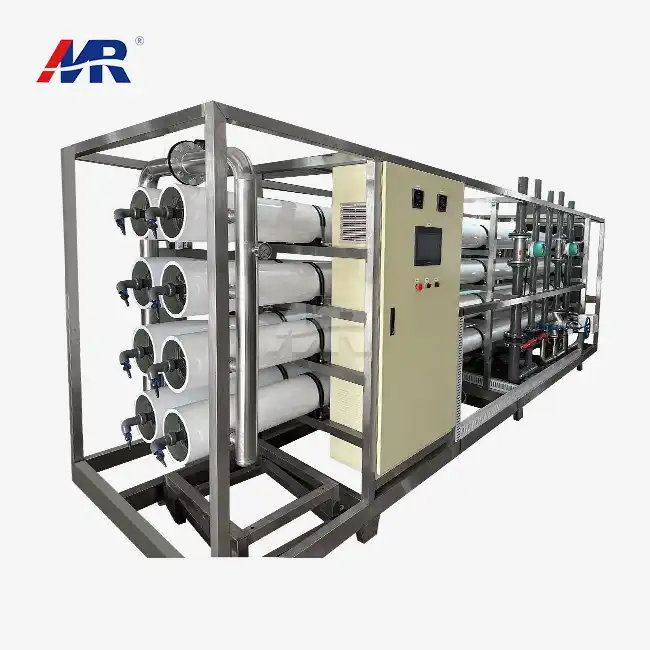
The reverse osmosis RO 132 greatly enhances the efficiency of water quality by using an advanced pressurised storage design that keeps the delivery flow steady, even though high-rejection membranes produce permeate at a slow rate. This 3.2-gallon tank stores clean water under pressure and lets it out right away when it's needed. It's called a hydraulic cushion. The system gets rid of contaminants like heavy metals, dissolved solids, and organic compounds. Its butyl rubber diaphragm and polypropylene liner stop metals from leaching, making sure it meets NSF/ANSI Standard 58 and providing safe, clean water for important business and industrial uses.
Introduction
Reverse osmosis technology has changed how businesses clean water by getting rid of up to 99% of dissolved solids and other contaminants that hurt production quality and make it harder to follow the rules. The RO 132 type is a big step forward in treating industrial water because it was designed to deal with the problems of fast membrane filtration and stable delivery pressure. Many sites have had trouble with slow output rates and irregular water flow, which has a direct effect on their ability to keep running.
This detailed guide talks about how the RO 132 system improves both water quality and operating efficiency for people who buy things for businesses, run facilities, and make technical decisions in the industrial, pharmacy, food processing, and local sectors. To understand this technology, you need to know how pressurised storage options get around membrane filtration's main flaw—they turn irregular production into a stable, on-demand water supply.
Understanding the Reverse Osmosis RO 132 Filtration Process
Core Design Architecture
As a complex pressurised holding tank, the RO 132 has a total volume of 3.2 gallons, which is about 12.1 litres, and a usable drop volume of about 2.8 gallons at normal 60 PSI system pressure. In contrast to regular storage tanks, this one has a high-grade butyl rubber cushion that physically separates the clean water from the pressurised air room. This makes a sealed environment that keeps the water clean during the storage cycle.
The post-purification polyethene lining is a very important new idea because it keeps the water inside from touching the steel shell. This design gets rid of the problems with metallic leaking that come with older tank layouts. This is especially important for pharmaceutical and lab uses, where small metal contamination makes water unfit for use. The 1/4 inch NPT stainless steel water link works well with existing RO systems and won't rust. The 5-7 PSI air pressure that is pre-charged at the plant makes the diaphragm work best at all 100 PSI working pressures that the tank can handle.
Multi-Stage Filtration Integration
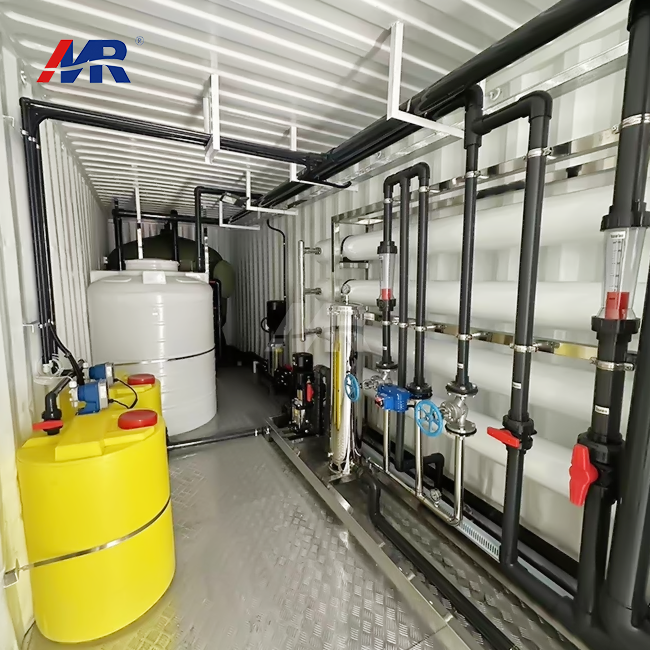
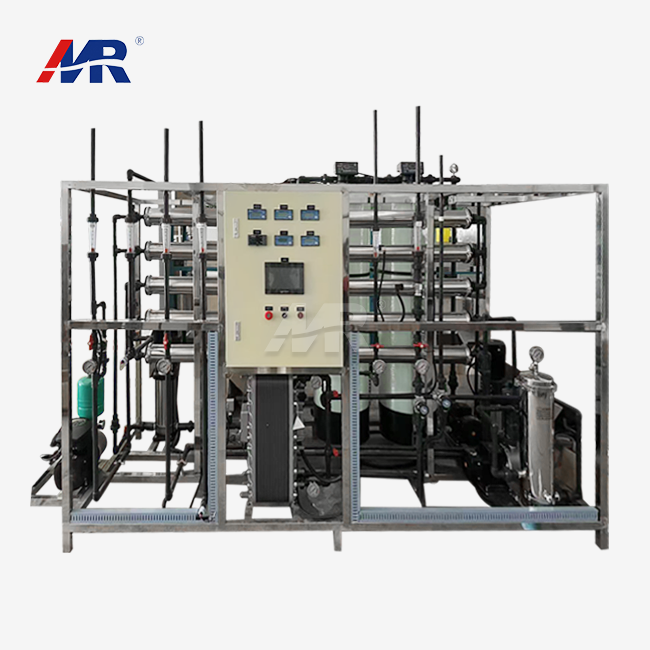
When added to full RO systems (reverse osmosis RO 132), the RO 132 works well with pre-filters that get rid of grit and chlorine, the semi-permeable membrane that gets rid of dissolved solids, and post-filters that make the end product smooth. The pressurised storing part solves a major problem in the industry: home and business RO filters usually only make 50 to 100 gallons of water per day, which is only 0.03-0.07 gallons per minute, which is much less than the immediate flow rate people expect when they open a tap.
The RO 132 lets users get 0.5 to 0.75 gallons of clean water per minute, which is the same as a normal tap flow rate. It does this by storing clean water when it's not in use and releasing it under steady pressure when it is. This hydraulic buffering feature is very useful in business coffee equipment, lab rinse stations, and manufacturing processes that need instant access to clean water without using electronic booster pumps.
Compliance and Material Safety Standards
The RO 132 handles worries about leakage and smell by using materials that are FDA-approved and meet NSF/ANSI Standard 58. It does this through strict TOC/VOC testing procedures. Third-party NSF approval proves that the inner liner doesn't add any chemical tastes, volatile organic compounds, or hormone-disrupting substances to the saved percolate water. This level of approval is a must for companies that make medicines that follow GMP guidelines, food makers that make sure drinks are always of high quality, and medical facilities that help with dialysis.
Quality control includes checking the structural soundness as well as the compliance of the materials. This ensures long-term dependability in business settings with a lot of demand, where equipment failure means lost production time and money.
Performance and Efficiency Optimisation of RO 132
Quality Control and Performance Verification
Professional quality control methods include four important levels of inspection that have a direct effect on how well operations run. The Hydrostatic Pressure Test puts 1.5 times the maximum pressure on each tank. This checks the integrity of the welded seams and keeps them from breaking down in a catastrophic way while the tanks are in use. For Air-Tightness Verification, all production units are submerged underwater while they are under pressure. This is done to find tiny leaks in the Schrader valve or diaphragm seal that would weaken system pressure and delivery performance over time.
In the Diaphragm Endurance Cycle Test, 50,000 discharge cycles are simulated, which is about five years of normal business use. This sped-up lifetime testing makes sure that the flexibility is maintained over time and stops sudden ruptures that would let pressurised air into held water. The Leachate and Odour Test specifically checks for pollution risks and makes sure that the way the water is stored doesn't change how pure it is after membrane filtration.
Optimising Output Capacity and Longevity
Getting the best performance starts with adjusting the pre-charge pressure correctly. Most setups work fine with the original setting of 5 to 7 PSI, but places with higher line pressures might benefit from having a special pre-charge adjustment done. When the system pressure hits 60 PSI, and the air valve in the tank reads 58–59 PSI, the drawdown volume is at its highest, giving all 2.8 gallons before membrane production starts up again.
Stopping membrane fouling makes both the membrane and the tank last longer. Scaling, biological growth, and material buildup all lower membrane output. This makes the tank spin more often, which wears out the diaphragm faster. Using the right pre-filtration, cleaning the membranes on a regular basis with approved solutions, and keeping an eye on the TDS breakthrough will help keep the quality of the permeate stable and lower the mechanical stress on the storage system.
Tracking productivity (reverse osmosis RO 132) is better when smart automatic tools are integrated. Predictive repair scheduling is possible with the help of pressure sensors that track tank output, flow meters that count daily production, and conductivity meters that find membrane breakdown. By using these tracking procedures, a beverage processing plant cut unexpected downtime by 43% and increased the time between membrane replacements from 18 to 26 months, showing a measurable return on investment (ROI) through proactive system management.
Energy Efficiency and Cost Reduction
When you use pressurised storage, you don't need extra backup pumps in most business setups. This saves energy and cuts down on upkeep needs. The passive hydraulic system doesn't use any electrical parts, which makes it more reliable and lowers the cost of running it. Facilities that replace pump-assisted delivery systems with correctly sized RO 132 setups report 15–22% lower water treatment energy costs. Depending on usage volume, payback times range from 14 to 18 months.
Comparative Analysis: Reverse Osmosis RO 132 vs Other Water Purification Solutions
RO 132 vs Earlier RO Models
When you look at the RO 132 next to older models like the RO 129, you can see that both volume and material engineering have come a long way. The RO 129 had a total amount of 2.9 gallons, but it only used about 2.4 gallons of water during each run, giving 14% less useful water. In business settings with regular high-demand events, like a café serving a queue of espresso drinks or a lab doing a series of rinse processes, this difference in capacity becomes very important.
Better materials in the RO 132 include diaphragm compounds that are less likely to break down chemically during chlorine breakthrough and ozone sanitisation processes. When older butyl versions were introduced to leftover sanitisers, they hardened too quickly, which cut their usefulness by 30–40%. The improved substance keeps its flexibility over a wider range of chemical exposures, which means that it doesn't need to be serviced as often and costs less overall.
Comparing the regularity of maintenance shows useful benefits. The diaphragm on the RO 129 needed to be inspected every 18–24 months because it lost its flexibility more quickly, but the RO 132 usually keeps working for 36–48 months in the same settings. This longer service period cuts down on the cost of upkeep labour and the time that production has to stop for tank cleaning.
Membrane-Based vs Alternative Purification Methods
UV sterilisation devices are very good at killing microbes, but they can't get rid of heavy metals, dissolved solids, or chemical pollutants. A drug factory that needs less than 10 parts per million of total dissolved solids (ppm TDS) for making syringe water can't meet the standards with UV treatment alone. The RO 132 system gets rid of 95–99% of the dissolved solids, and the pressurised storage keeps microbial control by keeping it away from airborne contaminants.
Activated carbon filter gets rid of chlorine, volatile chemical molecules, and some poisons well, but it doesn't work on heavy metals, dissolved salts, or hardness minerals. To clean semiconductor chips, electronics makers need resistivity above 10 megohm-cm, which can only be achieved with membrane-based systems like those that use RO 132 storage. If you only filter water through carbon, the resistance will be less than 100,000 ohm-cm, which is too low for precision manufacturing.
Distillation makes very clean water, but it uses 3–6 kWh per gallon, which makes it too expensive for large-scale industrial uses. When pump energy and membrane production rates are taken into account, RO systems with pressurised storage use about 0.3 to 0.5 kWh per gallon. A bottled water plant that makes 5,000 gallons of water every day would spend $12,000 to $24,000 a year on distillation energy, but only $1,500 to $2,500 on RO energy. This shows that RO 132 is cheaper for large-scale uses.
Customer Experience and Performance Validation
Purchasing managers in the lab, pharmacy, and beverage industries all say that switching to RO 132 setups makes their systems more reliable. A coffee roaster chain in the area switched all 17 of its sites to RO 132 systems. In the first 24 months, they had no service calls due to pressure, compared to 23 calls with their old tank design. Because of this dependability, service costs go down, and customer happiness goes up during busy times.
When testing tools for GMP settings, engineers at a contract pharmaceutical manufacturing plant stressed how important it was to have NSF approval and make sure that all materials met the standards. The detailed third-party paperwork that came with RO 132 units sped up their validation processes, cutting the time it took to qualify from 8 weeks to 4 weeks compared to other storage options that needed a lot of extra testing.
Procurement Considerations for Reverse Osmosis RO 132
System Capacity and Application Matching
To choose the right tank size, you need to compare the peak flow needs with the average daily usage (reverse osmosis ro 132). During morning rush hours, a dentist's office with six rooms that use 0.5 gallons of water per operation could do three treatments at the same time, using 1.5 gallons of water in 15 minutes. If the ro membrane only makes 0.05 gallons per minute, it would take 30 minutes for the membrane flow to meet this need. The RO 132 gives you instant access to its 2.8-gallon storage space, so patients don't have to wait while the system gets ready for afternoon procedures.
Multiple tank designs are useful for commercial uses that need constant flow rates higher than membrane output rates. A beverage preparation line that needs 15 gallons of water an hour during production runs uses a lot more than a single membrane can handle. However, three RO 132 tanks connected in parallel provide 8.4 gallons of instant backup, which keeps the membrane system balanced during long production times.
Infrastructure Compatibility and Installation Requirements
Most business RO systems will work with the 1/4-inch NPT connection standard, but sites should make sure their system pressure stays below the 100 PSI maximum working pressure. In high-rise buildings or places where the city supply is increased in pressure, installations may need pressure-reducing valves upstream to keep the tank from getting too pressurised and damaging the diaphragm.
Physical mounting options include both vertical and horizontal orientations. However, vertical mounting makes the best use of floor space in machinery rooms that are already crowded. The brass connections that are popular in home systems rust more easily in damp places than the stainless steel ones. This means that the stainless steel connections will last longer in food processing and pharmaceutical clean rooms, where they are washed often.
Warranty Provisions and Supplier Credentials
Authorised dealers offer guarantees backed by the maker that cover structural and diaphragm flaws. These warranties usually last between 3 and 5 years, but can be longer based on the purpose. To get the warranty to work, the fitting has to be done right, with the right pre-charge checks and system pressure balancing. To make sure the guarantee is followed, procurement teams should write down these factors during testing.
The credentials of suppliers are especially important when buying for businesses that are controlled. Distributors who work with the medical and pharmaceutical industries should show that they know how to meet the standards for validation paperwork, offer material certification packages that include USP Class VI compliance when needed, and provide technical help that is familiar with the audit methods used by regulators. This difference in knowledge explains higher prices in critical situations where non-compliant equipment could cause production to stop and result in fines from the government.
Total Cost of Ownership Analysis
Starting prices for RO 132 units vary from $85 to $150, based on the seller, the number of units bought, and the extras that come with them. For expert integration that includes pressure testing and system balancing, installation labour costs an extra $200 to $400. Facilities with skilled support staff may be able to do their own installation, which cuts down on upfront costs but puts the guarantee at risk if wrong steps are taken and parts are damaged.
Replacement of the diaphragm every 4 to 6 years is the main cost of ongoing upkeep. Genuine OEM parts cost $40 to $65 while aftermarket parts of varying quality cost $25 to $35. Annual check methods that take 30 to 45 minutes of expert time add $75 to $125 to operational budgets each year when done during routine membrane maintenance, which keeps extra labour costs to a minimum.
Looking at the 10-year costs of owning a RO 132 versus a pump-boosted option shows that the RO 132 has big benefits. The passive design gets rid of the need to repair the pump, which costs about $350 to $500 every 4 to 5 years, and lowers the amount of energy used by 140 to 260 dollars a year based on normal business use. Over ten years, RO 132 systems are more cost-effective than other systems by $1,200 to $1,800 per installation, and they pay for themselves in less than two years in uses that use a lot of energy.
Maintenance and Troubleshooting Guide for Reverse Osmosis RO 132
Routine Maintenance Protocols
A standard tyre pressure gauge (reverse osmosis ro 132) should be used to check the pre-charge pressure at the Schrader valve every three months as part of the repair plan. For devices with a line pressure of 40 to 60 PSI, the proper pre-charge reading is 2 PSI below the cut-in pressure, which is usually between 5 and 7 PSI. Low pre-charge lowers the withdrawal volume, and too much pre-charge stops the tank from filling all the way. Both of these situations hurt the system's efficiency and the user experience.
Testing the performance of the membrane once a year finds signs of wear and tear before the membrane fails completely. Comparing the conductivity of the input and escape fluids to measure TDS breakthrough shows the state of the membrane's health. When rejection rates drop below 90% (permeate TDS exceeds 10% of inlet TDS), it becomes economically viable to replace the membrane before a catastrophic failure pollutes the water kept in the RO 132 tank and requires the whole system to be cleaned.
In medical and industrial settings, checking for bacteria every six months should be part of tracking water quality. The protected diaphragm design keeps out air contamination, but if the membrane upstream fails or the links are broken, microbial contamination can get into the storage. By using regular testing procedures, these problems can be found before they hurt output or patient safety.
Common Issues and Resolution Strategies
Flow decrease is the most common performance issue, and it's usually caused by three different things. Low pre-charge pressure in the tank lowers the effective flow. This can be fixed by changing the Schrader valve to the right setting. Fouling on the membrane slows down output and keeps the tank from fully refilling between draw rounds. This can be fixed by cleaning or replacing the membrane. When pressure control fails or supply changes, the system pressure drops, which stops the tank from filling properly. This means that the pressure system needs to be diagnosed and fixed.
If the taste or smell of water changes after being stored for a long time, it's likely that chlorine is getting through the carbon pre-filters that are worn out. Even though the RO membrane gets rid of most of the chlorine, small amounts can damage the polyethene lining over time. This degradation can be stopped by replacing carbon filters when the maker tells you to. If you notice a rubbery taste, which means the diaphragm is wearing down, you'll need to replace the whole tank because replacing just the diaphragm inside is too expensive for most businesses.
Leaking connections at the NPT fitting happen when the installation pressure is too low or when the thread glue breaks down chemically. In many places, Teflon tape is still not allowed to be used for drinkable water. NSF-certified pipe dope made for drinking water makes sure joints don't leak, and there is no chance of contamination. The right torque range of 8 to 10 ft-lbs stops both leaks and damage to the metal part inside the tank from being over-tightened.
Lifespan Extension Best Practices
Using the right pre-treatment methods greatly increases the life of both the membrane and the tank. Filtration of sediment to 5 microns or smaller stops the buildup of particles that speed up membrane fouling. Using carbon filters to get rid of any remaining chlorine protects the surfaces of polyamide membranes and tank liners from reactive damage. When you soften the water in places where the hardness is higher than 120 ppm, you stop the calcium carbonate scaling that makes the membrane less effective and needs to be cleaned more often.
Keeping an eye on the temperature is especially important in mechanical areas that don't have air conditioning. When RO systems are used in temperatures below 45°F, membrane production rates drop greatly and water viscosity rises, which puts stress on tank diaphragms during draw cycles. Insulated shelters or trace heating can keep installations in buildings that aren't kept at 55 to 75°F all year long.
As part of the documentation standards for predictive maintenance, system pressure, permeate TDS, daily output volume, and tank drop capacity must be recorded every month. By looking at trends in this data, we can see that performance is slowly getting worse before it breaks down. This lets us do planned maintenance during set downtime instead of emergency fixes during work hours. Water treatment downtime is cut by 35 to 50 per cent a year at facilities that use data-driven repair procedures.
Conclusion
The reverse osmosis RO 132 transforms water treatment efficiency by bridging the gap between membrane production rates and end-user flow requirements through intelligent pressurised storage. Its FDA-approved materials, NSF-certified construction, and proven diaphragm technology deliver consistent, pure water across demanding commercial and industrial applications. Understanding proper selection, installation, and maintenance protocols enables facility managers to maximise both water quality and operational efficiency while minimising total ownership costs. The comprehensive quality control measures—including hydrostatic pressure testing, air-tightness verification, and endurance cycling—ensure reliability in pharmaceutical manufacturing, food processing, and laboratory environments where water purity directly impacts product quality and regulatory compliance.
FAQ
1. What contaminants does the RO 132 system effectively remove?
The RO 132 storage system works with reverse osmosis membranes that remove 95-99% of dissolved solids, including sodium, calcium, magnesium, fluoride, nitrates, arsenic, lead, copper, and chromium. The membrane eliminates bacteria, viruses, and protozoan cysts exceeding 0.0001 microns while reducing organic chemicals, pesticides, and herbicides. The sealed polypropylene liner prevents recontamination during storage, maintaining the purity achieved during filtration throughout the delivery cycle.
2. Can the RO 132 handle well water or heavily contaminated sources?
Well water typically requires additional pre-treatment beyond standard sediment and carbon filtration. High iron and manganese concentrations demand oxidation and precipitation stages before membrane exposure to prevent irreversible fouling. Hydrogen sulfide requires specialised carbon filtration or oxidation treatment to prevent odour issues and liner degradation. The RO 132 performs effectively downstream of properly designed pre-treatment systems, addressing specific well water characteristics identified through comprehensive source water analysis.
3. What is the recommended replacement schedule for filters and membranes?
Sediment pre-filters require replacement every 6-12 months, depending on source water quality and usage volume. Carbon filters protecting the membrane need replacement at 12-month intervals or when chlorine breakthrough occurs, whichever comes earlier. RO membranes typically last 24-36 months with proper pre-treatment and regular cleaning, though heavily utilised commercial systems may require 18-month intervals. The RO 132 tank diaphragm lasts 4-6 years under normal operating conditions, with replacement indicated by reduced drawdown volume or rubber taste development.
Partner with Morui for Superior Water Treatment Solutions
Guangdong Morui Environmental Technology Co., Ltd. stands as a comprehensive reverse osmosis RO 132 supplier delivering complete water treatment solutions beyond equipment sales. Our integrated approach encompasses industrial wastewater treatment, seawater desalination, drinking water manufacturing, and system optimisation across pharmaceutical, food processing, and manufacturing sectors. With 14 branches supporting 500 employees, including 20 specialised engineers, we provide one-stop installation, commissioning, and ongoing Technical support, ensuring your water treatment investment delivers maximum long-term value.
Our membrane production facility manufactures components meeting international quality standards, while our equipment processing factories enable rapid customisation for unique application requirements. Representing premium brands including Shimge Water Pumps, Runxin Valves, and Createc Instruments, we source optimal components for each installation rather than forcing one-size-fits-all configurations. Reach out to our procurement specialists at benson@guangdongmorui.com for tailored system design, competitive pricing on reverse osmosis RO 132 for sale, and expert guidance navigating regulatory compliance across pharmaceutical, food, and medical applications.
References
1. Membrane Technology and Applications, Third Edition, Richard W. Baker, John Wiley & Sons, 2012.
2. Water Treatment: Principles and Design, Third Edition, James M. Montgomery Consulting Engineers, John Wiley & Sons, 2010.
3. NSF International Standard 58: Reverse Osmosis Drinking Water Treatment Systems, NSF International, 2022 Edition.
4. Industrial Water Treatment Process Technology, Rajesh K. Vashishtha, CRC Press, 2019.
5. Reverse Osmosis: Design, Processes, and Applications for Engineers, Jane Kucera, Scrivener Publishing, 2015.
6. Guidelines for Drinking-water Quality: Fourth Edition Incorporating the First Addendum, World Health Organization, 2017.