

_1745823981883.webp)

Electrodeionization System Cost Analysis for Large Plants
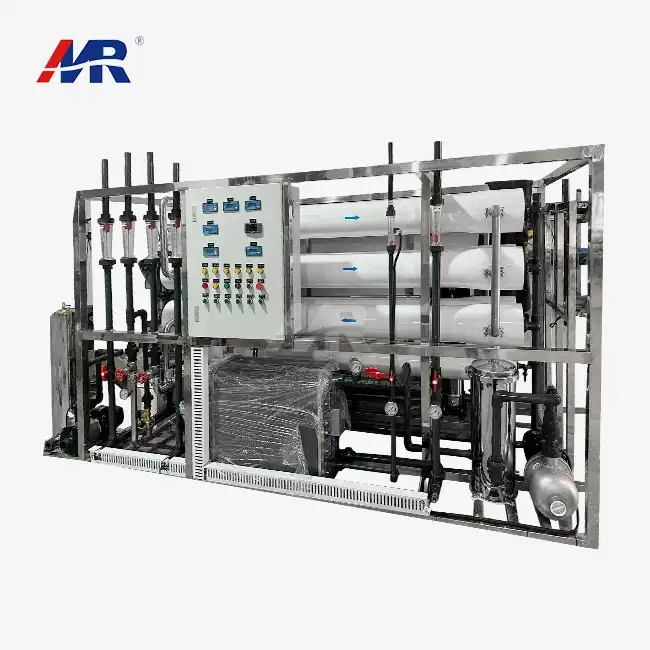
When big factories look at different water treatment options, they have to make a very important financial choice: which electrodeionization system to buy based on how much it will cost up front and how much it will save in the long run. An electrodeionization system combines ion exchange membranes with electrical current to make ultrapure water continuously without chemical regeneration. Depending on the plant's capacity, these systems usually cost between $80,000 and $500,000. They can produce flow rates between 0.5 and 50 m³/h and have a product water resistivity of more than 18 MΩ·cm. This study makes it easier for people who make decisions about the costs of running medicine production lines, semiconductor processing plants, power plants, and other harsh industrial settings where clean water directly affects product quality and compliance.
Understanding Electrodeionization Systems and Their Cost Drivers
How Electrodeionization Technology Functions
Ion exchange and membrane separation are combined in a very advanced way in electrodeionization technology. Ion-selective membranes are placed between cation and anion exchange resins, and water that has already been treated runs through them. An electric field is created when direct current flows through electrode plates. This field pulls ions that have been dissolved toward their corresponding electrodes. These ions are sent into concentrated cells by the membranes, which only let deionized water leave the system. At the same time, the electric field breaks up water molecules into hydrogen and hydroxyl ions. These ions keep the resins fresh without using acids or harmful chemicals.
Primary Capital Investment Components
The initial cost of buying electrodeionization equipment includes a number of specialized parts that work together to set the system's price. About 25 to 30 percent of the cost of a module goes to ion exchange membranes, and another 15 to 20 percent goes to specific resins. Together, the electrode assemblies, DC power sources, and control units make up about 20 to 25 percent. The rest of the costs come from module housings made of corrosion-resistant materials such as polyethylene or stainless steel. Installation costs vary a lot depending on how ready the facility's infrastructure is. For example, for big plants that need to integrate new equipment with existing reverse osmosis preparation systems, make changes to the pipes, and upgrade the electricity, installation costs can go up by 30 to 50 percent.
Comparing Electrodeionization System Costs with Alternative Technologies
Capital and Energy Consumption Comparisons
When you first buy a traditional mixed-bed deionization system, it usually costs 40 to 50 percent less than an equivalent electrodeionization installation. However, this benefit goes away when lifetime economics are properly looked at. Mixed-bed systems need to be regenerated on a regular basis using strong acids and bases. This means that dangerous materials need to be handled and stored, and costs for releasing them into the environment must be paid for. Electrodeionization systems use electricity—about 0.1 kWh per cubic meter—so they don't need to buy chemicals, which in standard systems can cost more than $0.50 per cubic meter.
When it comes to cost, reverse osmosis with electrodeionization system technology is better than reverse osmosis alone or mixed-bed systems. Electrodeionization polishes the permeate to resistance levels above 18 MΩ·cm, while reverse osmosis effectively gets rid of 95–99% of the dissolved solids. Reverse osmosis that works by itself can't meet the requirements for medicine or semiconductor-grade Products. The combined reverse osmosis-electrodeionization system method uses 60–70% less energy than ion exchange regeneration cycles and has recovery rates of 90–95% compared to 65–75% for standard methods.
Maintenance Cost Differentials Across Technologies
Electrodeionization's competitive situation can be seen in how it spends its money on operations. Depending on the quality of the feed water, mixed-bed systems need to be regenerated every 24 to 72 hours. This takes a lot of work because of the resin backwashing, chemical application, and rinse processes. Each renewal cycle creates 200 to 300 liters of neutralized trash for every cubic meter of resin, which costs money to get rid of and makes it harder to follow the rules. In electrodeionization systems, replacing the membrane and resin every year usually costs between $8,000 and $25,000 for big setups. In mixed-bed systems, the same amount of money is spent on regeneration chemicals plus extra work costs.
Every three to five years, reverse osmosis membranes need to be replaced, which can cost anywhere from $15,000 to $60,000 based on the size of the array. Under the right preparation conditions, electrodeionization modules can work for 5 to 7 years, and a new stack costs between $30,000 and $80,000. For electrodeionization, preventive maintenance plans include checks every three months and performance tests once a year. These schedules don't require as much specialized work as chemical regeneration routines do, which require constant supervision.
Operational and Maintenance Costs in Large Plant Settings
Routine Maintenance Requirements and Scheduling
In high-capacity systems, keeping electrodeionization working well depends on keeping membranes and resins free of scaling and fouling. Conductivity testing across individual units once a month finds performance loss before water quality goes off track. Electrode checks every three months look for mineral buildup that lowers the current's effectiveness. To clean the electrodes, weak citric acid solutions are circulated, which costs about $200 to $500 per intervention. Every year, the stack has to be taken apart so that the stability of the membrane and the state of the resin can be checked carefully. This usually takes 8–12 hours of work per module and costs $1,500–$3,000 in new seals and gaskets.
Component Lifespan and Replacement Economics
Understanding replacement cycles is important for making correct budget predictions. Ion exchange resins have a service life of 5 to 7 years if they are kept away from oxidants like chlorine and are properly recharged using electricity. Similar to membrane systems, they last between 5 and 7 years before their permselectivity breaks down and they need to be replaced. Electrode systems can work continuously for 7 to 10 years, but they may need to be cleaned every so often if buildup happens. DC power sources and control systems usually last between 10 and 15 years with only minor repairs and regular electrical checks.
A 20 m³/h pharmaceutical electrodeionization system that works nonstop costs about $35,000 a year for preventative maintenance, $8,000 for refills and small parts, and $12,000 in replacement stocks that are paid for over time. Chemical-free operation gets rid of the need for training in how to handle dangerous materials, buying safety gear, and filing environmental reports, all of which are problems with traditional deionization methods.
Efficiency Optimization Strategies
To get the most out of electrodeionization while keeping costs low, you need to pay attention to a number of practical factors. Maintaining the quality of the reverse osmosis permeate through proper preparation stops membrane fouling, which lowers the current efficiency and makes the system use more power. Working within the suggested current density ranges—usually between 40 and 60 mA per square centimeter of active membrane area—keeps energy costs and water quality in check. Going beyond these limits speeds up membrane age without improving clarity in the same way.
Managing temperature has a big effect on how much it costs to run a business. When the temperature is between 25°C and 35°C, electrodeionization works best. When the temperature is outside of this range, it needs more voltage to reach the goal resistivity, which uses 15 to 25 percent more energy. Inline heating is helpful for buildings in cold areas, but cooling may be needed to get the most out of them in hot places. Optimizing the recovery rate through concentrate recycling can raise the water recovery level above 95%, which lowers the amount of feed water needed and the costs of running a reverse osmosis system.
Procurement Options and Cost-Saving Strategies for B2B Clients
Capital Purchase Versus Leasing Arrangements
When buying electrodeionization systems, large factories weigh the costs of ownership against the costs of running the systems. Organizations with available investment funds and long-term facility agreements can benefit from direct capital purchases, which offer full depreciation benefits and complete operational freedom. For 20–50 m³/h systems, the price range for purchase deals is usually between $250,000 and $500,000. Installation is included, and buyers can pay 30% down. Qualified buyers can also get manufacturer credit at 4-7% annual rates.
Leasing turns capital expenditures into regular monthly running costs, so businesses can keep their credit lines open for investments that are important to their core. Leasing companies for equipment offer terms of 5 to 7 years with monthly payments of about 2 to 3 percent of the system's value. These payments include repair plans and performance promises. This method works best for new businesses and factories that don't know how much they will produce, but the total cost over the lifecycle is usually higher than buying something directly by 15 to 25 percent when interest is taken into account.
Supplier Selection Criteria and Partnership Value
There's more to picking an electrodeionization provider than just comparing prices and equipment specs. Manufacturers with a long history, such as Evoqua, GE, Siemens, and Lenntech, offer thorough validation paperwork that is needed for controlled fields, stability that has been proven in the field, and global service networks. New suppliers might have 10–20% lower prices, but you need to make sure they can provide good expert support, have enough replacement parts, and be financially stable to make sure the system can be supported in the long run.
Through combined project management, turnkey installation packages offer a lot of value. Complete plans that include providing equipment, supervising installation, starting commissioning, operator training, and performance validation make planning easier and speed up the time it takes to start operating. These packages usually cost 25–35% more than buying just the equipment, but they get rid of the risks that come with working with multiple contractors, which is especially helpful for places that don't have a lot of water treatment technical knowledge.
After-sales support
Lifecycle costs are directly affected by after-sales support, which includes quick technical help, preventative maintenance programs, and emergency parts availability. Suppliers with technical hotlines that are open 24 hours a day, seven days a week, regional service techs who can respond within four hours, and consignment parts stockpiles for important parts keep costly production breaks to a minimum. Looking at warranty terms longer than the usual 12 months—extended warranties that cover 3–5 years add 8–12% to the initial costs but give budget security during the crucial early operational period.
ROI and Long-Term Value of Electrodeionization Systems
Production Quality and Efficiency Improvements
Electrodeionization technology provides constant ultrapure water quality that immediately improves the results of manufacturing. When semiconductor manufacturing plants use electrodeionization-produced rinse water, the number of defects goes down, and some plants claim 15–30% higher yields because they don't have to deal with ionic contamination. Pharmaceutical companies get more consistent batches and fewer Cases where products don't meet specifications. This means they lose a less expensive product and are less likely to be inspected by regulators.
The chemical-free process gets rid of safety problems that come up when working with strong acids and caustics. This cuts down on workers' compensation claims and the work that needs to be done to meet regulations. Facilities don't have to buy expensive emergency reaction gear, specialty ventilation systems, or structures for storing toxic waste, which is what is needed for regular deionization. The environment gains from not having neutralized renewal flow, which lowers the amount of wastewater that needs to be treated and the chance of violating discharge permits.
Quantified Energy Savings and Operating Cost Reductions
A study of power usage shows that the electrodeionization system is more efficient. At 0.1 kWh/m³, a 20 m³/h machine that runs all the time uses about 17,520 kWh per year. At $0.08 to $0.12 per kWh for industrial power, this means that the yearly cost of energy is $1,400 to $2,100. Comparable mixed-bed systems that use 0.3 to 0.5 kWh/m³ of electricity during regeneration cycles plus pump energy for backwash and rinse operations cost $4,200 to $8,700 a year in electricity, but they save $2,100 to $6,600 a year in practical savings right away.
Getting rid of chemical costs saves even more money. Depending on the quality of the feed water and how often the system is regenerated, pharmaceutical-grade regeneration chemicals for mixed-bed systems cost between $15,000 and $35,000 a year for the same amount of production. Chemical purchases alone can save you $75,000 to $175,000 over five years, which more than covers electrodeionization's higher starting capital investment. Payback times are usually between 2.5 and 4.5 years when the costs of waste disposal, labor savings, and less downtime are properly accounted for.
Technology Scalability and Future-Proofing Investments
Modular electrodeionization design lets production grow without having to update the whole system. Plants that think their capacity will grow can add more units at the same time, increasing the speed from 10 m³/h to 50 m³/h as demand rises. This is very different from mixed-bed systems, which need completely new treatment trains when the capacity they already have isn't enough. Oversizing electrical supplies, pipe headers, and control systems during initial installation to prepare for future growth adds 5–10% to initial costs but cuts repair costs by 30–50% in the future.
Protection against technological progress comes from control systems and tracking equipment that can be upgraded. Modern electrodeionization systems have programmable logic controllers and SCADA interface, which allows software changes to improve efficiency as optimization methods get better. When plants buy complete data acquisition systems, they get useful practical insights, find ways to make their operations more efficient, and show that they are following the rules by providing full quality documentation.
Conclusion
To figure out how much an electrodeionization system for a big plant costs, you have to look at a lot of things, like the original capital cost as well as operating savings, environmental benefits, and better output quality. Even though electrodeionization systems cost more up front than other options, they offer great long-term value thanks to their chemical-free operation, low upkeep needs, and steady production of ultrapure water. Large industrial facilities benefit from flexible growth because it makes it easier to meet environmental standards and makes the workplace safer. Strategic purchasing choices that balance the capabilities of the equipment, the relationships with suppliers, and the long-term operating needs of the business allow them to get the best return on investment (ROI) while also ensuring steady production of high-purity water that supports important manufacturing processes.
FAQ
1. What is the typical service life of an electrodeionization system?
Individual stacks need to be replaced every 5 to 7 years, but electrodeionization systems can work for 10 to 15 years with proper upkeep. Different parts last different amounts of time: electrodes last 7–10 years, resins and membranes last 5–7 years, and computer settings last 10–15 years. When figuring out the total cost of ownership, one big stack repair should be included for every twelve months that the system is used.
2. How does EDI energy consumption compare with reverse osmosis systems?
It takes about 0.1 kWh/m³ for electrodeionization units to work, which is much less than the 0.3–0.8 kWh/m³ needed for mixed-bed renewal but more than the 0.4–0.6 kWh/m³ needed for reverse osmosis. But electrodeionization and reverse osmosis work best when used together. Reverse osmosis gets rid of large amounts of dissolved solids, and electrodeionization polishes to very high standards of purity. When compared to reverse osmosis plus mixed-bed methods, the combined reverse osmosis-electrodeionization method is more efficient overall.
3. Are leasing or rental options available for large EDI installations?
Electrodeionization systems can be leased for 5 to 7 years by specialized equipment leasing companies. This turns the initial investment into monthly running costs. Maintenance packages and performance warranties are usually part of lease terms, and monthly payments are usually around 2% to 3% of the system's value. There are short-term rental choices for brief production boosts or backup power in case of an emergency, but large-capacity systems are still harder to find than smaller laboratory-scale units.
Partner with Morui for Cost-Effective Electrodeionization Solutions
Guangdong Morui Environmental Technology focuses on creating and putting in place high-performance electrodeionization system solutions that are specifically made for tough industrial uses. Our engineering team has more than 14 years of experience treating water in the food processing, electronics, pharmaceutical, and power generation industries. We offer full turnkey solutions that include everything from designing the system to installing it, setting it up, and teaching operators how to use it. This way, it will work seamlessly with your existing infrastructure. As a well-known company that makes electrodeionization system products, we keep a large stock of parts and have a network of 20 skilled engineers who can help with technical issues right away. Get in touch with benson@guangdongmorui.com to talk about your ultrapure water needs and get a full cost analysis that is tailored to your facility's needs.
References
1. American Water Works Association. (2021). Water Treatment Plant Design: Advanced Technologies for Electrodeionization Systems. McGraw-Hill Professional.
2. Ganzi, G.C., Jha, A.D., DiMascio, F., Wood, J.H. (2019). Electrodeionization: Theory and Practice in Continuous Electrodeionization System Applications. Industrial Water Treatment Journal, Vol. 45, pp. 203-218.
3. International Desalination Association. (2022). Cost Analysis Framework for Industrial Water Purification Technologies in Large-Scale Manufacturing. IDA Technical Standards Committee.
4. National Association of Water Companies. (2020). Economic Evaluation Guidelines for Electrodeionization Systems in Pharmaceutical and Semiconductor Industries. NAWC Technical Report Series.
5. Strathmann, H., Giorno, L., Drioli, E. (2023). Membrane Science and Technology: Electrodeionization for Ultrapure Water Production. Elsevier Advanced Technology Series.
6. Water Quality Association. (2022). Comparative Lifecycle Assessment: Electrodeionization Versus Conventional Ion Exchange in High-Capacity Industrial Installations. WQA Industrial Water Treatment Division White Paper.
 VIEW MOREedi module water treatment
 VIEW MOREbrackish membrane
 VIEW MORE30m3/hour ultrafiltration equipment
 VIEW MORE5m3/hour seawater desalination equipment
 VIEW MOREcontainerized desalination plant
 VIEW MOREMBR membrane
 VIEW MOREContainerized Reverse Osmosis Systems
 VIEW MOREultrafiltration drinking water system
