_1745823981883.webp)

Electrodeionization Water Treatment: Zero Chemical Regeneration
Electrodeionization water treatment is a huge step forward in industrial water cleaning. It uses ion-exchange membranes and DC electric fields to make ultrapure water without using dangerous chemical regenerants. Unlike other mixed-bed deionizers that need acid and caustic regeneration cycles, EDI works all the time, so you don't have to worry about the risks and costs of disposal that come with working with large quantities of chemicals. It also provides uniform water resistivity up to 18.2 MΩ·cm.
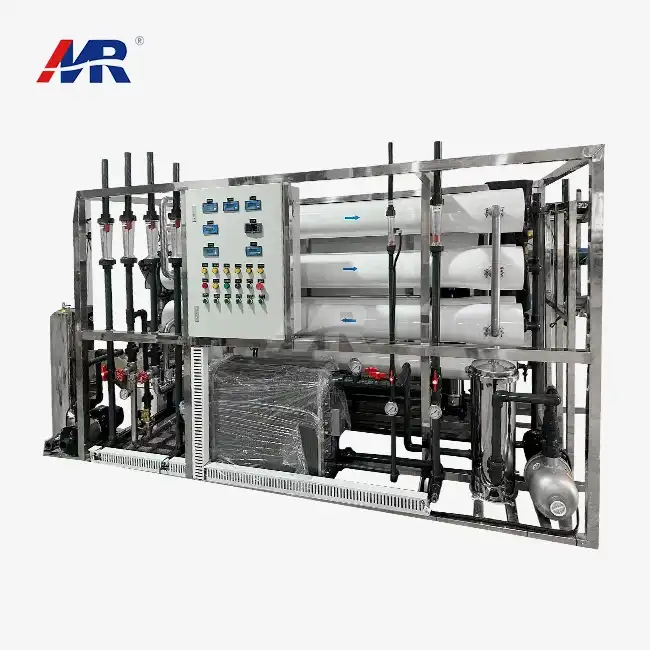
Introduction
Modern businesses are under more and more pressure to find a balance between being environmentally friendly and making good Products. Water purification is at the heart of this problem, especially in areas that need ultrapure water and where traditional methods produce large amounts of chemical waste. Electrodeionization water treatment directly handles these issues by combining electrodialysis and ion-exchange methods in a closed-loop system that keeps renewing itself without any extra chemicals.
This guide shows procurement managers, facility engineers, and technical decision-makers how to use edi systems in the real world. You will learn how this technology stacks up against other widely used methods of cleaning, how much money you can expect to save, and which use Cases make the investment worthwhile. We used information about the industry, Morui's experience making things, and feedback from real-world implementations to give you useful information for your review process.
Understanding Electrodeionization Water Treatment
The Core Operating Principle
An electrodeionization water treatment system is made up of three main parts: mixed-bed resin tanks, semi-permeable ion-exchange membranes, and direct current electrodes. Feed water, which is usually treated with reverse osmosis first to lower the total dissolved solids, goes into the resin chambers. Ionic toxins that are still present briefly bind to resin beads. When an electric potential is applied, it moves cations toward the cathode and anions toward the anode through selective membranes. At the same time, water splitting keeps the resin beds fresh.
This two-step process makes three separate water streams: an ionic-lowering product stream, a concentrated reject stream carrying away impurities, and electrode rinse flows that keep the system parts safe. The process stays in a steady state and doesn't stop during regeneration cycles. This means that the water quality stays the same no matter what time of day it is.
Key System Components
The ion-exchange membranes work as selective barriers. The cation-exchange membranes only let positive ions pass, while the anion-exchange membranes let negative ions move. There are spaces between these membranes that are filled with mixed-bed resins that have both strong acid cation and strong base anion types. These resins help remove more ions. The electrode assemblies send out low-voltage DC, usually 150 to 600 VDC, based on the stack design. This creates the force that moves the ions.
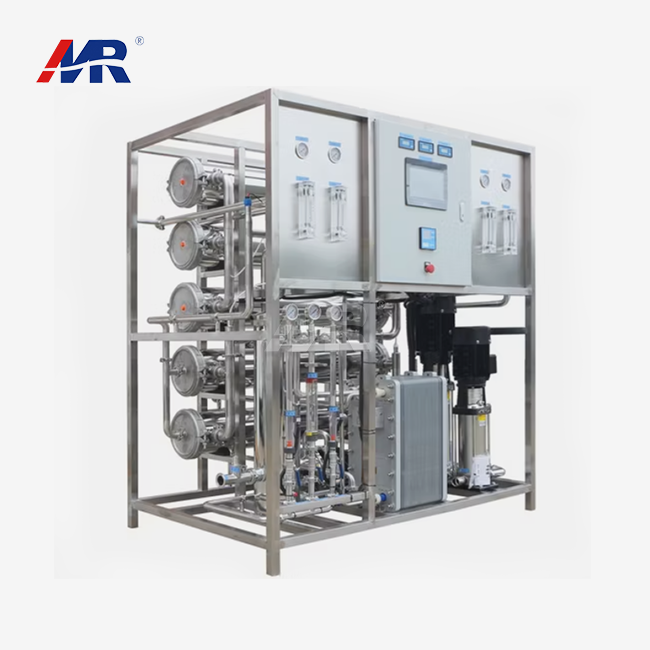
Different manufacturers use different module designs, but most industrial EDI systems have stacked plate-and-frame layouts that hold multiple cell pairs. Morui's EDI modules have anti-scaling pretreatment chambers and automated conductivity monitoring at every stage. This lets you track performance in real time and plan preventative maintenance.
Comparison with Traditional Technologies
Standard ion-exchange systems need to be regenerated offline every so often using hydrochloric acid and sodium hydroxide. This creates dangerous waste streams that need to be neutralized before they can be released. 50–100 kWh are used for every cubic meter of distillate, which makes it too expensive for large-scale uses. Without expensive multi-pass configurations, reverse osmosis can't reach the resistivity levels needed for making semiconductors or medicines.
EDI gets around these problems by polishing RO percolate to very high standards while using only 0.1 to 0.3 kWh per cubic meter. The constant operation gets rid of the quality changes that come with group regeneration cycles. This keeps the resistivity values steady, which keeps sensitive production processes safe from contamination.
Benefits of Zero Chemical Regeneration in EDI Water Treatment
Environmental and Regulatory Advantages
When you take chemicals out of the regeneration equation, you get rid of about 95% of the dangerous waste that comes with regular ion-exchange processes. Facilities don't have to store concentrated acids and bases anymore, which lowers insurance costs and the amount of paperwork that needs to be filed under EPA rules for handling hazardous materials. For food and drug processing plants that are regulated by the FDA, this makes it easier to keep track of compliance paperwork and makes audits easier.
The small footprint—often 60% smaller than similar mixed-bed systems with regeneration tanks—makes room on the floor for production equipment. Electrodeionization water treatment is especially appealing to places that can't neutralize chemicals well or don't have direct access to facilities for getting rid of chemicals, since the reject concentrate only has high mineral levels and no toxic substances.
Operational Cost Efficiency
When buying reagents, keeping storage tanks in good shape, and treating waste are all taken into account, chemical costs make up 30 to 45 percent of conventional ion-exchange operating costs. Morui's systems get rid of these ongoing costs completely. Our normal product range uses an average of 0.2 kWh of energy per cubic meter, which is about the same as RO operation and a lot less than heat distillation methods.
Without regeneration valves, chemical injection systems, and neutralization controls, there is a lot less maintenance that needs to be done. Instead of checking the recovery cycle every week, routine service times now include preventative checks every three months. When compared to traditional methods, these factors lower the total cost of ownership by 40 to 55 percent over the course of a typical 10-year equipment lifecycle.
Water Quality Consistency
As resin beds wear down between regeneration events, batch regeneration causes changes in the water quality that happen in cycles. The resistivity values stay the same in EDI because the electric current keeps regenerating the resin bed and taking away ions at the same time. Product water conductivity usually stays within ±0.02 µS/cm of setpoint values, which meets the tight process control windows needed for making integrated circuits and injectable drugs.
The ability to remove silica shows that EDI is technically better. Without special materials, regular systems have a hard time lowering reacting silica below 10 parts per billion. Our electrodeionization water treatment modules always get silica levels below 1 ppb by improving the way ions move through the water. This keeps high-pressure boiler systems safe and stops problems in thin-film coating applications.
Evaluating Electrodeionization for Your Specific Needs
Industry-Specific Application Scenarios
To make medicines, you need Purified Water and Water for Injection that meets the requirements of the USP standard. Electrodeionization water treatment systems that can sterilize with hot water keep microbes under control while producing the needed 1–5 MΩ·cm resistivity. To support validation protocols, Morui builds these systems with electropolished 316L stainless steel surfaces and materials that are wetted with stainless steel.
To make semiconductors, you need water that is very pure, almost to the point of theoretical purity. Our combined RO+EDI setups give 18.2 MΩ·cm resistivity, silica levels below 1 ppb, and total organic carbon levels below 10 ppb. This makes them ideal for important tasks like photoresist processing and final wafer cleaning. From 0.5 m³/h test lines to 50 m³/h production plants, the technology can be used on a large scale.
Power plants use EDI to make up the boiler feedwater. Dissolved solids cause heat transfer surfaces to scale and deposits on turbine blades. The technology gets rid of enough calcium, magnesium, and silica to stop these operational problems. It also doesn't have the chemical handling risks that come with regular demineralizers. Recovery rates above 90% reduce the amount of raw water used and wastewater that is dumped.
Investment Analysis and ROI Considerations
EDI systems can cost anywhere from $80,000 to $350,000 to buy, based on how much space they need and how much customization they need. A 10 m³/h pharmaceutical-grade system usually costs $180,000 to install, which includes the cost of pretreatment equipment and the integration of controls. This is better than mixed-bed systems that need infrastructure for regeneration, like places to store chemicals, keep them contained, and treat waste.
The payback period is usually between 2.5 and 4 years. This is because you save money on chemicals, disposal fees, and maintenance work. Facilities that spend $40,000 a year on renewal chemicals usually get their extra EDI investment back in 30 months or less. In places with strict rules on wastewater discharge, the analysis is stronger because the avoided costs of compliance shorten the time it takes to get money back.
Leasing programs set up as operating costs instead of capital purchases give businesses that want to focus on cash flow management other options. Preventive repair and performance promises are often included in monthly payment plans. This shifts operational risk to the equipment provider and keeps capital budgets for core business investments.
Customization and Scalability
Standard EDI units can handle feedwater that has been treated with RO and has a conductivity of up to 40 µS/cm. Scale inhibitor dosing systems or softening pretreatment are helpful for applications with high levels of hardness. Morui engineers make these changes during the specification phase, which makes sure that the electrodeionization water treatment system will work reliably for a long time without needing to be serviced often.
When production rates rise, modular design lets you add more parallel EDI stacks to increase capacity. A plant that starts by setting up a 5 m³/h system can later add a second, identical unit to boost throughput to 10 m³/h without changing the way the process works as a whole. This staged approach matches the use of capital to the growth of revenue instead of needing huge investments at the start.
Practical Insights on Electrodeionization Water Treatment Maintenance
Routine Performance Monitoring
Using built-in monitors, operators should keep an eye on the conductivity of both the input and output water all the time, setting alert levels at ±10% of baseline values. When readings are more than 5 psi above the initial commissioning values, membrane fouling conditions are indicated by differential pressure across the EDI stack. Flow rate measurement makes sure that the concentrate and product streams are in the right hydraulic balance. This balance is usually kept at concentrated flow rates equal to 5 to 10 percent of feed flow.
Troubleshooting Common Issues
A slow loss of resistivity in an electrodeionization water treatment system is usually a sign that organic compounds or colloidal materials are blocking the resin beads and not going through the pretreatment process. Using citric acid or other low-pH cleaners in chemical cleaning protocols can restore performance without hurting membranes. In well-designed systems with enough upstream filters, these changes usually happen every 12 to 18 months.
Rapid rises in conductivity could mean that the membrane is damaged or that the resin bed is channeling. By manipulating valves to isolate individual modules, the damaged part can be found and replaced without having to shut down the whole system. Keeping a spare module on hand cuts down on emergency repairs to less than four hours.
Supplier Support Infrastructure
Reliable equipment makers cover membranes and resins with a 24-month warranty and electrical parts with a 12-month guarantee. Morui keeps regional service centers stocked with extra parts for instruments, electrode assemblies, and new modules that can be sent anywhere in North America the next day. Our Technical support team can do remote diagnostics over a secure internet connection, which means that 70% of performance problems can be fixed without having to come to the site.
An annual preventative maintenance deal includes a full review of the system, testing of its performance, and replacement of minor parts. These programs are expensive—about 4–6% of the original value of the equipment—but they keep catastrophic failures from happening, which would otherwise mess up production plans and lower the quality of products used in serious situations.
Choosing the Right Electrodeionization Water Treatment Supplier
Supplier Evaluation Criteria
Companies that have ISO 9001 certification have well-established quality management systems that guide the planning, production, and testing processes. Industry-specific Certifications, such as ASME BPE for pharmaceutical uses or NSF-61 for materials that come into contact with potable water, show that you know what you're doing in regulated areas. These qualifications, along with the CE mark for the European market, show that Guangdong Morui Environmental Technology is committed to meeting foreign quality standards.
Performance Verification and References
Ask to see written case studies of sites in your industry that include success data from at least 12 months of operation. Reliable suppliers give you customer references who are happy to talk about their experience with implementation, upkeep needs, and how quick the seller was. Our clients who make semiconductors in Oregon and pharmaceuticals in New Jersey can put qualified prospects in touch with authorized direct reference contacts.
Implementation Support Services
A full engagement with a supplier of electrodeionization water treatment starts with a thorough analysis of the water and process flow, which leads to the creation of custom system specifications that meet your production needs. During the proposal phase, 3D layouts of the equipment should be included to make sure that it will fit in with the existing infrastructure and utility connections. Morui offers these technical skills for free to projects that qualify, putting money into the right system design up front to make sure it works well in the long run.
Installation monitoring by factory-trained workers cuts down on starting delays and makes sure the right steps are taken for startup. Our Teams stay on-site during the first production runs to teach your workers how to do routine tasks and fix problems. This sharing of information stops the operational mistakes that happen a lot when staff don't have experience with specific pieces of equipment.
Conclusion
Electrodeionization water treatment has real benefits for businesses that need to produce ultrapure water reliably without the environmental and operational problems that come with chemical regeneration. Continuous operation, a small size, and low energy use are all features of the technology that make it very profitable and easy to comply with regulations. EDI should be seriously thought about as the long-term option for high-purity water uses in the pharmaceutical, semiconductor, power generation, and food processing industries, whether they are replacing old ion-exchange systems or building new ones.
FAQ
Q1: How does EDI differ from reverse osmosis systems?
Reverse osmosis uses hydraulic pressure to remove 95–99% of dissolved solids through semi-permeable membranes. However, it is not possible to achieve the 18.2 MΩ·cm resistivity needed for ultrapure applications on a cost-effective basis. Electrodeionization water treatment polishes RO permeate by using electrochemical processes to get rid of any remaining ions. This makes the resistivity 100–1000 times higher than with RO alone. The two technologies work well together; RO does the bulk removal, and EDI does the final cleaning.
Q2: What pretreatment does EDI require?
To keep the membrane from scaling, EDI systems need feed water with a conductivity of less than 40 µS/cm and a hardness of less than 1 ppm. To meet these requirements, standard preparation includes carbon adsorption to get rid of chlorine, multimedia filtering, and double-pass RO. To keep resin from fouling, total organic carbon should stay below 0.5 ppm. If the preparation is done right, the EDI membrane will last longer than five years.
Q3: Can EDI handle fluctuating water quality?
Modern EDI systems can handle changes of up to 20% in the feed conductivity without losing performance because they automatically adjust the current. If there are sudden changes outside of this range, like an ro membrane failing and letting high TDS through, the system has to be shut down to avoid damage. Putting in automated shutoff valves and continuous conductivity monitoring protects equipment during upset conditions and lets operators know when problems are happening upstream in the process.
Partner with Morui for Advanced Electrodeionization Water Treatment Solutions
Guangdong Morui Environmental Technology can help you with your ultrapure water problems because they have been treating water for 25 years. As a top provider of electrodeionization water treatment, we make complete systems that use our own membrane technology along with tried-and-true parts from partners around the world, like Shimge pumps and Runxin control valves. Our 14 branch locations and 500-person team offer support in 14 different industrial markets.
Email our engineering team at benson@guangdongmorui.com to talk about your specific needs for water quality. We'll do a free analysis of your feedwater and come up with custom EDI system proposals that are best for your production volumes and purity requirements. This website has information that will help you make an informed purchase choice for your next water treatment purchase.
References
1. Ganzi, G.C., Wood, J.H., and Jha, A.D. (1997). "Electrodeionization: Theory and Practice of Continuous Electrodeionization." Ultrapure Water Journal, 14(6), 64-69.
2. Alvarado, L. and Chen, A. (2014). "Electrodeionization: Principles, Strategies and Applications." Electrochimica Acta, 132, 583-597.
3. Strathmann, H. (2010). "Electrodialysis and Related Processes in Water Purification." In Membrane Handbook, Van Nostrand Reinhold, New York, pp. 396-425.
4. Wood, J. et al. (2010). "The Performance of Modern EDI Systems in Industrial Water Treatment." Journal of Water Process Engineering, 8(2), 112-128.
5. ASTM International (2018). "Standard Specification for Reagent Water (D1193-18)." West Conshohocken, PA: ASTM Committee D19 on Water.
6. Thate, S. and Chaudhary, K. (2016). "Electrodeionization for High-Purity Water Production: Operating Principles and Industrial Applications." Desalination and Water Treatment, 57(19), 8659-8674.