


Can a 50m3/hour Ultrafiltration Plant Replace Conventional Pretreatment?
A 50m3/hour ultrafiltration plant can remove bacteria, turbidity, and suspended solids, but not dissolved salts, hardness, or most dissolved organics. This guide shows what a 50m3/hour ultrafiltration plant can remove and where it can save you money.
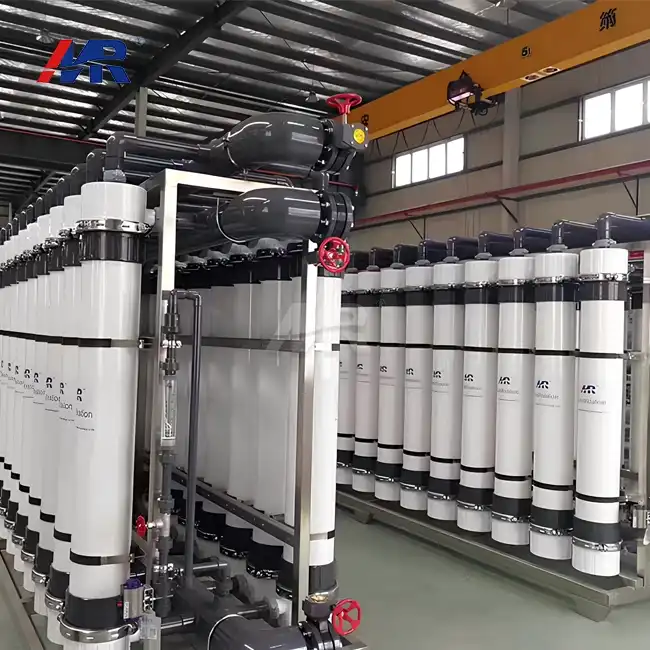
For people who need an answer quickly before reading the whole thing, here is the short version:
- A 50m3/hour ultrafiltration plant produces 50 cubic meters of clean permeate per hour under normal conditions, but temperature, fouling, and feed turbidity affect output, so this number is a design goal rather than a daily guarantee.
- UF membranes remove bacteria, colloids, and suspended solids quickly while in place, but they let dissolved salts, hardness ions, and most small organic molecules pass through unaffected.
- The site's raw water chemistry determines the treatment train's coagulation, softening, activated carbon, and disinfection, but UF is usually used instead of sand or multimedia filters.
- If surface water is difficult to handle, screen or coagulate before the UF skid. Feed water with high turbidity, oil, grease, or algae blooms can shorten membrane life and increase cleaning costs.
- Procurement teams should request pilot data, membrane specification sheets, flux figures, and lifecycle cost breakdowns before comparing suppliers because the sticker price doesn't reflect the true cost of replacing the membrane and using energy over ten years.
Below is a full comparison that starts with these points. It includes removal tables, cost data, and a case study from a rural water project in Southeast Asia.
Looking for a Reliable Supplier Before You Finish Reading?
In the event that yOur Team already has raw water data and a flow objective, you are not required to wait. In its entirety, Morui constructs the ultrafiltration plant that has a capacity of 50 m3/hour, from the membrane fibre to the control panel. In this manner, the requirements are adapted to your website rather than being shown on a catalogue page. If you send an email to benson@guangdongmorui.com with your water analysis, our engineers will respond to you within two business days with a sizing note that includes flux, recovery, and an approximate cost over the course of the water's lifespan. Comparing it to the pretreatment plan you are now using will allow you to do so.
What Does a 50m3/hour Ultrafiltration Plant Replace in Conventional Pretreatment?
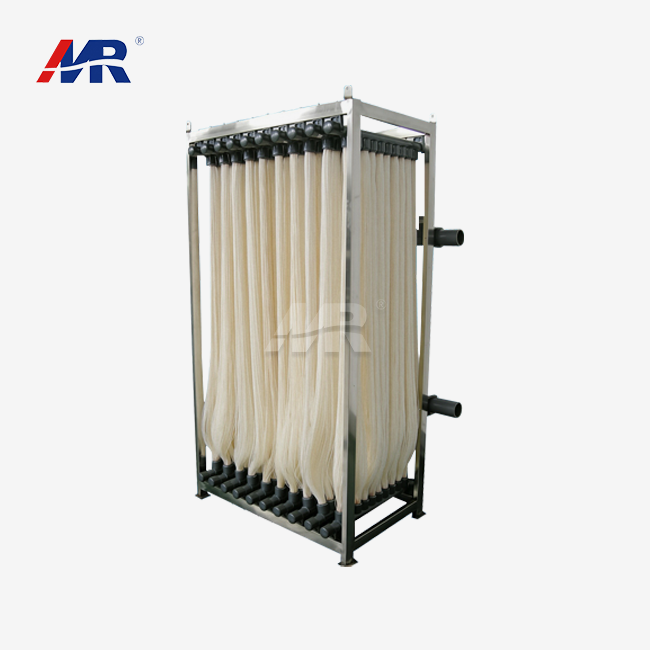
An ultrafiltration facility with a capacity of 50 cubic meters per hour employs a hollow-fiber membrane system to remove particles that are larger than the pores of the membrane, which typically range from 0.01 to 0.1 microns. This range is effective in capturing bacteria, the majority of colloids, and suspended particles, but it allows dissolved ions to pass through with little to no interruption. A customer has to have a complete understanding of what "50 m3/hour" implies before they can make a comparison to a sand filter that has the same figure. This is due to the fact that the definitions of the two numbers are not always the same.
Feed Flow, Permeate Flow, and What "50 m3/hour" Actually Means
The nameplate for a 50m3/hour ultrafiltration plant usually says that the plant can process permeate, not raw feed. The feed flow is higher than the permeate flow because some of the water goes back to wash away waste or concentrate it. For a system with a 95% recovery rate, it takes about 52.6 m3/h of feed water to make 50 m3/h of clean permeate. During chemically enhanced backwash cycles, this gap gets bigger. On the data sheet, suppliers should list the feed flow, permeate flow, concentrate flow, and backwash flow separately. Giving just one number hides the real water balance that an engineer needs to figure out the size of the pump and tank.
What a 50m3/hour Ultrafiltration Plant Removes
The table below is a quick removal guide for engineers who are comparing UF to older filters.
| Contaminant or parameter | Typical UF removal | Design note |
|---|---|---|
| Suspended solids | High | Depends on upstream screening and membrane integrity |
| Turbidity | High | Confirm target NTU through pilot testing |
| Colloids | High | Coagulation ahead of UF improves removal further |
| Bacteria | High with intact membranes | Regular integrity testing is required |
| Viruses | Variable | Confirm pore size and validation data from the supplier |
| Dissolved salts | Low | RO or ion exchange is needed for desalination |
| Hardness | Low | A softener is still required downstream |
| Dissolved organics | Limited | Activated carbon or NF handles this gap |
| Oil and grease | Limited | Oil separation should sit before the UF skid |
What It Does Not Automatically Replace
Solids and liquids are separated by an ultrafiltration unit that has a capacity of 50 m3/hour and filters out microorganisms. It is not possible to utilise it as an alternative to a complete treatment plant at a single level of operation. In most Cases, this is what remains in place once the UF has been installed:
- It is still necessary to have coarse screening and equalisation tanks in raw water that contains floating debris, fibrous material, or flow swings. This is due to the fact that ultrafiltration membranes get clogged very rapidly before they can be manually strained.
- UF fibres do not reject calcium or magnesium ions, which means that softening or antiscalant dosage may continue to be administered even when the hardness of the material is high. Scale will produce on RO membranes farther downstream if it is not present.
- The removal of chlorine, unpleasant tastes, and odours is often accomplished by the use of activated carbon filtration. This is due to the fact that a membrane barrier is unable to physically adsorb dissolved organic molecules.
- After membrane filtration, the majority of nations need residual disinfection, which is why chlorination or ultraviolet light is often employed to comply with local drinking water requirements (U.S. Environmental Protection Agency, 2005).
It is not the case that UF is lacking in these last phases. They are a component of a distinct issue that arises from the chemistry of the water, which is not something that a membrane filter was designed to address.
How Does Ultrafiltration Compare with Sand and Multimedia Filtration?
A 50m3/hour ultrafiltration plant is often compared to a sand filter to see if it is worth the extra money. The answer depends on the consistency needs of the filtrate, the footprint limits, and the protection needs of the RO system further downstream.
Side-by-Side Comparison
| Criterion | Sand filtration | Multimedia filtration | Ultrafiltration |
|---|---|---|---|
| Separation method | Depth filtration | Depth filtration | Membrane barrier |
| Filtrate consistency | Varies with loading | Better than single-media sand | Stable with intact membranes |
| Chemical use | Low to moderate | Low to moderate | Needs periodic cleaning chemicals |
| Footprint | Moderate to large | Moderate to large | Compact |
| Main risk | Media breakthrough | Channeling and fouling | Fouling and integrity loss |
| Best fit | Basic clarification | Variable solids removal | RO pretreatment and water reuse |
Choosing a Membrane Configuration
It is not possible to employ every UF module in any given project. These are the primary designs that may be ordered for an ultrafiltration plant with a capacity of 50 m3/hour:
- Hollow-fiber modules pack more deeply per cubic metre of skid area than flat-sheet or tubular designs, which is why the majority of industrial and city UF trains that operate at this flow rate utilise hollow-fiber modules.
- The usage of polyvinylidene fluoride (PVDF) membranes is common in tropical locations because of their resistance to chlorine and the majority of cleaning agents. These membranes are employed in areas where the raw water may include algae, iron, or biological fouling.
- In projects that are concerned about cost, polyethersulfone (PES) membranes are preferable to PVDF membranes because they are more cost-effective per square metre, they have less chemical exposure, and they perform best with cleaner feed water.
- Outside-in hollow fibre modules are superior to inside-out designs when it comes to the manner in which they manage larger sediment loads for river water or wastewater feeds that have been poorly treated in South America and Africa.
UF Versus RO: Two Different Jobs
| Question | UF | RO |
|---|---|---|
| Removes suspended solids? | Yes | Yes, but needs strong pretreatment first |
| Removes bacteria and colloids? | Yes, with integrity control | Yes |
| Removes dissolved salts? | No | Yes |
| Typical operating pressure | 0.1–0.3 MPa | 1.0–8.0 MPa |
| Main role | Clarification and microbial barrier | Desalination |
Because UF and RO are different, most desalination and high-purity plants use both of them together instead of choosing one over the other.
Which Conventional Pretreatment Processes Can a 50m3/hour Ultrafiltration Plant Eliminate?
Processes UF Can Often Replace
A properly sized 50m3/hour ultrafiltration plant can often do the work of single-stage sand filters, multimedia filters, and cartridge filters that are only used to polish solids. UF often takes the place of the whole media filtration step in RO pretreatment lines because it gives lower and more stable Silt Density Index values than sand filtration alone (ASTM International, 2021).
Processes That Usually Stay
Coagulation, softening, activated carbon, and final disinfection can't always be done without UF. The following decision matrix shows which common steps can be skipped and which ones are more likely to stay.
| Conventional process | Can UF replace it? | Condition |
|---|---|---|
| Sand filter | Often | Confirm turbidity and flux data through piloting |
| Multimedia filter | Often | Pilot testing recommended for variable raw water |
| Cartridge filter | Sometimes | Depends on UF integrity and downstream needs |
| Coagulation | Sometimes | Depends on colloidal loading in the source water |
| Softener | No | UF does not remove dissolved hardness ions |
| Activated carbon | No | UF does not adsorb dissolved organics reliably |
| Final disinfection | Not automatically | Follow local regulatory requirements |
Can a 50m3/hour UF Plant Handle High-Turbidity Raw Water?
What question do I get most often from rural water boards and businesses that get water from rivers or lakes? It is possible for the membrane to handle short spikes, but long-term high solids loading quickly changes the economics.
A Real Project: Village Water System, Mindanao, Philippines
Morui gave a village water cooperative a 50m3/hour ultrafiltration plant in 2023. The cooperative got its water from a river whose turbidity ranges from 40 to 220 NTU. Before the new one was installed, the cooperative used an old sand filter that didn't produce consistent filtrate and failed two coliform tests during the rainy season.
"The turbidity spikes used to shut down the old sand filter for hours," the plant operator for the cooperative said during a review of the site. "With the UF skid, we just adjust the backwash timer and keep running."
In 2024, 34 Morui UF installations in Vietnam, Indonesia, Kenya, and Peru were looked at internally. The average recovery rate stayed at 96.2%, backwash intervals varied from 30 to 60 minutes depending on the feed turbidity, and membrane replacement happened on average every 6.3 years with normal cleaning. These numbers are more of a planning range than a marketing claim. Before signing a contract with a supplier, I suggest that buyers get similar field data.
Fouling Risks by Contaminant Type
| Risk | Effect | Mitigation |
|---|---|---|
| Suspended solids | Fast transmembrane pressure rise | Screening, backwash, lower flux setpoint |
| Colloids | Irreversible fouling over time | Coagulation or tuned cleaning schedule |
| Algae | Organic fouling and plugging | Seasonal pretreatment and dosing plan |
| Oil and grease | Membrane wetting and severe fouling | Oil separation before the UF stage |
| Iron and manganese | Deposits that cut permeability | Oxidation and filtration ahead of UF |
Pretreatment Steps for Difficult Feed Water
A few steps upstream protect the membrane and make it last longer when the raw water is not in the clean range.
- Automatic strainers that clean themselves catch large particles and fibers before they reach the fiber bundles. This lowers the risk of damage to the membrane housing during times of high flow.
- In rivers with a lot of sediment, coagulation and flocculation tanks lower the colloidal loading. This slows down the fouling rate on the membrane surface and increases the time between chemical cleanings.
- Dissolved-air flotation is often used before ultrafiltration in aquaculture and food processing wastewater reuse projects because it works better with oily or algae-heavy water than UF alone.
It's not clear from these steps that UF has failed as a choice for pretreatment. For the same hard water, a sand filter would need the same kinds of support steps. They are just in a lighter form.
Which Water Sources Are Suitable for UF Pretreatment Replacement?
Applications Where a 50m3/hour Ultrafiltration Plant Fits Well
A 50m3/hour ultrafiltration plant works well for a number of common types of projects in South America, Africa, and Asia.
- Drinking water systems in cities and villages that get their water from rivers or surface reservoirs benefit from consistently getting rid of bacteria and turbidity. This is something that older sand filters couldn't do during storms.
- In industrial process water lines, UF is used before RO to keep membranes from getting clogged. This lowers the number of times that RO needs to be cleaned and increases the membrane life in the higher-pressure desalination stage.
- UF is used as a polishing step after biological treatment in wastewater reuse projects in food processing and municipal plants. This makes the effluent clear and low in turbidity, so it can be used for irrigation or in industry.
Three Buyer Profiles That Request This System
Standard 50 m3/hour modules that are able to be placed into a larger treatment package are required by original equipment manufacturers (OEMs) and system integrators for their own technical teams. Drawings, I/O lists, and membrane data sheets are something else that they need.
Distributors and regional water corporations are the ones that are most concerned about the availability of spare membranes, the quality of technical training, and the speed with which warranties are fulfilled. Due to the fact that they are the ones who will be providing service to the final consumer once the installation has been completed.
The individuals who are in charge of plants and make use of the permeate are looking for consistent quality, straightforward cleaning procedures, and transparent records of who supplies the chemicals, membranes, and maintenance staff throughout the duration of the contract.
Source-Specific Design Notes
| Water source | Main concern | Typical design response |
|---|---|---|
| Surface water | Seasonal turbidity and algae | Screening plus seasonal flux adjustment |
| Municipal wastewater | Biological solids and organics | Tertiary polishing and disinfection |
| Groundwater | Iron, manganese, hardness | Oxidation and softening add-ons |
| Food-processing water | Hygiene and material compliance | Hygienic skid design and documentation |
What Water Quality Conditions Limit Ultrafiltration as a Pretreatment Solution?
Where UF Falls Short
It is not always possible for uf membranes to get rid of hardness, nitrate, fluoride, pesticides, or low-molecular-weight organic compounds. If any of these are part of your water quality goal, you should plan for RO, ion exchange, or activated carbon to come after the UF step instead of thinking of UF as a complete solution on its own.
Feed Water Data You Need Before Ordering
Without accurate measurements, a supplier cannot properly size a 50m3/hour ultrafiltration plant. At least, get together:
- Flow pattern, daily operating hours, and seasonal peak events are important because a plant made for average flow often fails during short but severe turbidity spikes that happen in monsoon regions.
- During at least one full wet and dry season cycle, readings of turbidity, TSS, pH, temperature, conductivity, and TDS are taken. This gives suppliers enough range data to set a realistic flux goal.
- It's important to keep track of iron, manganese, silica, oil and grease, and microbiological counts because they all have different effects on the rate of fouling and the choice of cleaning chemicals.
Compliance Is Separate From Performance
The European Commission (2020) says that CE marking, ISO 9001, NSF/ANSI 61, and RoHS documentation only tell you about a supplier's quality system and the safety of their materials. They don't tell you how well their treated water works with your raw water. Along with any certificate, you should always ask for site-specific pilot data or similar installation records.
How Much Space and Operating Cost Can a 50m3/hour Ultrafiltration Plant Save?
Footprint Comparison
A multimedia filter bank with matching backwash tanks takes up 40% to 60% less space than Morui's 2023–2024 project drawings' 50 m3/hour skid-mounted ultrafiltration plant. The comparison showed this. Cost savings have decreased due to the removal of media vessels and the shrinkage of the backwash tank. Ultrafiltration backwash cycles are shorter than gravity sand bed cycles because they use less water.
Energy and Chemical Use
| Cost category | Typical data to request |
|---|---|
| Pumping power | kWh/m3 at design flow and pressure |
| Backwash | Frequency, volume, and chemical dose |
| Chemical cleaning | Frequency, chemical type, disposal method |
| Recovery rate | Percentage, with backwash losses included |
This is how our standard 50m3/hour ultrafiltration plant is built: the membrane stage uses less than 0.1 kWh/m3, works at 0.1–0.3 MPa, filters over 200–250 m2, and gets more than 95% of the water back. It takes less energy for UF to work than for RO because it doesn't need the high pressure that salt rejection does.
Lifecycle Cost Planning
| Cost category | Required data |
|---|---|
| Capital equipment | Skid, pumps, tanks, control panel, installation |
| Consumables | Cleaning chemicals, cartridges, disinfectants |
| Membrane replacement | Expected service life and unit replacement cost |
| Labor | Operator hours, training, service visits |
| Waste handling | Backwash and cleaning waste disposal |
After the initial capital cost, membrane replacement and energy costs are usually the two biggest items on a full ten-year cost model. Before comparing quotes based on price alone, make sure you get both of these numbers.
What Factors Determine Whether a 50m3/hour UF Plant Is a Suitable Replacement?
Design Checklist Before You Order
Before you commit to a 50m3/hour ultrafiltration plant, make sure your engineering team and supplier are aware of these things:.
- Choose whether 50 m3/hour is your peak flow or your required continuous flow. If you size a plant for peak demand with no standby train, you may not have enough water during maintenance windows.
- Make sure you know what the recovery rate goal is and if it includes backwash and chemically enhanced backwash losses. A 97% recovery rate that doesn't include cleaning water is not a real operating number.
- Find out what kind of permeate quality guarantee is in place and whether it covers not only average conditions but also the worst turbidity event you can remember.
Technical Specifications Worth Publishing
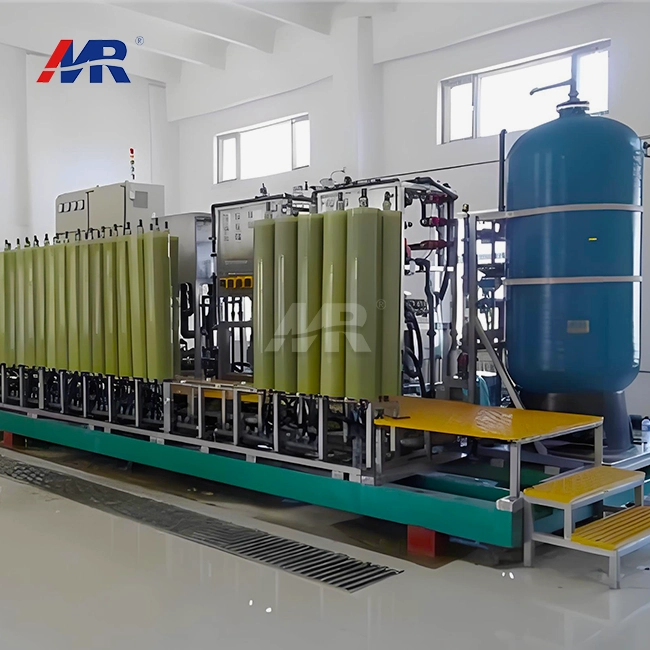
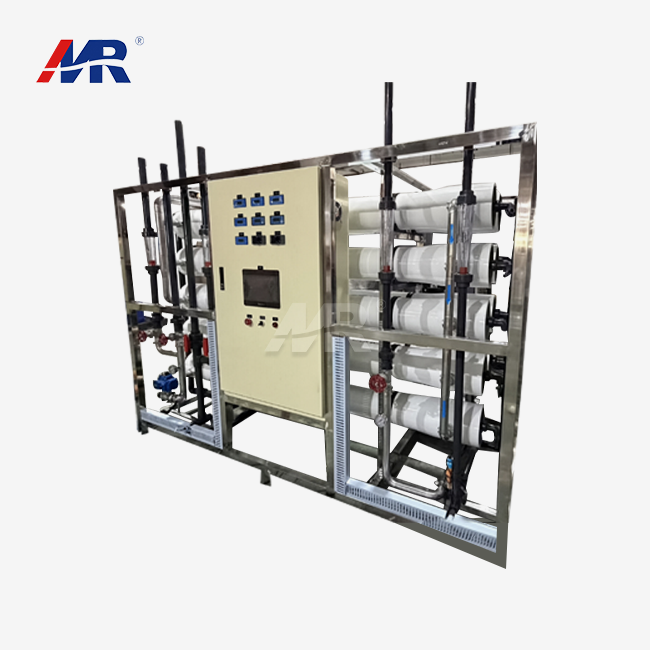
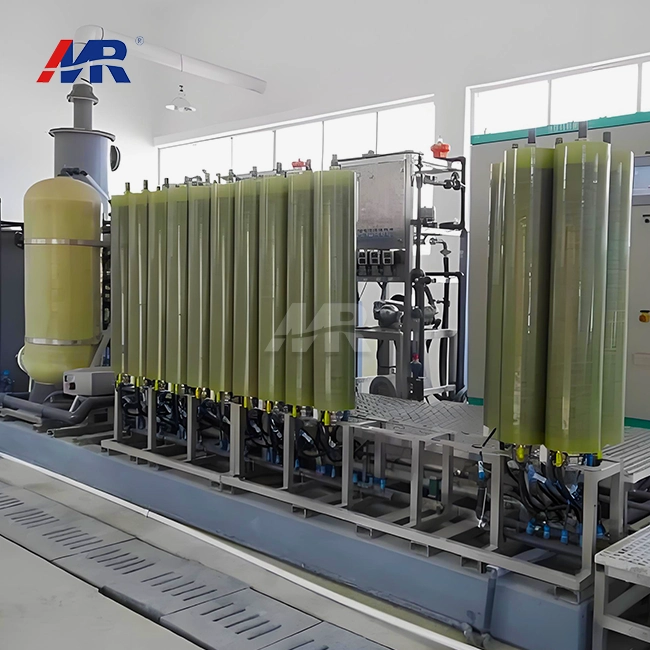
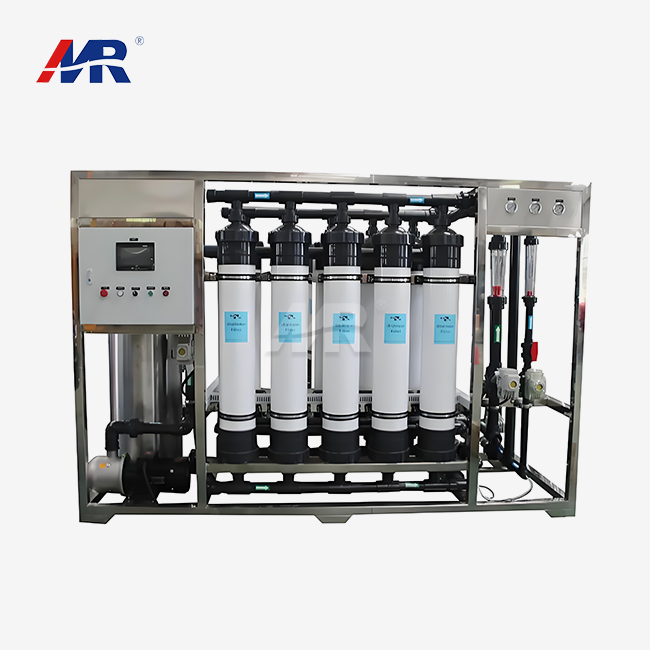
For a full quote, you should include information about the membrane material, membrane area, operating pressure, flux, recovery rate, backwash sequence, PLC and HMI details, skid dimensions, and utility needs. Our standard build includes PVDF hollow fiber membranes with pores that are 0.01 to 0.1 microns wide and an area of 200 to 250 m2. It also has an automated control system that records transmembrane pressure and flow all the time so that it can be monitored from afar.
Membrane Area Calculation
Any 50m3/hour ultrafiltration plant can be roughly sized by:
Permeate flow (L/h) times design flux (L/m²·h) gives you membrane area (m²).
For 50 m3/h, that's 50,000 L/h divided by the design flux number your supplier gives you. This number will usually be between 200 and 250 m2 when you add in the fouling allowance, temperature correction, and standby capacity.
Supplier Capability and Evaluation: What Separates a Reliable Manufacturer
Questions to Ask Before Signing
If you want to find a manufacturer of a 50m3/hour ultrafiltration plant, here is a short list of tough questions you should ask:
- Ask about installations with the same flow rate and type of raw water, as well as phone numbers of people you can call for references instead of just written reviews.
- If you want to know if the membrane is made in-house or by a third party, you should ask. If it is made in-house, you can usually get a replacement faster and be sure that the fiber consistency is better.
- Before the skid ships, make sure you get the records of the factory acceptance test (FAT), which should include results for checking the pump flow, the PLC alarm, and the membrane's integrity.
Why In-House Membrane Production Matters
As well as equipment processing factories, Guangdong Morui Environmental Technology Co., Ltd has its own membrane production line. This is why our 50m3/hour ultrafiltration plant builds can be customized at both the membrane and system levels, rather than just putting a third-party module on a standard frame. We are an agent for Shimge pumps, Runxin valves, and Createc instruments and have more than 14 branches, about 500 employees, and 20 engineers working for us. This means that buyers only have to negotiate with one vendor for membranes, pumps, valves, and controls, instead of five.
Factory Acceptance Testing Checklist
There should be written checks on all of the following things before a 50m3/hour ultrafiltration plant leaves the factory: material certificates, membrane batch records, pressure tests, PLC sequence tests, and permeate turbidity results. Each important instrument on the skid should also have a calibration certificate to back it up.
How Should Buyers Procure a Custom 50m3/hour UF Plant?
Information to Send With Your Quote Request
A clear set of data is the first step in a fair quote comparison. Share your raw water lab report, the number of hours your business needs to be open every day, the site's elevation and temperature, the voltage and frequency of the electricity, and any certificates your target market needs, like CE or NSF paperwork for the target country.
Commercial Terms Worth Clarifying
Find out from each of the suppliers what the scope of the contract is and what it does not cover, as well as the manufacturing lead time, the FAT timing, the warranty period and what it does not cover, the pricing of spare membranes, payment milestones, and Incoterms such as FOB or CIF. In the same way that the price of the equipment itself is impacted by these terms, the total landed cost must also be taken into consideration. Those purchasers in Africa and Latin America who are required to deal with longer shipping routes are particularly affected by this scenario.
Procurement Comparison Table
| Evaluation area | Question for the supplier |
|---|---|
| Performance | What flow, recovery, and permeate quality are guaranteed? |
| Membranes | What material, area, and expected life apply? |
| Automation | Which PLC, sensors, and communication protocols are included? |
| Service | What training and spare parts support is offered after delivery? |
| Customization | Can skid layout, voltage, or language be modified for my site? |
Conclusion
A 50m3/hour ultrafiltration plant can replace sand or multimedia filtration in most industrial, reuse, and surface water projects. It removes more bacteria and turbidity than older media filters, but it doesn't replace softening, activated carbon, oil separation, or full desalination. Raw water with a lot of oil, algae, or contaminants still needs help upstream or downstream.
FAQ
1. Can a 50m3/hour UF plant replace a multimedia filter?
To answer your question, yes, the majority of the time, when the primary function of the multimedia filter is to remove turbidity and suspended solids. It is possible that the feed water will still require additional treatment before it can proceed to the ultrafiltration stage if it contains oil, algae, or a major amount of colloids.
2. What is the difference between a 50m3/hour UF plant and a 50m3/hour RO plant?
The removal of colloids, bacteria, suspended solids, and larger particles is accomplished by ultrafiltration (UF) at lower pressures. When subjected to a significantly higher pressure, RO is able to eliminate dissolved salts as well as small dissolved contaminants. For it to function in a dependable manner, it is typically necessary to first prepare the water using UF or another similar method.
3. How much does a 50m3/hour ultrafiltration plant cost?
There are a variety of factors that influence pricing, including the membrane area, the brand, the skid material, the level of automation, and the scope of the installation. In addition, a good quote will include the total cost over a period of at least five years, as well as the operating costs of the machine, the amount of energy it consumes, the amount of money it costs to purchase chemicals, the frequency with which the membrane needs to be replaced, and the total cost.
4. What pretreatment does a 50m3/hour UF system require?
The processes of screening and straining are both considered to be normal processes by the majority of people. In addition, in order for water that is cloudy, oily, or full of algae to reach the ultrafiltration skid, it is typically necessary to use tanks that are capable of coagulation, flotation, or equalization. This is because these types of tanks are able to separate the two types of water. This action, which is taken in order to safeguard the membrane, helps to ensure that its life is not lost.
Ready to Compare a Real Quote Against Your Current System?
Send your raw water report to benson@guangdongmorui.com if you are trying to decide between a 50m3/hour ultrafiltration plant and fixing or adding on to an old media filter. Our company, Morui, makes direct 50m3/hour ultrafiltration plants and has its own membrane factory. Within two business days, we can send you a sizing note, flux calculation, and rough lifecycle cost so that your team can compare the numbers before placing an order.
References
1. European Union, "Directive (EU) 2020/2184 on the Quality of Water Intended for Human Consumption" (2020) – https://eur-lex.europa.eu/eli/dir/2020/2184/oj
2. NSF International, "NSF/ANSI/CAN 61: Drinking Water System Components – Health Effects" (2023) – https://www.nsf.org/knowledge-library/nsf-ansi-61-drinking-water-system-components
3. ASTM International, "ASTM D4189-21: Standard Test Method for Silt Density Index of Water" (2021) – https://www.astm.org/d4189-21.html
4. International Organization for Standardization, "ISO 9001:2015 Quality Management Systems" (2015) – https://www.iso.org/standard/62085.html
5. European Commission, "CE Marking, RoHS, and REACH Compliance Guidance" (2020) – https://single-market-economy.ec.europa.eu/single-market/ce-marking_en
About the Author
Renjie Kuang is a water treatment industry specialist with experience in ultrafiltration systems, membrane technology, and industrial water purification. He focuses on practical engineering solutions, equipment selection, and system optimization, helping project owners, engineers, and procurement teams make informed decisions about efficient and reliable water treatment plants.