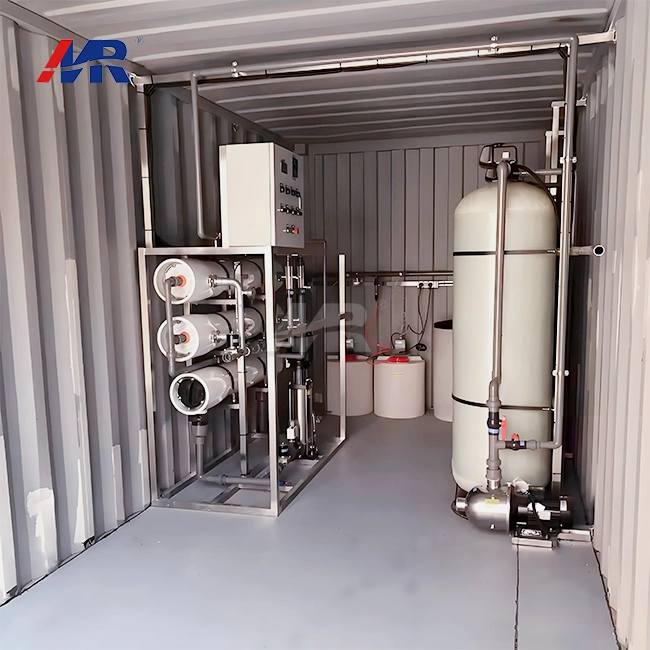
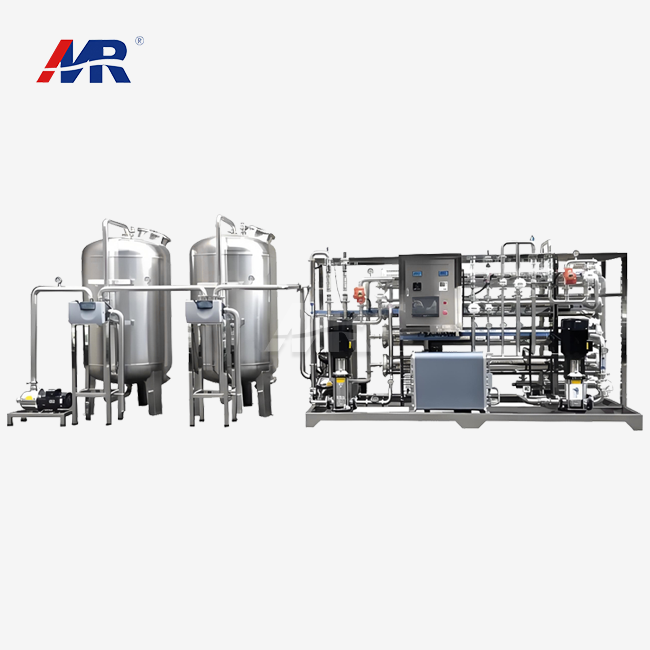
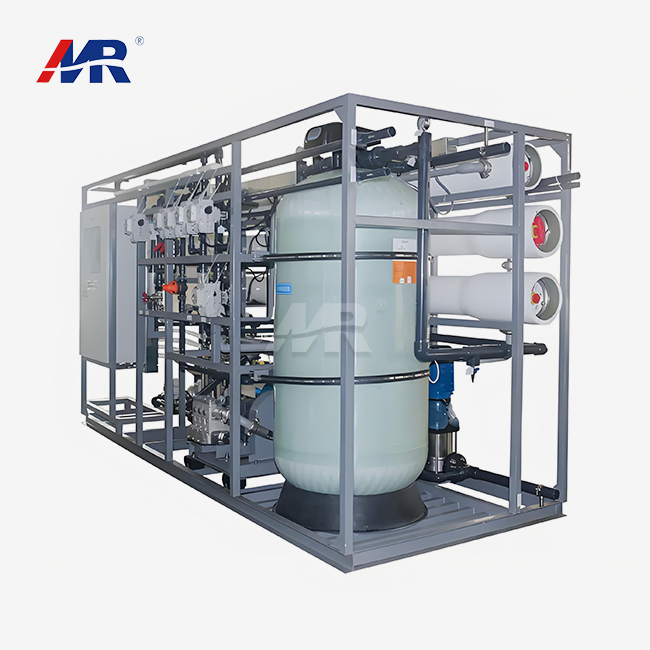
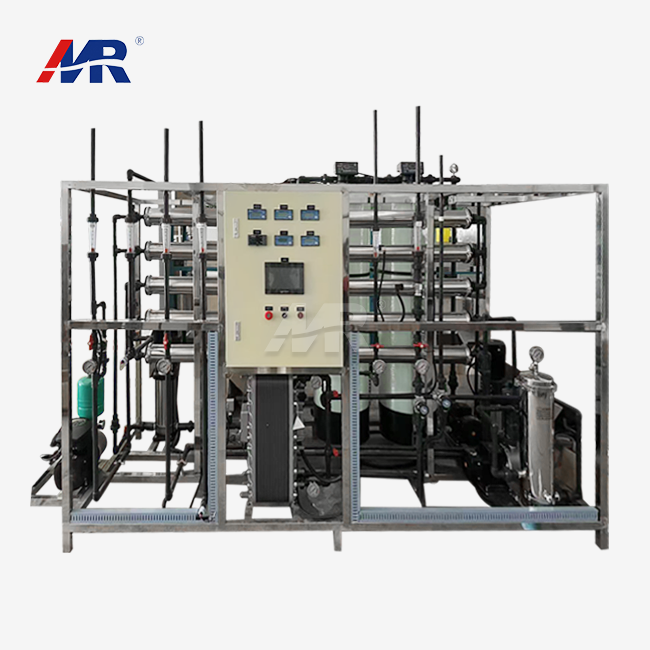
_1745823981883.webp)

Why Are Electrodeionization Systems Critical for Ultrapure Water Production
Electrodeionization systems are critical for ultrapure water production because they deliver consistent, chemically pure water at 18.2 MΩ·cm resistivity without acid or caustic regeneration. By combining ion-exchange membranes with a direct current electric field, continuous electrodeionization (CEDI) removes dissolved ions to parts-per-trillion levels around the clock. Industries like semiconductor fabrication, pharmaceutical manufacturing, and power generation depend on this level of purity to protect equipment, maintain product quality, and meet regulatory standards. No other single-stage technology matches this combination of output quality, operational uptime, and environmental compliance.
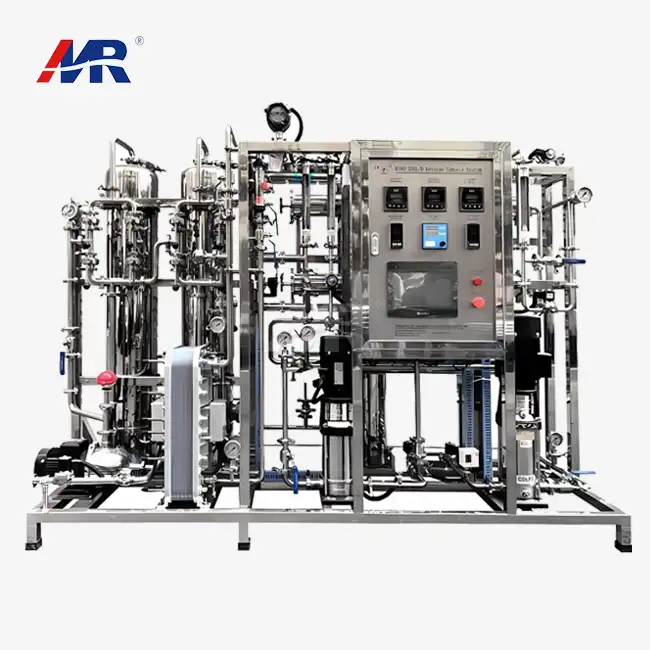
Understanding Continuous Electrodeionization Technology
How the Core Process Works
A low-voltage DC field, ion-exchange resin beads, and membranes that pick out cations and anions are all stacked together and sealed by CEDI. It is usually reverse osmosis permeate with a TDS level below 40 ppm that is used as feed water. The water moves through less concentrated areas where resin picks up ions that are dissolved in the water. Ions move through the selective membranes and into concentrate streams after being pushed by the electric field. There is no need to add chemicals because the resin keeps getting H⁺ and OH⁻ ions when it comes into contact with the membrane.
Self-Regeneration and Steady-State Operation
Since the resin regenerates electrochemically while the unit is running, chemical doses are not supposed to stop at set times. The way CEDI acts in steady state is different from other types of mixed-bed deionization. The output resistivity stays above 10 MΩ·cm during the production day and often gets to 18.2 MΩ·cm. This gives managers a solid and verifiable picture of the water quality that batch systems can't give.
Key Performance Benchmarks
When it comes to Morui's edi systems, the flow rate is between 0.5 and 50 m³/h, the recovery rate is above 90%, the power use is below 0.1 kWh/m³, the working pressure is between 3 and 7 bar, and the temperature range is 5 to 45°C. The numbers here are in line with ASTM D5127 standards for water that is safe for electronics and USP/EP standards for water that is safe for pharmaceuticals. This means the technology can be used in the strictest safety situations in the US market.
Continuous Electrodeionization vs. Traditional Water Purification Methods
Reverse Osmosis Alone Falls Short
Even though ro membranes can get rid of 95–99% of all dissolved solids, they can't always hit the sub-1 µS/cm conductivity that semiconductor and pharmaceutical processes need. Small amounts of silica, dissolved CO₂, and residual ions are often present in the RO permeate. These need to be removed in the next step, which is polishing. Here's what CEDI does: it takes RO permeate and turns it into really pure water, all without adding any chemical waste streams to the facility.
Mixed-Bed Ion Exchange Carries Hidden Costs
Mixed-bed deionizers make the same high-quality product as CEDI, but they need to be cleaned with sulfuric acid and sodium hydroxide every so often. For each regeneration event, the vessel has to be taken offline, neutralization wastewater has to be made, and chemicals have to be handled safely. These things all make it more expensive to hire people, more rules to follow, and more likely that something bad will happen. A plant with three 8-hour shifts can't afford unplanned downtime that has to happen at certain times to let things grow again.
Batch EDI vs. Continuous Operation
The quality of the result changes because older batch-mode continuous electrodeionization units need to change the voltage or take breaks every so often. Because CEDI never stops, drug fill lines and factories that make semiconductors get water with the same resistivity at 2 a.m. as at 2 p.m. People in the US who care about process validation and 21 CFR Part 11 data protection will really gain from this uniformity.
Why Electrodeionization Systems Are Essential Across Key Industries
There are three main areas where CEDI systems work, where the purity of the water has a direct impact on the outcome of the product and its legal status.
Semiconductor and Electronics Manufacturing
Salt or chloride, even in very small amounts, can hurt the gate oxide and cause output loss when chips are being made. CEDI is the last step in the process of making ultrapure water (UPW). It improves the water by getting rid of any ionic toxins that are still in it. Plants in the US that are building or upgrading UPW systems are picking CEDI over mixed beds more and more. This is because CEDI doesn't need the chemicals, secondary waste permits, or risk of resin exhaustion that come with standard deionization.
Pharmaceutical and Biotech Facilities
In both USP <1231> and EP 2.2.3, there are limits on how much energy can flow through WFI and filtered water. You can be sure that the water that CEDI makes meets these standards because it doesn't have the endotoxin spikes that can happen in regular deionizers after chemicals grow back. People who buy drugs can get IQ/OQ proof paperwork, material certificates, and sanitary pipe setups that meet FDA inspection standards from Morui. This stack of papers makes it easy for US teams that buy drugs to stand out.
Power Generation and Industrial Boilers
Some silica or sodium that is left over in boiler feed water makes high-pressure steam turbines rust faster. CEDI gets rid of silica to less than 10 µg/L and salt to parts-per-billion levels. This keeps the inside of the rotor safe and lowers the chance of something going wrong without warning. A power plant's engineers say that switching from chemical deionization to CEDI greatly reduces the quantity of chemicals used each year and the cost of getting rid of them. Also, the boilers are better able to handle chemicals.
Procurement Considerations for Choosing the Right EDI System
If you want to find the best EDI provider, you should do more than just look at the price per module. When people in the US decide what to buy, these are the things they look at most closely:
- Compliance documentation: Look for approvals for water contact from NSF, CE, and UL, as well as test records from a third party that show real resistance and TOC output data.
- Feed-water compatibility: Make sure the supplier can build the continuous electrodeionization stage around the quality of your RO permeate. If the CO2 level in the feed is more than 10–15 ppm, there needs to be a membrane degasser before the EDI stack to keep the resin space safe. Module lifespan and support: If you take good care of your CEDI modules, they should last between 7 and 10 years from a good maker. Before you sign the purchase order, make sure you get references, know if there are spare parts, and know how to keep an eye on the system from afar.
- Single-source fabrication: If the same company makes the RO, EDI, and UF in the same factory, they can keep an eye on the standards for the whole train. This lowers the chance of problems at the point where two steps of the process meet.
Not just the price of the tools, but also the total cost of ownership is based on these things. Most of the time, a system with full documentation and local service support will pay for itself in five years more than a cheaper unit that doesn't have as many tools for support after the sale.
Future Directions in Electrodeionization Technology
Energy Reduction Through Advanced Stack Design
The form of the membrane stack and the mass of the resin packing have a direct effect on the power draw. At the moment, the main goal of research and development is to lower the internal resistance in the dilute compartment. Some plans for the next generation say they will use 15–20% less power than the ones that came before. This is a big improvement over Morui's current systems, which already get 0.1 kWh/m³.
Digital Monitoring and Predictive Maintenance
They can now find membrane fouling or resin degradation weeks before it changes the quality of the output thanks to real-time resistivity monitors, conductivity emitters, and PLCs that are connected to the cloud. Remote tracking can be added to Morui's systems so that plant workers can see how the stack is working from anywhere. This feature works with the frameworks for predictive maintenance that more and more US semiconductor and drug manufacturing plants need.
Expanding Regulatory and Market Demand
More rules are being put in place by the US EPA about PFAS and other small pollutants that can get into commercial water. This is making facilities use treatment trains without chemicals. The zero-liquid-discharge method works well with CEDI because it makes a clean concentrate stream without adding regenerant chemicals. As runoff gets tighter in areas that use a lot of water, more people want CEDI as the best technology for polishing.
Conclusion
Continuous electrodeionization systems are used to make ultrapure water because they consistently produce pure water that can be checked and doesn't produce any chemical waste, have planned downtime, or change output in ways that are hard to predict. Modern industrial processes need resistivity, paperwork, and operating consistency. CEDI can give you these things. It doesn't matter if you run a high-pressure boiler loop, a semiconductor fab, or a pharmaceutical water system. Morui's RO+EDI systems are reliable, come with full documentation, and are reasonably priced. This is because the membranes are made in-house, and quality control is done by a single source from the design of the feed water to the output resistance.
FAQ
1. What feed-water quality does a CEDI system require?
To work, CEDI needs high-quality RO permeate with a hardness of less than 1.0 ppm and a TDS of less than 40 ppm. It is important to make sure that the RO pretreatment is done right before the EDI stack because hardness leads to internal scaling that slows down the membrane over time.
2. What resistivity level can a CEDI system reach?
It is possible for CEDI production to go over 10 MΩ·cm and even as high as 18.2 MΩ·cm with the right preparation. This is the theoretical highest for pure water at 25°C. Morui's systems have been shown to have resistivity above 10 MΩ·cm when everything is normal.
3. How long do CEDI modules typically last?
If you treat it right and keep an eye on it, a high-performance CEDI cell can last for seven to ten years. If biological fouling or scaling happens because of issues with the pretreatment, cleaning-in-place may be needed every once in a while. This does not mean that the resin needs to be chemically regenerated, though.
4. Does temperature affect system performance?
Yes, up to 35–40°C, it usually works better because as the temperature rises, the ions move around more. It can be anywhere from 5°C to 45°C in Morui's systems. By keeping an eye on the temperature within this range, you can protect the membrane and keep the output resistance fixed.
5. What is the difference between EDI and conventional mixed-bed deionization?
There is a lot of downtime and chemical waste when mixed-bed systems need to be refreshed with acid and caustic on a frequent basis. EDI uses an electric field to keep renewing the resin, which produces ultrapure water without stopping and without the damage that chemicals can do to the environment.
Partner with Morui for Your Continuous Electrodeionization Needs
The continuous electrodeionization systems that Guangdong Morui Environmental Technology Co., Ltd. makes range from small lab units that can handle 0.5 m³/h to big industrial trains that can handle 50 m³/h. They also make RO, EDI, and UF systems in-house, all in the same building. Continuous electrodeionization is a service provided by the dependable company Morui. They have paperwork that is NSF/CE-compliant, IQ/OQ validation packages, and the ability to connect to tracking systems from afar. You can contact our engineering team at benson@guangdongmorui.com and ask for a technical consultation and quote that is made just for your facility.
References
1. ASTM International. ASTM D5127: Standard Guide for Ultra-Pure Water Used in the Electronics and Semiconductor Industries. ASTM International, 2022.
2. United States Pharmacopeia. USP <1231> Water for Pharmaceutical Purposes. USP, 2023.
3. Walters, R. W., & Weiner, E. R. Electrodeionization: Theory, Techniques, and Applications. CRC Press, 2020.
4. Huang, C., & Xu, T. "Electrodialysis with Bipolar Membranes: Principle, Optimization, and Applications." Journal of Membrane Science, 2006.
5. Electric Power Research Institute. Water Treatment for Industrial Boilers and Cooling Systems. EPRI Technical Report, 2019.
6. European Pharmacopoeia Commission. EP 2.2.3: Conductimetry — Water for Pharmaceutical Use. Council of Europe, 2023.