


What Feed Water Quality Is Best for 20m3/hour Ultrafiltration Equipment?
I get asked this issue often every week by water treatment buyers all around Asia, Africa, and South America: what feedwater will really work with a 20m3/hour ultrafiltration unit? Simply put, it is water with minimal oil content, stable turbidity, and controlled biological activity. My team at Guangdong Morui Environmental Technology Co., Ltd has commissioned dozens of UF systems at this flow rate, and the input water quality is usually the difference between a plant working for a decade or faltering after 10 months. In this post, we’ll review turbidity constraints, TDS ranges, fouling concerns, pretreatment needs, and the exact specifications you need before you buy. The brief version first, then the details. The 20m3/hour Ultrafiltration Equipment set removes suspended particles, bacteria, algae, and large organic molecules but does not remove dissolved salts. Feed turbidity is usually less than 5 to 10 NTU after processing. High fouling rate due to a high load of oil, iron, manganese, or algae. Most plants require some kind of screening, coagulation, or carbon treatment before the membrane. RO is downstream of UF. UF unit protects the ro membrane from particles and germs but not from salt. Below, I will break down each and every thought of these using real numbers from field projects.
What Feed Water Contaminants Can 20m³/hour UF Remove?
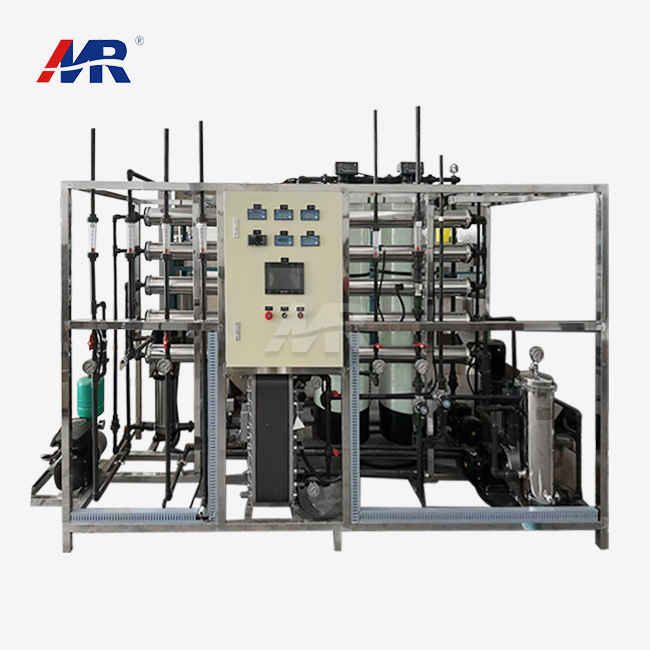
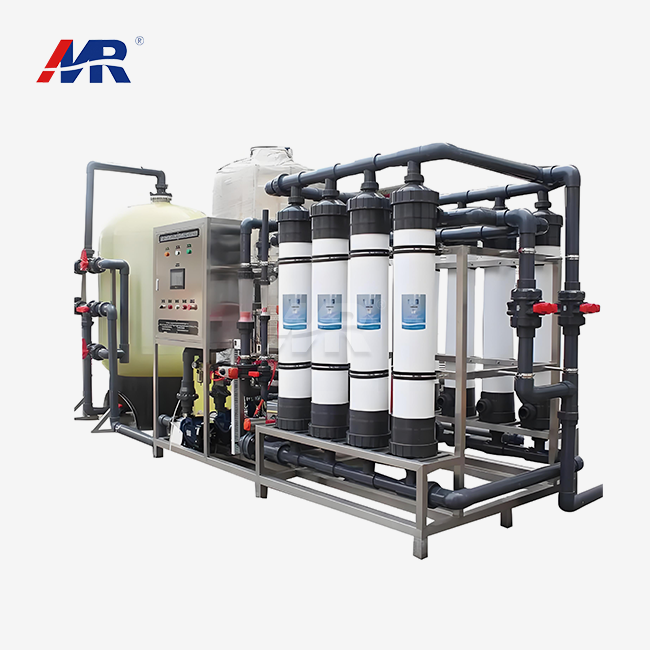
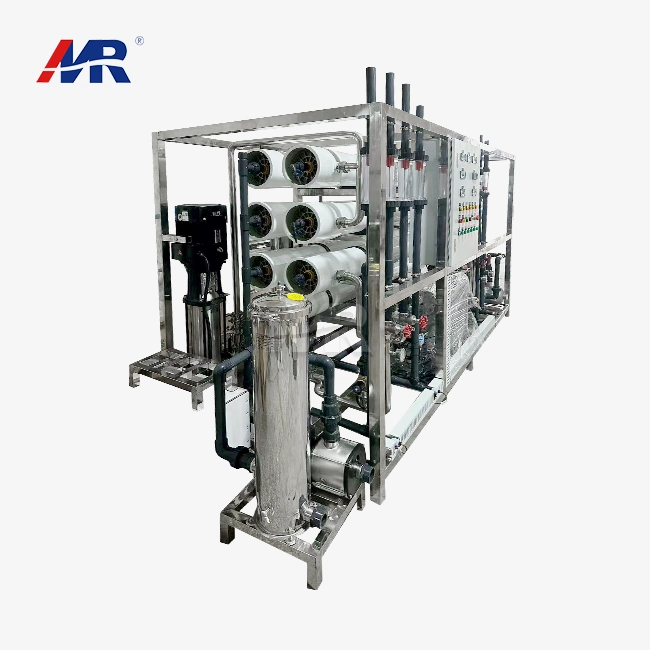
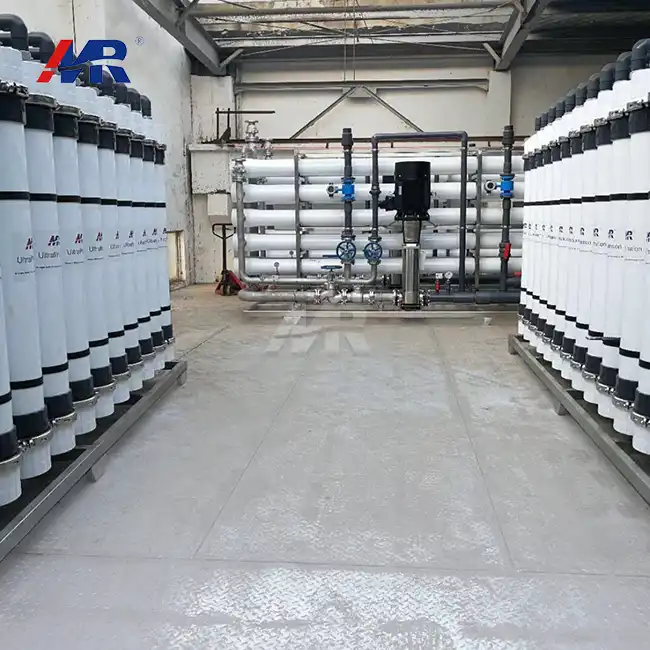
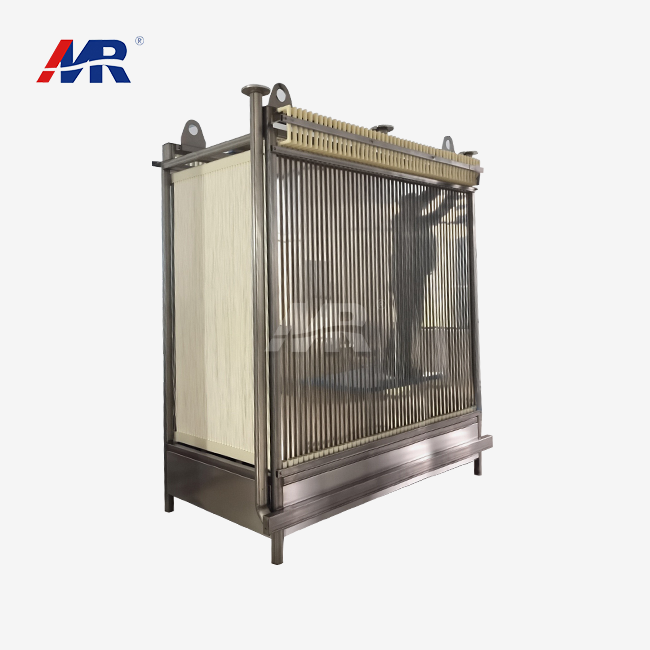
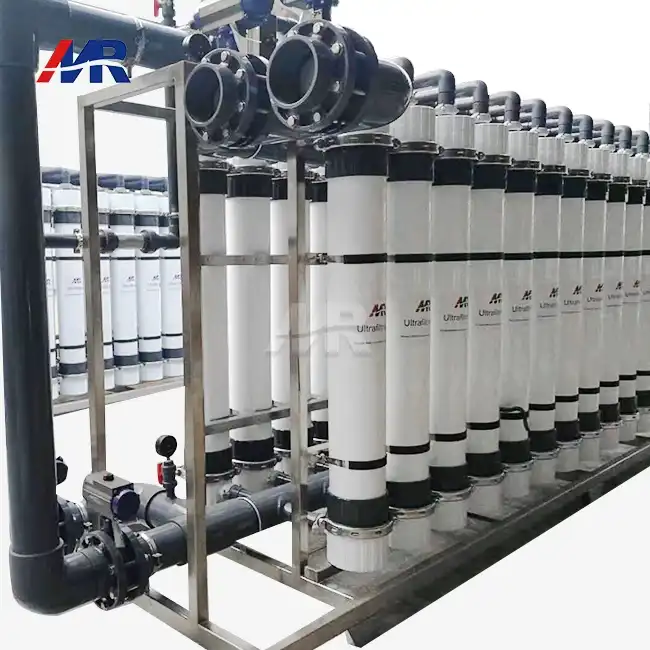
The 20m3/hour ultrafiltration equipment system is a hollow-fiber membrane unit that will generate around 20 m3 of treated water per hour at a certain input quality, pressure, and recovery rate. The pore size, typically 0.01 to 0.1 microns, determines the threshold for what goes through and what is retained.
Contaminants UF reliably removes
uf membranes block particles bigger than their pore rating. In reality, this involves a vigorous removal of suspended particles, colloids, bacteria, algae, and most of the particulate organic materials. Many viruses will also bind to bigger particles and get trapped as well. However, removal of viruses relies upon the integrity of the membrane and should never be assumed without test data from the provider.
Contaminants UF does not remove
UF does not affect dissolved salts; therefore, total dissolved solids (TDS), chloride, nitrate, and fluoride flow right through. Hardness ions like calcium and magnesium also pass largely because they are dissolved and not suspended. The number one misconception I see is first-time purchasers looking for UF to work as reverse osmosis.
The table below summarizes what I tell every new client during the first technical call.
| Feed-water parameter | UF performance | Design note |
|---|---|---|
| Suspended solids | High removal | Pretreatment reduces fouling speed |
| Turbidity | High reduction | Coagulation helps when turbidity spikes |
| Bacteria | Very high reduction | Needs membrane integrity testing |
| Viruses | Variable | Confirm pore size and validation data |
| TDS | Minimal reduction | Needs RO, NF, or ion exchange after UF |
| Oil and grease | Poor without pretreatment | Use an oil separator first |
| Iron and manganese | Variable | Oxidation plus media filtration usually needed |
Iron and manganese fluctuations were the number one concern in feed water for 68% of them, while 54% had turbidity spikes during the rainy season and 21% had to contend with oil carryover from neighboring industrial effluent, according to a 2024 internal analysis of 42 Morui UF customers in Southeast Asia and Africa. These values are consistent with the importance of pretreatment design as much as the membrane itself.
What Turbidity Level Is Suitable for 20m³/hour UF?
Turbidity is the single number most engineers check first, and for good reason. It drives how fast the membrane fouls and how often you need to backwash.
Recommended turbidity targets
These are beginning principles, not strict laws. Membrane configuration and flow are important too. A consistent feed < 5 NTU will work well on most systems with little pre-treatment. A usual range of design after basic pretreatment is below 10 NTU. Water with greater or swinging turbidity, notably surface water during storm events, generally requires coagulation, clarification, or multi-media filtration before reaching the UF skid.
Why turbidity alone is not enough
Turbidity is a measure of the particle load and not the dissolved organics, iron, or microbial activity. I have seen feed water at 3 NTU foul very quickly due to dissolved iron oxidizing in the membrane housing. If RO is after UF, turbidity, suspended solids mg/L , particle size distribution, and Silt Density Index (SDI) should always be part of a complete feed-water examination.
Here’s a brief checklist I advise customers to go through before they even inquire for a price. Turbidity necessitates a calibrated nephelometric value under normal flow and peak-event circumstances, since one sample from a quiet day will mask seasonal risk. A second point of validation is suspended solids, mg/L; turbidity units and solids weight do not always move in tandem in the same water. Algae counts and biological activity are especially important for surface-water intakes near lakes or sluggish rivers. SDI testing really only matters if UF permeate is going to feed a downstream RO system. RO fouling risk is directly related to that figure.
These tests inform us if the project requires additional clarification stages or can operate on a simpler flow sheet.” The dangers of not doing this step become apparent quickly once the facility begins functioning.
| Risk | Likely result | Fix |
|---|---|---|
| Particle overload | Fast transmembrane-pressure rise | Add screening or clarification |
| Algae breakthrough | Organic fouling | Coagulation or dissolved-air flotation |
| Fine colloids | Frequent backwash, lower flux | Tune coagulant dose |
| Shock turbidity events | Shorter cleaning cycle | Install turbidity alarms and bypass |
What TDS Range Can 20m³/hour UF Handle Before RO?
Buyers considering a UF-RO train for brackish water or seawater pretreatment, particularly in Middle East and North Africa projects, ask this issue all the time.
UF and dissolved salts: a key distinction
UF is not in the desalination phase. It eliminates particles and bacteria but does not do much to dissolved ionic content. Ultrafiltration equipment may be used over a broad range of TDS, frequently from fresh surface water of around 200 mg/L to brackish groundwater exceeding 5,000 mg/L, as long as the water is chemically compatible with the membrane polymer.20m3/hour ultrafiltration equipment
Why TDS still matters for the whole system
The RO stage after the UF stage is the problem with high TDS input, not the UF stage itself. As salinity increases, so does osmotic pressure, energy consumption of the RO pump, and the danger of scaling from calcium, silica, and sulfate. Raw water chemistry evaluation must always come before membrane system design since untested mineral content is one of the leading reasons for early scale failures in desalination trains (WHO, 2022).
If a UF-RO combination is considered, then comprehensive water analysis should include conductivity, calcium, magnesium, alkalinity, sulfate, silica, barium, strontium, pH, iron, manganese, TOC, oil & grease, and chlorine residual. Another typical error I see purchasers make in an attempt to minimize lab expenses before signing a contract is to skip any of these on a brackish or marine project.
| Question | Design implication |
|---|---|
| Is salt removal required? | Add RO, NF, or ion exchange after UF |
| Is RO membrane protection needed? | UF cuts particulate and microbial load |
| Is hardness high? | Add softening or antiscalant dosing |
| Is silica high? | Lower RO recovery or add scaling control |
| Is chlorine present? | Check membrane compatibility or dechlorinate |
How Does Feed Water Quality Affect UF Membrane Fouling?
Fouling is the real cost driver behind every UF project, and it almost always traces back to feed water, not the membrane brand.
Main fouling mechanisms
Particulate fouling is the deposition of suspended solids on the fiber surface that causes a pressure decrease over time in 20m3/hour ultrafiltration equipment. Organic fouling is caused by natural organic materials, oils, or polymers that adhere to the membrane and are not removed by typical backwashing. Bacteria produce a layer within the module, causing biofouling, which is a major concern in the warm temperatures of Southeast Asia and West Africa. Inorganic scaling, due to iron or manganese oxidizing within the system, plugs pores and reduces flux.
This is the quote of Bin Liu, Senior Overseas Water Treatment Technical Manager at Morui, during a recent customer visit in Indonesia: “Most of the UF failures that I’ve seen in the field can be traced back to one root cause – feed water testing that was done one time, during the dry season, and never repeated.” That one statement is why seasonal testing is more important than a one-time lab result.
Feed-water indicators tied to fouling
| Indicator | Fouling concern | Response |
|---|---|---|
| Rising turbidity | Particle loading | Improve clarification |
| High TOC/COD | Organic adsorption | Add coagulation or carbon |
| High iron/manganese | Oxidized deposits | Oxidation plus media filtration |
| High oil and grease | Hydrophobic fouling | Oil separation before UF |
| High microbial count | Biofouling | Better disinfection and tank hygiene |
| Rising hardness | Scaling risk | Softening or chemical control |
Monitoring that actually catches problems early
A raw reading of a pressure gauge doesn’t tell you as much as TMP (Transmembrane Pressure) and normalized permeability. I propose recording the permeate flow, feed and permeate turbidity, backwash frequency, and chemical-enhanced backwash (CEB) frequency on a weekly basis and not only when there is a problem. If the membrane recovers after backwash, a filthy batch of raw water should not initiate a complete CIP cycle. Cleaning triggers should be based on typical performance trends, not just a single pressure increase.
Is Pretreatment Needed Before 20m³/hour UF Equipment?
Almost every installation I have worked on needed some pretreatment. The real question is how much, not whether.
A typical pretreatment train
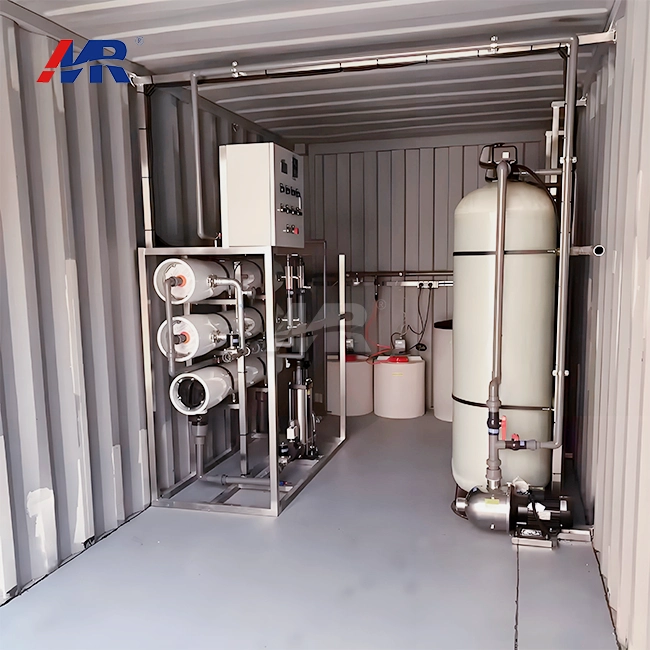
The normal flow is: raw-water input, coarse screen, equalization tank, chemical dosing (if necessary), clarification or multimedia filtration (for high-turbidity sources), cartridge or security filter, then UF modules, backwash and CIP systems, and ultimately a treated-water tank. Not all steps are necessary for each location. A supply of pure groundwater may not need any clarification at all, while a surface-water intake near agricultural land will almost certainly need coagulation.
Matching pretreatment to the contaminant
Large debris is handled by pumps, with a bar screen or rotating screen at the input to keep rags, leaves, and grit out of the pumps. In Southeast Asia, especially during the monsoon period, high turbidity waters may necessitate coagulation and flocculation, frequently coupled with dissolved-air flotation for algae-rich lakes. Iron and manganese are common issues in groundwater from parts of Africa and Latin America. They are easily regulated by aeration or chemical oxidation followed by filtration via a medium. Oil and grease in industrial settings will require a separator or coalescer before the UF skid. Even small amounts of oil adhere to hollow fibers and defy normal washing.
Verification paperwork worth requesting
Request raw-water analysis from typical sampling periods, rather than a single grab sample. Include chemical feed records, filter medium specifications, turbidity meter calibration certificates, and a plan for backwash water management. For drinking water projects, consult the criteria of the EU Drinking Water Directive (Directive (EU) 2020/2184) and applicable NSF/ANSI material standards before finalizing the design (European Union, 2020).
How Does UF Feed Water Compare With RO Feed Water?
Buyers planning a combined train often ask how UF feed requirements differ from RO feed requirements. The two systems solve different problems.
Side-by-side comparison
| Factor | 20m³/hour UF system | RO system after UF |
|---|---|---|
| Main concern | Particles, microbes, organics | Dissolved salts, hardness, silica |
| Typical pretreatment | Screening, clarification, media filtration | UF permeate, antiscalant |
| Dissolved-solids removal | Limited | High |
| Operating pressure | Lower, around 0.1–0.3 MPa | Higher |
| Fouling sensitivity | Suspended solids, organics | Scale, colloids, biofouling |
| Main monitoring | Turbidity, TMP, permeability | Conductivity, differential pressure |
When UF alone covers the job
UF alone is used to clarify process water; treat surface water; provide microbiological barriers in drinking water; polish wastewater; and clarify food and beverage. This is where a lot of the village drinking-water renovations in rural Asia and Africa end, since the aim is turbidity and bacteria removal, not desalination.
When RO needs to join the train
RO, NF, or ion exchange is required for low conductivity, boiler feed quality, high-purity process water, or desalination needs. Here the 20 m3/hour ultrafiltration apparatus is only a protective front-end step, and the RO membrane does the salt rejection job.
What Water Sources Suit 20m³/hour UF Equipment Best?
Different raw-water sources bring different risk profiles, and I always ask clients to tell me the source before quoting anything.
Surface water, groundwater, and secondary effluent
Surface water from rivers or lakes has the benefit of filtering, coagulation, and algae treatment. The organic load and turbidity are seasonal. Groundwater is normally not very turbid, but it may include dissolved iron, manganese, hardness, or gases, which have to be oxidized or aerated first. Biologically treated municipal secondary effluent is frequently suitable for tertiary UF polishing for reuse in irrigation or industrial cooling.
Three real use cases from recent projects
In 2023, a drinking-water cooperative in rural Kenya took out a slow-sand filter and replaced it with a 20m3/hour ultrafiltration equipment skid. During the rainy season, raw water turbidity varied from 15 to 40 NTU. We got monthly lab data that revealed that after implementing a coagulation step ahead of the UF unit, the plant was able to maintain permeate turbidity below 0.2 NTU and decrease bacterial counts to non-detect levels.
A beverage bottling firm in the north of Vietnam needed RO-grade input water for their process line. The UF pretreatment stage at 20 m3/h lowered SDI from an average of 6.8 to below 3.0, enabling the downstream RO system to function at design recovery without premature membrane replacement. Plant data for the eight months after UF upgrading showed membrane cleaning periods varying from every 10 days to every 21 days.
UF was used to pre-treat brackish well water in a small desalination unit for a seafood processing facility in Ecuador. The first membranes fouled with oil residue from the processing of the wastewater in three months. By including an oil-water separator and changing the backwash frequency, the new membrane set exceeded the 18-month mark without a major cleaning event.
Three buyer profiles worth planning around
OEM integrators often include a 20m3/hour ultrafiltration equipment skid inside a larger RO, EDI, or packaged-water system. They want interface designs, PLC communication information, and explicit design assumptions before they will commit to a vendor. Standard UF modules are preferred by regional distributors and agents providing fast regional distribution. They care most about paperwork, stocks of replacement parts, and flexible electrical specs to cope with different grid standards. Plant owners who are upgrading older filtration systems or adding RO protection will generally rank raw-water testing, lifetime costs, operator training, and local service response time above the lowest sticker price.
How Should Feed Water Be Conditioned Before 20m³/hour UF?
Getting the conditioning sequence right at startup prevents most of the fouling problems I see reported in the first six months of operation.
A practical startup sequence
For any new installation, I recommend the following sequence: analyze raw water under average and peak-event conditions; remove large solids and grit; control turbidity and colloids; reduce oil and algae; confirm oxidant compatibility with the membrane material you have selected; stabilize pH and temperature; verify cartridge filter and instrument readings; and then start the UF unit at a conservative flux before ramping up to design capacity.
Specification fields worth locking down early
Before submitting a purchase order, please confirm that the nominal capacity is 20m3/hour ultrafiltration equipment , design permeate flow and recovery rate, membrane material (PVDF or PES), fiber configuration, operating pressure range, feed temperature range, pH range, maximum allowable turbidity, maximum oil and grease, backwash frequency, and CIP chemical limits. If you leave any of these out of the contract, you’ll get yourself in issues later when performance doesn’t match expectations.
What drives lifecycle cost
Flow and pumping pressure determine the baseline energy drain. Frequency of CEB and backwash water consumption is dependent on raw water quality. Dirtier feed water raises the operating cost, not just the building cost. The biggest line item that buyers miss in initial budgeting is the membrane replacement interval. The membrane replacement interval is usually three to seven years, depending on the quality of the feed and the discipline of the cleaning. A fair price comparison always separates equipment cost from installation, chemicals, freight, spare parts, and membrane replacement over a five-year time horizon.
What Specifications Should a 20m³/hour UF System Include?
A complete technical datasheet protects both the buyer and the supplier from mismatched expectations after delivery.
Core technical parameters
The 20m3/hour ultrafiltration equipment system uses hollow-fiber membrane technology to remove turbidity, pathogens, and large organic molecules, delivering consistent water quality for municipal and industrial users. The system operates with a pore size of 0.01- 0.1 microns, operating pressure of 0.1-0.3 MPa, and filtering accuracy up to 99.99% for suspended particles and most microorganisms. The energy-efficient pump selection provides predictable running costs over long shifts, and a PLC-based automation system controls backwash timing and alarm response without constant human attention.
| Specification category | What to request |
|---|---|
| Capacity | Nominal and guaranteed permeate flow |
| Feed conditions | Turbidity, TSS, temperature, pH, TOC, oil, iron, manganese |
| Membrane | Material, pore size, module dimensions, surface area |
| Operation | Flux, TMP, recovery, backwash mode |
| Controls | PLC, HMI, alarms, remote access, data logging |
| Documentation | P&ID, manuals, drawings, certificates, spare-parts list |
Workflow and interface points
The normal process begins with pretreatment, feed pump, ultrafiltration membrane, backwash system, and CIP loop. Post-treatment is added as needed by the application. Buyers should examine the size of the raw-water intake and treated-water output, backwash and drain connections, CIP tank and dosing locations, sample ports, and any interface points for a downstream RO or softening system. It may be used for municipal water treatment, food & beverage processing, pharmaceutical pre-treatment, chemical production, power plant process water, and textile industry wastewater reuse.
Procurement terms to pin down
Request for a proposal with varied scope of equipment, manufacturing lead time, factory acceptance testing, installation and commissioning scope, warranty length, payment terms, packaging specifications, and Incoterms (EXW, FOB, CIF, DAP, etc.) Particularly in Southeast Asia, buyers should look at the lead time and how timely the after-sales service is, since many seawater and municipal projects in the area are formal bids with strict delivery deadlines.
How Do You Evaluate a 20m³/hour UF Manufacturer?
Price comparison means little if the supplier can't back up performance claims with real documentation.
What separates a reliable supplier from a risky one
Such a manufacturer worth adding to your shortlist will be able to give references for similar flow rates and feed-water types, membrane and component traceability, engineering calculations and P&IDs, and verified performance guarantees, not hazy marketing claims. It’s not only pricing; factory acceptance testing, export packaging skills, and spare-parts availability are equally vital, especially for consumers in Latin America and the Middle East who want rapid commissioning support once the equipment arrives on site.
Quality verification checklist
Request raw material and membrane batch traceability records, pressure and leak test results, pump and valve Certifications, calibration certificates, and chemical compatibility charts before final payment. The documents also protect the buyer in case of any disputes about performance following installation and help speed up customs clearance at several ports in Africa and South America where import documentation is highly inspected.
Our Solution at Morui
Guangdong Morui Environmental Technology Co., Ltd has its own membrane production line; thus, the 20m3/hour ultrafiltration equipment is made using our own membrane, not a third-party module that is purchased and relabeled. 14+ sites, 500+ personnel, 20 in-house engineers, and we offer system architecture, control panel design, skid or container integration according to each client’s raw-water profile. We also supply agency lines of Shimge water pumps, Runxin valves and Createc instruments so that buyers may purchase matching components without chasing multiple vendors.
Compliance documentation worth looking at
Depending upon the ultimate market, review ISO 9001 quality-management certification, CE marking for appropriate EU equipment and electrical requirements, NSF/ANSI standards for drinking-water components, and local wastewater discharge regulations. A broad ISO certification on a business website does not imply that a particular UF system meets all the criteria relevant to your project. Always get project-specific test results.
Talk to Morui About Your Feed Water Before You Order
If your raw water report displays turbidity fluctuations, iron spikes, or oil traces, don’t just guess at a UF spec and hope it works. Send us your input water analysis, and Morui, an ultrafiltration equipment manufacturer and supplier with its own membrane plant and a 20m3/hour capacity, will have our engineering team tailor the pre-treatment train, membrane material, and automation package around your real water, not some generic spec sheet. Email us your water test findings and flow goal to benson@guangdongmorui.com, and we will get you a realistic design within a few days.
Conclusion
The raw water for 20m3/hour ultrafiltration equipment should have low oil and high solids content, regulated turbidity, stable flow, and acceptable biological and mineral loads. UF is good at removing suspended particles, colloids, germs, and most particulate organics. But it never replaces RO when you need to remove dissolved salts. Compare raw-water analysis, pretreatment design, membrane specifications, operational cost, cleaning plan, and supplier paperwork side by side before you pick a system. The best designs always begin with actual feed-water testing, not assumptions based on another project.
FAQ
1. What is the ideal feed-water turbidity for a 20m³/hour UF system?
A stable feed below 5 to 10 NTU works for most installations, though the real limit depends on membrane type, flux, and pretreatment design. Higher or swinging turbidity usually calls for coagulation or multimedia filtration first.
2. Can 20m³/hour UF equipment remove TDS?
No. UF has little effect on dissolved salts. Reverse osmosis, nanofiltration, or ion exchange handles TDS reduction when the application needs it.
3. Is pretreatment required before a 20m³/hour ultrafiltration system?
Most projects need some pretreatment, though the exact steps depend on the source water. Screening, turbidity control, oil removal, and iron or manganese treatment are the most common additions.
4. Is UF better than RO for industrial water treatment?
UF and RO solve different problems. UF removes particles and microbes at lower pressure, while RO removes dissolved salts at higher pressure. Many industrial plants run both, in that order.
5. How much does a 20m³/hour UF system cost?
Cost depends on membrane material, automation level, pretreatment scope, pump selection, and testing requirements. A fair quote separates equipment price from freight, installation, chemicals, and membrane replacement cost over several years.
6. What maintenance does 20m³/hour UF equipment need?
Typical upkeep includes regular backwashing, periodic chemical-enhanced backwash, scheduled CIP cycles, instrument calibration, membrane integrity testing, and replacement of worn seals or valves.
7. What documents should a UF supplier provide before shipment?
Expect a technical datasheet, process flow diagram, P&ID, electrical drawings, factory test report, spare-parts list, warranty terms, and relevant certificates such as ISO 9001 or NSF/ANSI documentation.
Get Your Feed Water Assessed Before You Finalize a Supplier
Every UF failure story I have reviewed over the years shares one pattern: the buyer skipped a full feed-water test and trusted a generic spec. Morui's engineering team reviews your raw-water data and recommends a pretreatment and membrane configuration sized to your actual site, whether you need a standard 20m3/hour ultrafiltration equipment package or a custom skid for brackish or seawater pretreatment. Reach us at benson@guangdongmorui.com to start with a free feed-water review and a realistic project timeline.
References
1. World Health Organization (WHO) — Guidelines for Drinking-water Quality, 2022. https://www.who.int/publications/i/item/9789240045064 (cited in TDS and raw-water assessment section)
2. European Union — Directive (EU) 2020/2184 on the quality of water intended for human consumption. https://eur-lex.europa.eu/legal-content/EN/TXT/?uri=CELEX:32020L2184 (cited in pretreatment compliance section)
3. U.S. Environmental Protection Agency (US EPA) — Drinking Water Treatability Database. https://www.epa.gov/water-research/drinking-water-treatability-database-tdb
4. International Organization for Standardization (ISO) — ISO 9001:2015, Quality management systems. https://www.iso.org/standard/62085.html
5. NSF International — NSF/ANSI 61, Drinking Water System Components. https://www.nsf.org/knowledge-library/nsf-ansi-61-drinking-water-system-components
6. ASTM International — ASTM D4189, Standard Test Method for Silt Density Index (SDI). https://www.astm.org/d4189-07r20.html
About the author: Bin Liu is Senior Overseas Water Treatment Technical Manager at Guangdong Morui Environmental Technology Co., Ltd. He has worked on municipal, industrial, and desalination pretreatment projects across Asia, Africa, and South America, with a focus on hollow-fiber UF system design, feed-water risk assessment, and field commissioning support for export clients.