


Containerized RO in 10ft, 20ft or 40ft Boxes: Match Size to Site
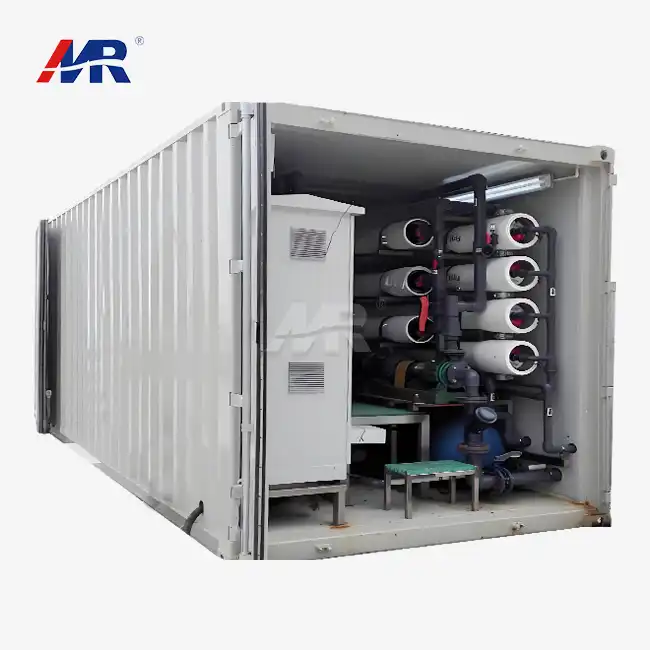
A containerized ro system should match the site's water demand, feedwater quality, pretreatment needs, power supply, and access, not just the shipping dimensions. In general, a 10ft box suits compact or rapid-response sites. A 20ft box balances capacity with maintenance access. A 40ft box or a multi-container plant suits higher flows, seawater duty, or complex pretreatment. At Morui, our units cover 10-500 m³/day and use corrosion-resistant stainless steel. Below, I explain how we match box size to site.
Start With the Site: Define Water Demand and Operating Conditions
Calculate Flow From Daily Demand and Operating Hours
Pick a simple number to begin with. How many hours will the plant be open? That's how much product water you need every day. Let's say a place needs 120 m³ of water every day for 20 hours. That place needs 6 m³ of water every hour. Add a little extra to account for seasonal highs, membrane age, and growth in the future. After that, check out the feed side. In order for our systems to work at their best, which is 75% recovery, they need to take in 8 m³/h of feed and throw away 2 m³/h of permeate. Most of the time, when people compare quotes, they don't separate these three flows. This can lead to pumps or boxes that are too small or too large. We need all three numbers to begin every project.
Confirm Feedwater Quality Before Sizing
Feedwater decides how much gear can fit in the box. Water on the surface, at sea, or treated wastewater needs better barriers to keep it safe than water in the ground that isn't cloudy. As a lab report, please send us the temperature, turbidity, hardness, iron, manganese, and chlorine. Based on the salt, the working pressure is set. Publications on desalination say that seawater plants usually work at 55 to 70 bar, while brackish systems work at much lower pressures. With more pressure, you can get more space on the floor, bigger pumps, and better lines. Temperature is also important because the output of the membrane goes down when the water is cold and up when it is warm. That's why we make sure we know the design temperature before we size.
Check Access, Foundation, and Climate
If the box can't get to the spot, the plan won't work. The outside of an ISO 668-20ft container is about 6.06 m long and 2.44 m wide. The outside of an ISO 668-40ft container is about 12.19 m long. A 10ft box is about 2.99 m long. There should be enough space on the road for a crane or truck and a flat base pad. Plan how the dirty water and water used to clean the floors will be drained. The weather also changes the plan. People who live in cold places need to insulate and heat their homes. People who live in hot places need airflow or cooling for the panels and fans. We have configurations for both hot and cold places, and the enclosure can be changed to fit.
Compare 10ft, 20ft, and 40ft Containerized RO Configurations
10ft Boxes for Compact and Rapid Deployment
A 10-foot box for a containerized ro system can be used for test runs, emergencies, small camps, and other places that aren't big enough for a bigger box. It's small, so it's easy to move and store. Because of its weight, it can often be put down by a forklift or small crane. It costs money to get space. The pumps, membrane vessels, controls, and small preparation train are all close to each other, making it hard to get to them. Chemical tanks and stores stay outside most of the time. This size is good if the feedwater is clean, demand is low, and technicians won't have to replace big parts very often. What if the water needs a lot of work before it can be used? A 10-foot enclosure might force people to make concessions that make upkeep take longer.
20ft Boxes for Balanced Capacity and Access
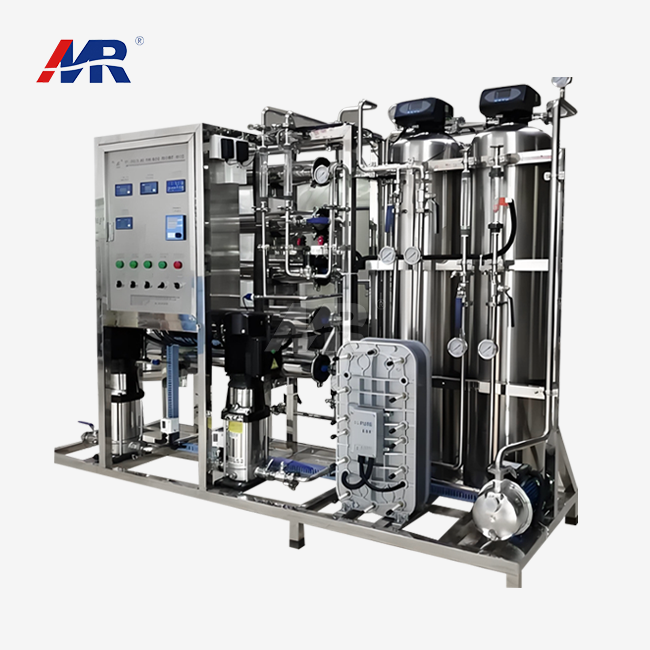
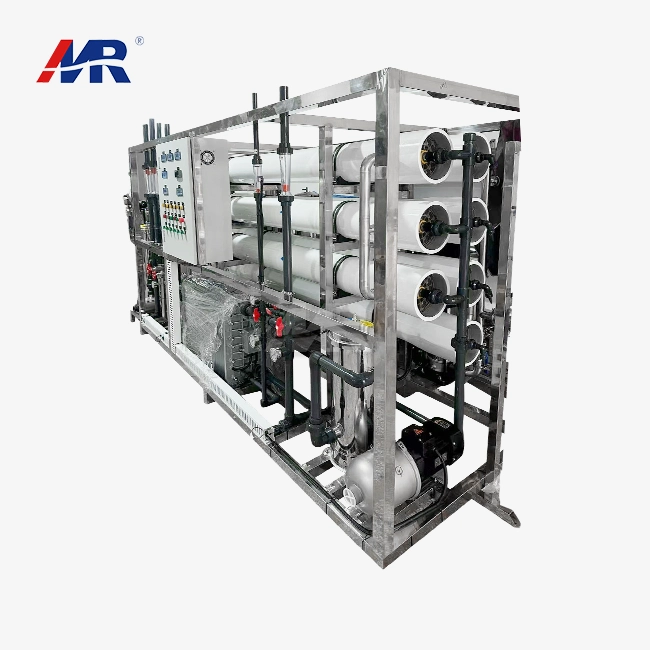
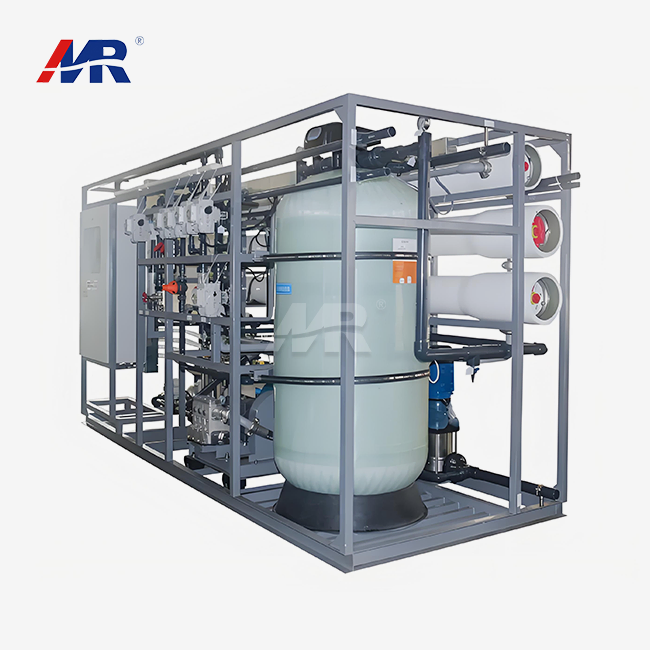
Businesses, factories, mines, and construction camps often use 20-foot containers for their work. It has a control panel, service paths, cartridge filters, high-pressure pumps, membrane tanks, cleaning connections, and room for multimedia or ultrafiltration pretreatment. Also, it doesn't go too far for normal sea freight or a lot of roads. At the plant, Morui builds the process, pipes, and electrical systems into the box. This way, when the unit gets to the job site, it is already ready to connect to power and water. So, a 20-foot box is just a starting point and not a promise. The final capacity will depend on the feedwater, recovery, and preparation.
40ft Boxes and Multi-Container Plants
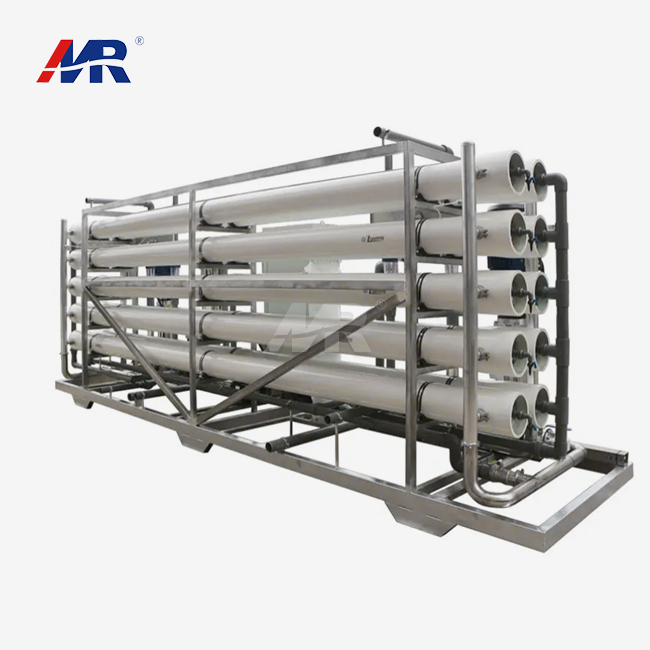
In a 40-foot box or several containers working together, you can get higher flows, remove salt from seawater, do complicated pre- and post-treatments like remineralization and pH change, and more. The extra length makes the service aisles bigger and the places for chemicals, wet materials, and electricity more separate. There are times when several smaller boxes work better than one big box. If there are two, one can stop to clean while the other keeps going, and the capacity can slowly rise. You don't have to work as hard to move containerized RO parts as a set building. They keep tools outside safer than open skids. Because our design is modular, we can add more units that work together in the future.
Plan Pretreatment, Utilities, and Lifecycle Support
Pretreatment Often Sets the Box Size
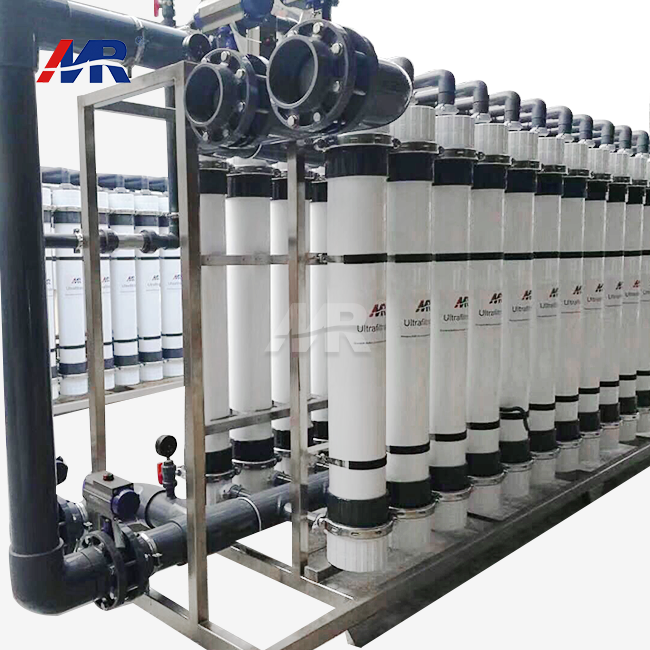
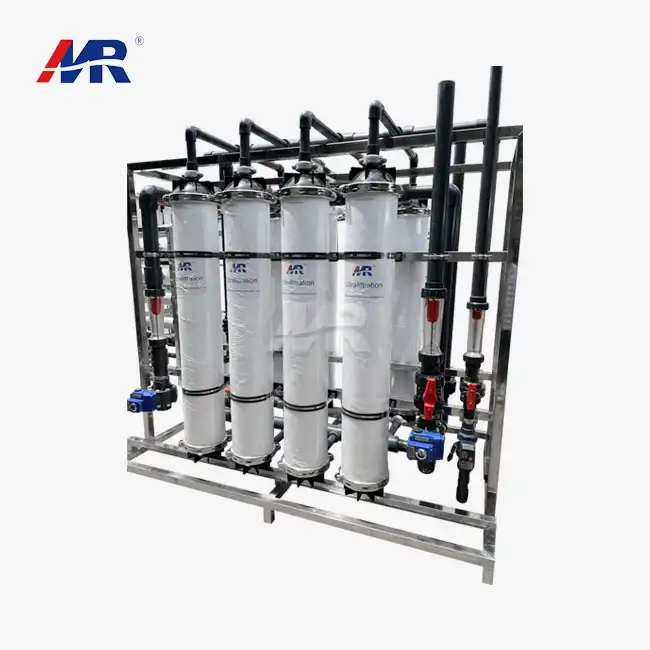
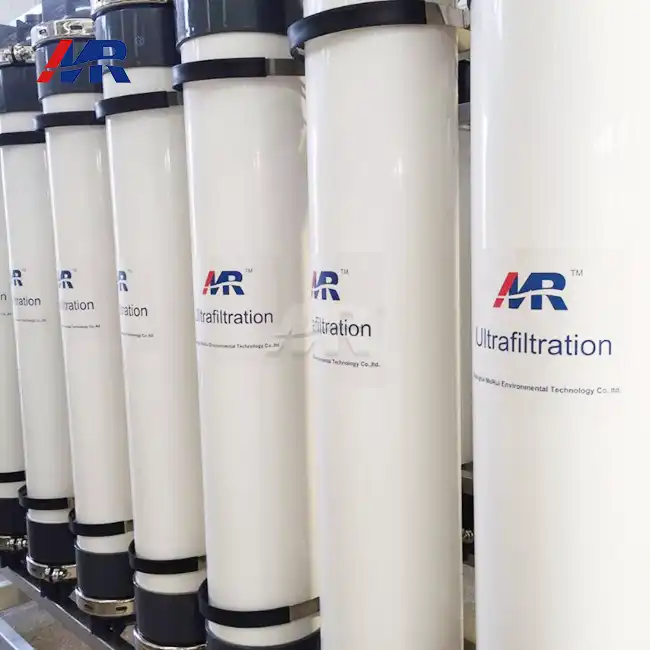
It's possible that pretreatment has more room than membranes. Some of the things that may be done depend on the water. They may include multimedia filtration, ultrafiltration, cartridge filters, softener, activated carbon, antiscalant amounts, and pH control. Fouling and solids in the water can shorten the life of membranes. This is why clean groundwater and seawater need less protection. Once the process is over, the water needs to be remineralized, cleaned, stored, and pumped again. There must also be room for chemical tanks, spare filters, and cleaning systems, as well as a safe way to get to them. Pick the process first, then pick the box. As your lab tests come in, we build the train around them. We can pick the right membranes for each job because we have our own membrane plant.
Power, Controls, and Core Product Features
Our containerized RO equipment for containers is great for planning sites because:
- Power and controls: It comes with 380V/50Hz as standard, but we can change it to work with your power grid or a generator for places that aren't wired to the power grid. Techs can check the pressure, flow, and alarms from afar thanks to online tracking and automated operation. Small groups can now run several plants.
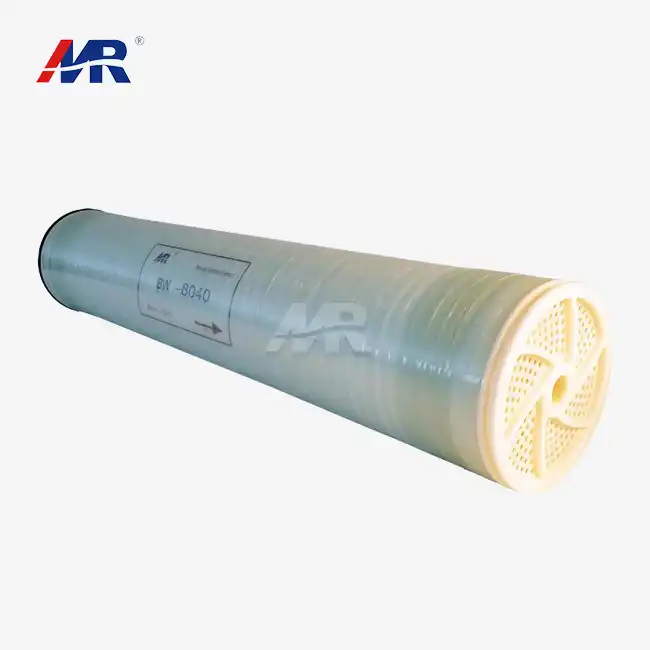
- Membranes and recovery: The RO membranes in the units are very good at what they do, and they can recover up to 75% of the water that goes into them. We don't use a set number to set the recovery because there is more risk of scaling when the recovery is higher and less water is rejected when the recovery is higher. Instead, we look at your water study to set the recovery.
- Construction and layout: Steel that doesn't rust works well in rough, wet, or salty places, and its small size makes it easy to store. Because it is flexible, you can add a second container at the same time if demand goes up, without having to get a new one. The sizes can be changed based on how much they can hold. The cover also protects the pumps and screens from dust and rain.
These features address the main sizing problems: unstable power, uncertain recovery, and limited space.
Documentation and Maintenance Access
Ask each supplier to break down their prices for things like freight, training, electrical work, building containers, equipment, and so on so you can get fair quotes. Make sure you get the P&IDs, general arrangement plans, equipment lists, wire diagrams, factory-test records, and working instructions before you agree to buy something. Check out our documents in more than one language. If you need them in a different language, just let us know. It's just as important to take care of something as it is to buy it. Every so often, you need to change the filters, check the dosing, calibrate the instruments, clean the membranes, and check the pumps. In other words, the plan must make it safe to reach the membrane vessels and cleaning connections. We help you get extra parts because we are a supplier for Shimge water pumps, Runxin valves, and Createc instruments. The 14 branches of our group work with 500 people and 20 engineers.
Conclusion
When planning a containerized RO job, it's not enough to just think about the size of the freight. It also matters where it is and how much water there is. There is a daily demand, operating hours, and a growth margin used to set the permeate flow. An analysis of the feedwater sets the pressure, the pretreatment, and the recovery. A 10-foot box is good for small places with clean water, or those that need to be set up quickly. A 20-foot box has enough space and is easy for service people to get to. For bigger flows, seawater, and more complex preparation, a 40-foot box or parallel containers work best. When it comes to utilities, controls, paperwork, and servicing access, the cost over its whole life is just as important as the price at which it was bought. When you order, make sure these things are the same. That way, you'll be less likely to get a pump, plan, or expansion that doesn't fit.
FAQ
Q1: What separates 10ft, 20ft, and 40ft boxes?
A: More or less inside space for getting ready for treatment, getting to services, and growing. Size is not the only thing that determines capacity.
Q2: Can a 20ft unit treat seawater?
A: A few times, when there is less flow, to see if the pretreatment works. A design review lets us be sure of this: pumps that work with saltwater need to be able to handle higher pressures and be better protected.
Q3: How do I estimate capacity?
A: Divide the daily demand by the number of working hours to find the space between the peaks and the growth. Let's say that 120 m³/day times 20 hours equals 6 m³/h before checking.
Q4: How much energy does the system use?
A: Depending on the shape, recovery, and salt level, it changes. More than half of RO systems that use seawater use around 3 to 4 kWh/m³. Systems that use salty water use less.
Q5: What do you need for a quotation?
A: A look at the feedwater, the flow of Products, the quality goal, the working hours, the power source, the site's size, and where the products are delivered.
Request a Site-Matched Containerized RO Design from Morui
Morui needs to know about your feedwater analysis, your daily usage, your power source, and the size of your site. Then, one of our engineers will help you choose a 10ft, 20ft, or 40ft layout that works for you. Our company is an established containerized RO manufacturer with its own membrane factory. We do unique designs, tracking from afar, installation and commissioning, and help after the sale. You can email benson@guangdongmorui.com to get a quote.
References
1. ISO 668: Series 1 Freight Containers – Classification, Dimensions and Ratings, 2020
2. Degrémont Water Treatment Handbook, Lavoisier, 2007
3. Reverse Osmosis: Industrial Processes and Applications, Jane Kucera, Wiley-Scrivener, 2015
4. Principles of Water Treatment, Howe et al., Wiley, 2012
5. Desalination: Water from Water, Jane Kucera, Wiley-Scrivener, 2014
6. The Future of Seawater Desalination: Energy, Technology, and the Environment, Science, 2011