_1745823981883.webp)

Industrial ultrafiltration systems reduce chemical dosing, reclaim process water for reuse, and decrease the amount of sludge a company must carry away, but they need a constant supply of electrical power and create cleaning waste that must be managed properly. This tutorial takes you through the whole environmental picture: the wastewater cutbacks, the water reuse advantages, the energy draw, and the chemical trade-offs that seldom make it into a supplier’s spec sheet. You receive genuine operational data, a documented plant case with measurable outcomes, and a direct comparison to traditional filtration, so you can make a sourcing choice based on facts instead of a sales pitch.
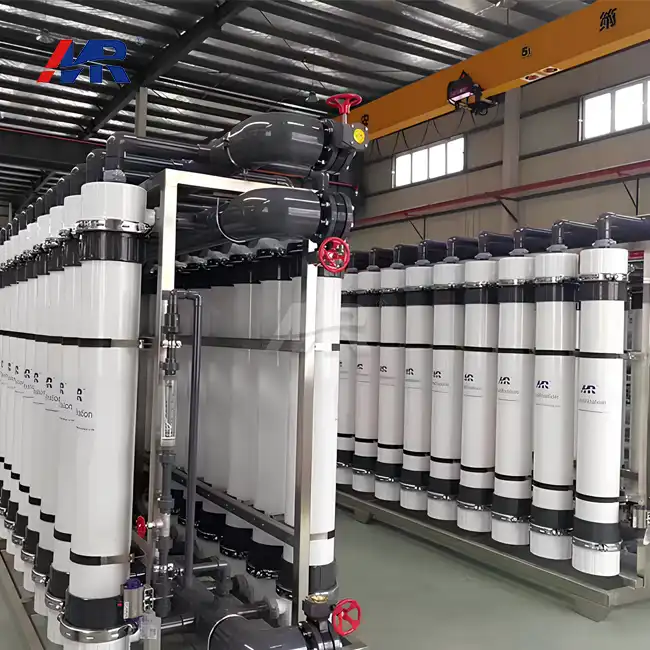
How Do Industrial Ultrafiltration Systems Reduce Wastewater Discharge?
Physical Separation Replaces Heavy Coagulant Dosing
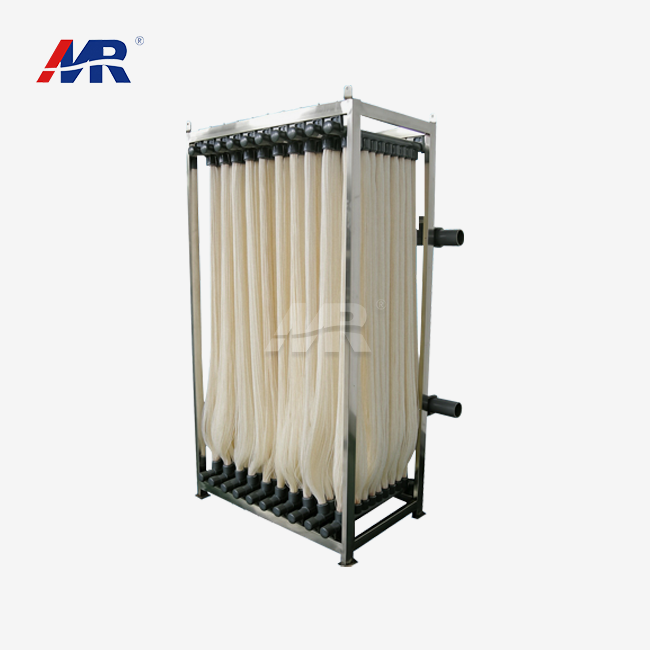
Traditional clarifying involves coagulants and flocculants, which remove particles from process water and are part of the sludge stream. Most of the chemistry is bypassed by industrial ultrafiltration devices. A 2026 assessment of ultrafiltration membrane technology published on ScienceDirect says that a hollow fibre membrane with hole sizes from 0.01 to 0.1 microns physically traps suspended particles, bacteria and colloidal debris before water gets to a discharge point. The absence of the coagulant phase reduces the metal salt residue that appears in downstream sludge, which is significant for facilities that have stricter discharge permits.
Lower Sludge Volume at the Plant Boundary
A 2020 statistical review of membrane technology in wastewater treatment found that, since membrane separation does not require chemical flocs to operate, a plant running an industrial ultrafiltration system generates considerably less residual solid waste than a coagulation-sedimentation line treating the same flow. That’s less sludge to haul away, fewer disposal truck trips, reduced landfill tipping costs, and less reporting load under most regional wastewater discharge standards. That same analysis explicitly connects this sludge reduction to progress against key United Nations Sustainable Development Goals related to clean water availability.
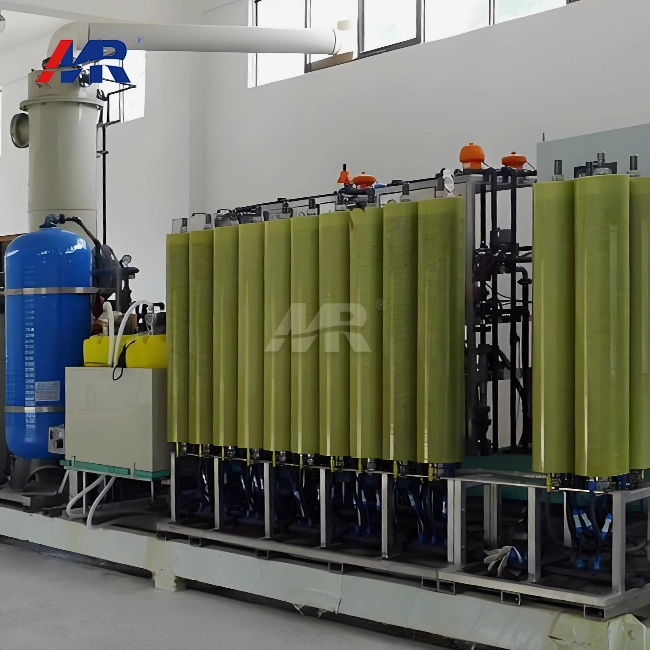
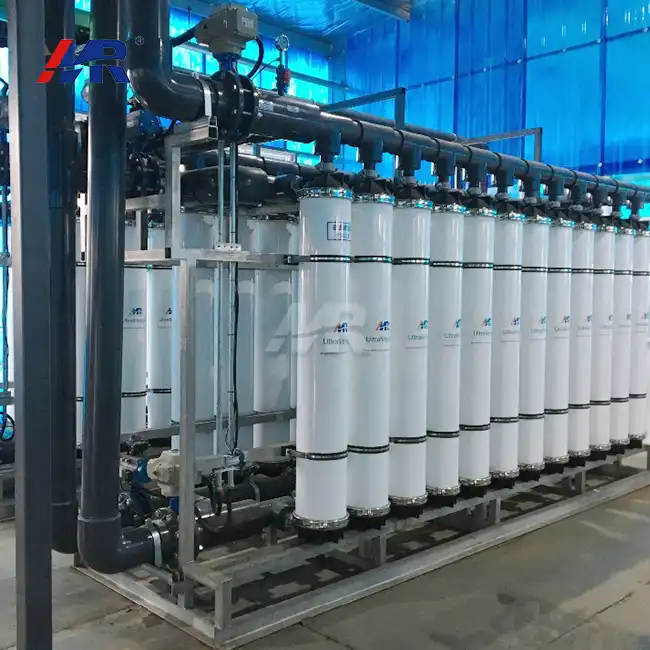
Guangdong Morui Environmental Technology develops these membrane skids for facilities that require this particular kind of discharge reduction. Morui is an industrial ultrafiltration systems manufacturer with its own membrane production line. We customise PVDF hollow fibre skids from 1 m³/h up to 10,000 m³/h. Email benson@guangdongmorui.com with your discharge targets, and our engineers will size a system around your actual wastewater chemistry within two working days.
Can Ultrafiltration Improve Water Reuse in Industrial Processes?
Meeting Reuse-Grade Water Quality
Water reuse only works if the treated stream is of high quality, and ultrafiltration systems consistently satisfy the standard. Membrane filtering eliminates over 99% of suspended particles and pathogens from process effluent, allowing a food processing factory or an electronics fab to reuse water instead of drawing new supplies from a municipal line. Based on research on industrial water treatment and reuse from Lawrence Berkeley National Laboratory, this kind of direct reuse is one of the most successful techniques for industry in the face of water shortage.
Sector Examples Where Reuse Pays Off
Water may be returned to cleaning or boiler feed circuits via membrane treatment of condensate recovered from evaporation lines in dairy facilities, which simultaneously reduces freshwater withdrawal and disposal costs. Cooling tower operators do the same: treated effluent substitutes for fresh makeup water, lowering extraction from rivers and aquifers already under seasonal stress. Semiconductor factories use ultrafiltration, reverse osmosis, and EDI to meet the chip cleaning ultrapure water requirement, recycling some of the water for reuse in non-critical loops.
- Food and beverage bottling: Ultrafiltration pretreatment using industrial ultrafiltration systems prevents fouling of downstream reverse osmosis membranes, extends membrane life, and allows the plant to recycle rinse water back into the production loop instead of discharging to the drain, reducing both freshwater consumption and effluent volume over a full production year.
- Pharmaceutical and biotech manufacturing – UF-treated water is used in the manufacture of GMP-grade filtered water. Consistent quality of the output means fewer batches are rejected for water contamination, hence minimising the raw material waste that would have to be disposed of separately.
- Textile and dye processing: Membrane-treated wash water is recycled through a number of dye baths before final discharge. Reducing the amount of coloured effluent that a company has to treat and dispose of at the end of the line.
These reuse trends are seen in industry, food processing, and municipal water facilities, where industrial ultrafiltration systems can help reduce the amount of fresh water a facility needs to draw from the ground or a river.
How Much Energy Do Industrial Ultrafiltration Systems Typically Consume?
The energy use is the portion that vendors skim over. Here are the real statistics. A full-scale UF tertiary treatment facility was reported in a 2024 Science of the Environment publication to use 0.098–0.452 kWh of energy per cubic metre treated, with electricity usage accounting for 66–79% of the overall operational cost. That variation depends on the membrane flux, the quality of the feed water, and the frequency of backwashing to keep the system clean.
| Treatment Method | Typical Energy Use (kWh/m³) | Main Energy Driver |
|---|---|---|
| Coagulation-sedimentation | 0.05 - 0.15 | Mixing and chemical dosing pumps |
| Industrial ultrafiltration systems | 0.10 - 0.45 | Feed pressure pumps and backwash cycles |
| Reverse osmosis | 0.50 - 2.50 | High-pressure feed pumps |
Backwash frequency causes a big part of that energy cost. A preliminary investigation of ultra-filtration backwash designs powered by photovoltaics indicated that the supercapacitor-driven backwash pumps used substantially less energy than standard bladder tank setups, and cleaning efficiency was balanced against energy consumption at a 60-minute backwash interval. Plants may remove this energy cost item without impacting membrane performance, provided the backwash schedule is adaptive to feed water conditions, as opposed to operating on a set timeline.
What Environmental Risks Are Caused by Membrane Cleaning Chemicals?
Acid, Caustic, and Chlorine Cleaning Cycles
All membranes in industrial ultrafiltration systems foul in time as organic debris, scale, and biofilm build up on the fiber surface. Restoring flux means cleaning-in-place cycles with acids, caustic soda, or chlorine solutions periodically, and these cleaning agents produce hazardous wastewater that needs to be neutralized before being discharged, as mentioned in a study on microbubble-assisted cleaning published through the National Center for Biotechnology Information. Failure to properly neutralize the waste stream might result in a pH increase that may compromise downstream biological treatment or breach a discharge permit.
Lower-Impact Cleaning Alternatives
The same study on microbubble-assisted cleaning-in-place provides a method to decrease this chemical burden. Inclusion of micron-scale air bubbles in cleaning solutions restored membrane flow by 31 to 72% during the studied circumstances, which translates to fewer chemical cleaning cycles over the working life of a membrane. Less harmful cleaning effluent is discharged from the plant with fewer cycles.
| Cleaning Agent | Purpose | Discharge Consideration |
|---|---|---|
| Citric acid or HCl | Removes scale and metal oxides | Requires pH neutralization before release |
| Sodium hydroxide | Breaks down organic and biological fouling | High pH stream needs dilution and buffering |
| Sodium hypochlorite | Controls biofilm and microbial growth | Residual chlorine must be quenched before discharge |
How Does Membrane Fouling Affect Environmental Performance and Resource Use?
The major drawback to the environmental justification for industrial ultrafiltration systems is fouling. As particles and organic matter build up on the membrane’s surface, the system requires more pump pressure to sustain the flow, which increases energy consumption, adds labour for maintenance, increases cleaning chemical costs, and reduces the life of the membrane, the 2026 antifouling performance evaluation said. An UF array badly operated may use more energy per cubic metre than a competently operated traditional filter line.
Feed water pretreatment is often underappreciated by most operators. The removal of big particles and debris before the water reaches the UF stage dramatically decreases the fouling rate, hence maintaining a lower transmembrane pressure and extending the time between chemical cleanings. The plants that invest in solid pretreatment screens get significantly longer runs between backwash cycles, which reduces both water consumption for cleaning and the accompanying energy demand.
What Happens to Concentrate and Backwash Water After Ultrafiltration?
Concentrate Stream Composition
Ultrafiltration generates two streams: clean permeate and a reject stream of concentrate, which contains the particles, bacteria, and organic debris prevented by the membrane. This concentrate requires a disposal pathway, whether that is routing to a municipal sewer with permission, mixing back into a wastewater treatment headworks, or, for higher-value operations, recovery of solids for separate use.
Backwash Water Handling Options
The backwash water is essentially a diluted form of the same contamination load and usually goes back to the plant’s main treatment system, where industrial ultrafiltration systems can provide additional filtration before the water is reused or further treated, rather than being discharged directly. Some facilities send backwash water first to a settling basin, which salvages some of the water for non-potable reuse, such as watering of on-site landscaping or dust suppression, before sending the remaining solids to disposal.
Permitting Considerations for Concentrate Disposal
Local discharge permits often restrict the total dissolved solids and biological oxygen demand of any concentrate stream leaving the plant. Many plants elect to size an on-site holding tank so that concentrate is released gradually, not in one massive rush. Plants that map their concentrate amount and composition early in the design phase save expensive permit revisions later.
How Does Ultrafiltration Compare With Conventional Filtration Environmentally?
Industrial ultrafiltration systems outperform sand filtration and basic coagulation in terms of chemical consumption and effluent clarity. But traditional techniques are still easier on the energy upfront for low-flow, low-contamination applications. But at a pore size that cannot be matched by conventional media filters, membrane systems consistently remove pathogens and fine particulates, at the cost of periodic chemical cleaning and higher capital investment tied to membrane material. The 2026 tertiary treatment study raised this point when weighing energy against membrane cost.
- Effluent quality: Membrane separation offers a constant low-turbidity effluent, even with little change in feedwater quality, unlike sand filters and clarifiers, which may be more variable as influent conditions change, an important consideration for plants with tight discharge permits.
- Chemical footprint: Ultrafiltration chemical consumption is restricted to periodic cleaning cycles, while conventional coagulation requires continuous chemical dosing that scales with flow, providing membrane systems with a reduced continuing chemical footprint during a full year of operation.
- Footprint and scalability: Membrane skids take up just a fraction of the footprint of a similar clarifier and filter train, making an industrial uf system particularly suitable for companies that are retrofitting water treatment to an existing industrial site with limited capacity for expansion.
Choosing one or the other depends on feedwater qualities, discharge needs, and available floor space for the treatment train at a plant.
Can Industrial Ultrafiltration Systems Reduce Freshwater Consumption?
One of the biggest uses of water in industrialised nations is water used for industry, and a lot of this water is drawn from fresh surface and groundwater, research from Lawrence Berkeley National Laboratory on industrial water treatment and reuse says. One of the most straightforward methods to reduce that drawdown is to reuse treated effluent using membrane technology. Every cubic metre recovered is a cubic metre that does not have to be taken from a river or aquifer.
A Documented Case: Southeast Asian Beverage Plant
In 2026, Morui provided an industrial UF system using a PVDF hollow fibre ultrafiltration skid to a bottled beverage factory in Southeast Asia, sized to pretreat rinse and process water ahead of reverse osmosis polishing. Twelve months of operational data from that location demonstrated the following measurable modifications from the plant’s earlier coagulation-sedimentation configuration.
| Metric | Before Ultrafiltration | After Ultrafiltration |
|---|---|---|
| Freshwater intake (m³/day) | 1,850 | 1,260 |
| Reused process water (% of total) | 8% | 34% |
| Chemical sludge generated (kg/day) | 340 | 95 |
| Downstream RO membrane cleaning frequency | Every 3 weeks | Every 9 weeks |
The plant said it cut roughly 32% of its intake of fresh water and about 72% of its chemical sludge in the first year. Frequency of RO cleaning increased from three weeks to nine weeks, which lowered downstream chemical use. Reduced acid and caustic use throughout the treatment train due to fewer cleaning cycles.
How Does Membrane Lifespan Affect the Environmental Footprint?
The PVDF hollow fibre membranes are gradually degraded due to mechanical stress and chemical exposure over repeated washing cycles. In the antifouling assessment of 2026, inevitable disposal of worn polymeric membrane modules and plastic waste as part of the ultrafiltration plant’s industrial solid waste stream was identified over the working life of the equipment. The 2026 tertiary treatment study showed that membrane material is a large part of the capital cost and raw material footprint of a UF system. This is because membrane material dominates the manufacturing stage environmental impact in life cycle assessments.
Directly reducing this footprint means extending the membrane service life. Proper pretreatment, backwashing cycles timed properly, and gentler cleaning chemicals all help reduce fouling and chemical degradation that may restrict the working years of a membrane. Morui PVDF hollow fibre elements are rated for pH 2 to 11, with an operating temperature range of 5 to 40°C. This gives plants the option to vary cleaning chemicals without pushing the membrane beyond its tolerance and restricting its useful life.
Why Membrane Material Choice Matters Long-Term?
PVDF is more chemically resistant than some of the earlier membrane materials and can survive repeated caustic and acid washing without loss of structural integrity at a faster rate. The membrane’s ability to endure a wide pH and temperature range means there’s less chance of early replacement, which helps keep plastic waste and replacement costs down throughout a 10-year operating life.
What Practices Can Make Industrial Ultrafiltration More Sustainable?
There are many operational aspects that will help make an ultrafiltration system environmentally benign rather than merely shifting the burden of chemical use to energy consumption. The important sustainability benefits come from implementing these measures correctly.
- Right-size the pretreatment step. The removal of large particles and debris before the membrane may significantly lower the fouling rate, hence increasing the backwash intervals and reducing the energy and chemical cost of the cleaning cycles during the whole operating life of the system.
- Match Flux Rate to Feed Water Quality: Membranes are operated at flux rates appropriate to the actual feed conditions, not maximum throughput. This reduces the rate of fouling and maintains a lower transmembrane pressure that directly translates to lower pump power consumption over the course of a day.
- Collect the spent cleaning solution for pH neutralisation and partial reuse in the next cleaning cycle, if practicable, to minimise the quantity of hazardous wastewater that the firm needs to treat and discharge.
- Use data from ultrafiltration equipment to monitor membrane status. Operators may observe transmembrane pressure trends to determine when to schedule cleaning based on actual fouling, not on a calendar. This prevents premature chemical cleaning and the energy cost of running a badly contaminated membrane for too long.
This combination of techniques often yields a system that utilises less energy, creates less hazardous cleaning waste, and has a longer lifespan before the membrane must be replaced.
Building Sustainability Into the Procurement Stage
The sustainability consequences are determined well before the membrane ever goes in. Plants that provide their equipment supplier with accurate feedwater data during the bidding process end up with a system that is properly sized from day one and don’t suffer the energy loss and premature fouling that occurs when an undersized or oversized skid operates outside of its design range.
Conclusion
That said, industrial ultrafiltration systems certainly do have environmental benefits on wastewater discharge, chemical consumption, and water reuse, as shown by measurable data across the industries covered below. There are genuine trade-offs as well; constant power use, periodic chemical cleaning waste, and final membrane disposal all must be actively managed rather than ignored. But plants that size membranes correctly and follow strict pretreatment and cleaning schedules get the environmental advantage without the hidden operating expenditure. That’s what it looks like in hard figures for the Southeast Asian beverage plant scenario: less freshwater extracted from the ground, less sludge trucked to landfill, and a longer interval between chemical treatments.
FAQ
1. Are industrial ultrafiltration systems considered an eco-friendly technology?
They reduce chemical dosing and enable water reuse, which lowers overall environmental burden compared to conventional coagulation-based treatment, though electrical energy use and cleaning waste still need proper management.
2. How much water can ultrafiltration systems recover for reuse?
Recovery rates vary by application, but plants commonly recycle 20 to 40% of treated process water back into production, depending on feed water quality and downstream reuse requirements.
3. What is the typical energy consumption per cubic metre treated?
Full-scale installations report a range of roughly 0.1 to 0.45 kWh per cubic metre, with backwash frequency and feed water quality driving most of the variation.
4. Do UF membranes eliminate the need for chlorine or coagulants entirely?
They eliminate routine coagulant dosing for solids removal, though chlorine or other agents are still used periodically during cleaning-in-place cycles to control biofilm growth.
Ready to Cut Your Plant's Water Footprint With a Membrane System Built to Spec?
Guangdong Morui Environmental Technology operates 14 branches, over 500 staff, and 20 in-house engineers, backed by our own membrane production factory and equipment processing lines. We also serve as an authorised agent for Shimge Water Pumps, Runxin Valves, and Createc Instruments, giving plants a single point of contact for a complete system. As an industrial ultrafiltration systems supplier with proven results like the beverage plant case above, Morui can size and quote a system for your facility. Reach Our Team at benson@guangdongmorui.com to start the conversation.
References
1. Jiménez-Benítez, A. et al. (2024). "Environmental and economic assessment of urban wastewater reclamation from ultrafiltration membrane-based tertiary treatment." Science of the Total Environment, ScienceDirect. https://www.sciencedirect.com/science/article/pii/S0048969724074308
2. ScienceDirect (2020). "Ultrafiltration membranes for wastewater and water process engineering: A comprehensive statistical review over the past decade." https://www.sciencedirect.com/science/article/abs/pii/S2214714420301203
3. ScienceDirect (2023). "Recent developments in ultrafiltration membrane technology for the removal of potentially toxic elements and enhanced antifouling performance: A review." https://www.sciencedirect.com/science/article/pii/S235218642300158X
4. National Center for Biotechnology Information / PMC (2023). "Microbubble-Assisted Cleaning-in-Place Process for Ultrafiltration System and Its Environmental Performance." https://www.ncbi.nlm.nih.gov/pmc/articles/PMC10146933/
5. Lawrence Berkeley National Laboratory (2021). "Opportunities and Challenges for Industrial Water Treatment and Reuse." https://energyanalysis.lbl.gov/publications/opportunities-and-challenges
6. ScienceDirect (2022). "Renewable energy-powered membrane technology: Energy consumption analysis of ultrafiltration backwash configurations." https://www.sciencedirect.com/science/article/abs/pii/S138358662102092X
Author: Shihai Su, Senior Water Treatment Applications Engineer, Guangdong Morui Environmental Technology. Shihai has spent over a decade specifying membrane systems for food processing, pharmaceutical, and municipal water clients across Asia, South America, and Africa. He works directly with Morui's in-house engineering team on system sizing, pretreatment design, and field commissioning, and he draws on plant-level operating data from Morui's installed base to guide every recommendation in this article.