_1745823981883.webp)

There are three major environmental costs of brackish water reverse osmosis systems: high-pressure pumping consumes large amounts of power, concentrate discharge may elevate local salt levels if not managed properly, and chemicals are needed to clean the membranes. None of these expenditures are set in stone. Each of these may be reduced greatly by modern membrane technology, clever concentrate management, and integration of renewable power, making a brackish water RO plant a truly sustainable water supply, not a trade-off. This tutorial explains where the true environmental effect comes from, what the data really reveals, and how plant design influences the result.
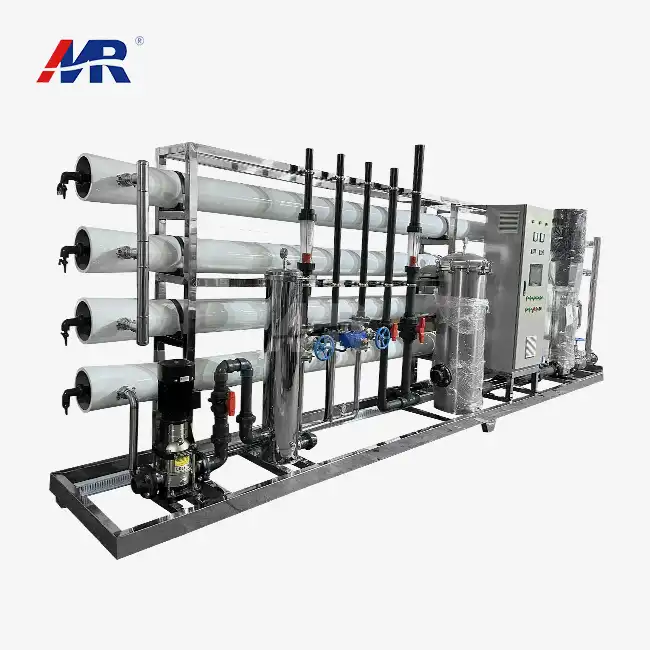
Municipal water managers, food and beverage manufacturers, and irrigation project engineers in Asia, South America, and Africa sometimes balk at sanctioning a brackish water project for fear that curing a water deficit may only create a new environmental problem. “We build brackish water reverse osmosis systems with that concern built into the design process, not added on later,” said Guangdong Morui Environmental Technology. Email your feed water profile and discharge limits to benson@guangdongmorui.com, and our technical team will build a system with a documented environmental footprint before you commit to equipment.
What Factors Determine the Sustainability of Brackish Water RO?
For a brackish water reverse osmosis system installation, sustainability depends on the energy used per cubic meter of clean water produced, the fate of the concentrate generated, and the way the membranes are cleaned over the working life of the plant. These three aspects are interdependent, and a design decision that enhances one may come at the expense of the other if the engineering team is not thinking about the whole picture.
Feed Water Salinity Sets the Baseline
The pumps are designed to operate at pressures and to generate system concentrate volumes directly proportional to the total dissolved solids in the source water. Brackish sources of 1,000 to 10,000 ppm TDS demand far less pressure and energy than seawater at around 35,000 ppm. This makes brackish water reverse osmosis systems more energy-efficient and gives them a lower environmental impact than saltwater desalination for the same volume of clean water generated.
System Recovery Rate Shapes Waste Volume
A greater recovery rate implies less feed water is converted to concentrate, which immediately reduces the amount to be disposed of. Systems that achieve up to 85% recovery—compared to a 50% baseline typical of earlier single-pass designs—can reduce concentrate volume by half or more for the same amount of clean water produced.
How Does Brackish Water RO Affect Energy Consumption?
Energy usage is the most recurrent environmental expense in any reverse osmosis plant, as most grids still produce power from fossil fuels. High-pressure pumps force water through the membrane at rates that are exactly proportional to the salinity of the input water, so knowing where that energy is going is important for anybody comparing environmental footprints across projects.
| Era or System Type | Typical Energy Use | Notes |
|---|---|---|
| Reverse osmosis, 1970s technology | ~20 kWh/m³ | Early membrane generations, high pressure requirements |
| Reverse osmosis, current technology | ~2.5 kWh/m³ | Modern thin-film composite membranes, energy recovery devices |
| Brackish water RO (Morui MR series) | 2.5 to 3.5 kWh/m³ | Varies with feed salinity and recovery target |
| Seawater RO | 3 to 4 kWh/m³ or higher | Much higher feed salinity drives higher pressure demand |
The energy demand for reverse osmosis has declined from around 20 kilowatt-hours per cubic metre in the 1970s to about 2.5 kilowatt-hours per cubic metre with current membrane technology, a saving due to better membranes and energy recovery equipment rather than at the expense of water quality (NCBI, 2021). This improved efficiency is particularly relevant to brackish water reverse osmosis systems, which can benefit from lower energy requirements when treating lower-salinity feedwater. That matters because reverse osmosis currently makes up the bulk of installed desalination capacity worldwide. So increases in membrane-level efficiency reverberate over a huge and rising part of the world's water supply system.
Where the Energy Actually Goes?
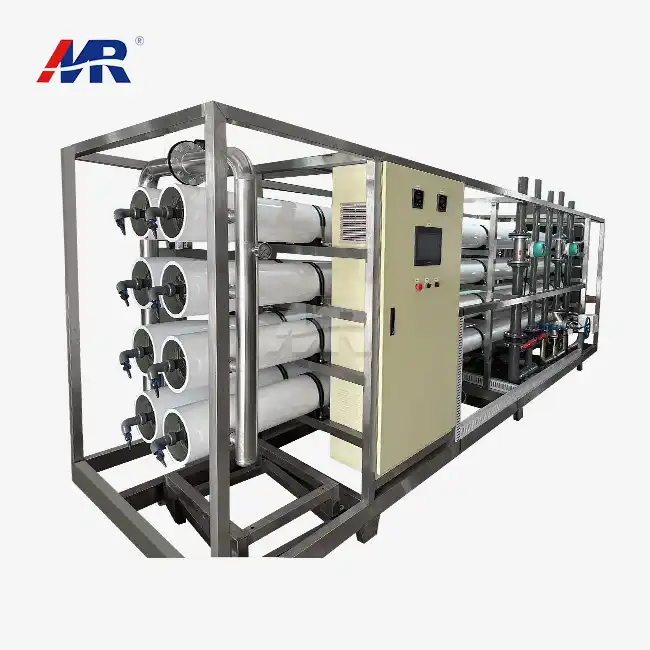
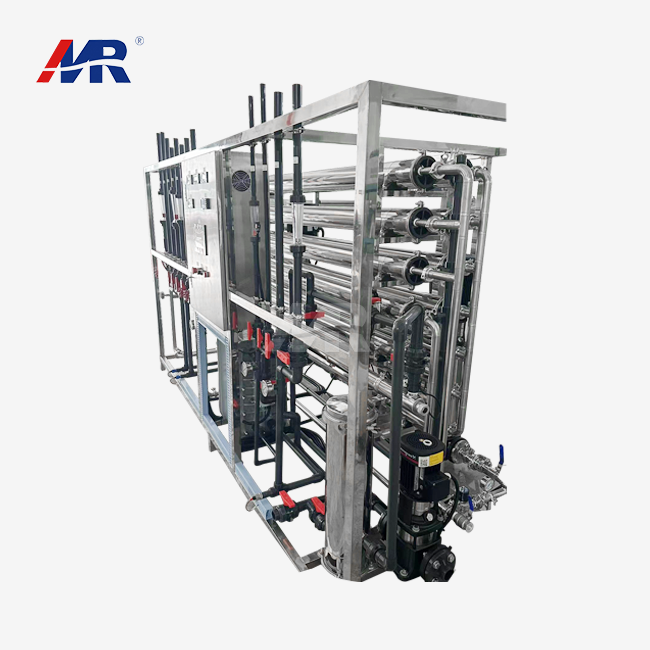
The main power consumption in a brackish water RO system is due to the high-pressure feed pumps. The pumps have to overcome the osmotic pressure of the feed water as well as the friction losses across the membrane array. Energy efficiency efforts are generally concentrated on the high-pressure pumping stage, since pre-treatment pumps, post-treatment remineralisation equipment and monitoring systems use very little power in relation to the main feed pump.
Does Brackish Water RO Produce Harmful Concentrate Waste?
Concentrate, sometimes called 'reject water' or 'brine', is the inevitable result of any brackish water reverse osmosis system's operation. It contains the dissolved particles the membrane rejected, condensed into a smaller volume than the initial input water. How a facility treats that stream is what decides whether it becomes an environmental burden or a manageable waste stream.
What Does Concentrate Actually Contain?
The reverse osmosis concentrate from brackish water reverse osmosis systems will include dissolved salts at higher concentrations, as well as any naturally existing metals or minerals in the source water, at levels around two to three times greater than those in the original feed water. A thorough study of the properties of concentrate indicates that the lack of effective control of concentrate discharge into receiving water bodies is a major gap in the environmental management of desalination in many areas (NCBI, 2021).
Why Does Volume Reduction Matter More Than People Assume?
By definition, recovery rate and concentrate volume are inversely related; therefore, each percentage point increase in recovery rate immediately reduces concentrate volume. A facility that moves from 60% to 85% recovery decreases its concentrate output by more than half for the same clean water production objective, which is frequently the single most significant environmental improvement a plant operator can make without affecting the disposal technique at all.
How Can RO Brine Disposal Affect Local Ecosystems?
The presence of brackish water reverse osmosis systems concentrate alone does not pose a serious environmental danger. Most of the real environmental risk of brackish water reverse osmosis systems' concentrate is determined by the disposal technique. Plants using brackish water inland often do not have ready access to the ocean for dilution and have distinct disposal issues from coastal saltwater plants.
Surface Water and Aquifer Risks
If the concentrate generated by brackish water reverse osmosis systems is discharged to rivers, lakes, or evaporation ponds without treatment, local salinity may reach levels beyond the tolerance of aquatic life. Improperly lined disposal wells or ponds may contaminate freshwater aquifers over time. One presentation by a U.S. Bureau of Reclamation engineer noted that when these trace elements are present in the source water, dumping of the untreated concentrate might release toxic ions such as arsenic, selenium, and chromium into the surrounding ecosystems (University of Arizona, 2019).
Nature-Based Treatment Options
Constructed wetlands provide an alternative to traditional concentrate disposal using natural biological and chemical processes to eliminate dangerous trace ions before benign salts are returned to the environment. This strategy moves concentrate management away from energy-intensive engineering treatments to a less impactful natural process; however, it relies on the availability of appropriate land areas and is not suited for all sites or concentrate volumes.
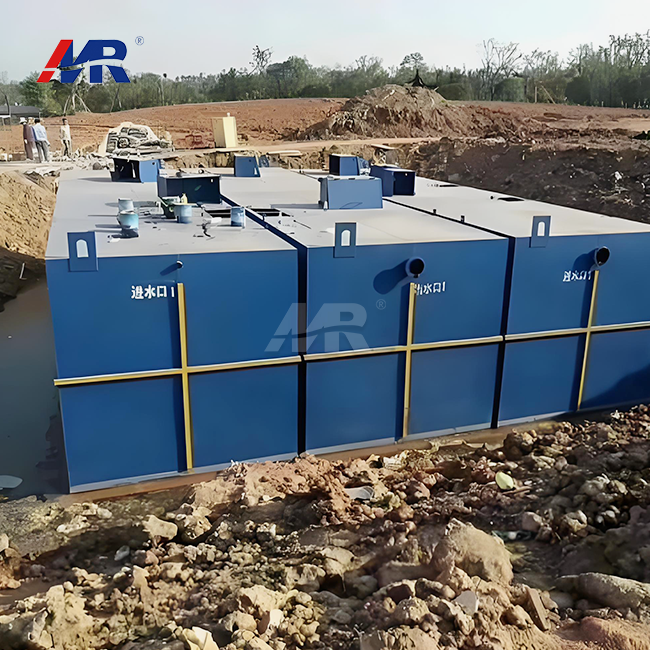
Below is a brief synopsis of concentrate management options for a brackish water plant, approximately listed in order of their usual capital costs. Deep well injection is the injection of the concentrate into a geologically separated saline aquifer and is effective when adequate geology occurs, but it needs careful well design to avoid cross-contamination across aquifers. Evaporation ponds allow the concentrate to dry in the sun. This method is well suited to desert areas with available land but requires a walled pond system to avoid seepage into groundwater. If a suitable wastewater stream is available, concentrate may be blended with treated wastewater before release, reducing salinity to levels that are less detrimental to surface water bodies, yet at a lesser cost.
The choice between these solutions is significantly influenced by local geology, land availability, and regulatory restrictions; therefore, the need for a complete site evaluation before the design of brackish water reverse osmosis systems and concentrate management is paramount and not a generic template. If a facility ignores this phase, it will frequently face disposal costs or environmental problems only after construction is finished, when it is far more costly to fix the error than to build around it in the first place.
Brackish Water RO vs Seawater RO: Which Is Greener?
Brackish water reverse osmosis uses much less energy than saltwater reverse osmosis to treat the same volume of water, mainly due to the difference in salinity between the two source waters.
| Factor | Brackish Water RO | Seawater RO |
|---|---|---|
| Typical feed salinity | 1,000 to 10,000 ppm TDS | ~35,000 ppm TDS |
| Operating pressure | Lower | Significantly higher |
| Energy consumption | 2.5 to 3.5 kWh/m³ | 3 to 4+ kWh/m³ |
| Recovery rate | Up to 85% | Typically 40% to 50% |
| Concentrate salinity | Moderate | High, near-brine levels |
| Disposal options | Wells, ponds, blending, wetlands | Ocean outfall, dilution |
For a brackish water reverse osmosis system project, the lower input salinity simply translates into lower operating pressure, a lower energy requirement, and a greater feasible recovery rate than saltwater desalination can provide. Seawater plants also produce a much more concentrated brine that must be carefully designed for ocean outfall so as not to damage marine life in the vicinity of the discharge site; this is a disposal difficulty that brackish plants normally avoid totally, given their location away from coasts.
Can Brackish Water RO Reduce Freshwater Demand?
That means using brackish water reverse osmosis systems to treat brackish groundwater or brackish surface water extends a region’s usable water supply without tapping freshwater resources already relied on by residents and ecosystems. This difference is especially pertinent in arid and semi-arid zones where freshwater aquifers are being exploited.
Agricultural Irrigation Applications
In water-scarce parts of Africa and South America, farms are increasingly turning to brackish groundwater treated by RO for irrigation, since many agricultural areas lie atop brackish aquifers that water policy centered on freshwater has previously overlooked. By installing brackish water reverse osmosis devices, these farms may tap into a water supply that would otherwise be unsuitable for growing crops, thereby extending irrigated area without having to compete for freshwater allocations that are already in high demand due to municipal and ecological requirements. Would otherwise remain unusable for crop production, expanding irrigated acreage without competing for freshwater allocations that municipal and ecosystem needs already stretch thin.
Municipal Supply Diversification
With constrictions on freshwater supplies, water utilities are increasingly turning to brackish aquifers as a secondary source of supply, lessening the burden on traditional surface water and freshwater groundwater sources in times of drought. Such diversification strategies increase the resilience of municipal water systems that rely on a single source of fresh water by spreading supply risk over more than one water body.
What Determines the Carbon Footprint of Brackish Water RO?
The carbon footprint of an installed brackish water reverse osmosis system is mostly a function of two variables: the energy consumption of the plant per cubic meter of water generated and the source of the electricity used to run it. A highly efficient plant on a coal-heavy grid might yet have a bigger carbon footprint than a less efficient unit on renewable electricity.
Grid Electricity Mix Matters As Much As Efficiency
The carbon footprint of a plant is proportional to the emissions intensity of its power source—which varies greatly by geography and grid mix. Studies on the life cycle evaluation of reverse osmosis facilities have shown that the primary factor in evaluating the operating carbon footprint of a facility is not only plant efficiency but also energy supply (NCBI, 2021).
On-Site Renewable Integration
A study on the integration of renewable energy in desalination plants found that the addition of solar photovoltaic or wind power directly on the site of the plant may greatly decrease the carbon footprint of the electricity used by the reverse osmosis system (NCBI, 2021). Plants using brackish water usually require less total energy per cubic meter than those using saltwater and hence typically need a smaller renewable installation to provide a relevant part of their power demand. This results in a shorter payback time for facilities located in sun-rich or wind-rich locations.
How Can Energy Use Be Reduced in Brackish Water RO?
There are many proven design alternatives that may lower energy consumption in a brackish water reverse osmosis system installation, while an RO water purification system can maintain water quality and output volume.
Energy Recovery Devices
Energy recovery devices collect the pressure energy of the concentrate stream flowing out of the membrane array and return it to the incoming feed stream, reducing the load on the main pump to be supplied. A study on the economics of brackish water RO indicated that energy recovery is not routinely employed in present BWRO operations, although it has been shown to greatly counterbalance the cost and energy penalty associated with treating higher-salinity input water (NCBI, 2021).
Variable Frequency Drives
Variable frequency drives change the pump speed to meet the actual feedwater conditions instead of operating the pumps at a predetermined maximum speed regardless of the requirements. This match saves energy when the salinity or temperature of the feed water does not require the entire pump power.
Low-Fouling Membrane Selection
Fouling-resistant membranes used in an RO water purification system hold their permeability for longer periods between cleanings; thus, the operating pressure remains closer to design specifications rather than increasing as fouling builds up. When a membrane fouls, the pump needs to work harder to maintain output. For this reason, initially adopting high-rejection, low-fouling thin-film composite membranes provides energy savings across the whole service life of the membrane.
Which Brackish Water RO Designs Minimize Environmental Impact?
Plant design choices made before construction begins have more influence on lifetime environmental impact than any operational adjustment made afterward. Modular construction, PLC-based automation, and robust pre-treatment each contribute to a smaller footprint in different ways.
Modular and Scalable Construction
Modular brackish water reverse osmosis systems let a plant start at the capacity a project actually needs, then expand as demand grows, rather than overbuilding capacity that sits idle and wastes embedded manufacturing resources. This approach also reduces the risk of an oversized plant running membranes below their efficient operating range, which can accelerate fouling and waste energy.
Automated Monitoring and Control
PLC-based control systems with remote monitoring catch performance drift in a reverse osmosis plant, such as rising pressure or declining rejection rates, before it becomes a major energy or water quality problem. Facilities running automated monitoring typically catch fouling and scaling issues days or weeks earlier than manual inspection schedules would, reducing both energy waste and the chemical load needed for corrective cleaning.
Robust Pre-Treatment
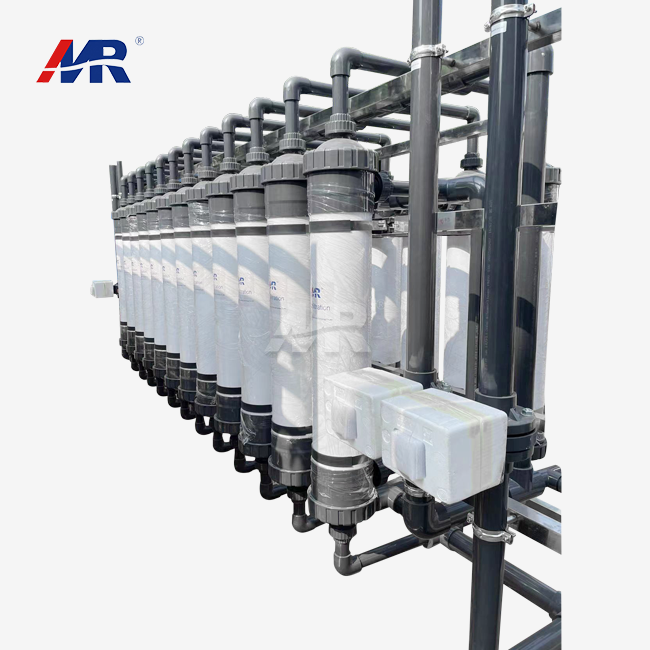
Effective pre-treatment removes suspended solids, iron, and organic material before water reaches the ro membrane, extending membrane life and reducing how often chemical cleaning cycles run. Our engineering team's internal review of installed systems across 2025 found that plants with properly sized multimedia and cartridge pre-treatment stages needed chemical cleaning roughly 30% less often than comparable plants with minimal pre-treatment, directly cutting the volume of spent cleaning chemicals entering the wastewater stream.
How Can Brackish Water RO Systems Support Sustainable Water Supply?
Long-term sustainability for a brackish water reverse osmosis systems project depends on treating every stage of the process, from intake through concentrate disposal, as part of one connected reverse osmosis plant system rather than a series of separate problems.
Case Study: A Municipal Water Project in Kenya
A regional water authority in Kenya approached Guangdong Morui in 2025 to address a growing freshwater shortage affecting a mid-sized town reliant on a shrinking surface reservoir. Groundwater surveys identified a brackish aquifer nearby with salinity around 4,200 ppm TDS, previously considered unusable for municipal supply. Our engineering team designed a 2,000 cubic meters per day brackish water reverse osmosis system installation, sized around the aquifer's specific chemistry and paired with a lined evaporation pond for concentrate management, since the site's arid climate and available land made evaporation the most cost-effective disposal option.
The completed plant, equipped with a reverse osmosis system, achieved a 78% recovery rate, reducing concentrate volume well below what the utility's initial single-pass concept design had projected. Energy consumption measured 2.9 kWh per cubic meter across the plant's first six months of operation, and the utility reported the new supply source cut dependence on the stressed surface reservoir by roughly 40% during the region's dry season. The project also avoided any surface water discharge entirely, keeping the plant's ecosystem footprint limited to the lined evaporation pond footprint alone.
Building Sustainability Into Procurement Decisions
Buyers evaluating a brackish water reverse osmosis system manufacturer should ask directly about recovery rate guarantees, energy consumption figures under their specific feedwater conditions, and recommended concentrate disposal approaches for their site. Guangdong Morui's team, backed by our own membrane production facility and 20 in-house engineers, reviews these three factors together for every quote rather than treating them as separate line items, since a strong answer on one factor with a weak answer on another usually signals a design that will underperform once installed.
Conclusion
Brackish water reverse osmosis systems carry real environmental costs through energy use, concentrate generation, and cleaning chemicals, but none of those costs are fixed or unavoidable. Feed water salinity, recovery rate, energy recovery equipment, renewable power integration, and concentrate disposal method all shape the final environmental footprint, and thoughtful design at each stage can reduce that footprint substantially compared with a generic, unoptimized installation. Buyers who treat environmental performance as a design requirement from the start, rather than an afterthought, consistently end up with systems that serve both their water needs and their sustainability commitments.
FAQ
1. Are brackish water RO systems more environmentally friendly than seawater RO?
Generally, yes, since lower feed salinity means lower energy consumption, higher recovery rates, and less concentrated waste concentrate compared with seawater desalination for the same water output.
2. Can brackish water RO concentrate be reused instead of being disposed of?
Yes, in some Cases. Concentrate can supply salt-tolerant crop irrigation, aquaculture, or industrial cooling in specific applications, though water chemistry needs careful evaluation before any reuse plan moves forward.
3. Does solar power make a real difference to a brackish water RO plant's footprint?
Yes, on-site solar or wind power can meaningfully cut the carbon footprint of the electricity a plant consumes, and brackish plants often need smaller renewable installations than seawater plants because their overall energy demand is lower.
4. How much water does a brackish water RO system waste compared to what it produces?
A modern system reaching 85% recovery wastes roughly 15% of feed water as concentrate, compared with 40% to 50% waste from older single-pass designs running closer to 50% to 60% recovery.
5. How long do membranes last in brackish water reverse osmosis systems?
RO membranes typically last three to five years with effective pretreatment, correct antiscalant dosing, and regular cleaning. Feedwater quality, operating pressure, recovery rate, and fouling conditions can shorten or extend membrane service life.
Design a Lower-Impact System With Our Engineering Team
Balancing water supply needs against environmental responsibility takes engineering judgment, not a catalog spec sheet. Guangdong Morui Environmental Technology, a brackish water reverse osmosis systems manufacturer with its own membrane production facility and a proven track record across municipal, agricultural, and industrial projects, designs every system around documented recovery rates, energy figures, and concentrate management plans. Email benson@guangdongmorui.com with your feedwater report for technical guidance on sustainable system design.
References
1. Pearson, J. L., Michael, P. R., Ghaffour, N., & Missimer, T. M. (2021). Economics and Energy Consumption of Brackish Water Reverse Osmosis Desalination: Innovations and Impacts of Feedwater Quality. Membranes, 11(8), 616. Referenced for BWRO energy consumption and energy recovery data. https://www.ncbi.nlm.nih.gov/pmc/articles/PMC8399043/
2. National Center for Biotechnology Information (NCBI). (2021). Reverse Osmosis Concentrate: Physicochemical Characteristics, Environmental Impact, and Technologies. Membranes journal. Referenced for concentrate composition, historical energy consumption trends, and regulatory gaps. https://www.ncbi.nlm.nih.gov/pmc/articles/PMC8541667/
3. Hagglund, C. R., & Duranceau, S. J. (2024). Screening the Performance of a Reverse Osmosis Pilot-Scale Process That Treats Blended Feedwater Containing a Nanofiltration Concentrate and Brackish Groundwater. Membranes, 14(8), 164. Referenced for minimum liquid discharge concentrate management approaches. https://www.ncbi.nlm.nih.gov/pmc/articles/PMC11356730/
4. University of Arizona Water Resources Research Center. (2019). Reverse Osmosis Concentrate Management through Wetlands. Presentation by Tom Poulson, US Bureau of Reclamation. Referenced for nature-based concentrate treatment and ecosystem risk data. https://wrrc.arizona.edu/events/reverse-osmosis-concentrate-management-through-wetlands
5. Leon, F., & Ramos, A. (2021). An Assessment of Renewable Energies in a Seawater Desalination Plant with Reverse Osmosis Membranes. Membranes, 11(11), 883. Referenced for renewable energy integration and carbon footprint reduction strategies. https://www.ncbi.nlm.nih.gov/pmc/articles/PMC8625004/
6. National Center for Biotechnology Information (NCBI). (2021). Environmental Performance of Small-Scale Seawater Reverse Osmosis Plant for Rural Area Water Supply. Referenced for life cycle assessment methodology applied to reverse osmosis carbon footprint. https://www.ncbi.nlm.nih.gov/pmc/articles/PMC7825528/
About the Author
Renjie Kuang is a Senior Applications Engineer at Guangdong Morui Environmental Technology Co., Ltd, where he designs brackish water and seawater reverse osmosis systems for municipal, agricultural, and industrial clients across Asia, South America, and Africa. He works directly with project engineers to balance recovery rate, energy consumption, and concentrate management against each site's environmental constraints, and he has supported system design and commissioning on projects spanning municipal supply, irrigation, and power generation.