_1745823981883.webp)

Understanding RO Membranes Element Construction
The membrane/80-40-ro-membrane">ro membrane is the most important part of any reverse osmosis water treatment system. It is made to block dissolved solids but let clean water pass through. These screens use advanced thin-film composite (TFC) technology, which usually combines several layers of polymer materials to filter very precisely. How well these elements are built has a direct effect on their ability to withstand industry demands, keep pollutants out, and provide uniform water quality for thousands of hours of use.
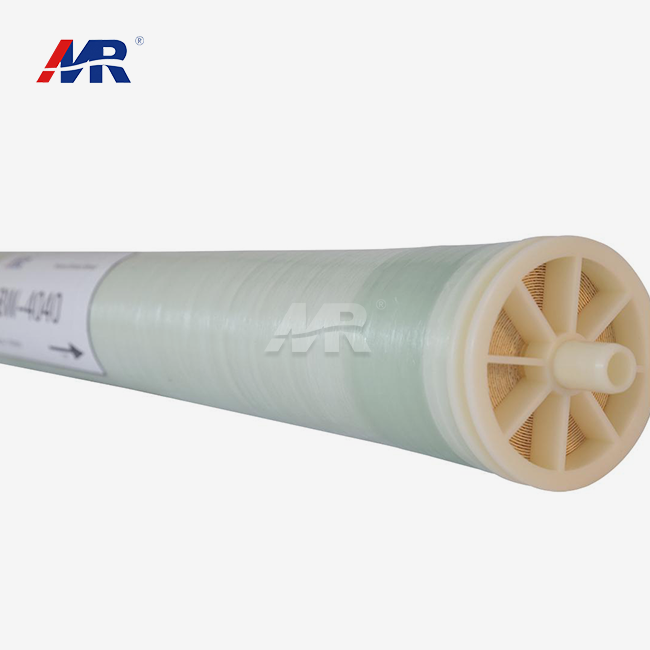
Overview of Reverse Osmosis Membranes and Their Construction
By understanding how these filter elements are put together, you can see why they are so important in the production of drugs, the generation of electricity, and city water systems. The first step in building something is precise polymer engineering, which determines how well the barrier can reject things.
Multi-Layer Architecture Design
The current thin-film hybrid RO membrane is made up of three separate layers that work together. The top layer is made of nylon and is only 0.2 microns thick, but it acts as the main filtering barrier. This very thin active layer is on top of a porous polysulfone support layer that gives the structure support without stopping water flow. The base is made of a polyester cloth backing that is strong enough to handle pressures of up to 600 psi in industrial settings. This layered design is what makes high-quality membranes like the MR-8040 type able to reject 99.5% of salt while cleaning thousands of gallons of water every day.
Manufacturing Precision and Quality Controls
Interfacial polymerisation is used in factories to make the active polyamide layer very precisely at the molecular level. When two reacting monomers meet on the support layer's surface, this process starts. Within seconds, a cross-linked polymer network is formed. Controlling the temperature, the amount of reactant, and the drying time all have an effect on the end qualities of the RO membrane. Manufacturers who follow ISO 9001 standards test finished parts for vacuum decay to make sure the seals are still good. Before it leaves the production line, the 400 ft² MR-8040 element goes through normal wet testing in a controlled environment to make sure that its flux rates and rejection performance meet the requirements.
Material Selection for Durability
How well the RO membrane stands up to chemical attack and physical compression over time depends on the type of polyamide chemistry used. Modern versions have changes that make them less likely to foul and make it harder for organic matter and bacterial biofilms to stick to the surface. The polysulfone support layer needs to be strong and porous at the same time so that it can handle high water flow without breaking under pressure. During cleaning processes, good RO membrane elements can handle pH levels between 2 and 11. This means that workers can get rid of both acidic scale deposits and alkaline organic foulants without hurting the filtration barrier.
How Reverse Osmosis Elements Function in Water Treatment?
Using pressure to push water molecules through a semipermeable barrier against natural osmotic forces is how filtering works. The contaminants stay behind. This part explains the practical details that procurement professionals need to know when they look at system standards.
The Filtration Mechanism Explained
The high-pressure feed water goes into the spiral-wound element. The pressure is usually between 150 and 600 psi, but it depends on how salty the water source is. As water moves across the surface of the RO membrane, the active polyamide layer lets water molecules pass through its selective polymer matrix while physically stopping salts, chemical compounds, and microbes that aren't part of the water. The rejected solutes gather in the brine stream, which moves out of the element, bringing the impurities that have been screened. Water that has passed through the membrane's complex chemical structure gathers in the centre tube. This process gets rid of particles as small as 0.0001 microns, which can be germs, sodium, calcium, nitrates, and more.
Pressure Optimisation for Efficiency
Applied pressure is what controls both the rate of water creation and the amount of energy used. Systems that treat brackish water usually work at 225 psi, which is high enough to beat the osmotic pressure of feedwater that has 2,000 ppm of dissolved solids. To get pure water through the RO membrane, which is made of osmotic resistance, seawater distillation needs higher pressures, between 800 and 1,200 psi. The MR-8040 element can handle up to 600 psi of pressure, which means it can be used for brackish water uses and mild seawater treatment. Designs that use less energy have pressure recovery devices that use the hydraulic energy in the brine stream. In big systems, these devices can cut pump electricity costs by up to 60%.
Flow Dynamics and Recovery Rates
The amount of feedwater that is turned into clean water is shown by the recovery rate, which is found by dividing the permeate flow by the feed flow. Higher recovery rates make better use of water, but they also raise the quantity of solutes that are rejected near the surface of the RO membrane, which makes scaling more likely. For industrial uses, the recovery rate for brackish water is usually between 75 and 80%, while the recovery rate for seawater systems is between 35 and 50%. The gap structure in spiral-wound elements encourages rapid flow across the membrane surface. This reduces concentration polarisation and keeps flux rates constant along the length of the element.
Key Performance Dimensions and Comparative Analysis
To choose the right filter technology, you need to know how RO membrane systems stack up against other ways of cleaning. This study helps technical decision-makers match the skills of treatment with specific goals for water quality.
Comparing Filtration Technologies
RO membrane filters get rid of contaminants based on the size and charge of molecules. For dissolved salts and organic molecules bigger than 100 Daltons, rejection rates are higher than 99%. Ultrafiltration membranes have bigger pores (0.01-0.1 microns) that stop germs and floating solids but let dissolved salts pass through. This means that they can be used for pre-treatment instead of demineralisation. Tiny filtration removes divalent ions like calcium and magnesium while letting monovalent ions like sodium and chloride pass through partly. UV treatment kills microbes but doesn't get rid of dissolved contaminants. Carboxylic acid, on the other hand, is great at soaking up chlorine and organic chemicals, but can't lower the saltiness of water.
The table below highlights the core differences:
Technology Pore Size Salt Rejection Primary Application: RO Membrane, 0.0001 micron and 99.5% Desalination and very clean water Tiny filtration (0.001 min to 60–90%) Softening, getting rid of organics Ultrafiltration: 0.001 to 0.1 micron, 0% Solids in suspension, bacteria Carboxylic Acid: Different 0% chlorine, smell, and taste
Leading Membrane Element Designs
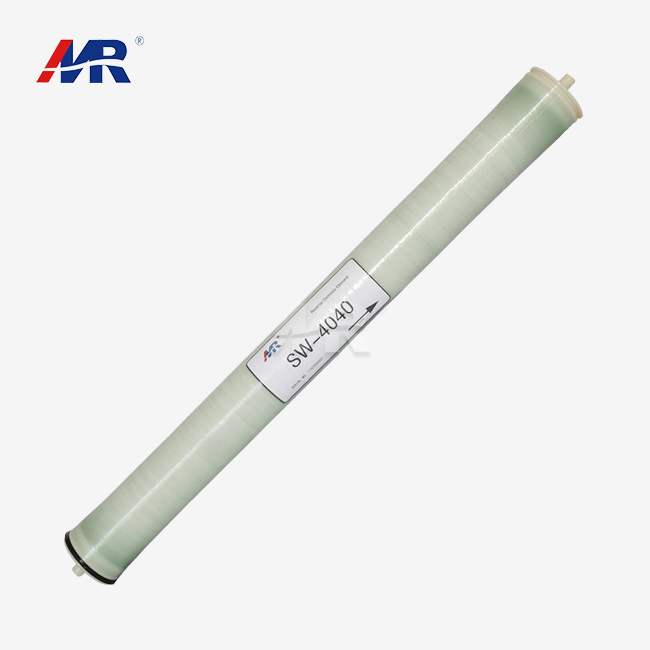
Due to their high packing density and ease of replacement, spiral-wound designs are most common in industry settings. These parts form a tight cylinder with a centre permeate collection tube that is wrapped in flat membrane sheets. This makes the most active area inside a pressure vessel. This design structure was first used by Filmtec and Dow Chemical. It now makes up more than 90% of the market for industrial RO membranes. Using thousands of thin membrane tubes packed together, hollow-fibre membranes can be set up in different ways to suit different needs. The spiral-wound form is used in the MR-8040, which fits normal pressure tanks used in the water treatment business and has a diameter of 8 inches. It has 400 square feet of filtration area.
Performance Factors Influencing Lifespan
How long an RO membrane lasts relies on the quality of the feedwater, how well the pre-treatment works, and how the system is used. Elements that process well-treated feedwater with a silt density index below 3 usually last between 5 and 7 years. Biofouling happens faster when there are a lot of organic loads, and scaling happens when there are too many hard minerals, which lowers flow and raises differential pressure. The permeability of a membrane changes with temperature. Within the safe working range, flow rates rise by about 3% for every degree Celsius rise. The MR-8040 element can handle temperatures up to 113°F, so it can handle the changes in temperature that are typical in industrial settings without losing its effectiveness.
Procurement Considerations: Choosing and Buying Industrial Membranes
When purchasing RO membrane elements, procurement experts have to make tough choices that involve weighing the costs of the original purchase against the long-term efficiency of the business. In this part, we'll talk about the metrics and tactics that make buying go well.
Essential Selection Metrics
The salt rejection rate tells you how well the RO membrane can get rid of dissolved solids. It is found by dividing the feed TDS by the permeate TDS. When used according to the manufacturer's instructions, good industrial membranes keep rejection above 99.5% for the whole time they're in use. Flux capacity, which is given in gallons per square foot per day (GFD), shows how much work can be done. The MR-8040 has high flow rates, which means that more water is made every day without the system's impact getting bigger. Cleaning choices depend on how well the material can handle different chemicals. Polyamide membranes can be damaged by chlorine oxidation, but they can handle most acids and bases in the pH 2–11 range. For chlorine tolerances below 0.1 ppm, dechlorination upstream with carboxylic acid or chemical input is needed.
Supplier Evaluation Framework
When evaluating RO membrane providers, you need to look at their manufacturing skills, Technical support facilities, and the reliability of their supply chains. Well-known names like Filmtec, Dow, Pentair, and Toray have been making films for decades and have a lot of performance statistics. Local providers might have good prices, but you need to make sure that their quality controls are working and have them tested by a third party. Teams in charge of buying things should ask for proof that membrane materials meet NSF/ANSI 61 safety standards for drinking water. When troubleshooting a system, how quickly the vendor is is important. This is why having access to application engineers and expert hotlines is useful after the buy.
Bulk Ordering and Total Cost Analysis
Through economies of scale, buying in bulk lowers the cost of each RO membrane element. Discounts usually start at sales of 20 elements or more. The total cost of ownership includes more than just the buying price. It also includes how often something needs to be replaced, how much cleaning chemical it uses, and how much energy it needs. More expensive, higher-quality membranes that last longer and get clogged less often save money on running costs. This idea is shown by the MR-8040 element, which has both high salt rejection and high fouling resistance, which means it doesn't need to be cleaned as often and can last longer between replacements. To help them choose a good vendor, procurement teams should get thorough cost estimates for a five-year operational time.
Conclusion
The way RO membrane elements are built directly affects how well systems work, how much they cost to run, and how clean the water is in a wide range of commercial settings. Procurement experts can choose elements that meet particular treatment goals by understanding the thin-film composite design, filtration mechanics, and performance factors. The MR-8040 element is an example of advanced membrane engineering. It has a 400-foot-square active area, rejects salt better, and doesn't get clogged easily, making it perfect for demanding uses like making medicines and desalinating seawater. Using the right operating and upkeep procedures will extend the membrane's life, protecting investments and ensuring reliable water purification. Technical leaders who understand these building principles and performance factors put their companies in the best situation to get the best treatment results and the lowest long-term costs.
FAQ
1. What determines the operational lifespan of membrane elements?
RO membrane elements usually last between 3 and 7 years, but this depends on how well they were treated before and how often they are cleaned. Particulate buildup that shortens service life can be avoided by keeping the Silt Density Index below 3 through proper filtration. Using the right cleaning-in-place methods when performance drops by 10-15% gets rid of the buildup of foulants before they cause serious damage. Chemicals in the feedwater can also affect how long something lasts. For example, high chlorine levels can damage polyamide membranes permanently, and too much hardness can cause scaling.
2. How do operating pressures affect different water sources?
To get past the osmotic pressure and reach goal flux rates in brackish water, most uses need 150 to 300 psi. The MR-8040 RO membrane element works well at a maximum pressure of 600 psi and can handle salty sources with a mild to high salt content. Because the feedwater has a high osmotic resistance and 35,000 ppm dissolved solids, distillation of seawater needs 800-1,200 psi. Lower pressures use less energy, but they may hurt efficiency, so it's important to carefully balance the costs of running the business with the need to produce water.
3. Which factors should guide brand selection?
Teams in charge of buying RO membrane elements should look at technical specs, Certifications from third parties, and the system for maker support. Well-known brands offer large performance records and application knowledge built up over many years. It is easier to match elements to specific treatment problems when you look at their salt refusal rates, flow capacities, and fouling resistance. Checking for NSF/ANSI 61 approval makes sure that the materials used to make drinkable water are safe. Long-term operating stability is affected by how quickly suppliers respond to technical questions and how much replacement stock is available.
Partner with Morui for Advanced RO Membrane Solutions
Guangdong Morui Environmental Technology has more than 14 branches, 20 expert engineers, and the ability to make membranes in-house, so it can provide custom RO membrane solutions for all kinds of industries. Our MR-8040 thin-film composite elements have an active area of 400 ft² and can reject 99.5% of salt, so they can handle the tough needs of pharmaceutical ultrapure water, boiler feed for power plants, and public drinking water systems. As a well-known company that makes RO membranes and has specialized equipment processing facilities, we offer full support from the creation of the first system to its installation, commissioning, and ongoing upkeep. Our expert team looks at your unique feedwater characteristics, output goals, and quality standards to suggest the best membrane configurations that match performance with low cost. Our technical knowledge and global supply network guarantee on-time delivery and reliable operation, whether you're setting up food-grade process water systems, increasing the capacity for desalinating seawater, or improving the infrastructure for reclaiming wastewater. Please email us at benson@guangdongmorui.com to talk about your project needs and find out how our membrane technology and full service can help you get the best results from your water treatment.
References
1. Baker, R. W. (2012). Membrane Technology and Applications, Third Edition. John Wiley & Sons, Chichester, United Kingdom.
2. Greenlee, L. F., Lawler, D. F., Freeman, B. D., Marrot, B., & Moulin, P. (2009). Reverse osmosis desalination: Water sources, technology, and today's challenges. Water Research, 43(9), 2317-2348.
3. Petersen, R. J. (1993). Composite reverse osmosis and nanofiltration membranes. Journal of Membrane Science, 83(1), 81-150.
4. Crittenden, J. C., Trussell, R. R., Hand, D. W., Howe, K. J., & Tchobanoglous, G. (2012). MWH's Water Treatment: Principles and Design, Third Edition. John Wiley & Sons, Hoboken, New Jersey.
5. Fritzmann, C., Löwenberg, J., Wintgens, T., & Melin, T. (2007). State-of-the-art of reverse osmosis desalination. Desalination, 216(1-3), 1-76.
6. American Water Works Association (AWWA). (2007). Reverse Osmosis and Nanofiltration (M46), Second Edition. American Water Works Association, Denver, Colorado.