_1745823981883.webp)

What is an EDI water treatment system?
The EDI water treatment method of treating water is very important for getting ultrapure water that is needed for many industrial and scientific tasks. An EDI water treatment system is a must-have when your pharmaceutical business needs water that is clean enough to meet GMP standards or when making semiconductors and needs to get rid of small amounts of ions. This guide is made for buying managers, engineers, wholesalers, and OEM clients who work in business-to-business (B2B) and need to know a lot about EDI water treatment systems. We want to explain how the Edi water treatment technology works, point out its business benefits, compare it to other ways of cleaning, and give useful tips on how to buy and maintain it. By focusing on clarity and dependability, this material helps people make smart choices and builds trust in choosing cutting-edge water treatment solutions that make operations run more smoothly. One of the most modern ways to clean water is with an EDI water treatment system, which uses ion-exchange resins, selective membranes, and direct electrical current to clear ions from water all the time. Instead of using dangerous chemicals to regenerate deionised water, EDI water treatment uses H+ and OH- ions made when water splits to regenerate electrochemical glue in real time. The water resistance of the finished product is higher than 10 M··cm and often reaches 18.2 M··cm. This makes it perfect for uses that need very pure water. The technology gets rid of the downtime that comes with batch regeneration processes and the difficulties of managing acids and caustics. This makes it the best choice for businesses that need regular, high-purity output.
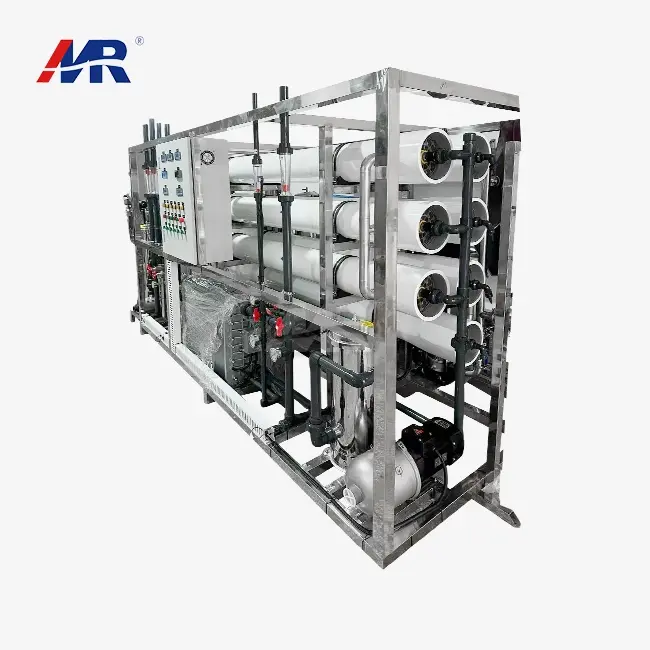
Understanding EDI Water Treatment Systems
What EDI Technology Is and How It Works?
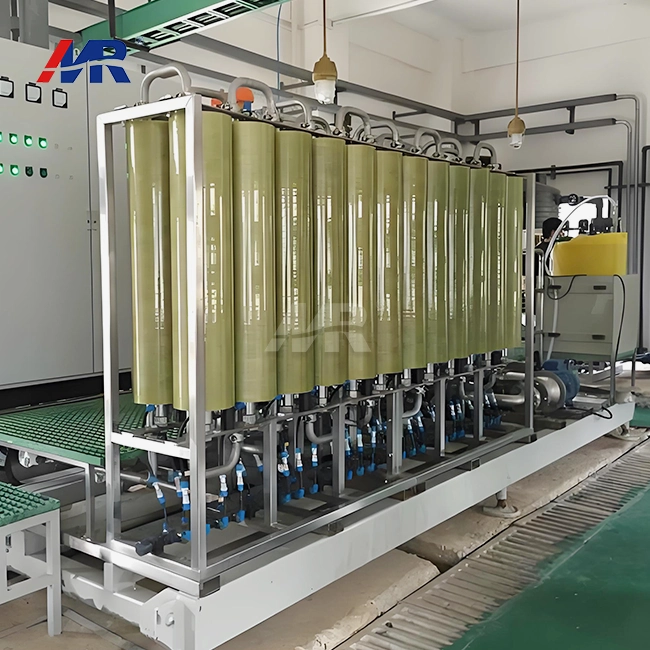
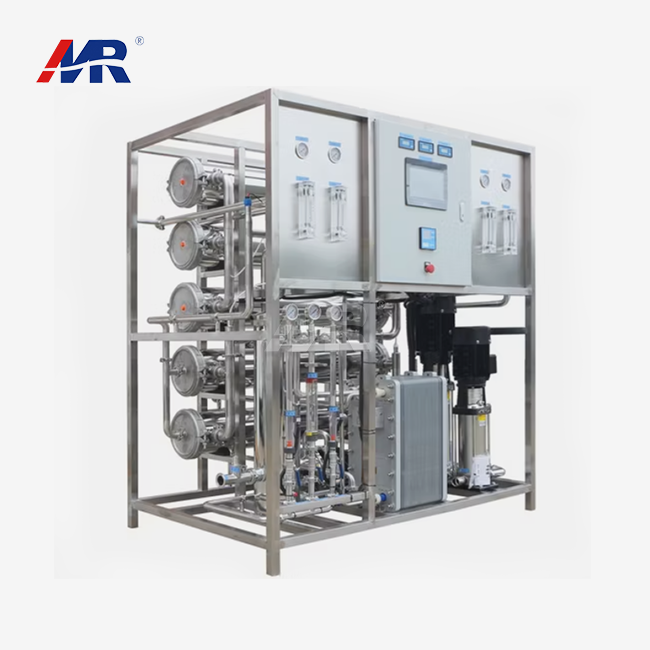
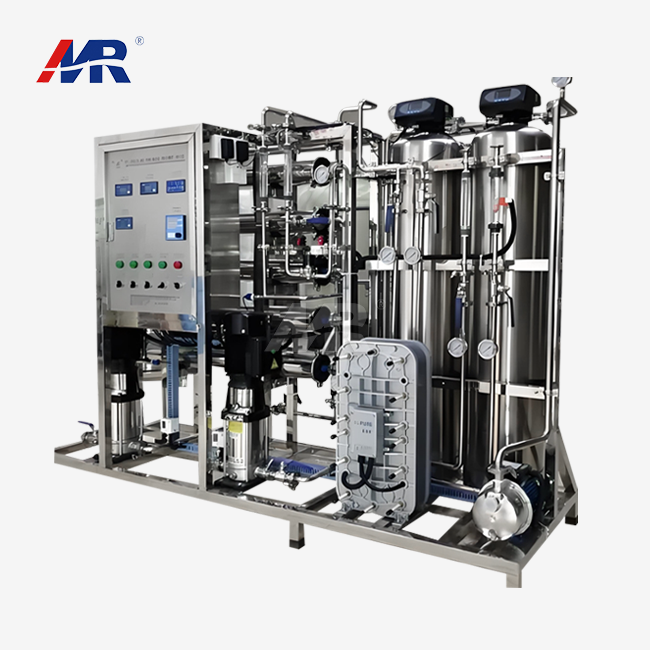
EDI water treatment technology is different from other ways of cleaning, like ion exchange and reverse osmosis, because it works continuously and without using chemicals. Three timed parts work together to make up the main machinery. Ion-exchange resins are in the weak areas between the cation and anion membranes. An electric field (DC) pushes ionic species through these barriers. Positively charged ions move toward the cathode through cation-exchange membranes as feed water flows through the resin-filled tanks. Negatively charged ions move toward the anode through anion-exchange membranes. At the same time, the electrical field breaks water molecules at the contact between the resin and the membrane. This creates hydrogen and hydroxide ions that keep the resins fresh without using any outside chemicals.
Usually, the process starts with water that has already been cleaned going into the EDI water treatment stack and being spread out among several cell pairs. Each cell pair has a dilute chamber that makes clean water and a concentrate chamber that gathers the ions that were taken out. The electric field keeps the ion movement going, which keeps the glue from running out. With this setup, the system can steadily make ultrapure water, and the quality of the product stays the same over long periods of time. Because EDI water treatment regenerates itself, there are no service delays, and it is easier to run than traditional deionisation beds.
Why EDI Is Critical for Sensitive Industrial Environments?
EDI water treatment systems are the best way for industries that need ultrapure water to get rid of impurities that are only slightly charged. Pharmaceutical companies need EDI water treatment to make USP-grade pure water and Water for Injection (WFI). If there are even small amounts of ionic particles in the water, they can affect how well or how sterile the product is. The technology stops the growth of bio-burden by getting rid of the plastic beds that sit still in standard mixed-bed deionizers. These beds can be home to bacterial colonies. For making electronics, especially semiconductors, you need water with a resistivity of more than 18 M©·cm to keep nanometer-scale circuits from getting damaged during the chip rinsing and photolithography steps.
Power plants use EDI water treatment to clean the boiler feed water, and silica and sodium can get into the water and cause scaling on the turbine blades and boiler tubes. Because the technology can lower silica levels to less than 5 ppb, it keeps expensive equipment from rusting and carrying over. The stable output of the EDI water treatment makes sure that testing results can be repeated in a lab setting. The chemical-free regeneration method also makes validation standards easier to follow in controlled industries. This means that quality assurance teams don't have to worry as much about compliance and paperwork.
Benefits and Advantages of EDI Water Treatment
Morui's high-tech EDI water treatment solutions give you measurable operating benefits that have a direct effect on your bottom line. Continuous production of high-purity water gets rid of the downtime that comes with resin recycling processes, which makes the plant more productive overall. When compared to steam distillation methods, our systems use a lot less energy (less than 0.1 kWh/m³) and are much more cost-effective. Without chemical renewal, there is no need for acid and caustic storage tanks, pumps, and neutralisation systems. This means that less money is spent on capital purchases and on buying chemicals on a regular basis.
When edification water treatment is used, protecting the environment becomes an economic benefit. Traditional ion exchange makes a lot of chemically dirty wastewater that needs to be cleaned up before it can be released into the environment. Our edi water treatment systems cut down on trash, which lowers the costs of environmental compliance and helps companies reach their sustainable goals. The small form fits into limited floor spaces, which means that upgrades and additions can be made without major changes to the building. Fully controlled operation cuts down on the need for work and the chance of mistakes made by humans. Long service life—often more than 10 years with proper maintenance—ensures a higher return on investment.
Here are the core advantages our state-of-the-art edi systems deliver:
- Consistent Product Quality: A product water resistivity of more than 10 M··cm makes sure that your sensitive production processes get water that meets strict requirements and doesn't change.
- Recovery Rate Excellence: With recovery rates of over 90%, our systems make the best use of water by lowering the amount of feed water needed and the amount of garbage that needs to be disposed of. This is especially important for sites in areas where water is limited.
- Minimal Maintenance Requirements: Since there isn't any chemical renewal equipment and the operating procedures have been sped up, maintenance times and labour costs are cut down, letting technical staff focus on main production tasks.
- Corrosion-Resistant Construction: High-quality materials make sure that things last, even in places with tricky water chemistry. This protects your investment and keeps repair costs to a minimum.
All of these benefits help procurement managers with the problems they face, like uncertain running costs, complicated rules, and worries about the dependability of production. EDI water treatment systems are a smart investment in both business success and the trust of regulators.
Comparing EDI Water Treatment with Other Methods
EDI Versus Reverse Osmosis
Reverse osmosis is a good pre-treatment step because it gets rid of 95–99% of the total dissolved solids, but it can't make the water as clean as many businesses need it to be. When RO systems make water, the conductivity is usually between 1 and 10 µS/cm. EDI water treatment cleaning, on the other hand, lowers the conductivity to almost theoretical levels. When you use RO first, then EDI water treatment, you get a treatment train that works better because RO gets rid of most of the impurities, and EDI water treatment does the finishing ionic cleaning. If you run EDI water treatment without doing enough RO pre-treatment, the stack will get clogged up quickly, and the machine will work less well.
Because it costs less, the RO+edi water treatment setup is better than distilling alone. Even though RO units need to have their membranes replaced every so often and EDI water treatment stacks need to be fixed up at some point, the total amount of energy used is still much less than that of thermal distillation. When the requirements for water quality allow it, RO alone is enough. Pharmaceutical WFI production and chip manufacturing need better ionic removal that only EDI water treatment can provide. This is why the investment is necessary, even though it costs more up front.
EDI Versus Traditional Ion Exchange
Traditional mixed-bed deionisers make very clean water, but they need to be regenerated with hydrochloric acid and sodium hydroxide every so often. This regeneration process causes operations to stop for several hours, which lowers the amount of work that can be done. Handling chemicals can be dangerous and is regulated, so they need special places to be stored, contained, and thrown away. The regenerative waste streams have a lot of extra chemicals and ions that have been taken away, so they need to be neutralised and treated before they can be released.
Through constant electrochemical renewal, EDI water treatment devices get rid of these problems. Handling dangerous chemicals is not needed, which makes building permits easier and lowers insurance costs. Stable process inputs are made possible by consistent product quality that doesn't go through the performance degradation cycle that comes with exhaustible resin beds. For small-scale uses, traditional ion exchange may have lower starting capital costs. However, when you add up the costs of chemicals, trash disposal, labour, and downtime, EDI water treatment usually comes out on top for medium to large systems that run all the time.
Procurement and Installation Considerations for EDI Systems
Selecting the Right EDI System Capacity
To find the right system capacity, you have to look at peak water usage, cleanliness standards, and growth forecasts. Our 1000 litres per hour (LPH) systems work well for medium-sized businesses like contract drug making, speciality chemical processing, and university research labs. To meet demand above 5,000 LPH, larger sites may need parallel systems or units with more space. Important things to consider are the goal product water resistivity specs and the feed water conductivity, which must stay below 20 µS/cm to keep the EDI water treatment stack from overloading.
The estimates for recovery rates affect how much feed water is needed and how much concentrate needs to be disposed of. Systems that can collect 90% of their inputs reduce waste, which lowers the costs of both getting water and treating garbage. The layout of the equipment is limited by space, but the sizes can be changed to fit into current utility rooms or process areas. Power usage numbers help figure out how much operations cost. The standard for our systems is less than 0.1 kWh/m³, which gives a competitive running expense profile that works for businesses that care about costs.
Evaluating EDI Suppliers and Support Services
Supplier review includes more than just the price of the tools; it also looks at professional support, guarantee terms, and the possibility of a long-term relationship. The Guangdong Morui Environmental Technology Co., Ltd. has more than 14 branches and more than 500 workers, including 20 expert engineers, who offer full installation, commissioning, and after-sales support. Our own facilities for making membranes and processing tools make sure that quality control is maintained throughout the whole supply chain. Our agency relationships with well-known names like Shimge Water Pumps, Runxin Valves, and Createc Instruments show that we are dedicated to putting together the best parts.
Professional installation procedures cut down on the time needed for setup and make sure the system works at its best from the start. Our "turnkey" service includes designing the pre-treatment system, setting up the EDI water treatment modules, writing the machinery, and training the operators. Maintenance plans protect your investment and increase uptime by providing regular checks, replacement of consumables, and emergency response support. Customisation features let you make solutions that fit specific water chemistry problems, limited room, or needs for connecting to existing infrastructure.
Technical Support, Maintenance, and Troubleshooting
Proactive Maintenance Strategies
Scheduled repair procedures keep EDI water treatment systems running well and make them last longer. Feed water quality factors should be checked every three months to make sure that hardness stays below 1.0 ppm (as CaCO₃), and silica stays below 1.0 ppm to keep concentrate tanks from scaling. Free chlorine must not be present because oxidisers damage the usefulness of resins and the stability of membranes. By keeping an eye on the trends in a product's water resistance, you can see when its performance is slowly getting worse. This lets you clean the stack or replace the modules before the quality goes below what was expected.
Conductivity sensors, flow meters, and pressure detectors need to be calibrated so that the process can be controlled correctly and problems can be found quickly. Upstream pollution doesn't get to the EDI water treatment stack because pre-filters, ro membranes, and UV lights (if built in for TOC reduction) are replaced every year. Keeping specific operational logs that include the quality of the feed and product water, flow rates, and electrical parameters makes it easier to find problems and proves success for legal purposes.
Common Operational Challenges and Solutions
A drop in resistance output is often a sign of resin fouling from not pre-treating well enough (e.g., lacking EDI water treatment) or membrane scaling from hardness breakthrough. As soon as possible, steps need to be taken to check the quality of the RO extract and start cleaning the stacks with allowed chemicals. High concentration conductivity could mean that the membrane is damaged or there isn't enough electrical current, which means that the stack needs to be inspected and the power source needs to be checked. If the pressure differences are higher than what was planned, it means that there is particulate fouling in the dilute chambers, which needs to be cleaned with chemicals or backflushing.
Conclusion
EDI water treatment technology is the standard for producing ultrapure water in the medicinal, electronics, power generation, and lab industries in a way that is sustainable and cost-effective. The constant electrochemical recycling gets rid of the need to handle dangerous chemicals, makes operations simpler, and produces uniform quality that can't be achieved any other way. When making a purchase choice, the capital costs should be weighed against the total ownership costs, taking into account things like energy use, upkeep needs, and waste disposal. Working with experienced sellers who offer full help is the best way to make sure that implementation goes smoothly and that the system works well for a long time. As rules get stricter and pressure to be more environmentally friendly grows, EDI water treatment systems can help your business gain a competitive edge by promoting operating excellence and environmental responsibility.
FAQ
1. What water quality can EDI systems achieve?
EDI water treatment devices always make ultrapure water with a resistance higher than 10 MΩ·cm, and at 25°C, it often reaches 18.2 MΩ·cm. It meets the standards for ASTM D1193 Type I, ISO 3696, and USP filtered water. Total Organic Carbon (TOC) levels usually stay below 500 parts per billion, and systems with built-in UV lights can get even lower than 50 parts per billion. Silica levels drop below 5 ppb, and the number of bacteria stays low because the design of the constant flow keeps biofilm from forming.
2. How does EDI compare with reverse osmosis for drinking water applications?
RO is enough to make drinkable water because it gets rid of enough contaminants to meet the EPA Safe Drinking Water Act guidelines. For drinking purposes, where minor mineral content is good for taste and health, EDI water treatment over-purifies the water. The RO+EDI water treatment mix is used in industries that need very pure water, and even small amounts of ionic material can mess up the process. RO or ultrafiltration are used by municipal water plants, while EDI water treatment is only used by certain commercial clients.
3. What is the typical lifespan of an EDI system?
EDI water treatment systems work well for 10 to 15 years if they are properly managed. EDI water treatment stacks need to be fixed up or replaced every 3 to 7 years, but this depends on the quality of the feed water and the number of hours they are used. Every two to five years, pre-treatment parts like RO filters need to be replaced. Buying high-quality feed water conditioning and keeping up with repair plans will protect your equipment's return on investment and make it last longer.
Partner with Morui for Advanced EDI Water Treatment Solutions
Guangdong Morui Environmental Technology Co., Ltd. is ready to be your reliable EDI water treatment provider, offering turnkey solutions that are suited to your unique business needs. Our engineering team plans, builds, and sets up whole ultrapure water systems that include RO pre-treatment, EDI water treatment, cleaning, and conditioning after treatment. We can make membranes, get a lot of parts through relationships with top brands, and have 20 committed engineers who support installations across the country. This gives you the technical knowledge and dependability you need when making a procurement choice. Our 1000 LPH EDI water treatment systems are very good at saving energy, don't need much upkeep, and produce water-resistive Products that are more than 10 M©·cm thick. They meet the high standards of the pharmaceutical, electronics, and power generation industries. Email benson@guangdongmorui.com to talk about your ultrapure water needs and get a personalised plan that meets your quantity, quality, and cost needs.
References
1. American Society for Testing and Materials. (2018). Standard Specification for Reagent Water, ASTM D1193-06. West Conshohocken, PA: ASTM International.
2. Ganzi, G.C., Egozy, Y., Giuffrida, A.J., & Jha, A.D. (1987). High Purity Water by Electrodeionization: Performance of the Ionpure Continuous Deionisation System. Ultrapure Water Journal, 4(3), 43-50.
3. United States Pharmacopeial Convention. (2021). Water for Pharmaceutical Purposes, USP 44-NF 39. Rockville, MD: USP.
4. Semiconductor Equipment and Materials International. (2016). Guide for Ultrapure Water Used in Semiconductor Processing, SEMI F63-0307. Milpitas, CA: SEMI.
5. Wood, J., Gifford, J., Arba, J., & Shaw, M. (2010). Production of Ultrapure Water by Continuous Electrodeionization. Desalination, 250(3), 973-976.
6. International Organisation for Standardisation. (2016). Water for Analytical Laboratory Use — Specification and Test Methods, ISO 3696:1987. Geneva, Switzerland: ISO.