_1745823981883.webp)

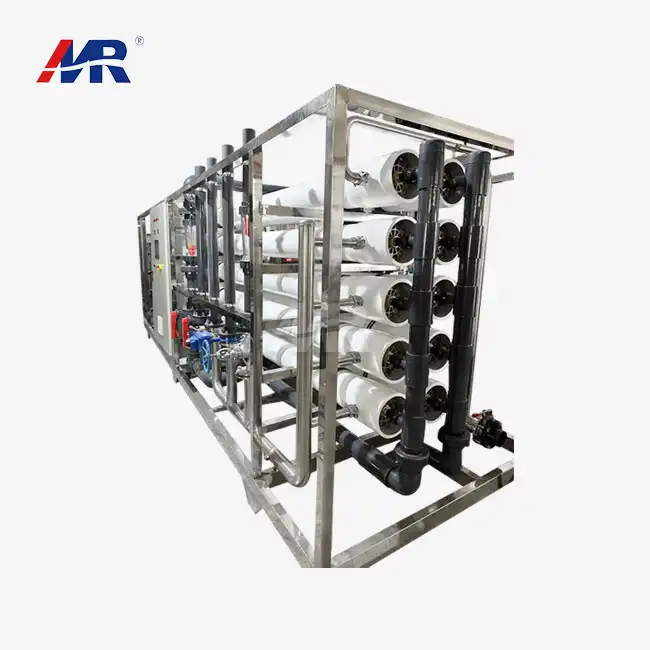
| Parameter | Standard Specification |
|---|---|
| Production capacity | 50 m³/hour (~1,200 m³/day) |
| Recovery rate | Up to 75% |
| Power consumption | 0.8–1.2 kWh/m³ |
| Membrane type | High-rejection TFC membranes |
| Pretreatment | Customizable based on feed water quality |
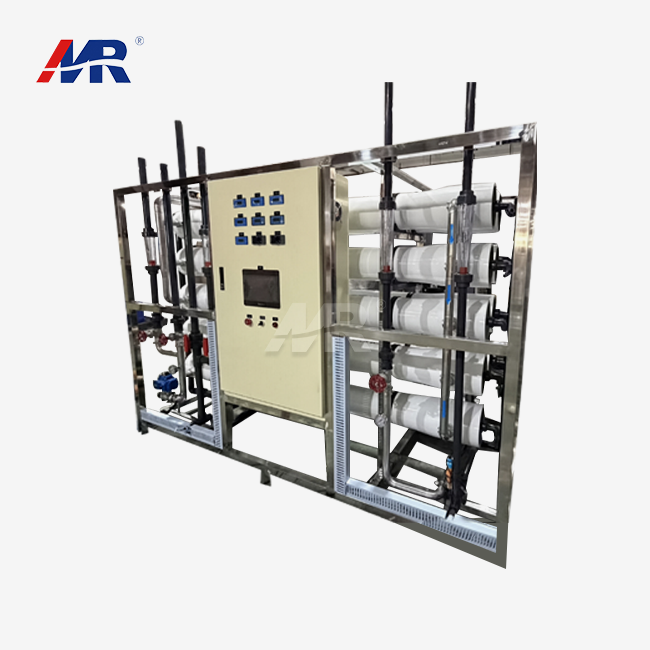
| Control system | PLC with touchscreen interface |
Recovery Rate and Water Resource Efficiency
A recovery rate of 75% corresponds to 37.5 cubic meters of useful permeate generated from 50 cubic meters of raw feed water treated. In arid zones in North Africa and certain areas of South Asia, such efficiency immediately lessens the load on limited groundwater and municipal supplies.
Power Consumption Across Different Feed Water Types
Power consumption of 0.8-1.2 kWh/cubic meter is typical for a brackish or medium saline feedwater setup. Systems treating higher salinity sources like saltwater need much more energy, since pump pressure must be increased to overcome higher osmotic resistance.
Why Specification Sheets Alone Don't Tell the Full Story?
Two systems might have equal capacity, recovery rate, and power consumption numbers, yet behave substantially differently once deployed. The real performance in the field is very dependent upon pretreatment design, pump construction quality, and how well the system fits your particular feedwater chemistry, none of which is readily seen in a simple spec sheet comparison.
Key Components That Make Up the Full System
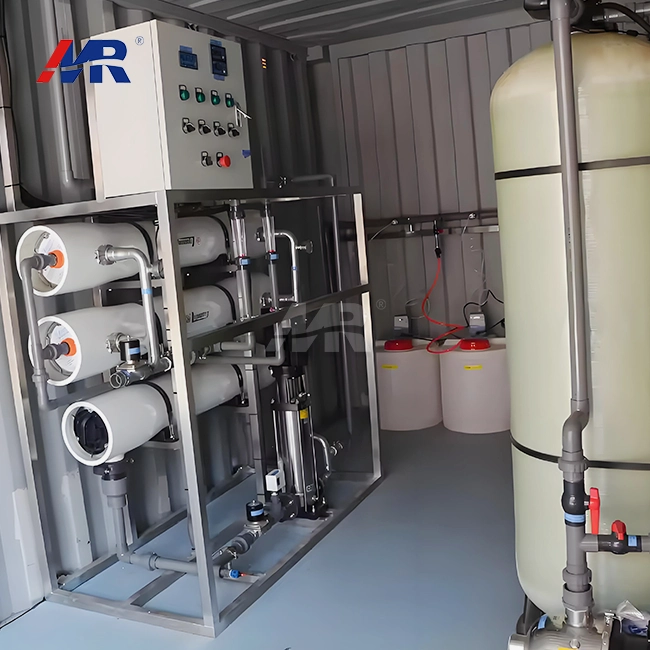
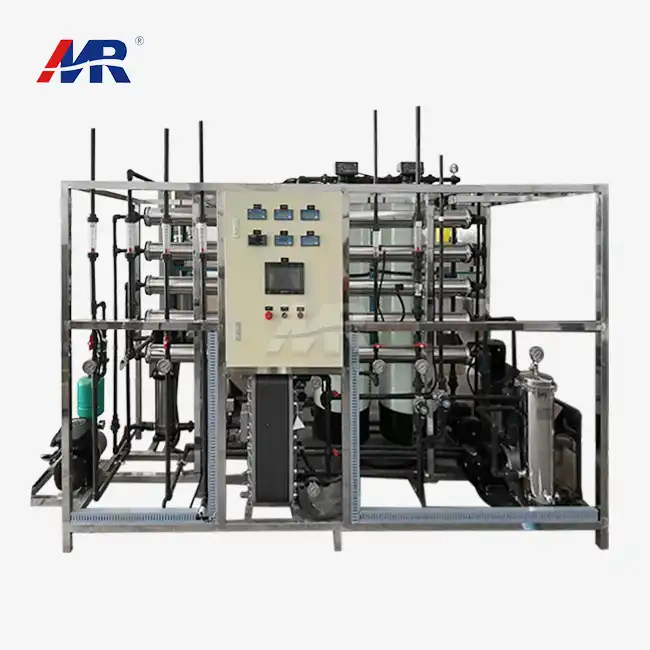
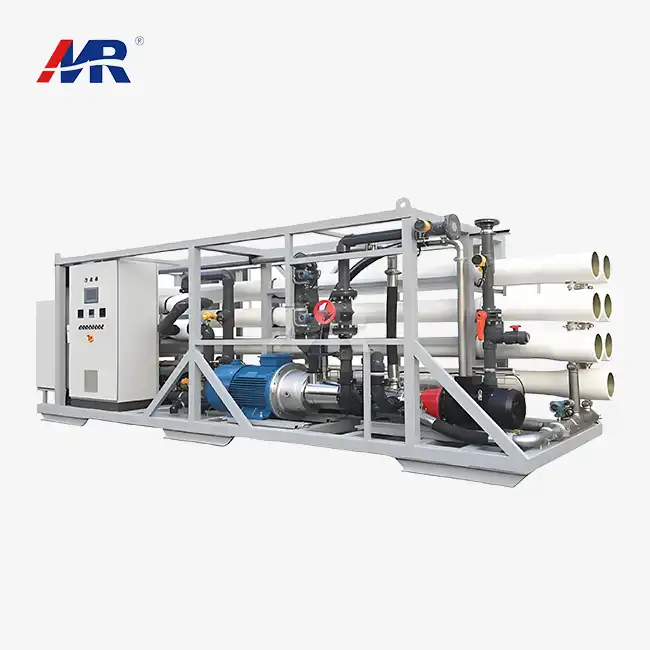
Each trustworthy 50m3/hour reverse osmosis equipment set is comprised of coordinated stages that function in unison. Undersizing or cutting out any step will lead to shorter membrane life and more downtime.
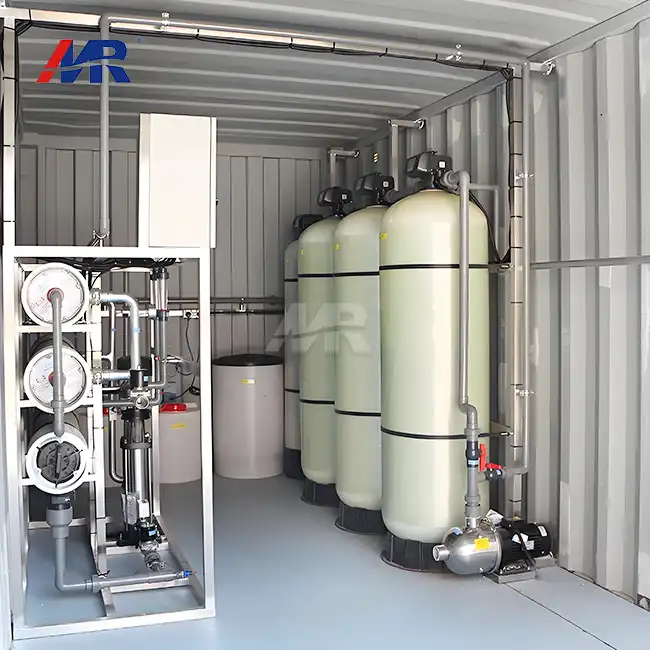
Pretreatment Filtration: Multimedia and activated carbon filters remove suspended particles, turbidity, and chlorine before the water reaches the membranes. A basic setup designed for average water quality generally fails to operate well against genuine seasonal fluctuation in turbidity or organic load, making customization of pretreatment to actual feed water chemistry necessary.
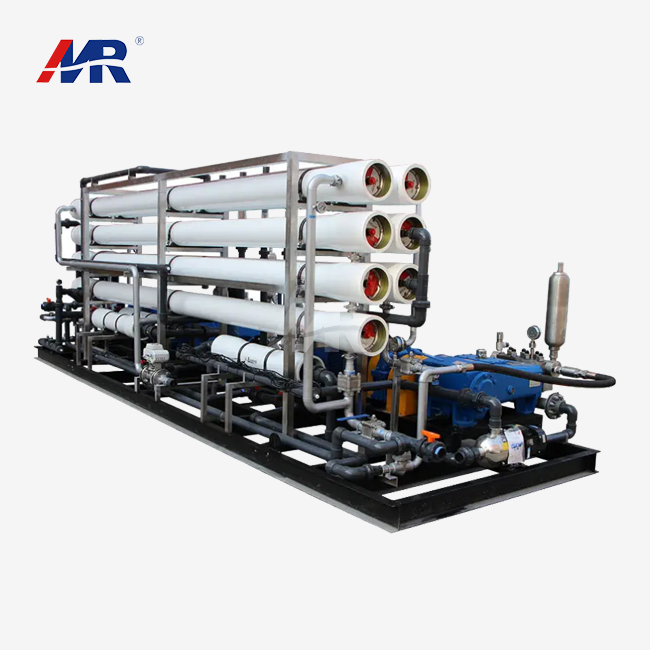
- High-pressure pumping: Multistage centrifugal pumps provide the pressure to maintain the enormous quantities of water across the membrane array. Pump dependability is crucial at 50 m³/hour; a few hours of downtime equates to a large amount of lost output.
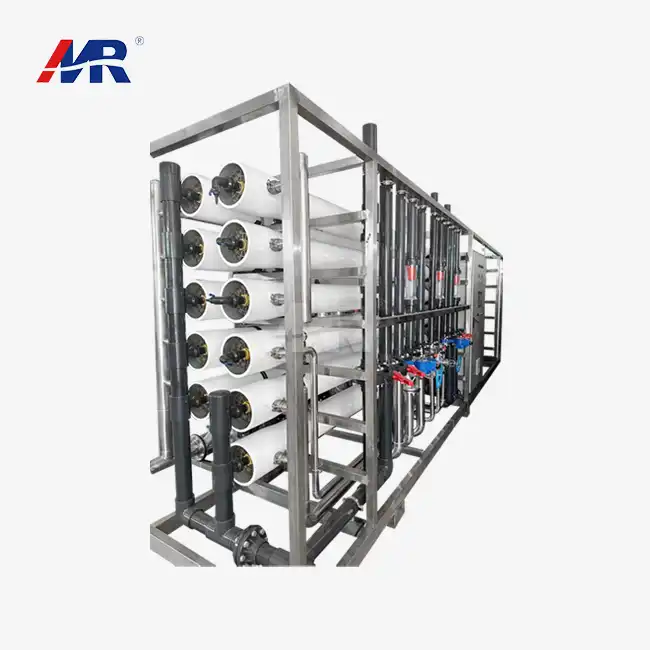
- Reverse osmosis membrane array: The separation process is carried out by high-rejection thin-film composite membranes in several pressure vessels. These vessels are commonly organized in a two-stage array to optimize recovery without exceeding the capacity of individual elements.
- Post-treatment systems: pH adjustment and remineralization render treated water suitable for intended end use, such as distribution of drinking water, boiler feed, or process water for industry.
- Storage and Distribution: Adequate storage tanks buffer supply and demand variations, avoiding pump short-cycling that reduces equipment life and increases maintenance intervals.
They operate as a system, not as individual elements. A poor pretreatment step may compromise even the best quality membrane array, so purchasers of solutions such as 50m3/hour reverse osmosis equipment should consider the whole treatment train, not just the membrane characteristics.
Why Component Integration Matters More Than Individual Ratings?
An efficient pump will not operate as stated if it is fed with undersized pipework or a poorly calibrated control valve. Buyers should seek documented system-level performance data from vendors when evaluating rival quotations, rather than relying on datasheets for individual components.
Membrane Technology and Array Configuration
The membrane array is the technical core of every reverse osmosis equipment installation of 50 m³/hour, and the choices of arrangement have a great impact on long-term performance.
High-Rejection TFC Membrane Structure
The thin film composite membranes are composed of a polyamide barrier layer and a polysulfone support layer. These membranes exhibit salt rejection rates higher than 99% and a high water flow. Their durability and chemical tolerance throughout washing cycles are better than those of previous cellulose acetate membranes.
Two-Stage Array Design for Higher Recovery
On this scale, a 50m3/hour reverse osmosis equipment system typically uses a two-stage membrane arrangement to increase recovery rates from a baseline 50% to as high as 75% by passing first-stage concentrate through a second bank of membranes for further extraction. This design allows maximum water recovery without requiring additional raw water input capacity.
Pressure Vessel Materials and Durability
Fibreglass-reinforced plastic pressure vessels are conventional at this size for brackish water applications, providing corrosion resistance and structural integrity at constant operating pressure. Where local regulations call for additional durability standards, or in higher pressure configurations, vessels are made of stainless steel.
Membrane Cleaning Protocols and Service Intervals
Clean-in-place systems pump cleaning chemicals across the membrane array without complete disassembly, restoring flux performance lost to fouling or scaling. Facilities that use a systematic cleaning routine every 3-4 months show membrane service life increases of 12-18 months compared to reactive, as-needed cleaning procedures.
PLC Automation and Remote Monitoring Capabilities
50 m³/hour is too large for manual operation. All serious 50m3/hour reverse osmosis equipment packages are PLC-based and automated with a touch screen interface for real-time control.
Real-Time Performance Tracking
The operator constantly monitors flow rate, pressure, conductivity, and pH on the control panel of the 50m3/hour reverse osmosis equipment, therefore detecting performance drift before it becomes a costly failure. At this scale, even a little loss in quality may affect massive amounts of water; therefore, this visibility is very important.
Remote Access for Multi-Site Operations
Many facility managers now have several sites and are increasingly using remote monitoring access to check on system performance from a mobile device rather than having to go on-site. This has resulted in a 40% reduction in average issue resolution time for customers operating spread industrial operations across many locations.
Automated Safety Shutoffs and Fault Protection
Low-pressure and high-pressure safety switches automatically shut off operation before pumps or membranes may be damaged, safeguarding the large capital investment that a system of this size represents.
Historical Data Logging for Operational Analysis
PLC systems may record performance data in rolling 12-month periods so that facility managers can see gradual patterns, such as a progressively falling membrane flow, before they become acute issues that need rapid action.
Real-World Applications Across Industries
There is a need for 50m3/hour reverse osmosis equipment in several sectors throughout Asia, South America, and Africa, with different operating requirements.
Municipal Water Treatment Upgrades
This capacity may be used by regional water utilities to improve old treatment facilities without the financial cost of constructing an altogether new plant, generally servicing towns of 20,000 to 35,000 persons (depending on per-capita usage trends).
Power Plant Boiler Feed Water
Boiler feedwater must be constant and low-mineral to avoid scaling and corrosion of turbine elements in thermal power plants. This capability is useful for mid-sized generating plants where water quality directly impacts equipment life and operating efficiencies.
Food and Beverage Manufacturing
This size capacity is used by large bottling operations and beverage manufacturers for continuous high-volume production runs and supports facilities producing well over 100,000 units per day in many shifts.
Mining and Mineral Processing
Process water treatment and water recycling are key applications for this technology in the mining industry, where a reverse osmosis system helps decrease reliance on external water supplies in areas where water rights and availability are constant operating difficulties.
Wastewater Recycling for Industrial Reuse
Manufacturers are increasingly using this capability to treat and recycle process wastewater internally, which helps them reduce both fresh water input and disposal expenses in one fell swoop, rather than counting them as two distinct lines in the budget, especially as discharge restrictions get stricter.
Case Study: Scaling Water Treatment for a Regional Bottler in Nigeria
Lagos, a Nigeria-based regional beverage bottling firm with a production restriction, contacted Guangdong Morui Environmental Technology in 2024.
The Challenge
Their old 30 m³/hour system was running at full capacity due to rapid demand growth, meaning the facility had to work prolonged hours and sometimes miss supply dates. Seasonal surges in turbidity also plagued their previous pretreatment system from their surface water supply during the wet season.
The Solution
Our engineering team built and installed a 50m3/hour reverse osmosis equipment package featuring an advanced reverse osmosis system with enhanced multimedia pretreatment capacity, particularly adjusted for seasonal turbidity variance. The solution incorporated a two-stage membrane array and PLC automation with remote monitoring, allowing the water treatment plant’s technical team to monitor performance without the need for additional personnel.
Measured Results
Within four months after commissioning, the plant eliminated extended shift scheduling completely and met full production demand within normal operating hours. Permeate quality was consistent within 5% variation even at maximum rainy season turbidity jumps. Energy usage is 1.0 kWh per cubic meter, within the predicted design range.
| Metric | Before Upgrade | After Upgrade |
|---|---|---|
| System capacity | 30 m³/hour | 50 m³/hour |
| Extended shift frequency | 3-4 times weekly | Eliminated |
| Permeate quality variance (rainy season) | 15-20% | Under 5% |
| Energy use per m³ | Not tracked (older system) | 1.0 kWh/m³ |
The plant's technical director summarized the impact plainly: "We used to plan our production schedule around the weather. Now the water system just handles it." That operational reliability, more than any single spec, is often the deciding factor for buyers scaling production at this capacity.
What This Project Revealed About Growth Planning?
The client's original request specified a direct doubling to 60 m³/hour based on rough demand projections. Our engineering review, which included eighteen months of production data, showed 50 m³/hour with modest pretreatment headroom actually matched the real growth trajectory more accurately, saving the client unnecessary capital expenditure on unused capacity.
Comparing Top-Rated Systems: What Separates Strong Performers?
Not every supplier offering 50m3/hour reverse osmosis equipment delivers equal long-term value. Choosing a reliable reverse osmosis plant requires evaluating system design, manufacturing quality, and after-sales support. Three factors consistently separate reliable systems from disappointing ones.
Membrane Quality and Replacement Frequency
Premium TFC membranes typically last 5-7 years with proper maintenance, compared to 2-3 years for budget alternatives. At this production scale, the cost difference in membrane replacement frequency alone can amount to tens of thousands of dollars over a five-year period.
Pretreatment Customization Depth
Sites with variable feed water, particularly surface water sources affected by seasonal changes, need pretreatment configured for actual site conditions rather than a generic average. Systems offering deeper customization options adapt far better to real-world variability than fixed configurations.
Automation Sophistication and Data Logging
Basic systems offer manual valve operation with limited data visibility. Top-rated systems include comprehensive PLC automation with historical data logging, supporting both operational efficiency and regulatory compliance reporting where required.
Manufacturer Track Record and Installed Base
Suppliers with a documented history of reverse osmosis plant installations at this specific capacity, ideally with verifiable client references, carry less risk than newer entrants without a proven track record. Asking for site references and actual performance data from comparable installations helps validate marketing claims before signing a contract.
These four differentiators explain why two systems marketed at an identical 50 m³/hour capacity can produce dramatically different five-year operating outcomes.
Total Cost of Ownership: Energy, Maintenance, and Long-Term Value
Purchase price represents only part of the real cost of operating 50m3/hour reverse osmosis equipment over its working life.
Annual Energy Cost Projections
At 1.0 kWh per cubic meter running at full capacity 20 hours daily, a system consumes roughly 1,000 kWh per day, or approximately 365,000 kWh annually. This represents a substantial recurring cost that varies significantly based on regional electricity rates across different markets.
Membrane and Chemical Budget Planning
Budgeting for membrane replacement every 5-7 years alongside ongoing antiscalant and cleaning chemical costs provides a realistic long-term cost projection. Buyers who skip this calculation commonly underestimate total ownership cost by 25-30% compared to the initial equipment quote alone.
Labor and Service Contract Considerations
Facilities without dedicated water treatment technicians often rely on service contracts for routine maintenance and troubleshooting support, typically representing 5-8% of equipment value annually when factored into total cost calculations.
Calculating Return on Investment for Efficiency Upgrades
Facilities upgrading from an older, less efficient system to a commercial RO system often see payback periods of 18–30 months purely through energy savings, before even factoring in reduced downtime or improved product consistency. Requesting a documented ROI projection from suppliers, rather than relying on general efficiency claims, gives a clearer picture of actual financial benefits.
Common Mistakes Buyers Make at This Capacity
Reviewing installations across multiple markets reveals recurring specification errors that buyers can avoid with better planning.
Sizing for Average Demand Instead of Peak Demand
Designing around average daily water consumption rather than peak-hour demand leaves systems unable to keep pace during high-production periods, often forcing costly emergency capacity additions within the first two years.
Underestimating Pretreatment Needs for Variable Feed Water
Facilities relying on surface water sources with seasonal variation need pretreatment systems calibrated for worst-case conditions, not just average water quality readings taken during a single site visit.
Overlooking Local Power Grid Stability
Voltage fluctuations common in parts of Africa and South America can damage sensitive PLC components in a commercial RO system without proper surge protection, making voltage stabilization a necessary standard feature rather than an optional add-on at this production scale.
Neglecting to Plan for Future Expansion
Facilities that specify equipment tightly matched to current demand, without modular expansion capability, often face expensive full-system replacement within a few years of continued growth rather than a simpler capacity addition.
Conclusion
Top-rated 50m3/hour reverse osmosis equipment delivers dependable, high-volume water treatment for municipal utilities, power plants, food and beverage manufacturers, and mining operations across emerging markets. The difference between a system that performs reliably for a decade and one that requires constant retrofitting comes down to membrane quality, pretreatment customization, and automation depth. Buyers who evaluate total cost of ownership alongside upfront price consistently report smoother operations and fewer unexpected expenses.
FAQ
1. How much does 50m3/hour reverse osmosis equipment cost?
Complete systems typically range from $110,000 to $220,000 USD depending on automation level, pretreatment complexity, and materials selected for pumps and pressure vessels.
2. How long does installation take?
Standard installation and commissioning takes 8 to 12 weeks from site preparation through startup testing, assuming civil works and utility connections are ready beforehand.
3. What recovery rate can I expect from this capacity?
Most well-designed systems achieve 65-75% recovery for brackish water sources, though actual performance depends on feed water salinity and membrane configuration.
4. Can this equipment handle variable feed water quality?
Yes, with customized pretreatment calibrated for your specific water source, including seasonal turbidity or mineral content changes common in surface water applications.
Request a Custom System Proposal
Sourcing a dependable 50m3/hour reverse osmosis equipment manufacturer starts with confirming in-house membrane production and verified installation records. Guangdong Morui Environmental Technology Co., Ltd. operates its own membrane production factory and multiple equipment processing plants, backed by 14 branches, 500 employees, and 20 in-house engineers across our network. We serve as the authorized agent for Shimge Water Pumps, Runxin Valves, and Createc Instruments, giving clients trusted components within one integrated project quote. Email our engineering team at benson@guangdongmorui.com to request a proposal built around your feedwater analysis.
Every industrial water treatment project starts with different feedwater conditions, production targets, and site constraints. Morui provides customized system design, complete installation and commissioning support, operator training, and ongoing preventive maintenance programs across Asia, South America, and Africa. Whether you're comparing 50m3/hour reverse osmosis equipment for sale from multiple vendors or planning your first large-scale industrial installation, request a documented performance guarantee and site-specific water analysis before finalizing your purchase.
References
1. World Health Organization. "Guidelines for Drinking-water Quality," 2022. https://www.who.int/publications/i/item/9789241549950
2. World Bank. "Water in Circular Economy and Resilience Report," 2023. https://www.worldbank.org/en/topic/water/overview
3. International Desalination Association. "Desalination Yearbook 2024." https://idadesal.org/
4. U.S. Environmental Protection Agency. "Membrane Filtration Guidance Manual." https://www.epa.gov/dwreginfo/long-term-2-enhanced-surface-water-treatment-rule-documents
5. Journal of Membrane Science. "Fouling Resistance in Thin-Film Composite Membranes," 2023. https://www.sciencedirect.com/journal/journal-of-membrane-science
6. Food and Agriculture Organization of the United Nations. "Water Scarcity Overview," 2023. https://www.fao.org/land-water/water/water-scarcity/en/
Author: Benson Peng, Senior Water Treatment Process Engineer
Benson Peng has spent over 12 years designing industrial RO, UF, and desalination systems across Southeast Asia, South America, and West Africa. He holds a degree in Chemical Engineering and has led commissioning projects for municipal, power generation, and beverage manufacturing clients across three continents. Visit moruiwater.com to learn more about our professional engineering team.