


Sludge Sewage Treatment Water Content Targets From 99% Down to 60%
Sludge sewage treatment usually reaches 60% water content in stages, not in one step. Thickening takes raw sludge from about 98–99.5% water down to roughly 94–98%. Mechanical dewatering then brings it to about 70–85%, and intensive pressing or thermal drying can push it to 60% or below. These figures are planning ranges, not guarantees, because sludge type, polymer conditioning, and equipment all change the result. I wrote this guide for US plant owners, engineers, and industrial operators who want clear targets, honest limits, and a practical way to cut sludge volume at the source.
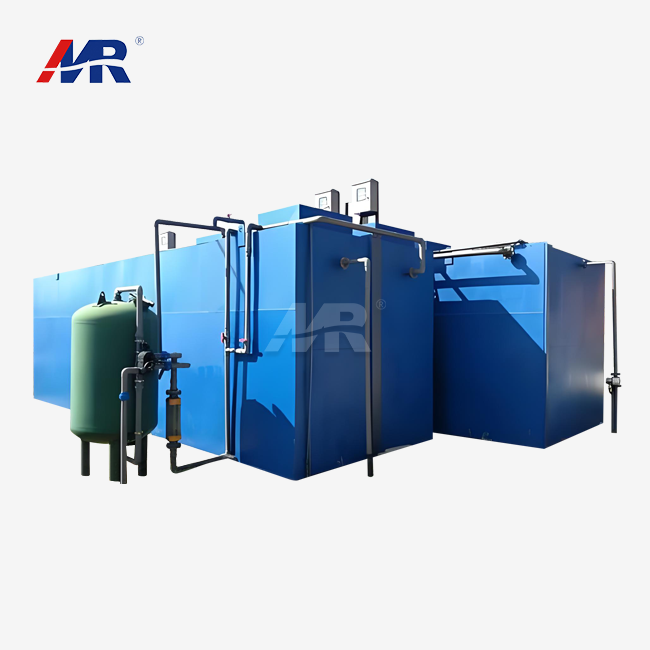
Sludge Water Content Targets at Each Treatment Stage
What 99% Water Content Means in Practice?
There is one number with two sides: water content and dry solids content. At 99% water, sludge can hold 1% dry solids. To show this, let's use 100 kg of dry grains. That load weighs about 10,000 kg because it is mostly water. It weighs about 3,333 kg when it's 97% water, 400 kg when it's 75% water, and 250 kg when it's 60% water. So, going from 99% to 60% cuts the amount of weight you carry by about 97.5%. That's why the costs of hauling and getting rid of trash drop so quickly as the temperature rises. When I look over a project, I ask the buyer to write down both the inlet and outlet values in the same document. That way, no one gets the percent water and percent solids mixed up.
Typical Water Content After Each Step
There are four steps that most plants take. By thickening, the water level drops to about 94% to 98%. Stabilization, like digestion, gets rid of smells and germs but not a lot of water on its own. When cake is mechanically dewatered with belt presses, centrifuges, screw presses, or filter presses, it usually has 15–30% dry solids, or 70–85% water. Intensive drainage can remove up to 75% of the water, while drying removes less. To get to 60% water, you need about 40% dry solids, which usually means high-pressure dewatering, heat or sun drying, or a mix of the three. Every range here is a planning value for me. What a machine will do can only be proven by testing it on real sludge in a lab.
Why Sludge Often Misses the 60% Target?
The hardest part is the last 10 to 20 percentage points. Free water is easily able to leave, but water that is chemically bound and capillary-bound stays with the solids and needs more heat or pressure to leave. Wet cake can happen when sludge analysis is skipped, the wrong material is used, mixing is bad, or the equipment is too big or too small. Too much polymer can weaken flocs and make them cost more to run. Changes in temperature and load that happen with the seasons also move results. Since mechanical dewatering is not the same as drying, adjusting a press that is rated for 25% solids will not get it to 40% solids on its own. A good quote includes information about the sludge, the flow rate, the dry solids, the polymer demand, and the test methods.
Dewatering and Drying Technologies for Sludge Sewage Treatment
Mechanical Dewatering Options
Every machine is good for a different job in sludge sewage treatment. A belt press never stops working and doesn't need a lot of power. Centrifuges are small, inside, and have a lot of automatic functions. Screw presses work well for small plants that want to be quiet and easy to maintain. Filter presses dry cakes more quickly, but they only work on groups at a time. The EPA fact sheets on centrifuges and belt presses talk about these trade-offs, and Metcalf and Eddy give a list of typical cake solids ranges. You can choose based on water demand, labor, throughput, and target dryness. I wouldn't choose a unit based on a brochure's widest rating. I would ask the supplier what they found with sludge that was like yours.
Thermal and Solar Drying
When you dry something, the tightly bound moisture that presses leave behind is gone. Thermal dryers are a reliable way to get rid of moisture, but they need to be carefully managed for energy, dust, smell, and fire safety. Solar dryers use less energy in places where the weather and land allow them to, but they need more time and room. The best time for both is after mechanical filtration, since heating wet sludge is a waste of fuel. Drying too much can use more energy than it saves in hauling. Instead of trying to find the lowest number, I usually tell people to choose a dryer based on the level of moisture that their disposal method needs. For example, cake that is drier works better for burning and some reuse choices. On the other hand, cake that is wetter works better for landfills and composting.
Matching Sludge Type and US Disposal Rules
That's how biosolids can be used in the US according to the EPA's 40 CFR Part 503 rule, which sets limits on pathogens, vectors, and pollutants. One way to meet the standards for vector attraction is to dry. The EPA says that the sludge should have at least 75% solids if it doesn't have any unstabilized solids from the primary treatment and at least 90% solids if it does. You should test all of them because primary, secondary, digested, mixed, and industrial sludges all behave differently. Different states have different rules about how to use PFAS and metals on land, so check them out before you decide. Your moisture goal should be set by your waste plan, not the other way around.
How do Morui MBR Systems Reduce Sludge at the Source?
Why does an MBR lower the Sludge Burden?
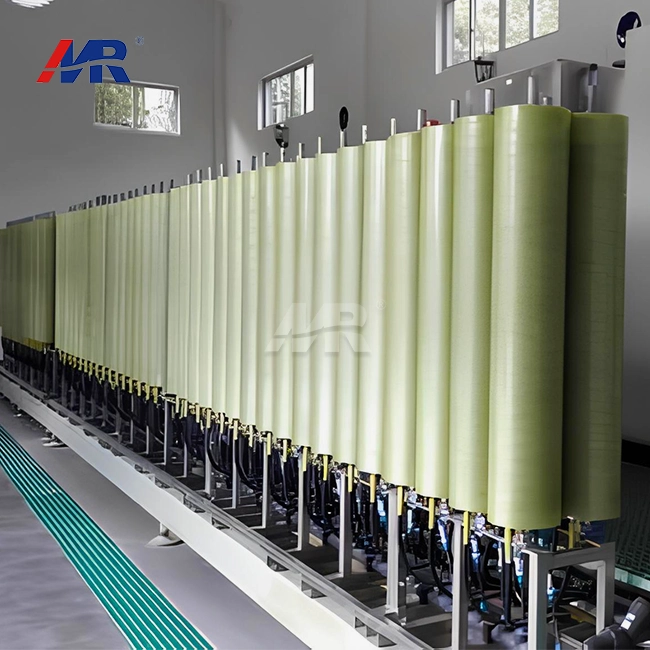
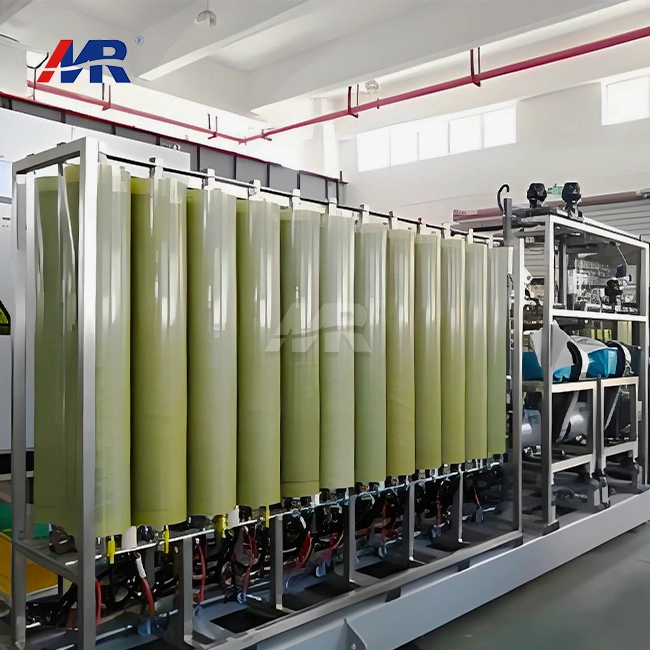
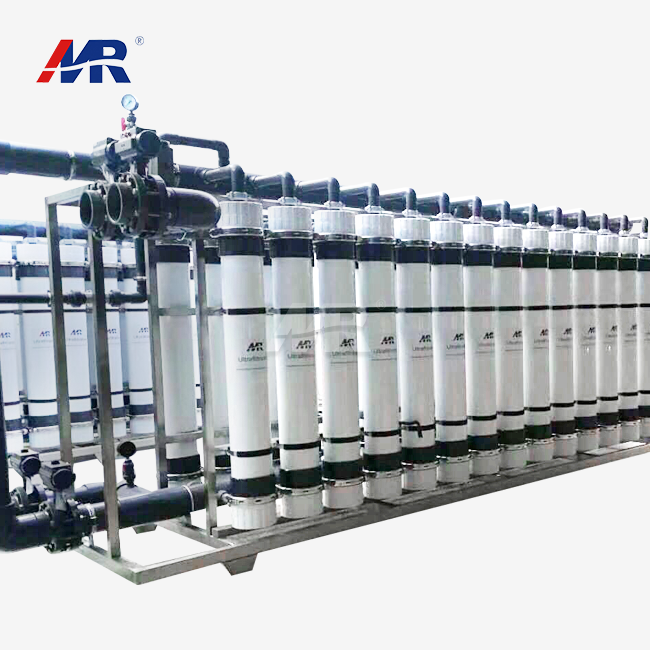
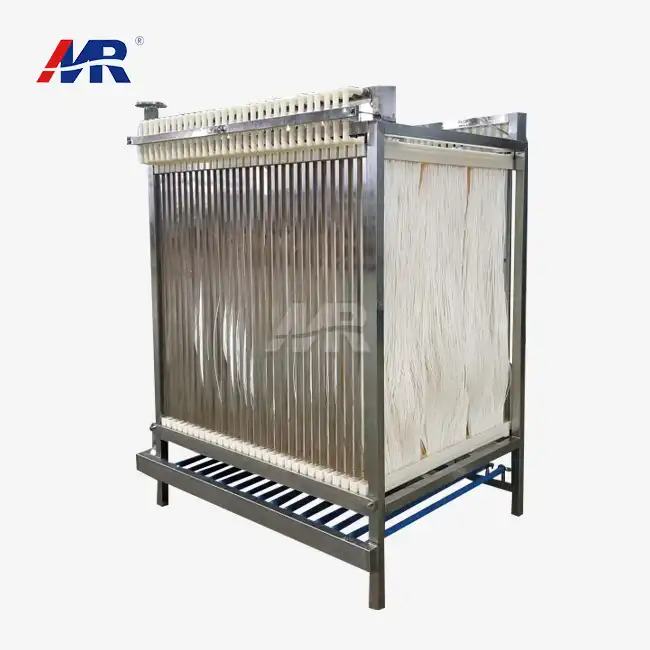
Sludge that you don't make is the cheapest to dry out in sludge sewage treatment. An MBR uses both biological treatment and hollow-fiber ultrafiltration. Instead of a clarifier, the membrane holds on to the biomass. According to Judd's MBR book, this lets plants run with more biomass in a smaller tank. Our systems use fewer chemicals and make less sludge than other systems, which lowers the cost of disposal. If the sludge stream is smaller, you can make your presses, dryers, and hauling trips smaller. A sludge line is still needed even if you have an MBR. It makes that line less busy.
Morui MBR Specifications
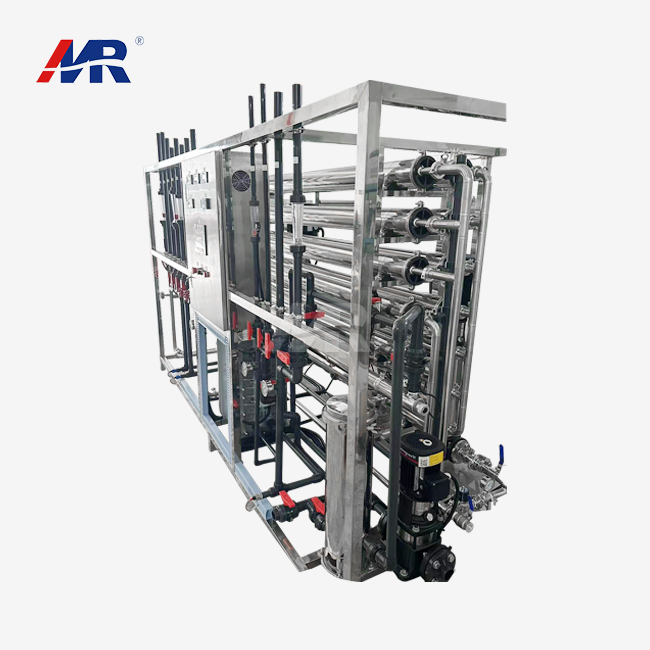
We have MBR systems at our waste treatment plant that handle 100 m³ to 100,000 m³ per day. One micron is how big the pores are in the membranes. According to our requirements, the effluent must have a turbidity below 0.5 NTU and remove BOD above 95%, COD above 90%, nitrogen above 80%, phosphorus above 90%, and nitrogen above 90%. Screening and removing grit, initial clarification, aerobic and anoxic biological treatment, membrane filtering, disinfection, and treatment and dumping of sludge are all parts of the process. Automated process control cuts down on work, and the modular design lets the business grow. Low-energy operation comes with options for recovering energy, and the small footprint is good for places that don't have a lot of room.
Applications, OEM Support, and Turnkey Service
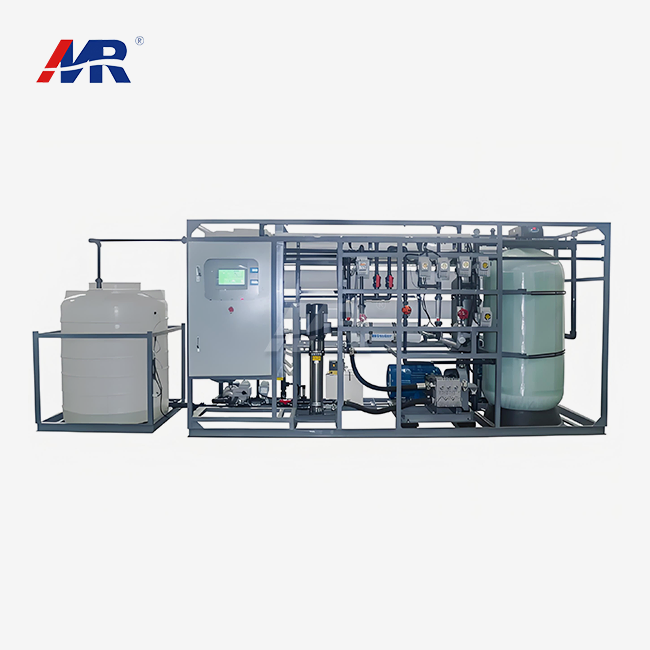
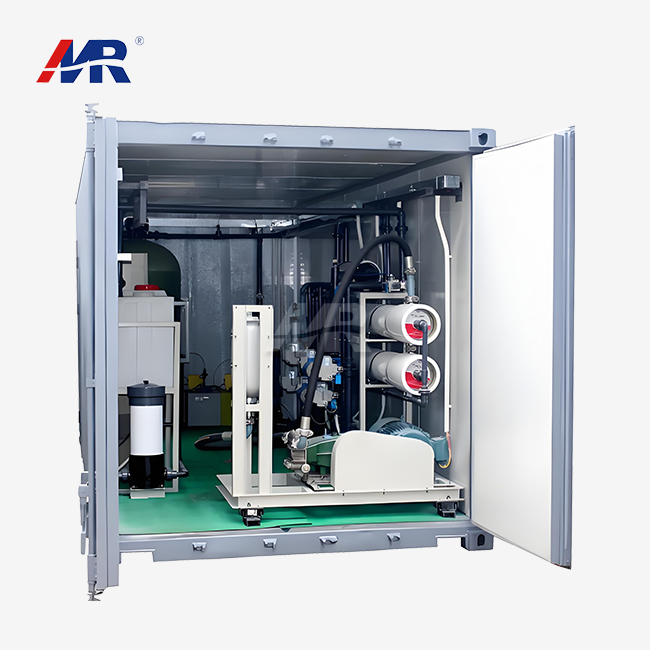
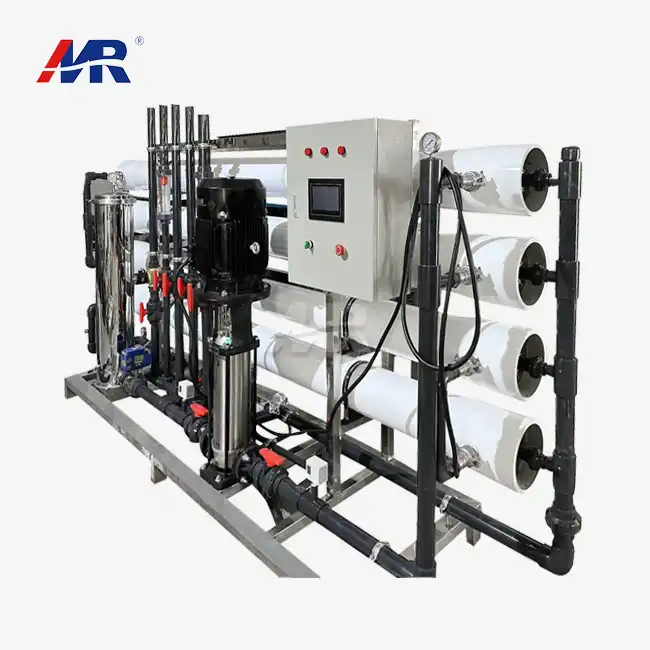
Morui has its own factory for making membranes and several factories for processing equipment. It also has more than 14 offices, 500 workers, and 20 engineers to support these factories. We offer control systems, integrated units, membrane modules, and can set up buried, above-ground, or container forms for your project. It can be used in city plants, independent sites, water reclamation, pharmaceutical and food and beverage effluent, and to improve standard plants. We also sell Shimge water pumps, Runxin valves, and Createc instruments, so you can get everything you need for installation and start-up in one place. For projects in the US, let us know early on what Certifications and test reports your area needs so that we can help you plan the paperwork.
Conclusion
Through thickening, stabilizing, mechanical filtration, and, if necessary, drying, sludge sewage treatment lowers the water content from about 99% to 60%. The math behind the mass shows why the work is worth it: the hauled weight drops by about 97.5% in that range. Most mechanical tools stop when there is 70–85% water, which means that 60% needs to be pressed or heated very hard, and this uses the most energy. The type of sludge, the throughput, the polymer's response, and the way it will be disposed of, as well as 40 CFR Part 503 requirements in the US, affect the choice of technology. Ratings on brochures aren't as accurate as tests done on real sludge. When you use an MBR, you make less sludge upstream, which lowers the load on the next step and the cost of disposal.
FAQ
Q1: Can one machine take sludge from 99% to 60% water?
A: Not often. Most plants do thickening, conditioning, mechanical dewatering, and drying all at the same time. Most presses stop when they reach 70–85% water, so the last step generally needs heavy pressing or heat.
Q2: Is water content the same as dry solids content?
A: No, they don't add up to something else. At 60% water, sludge can hold 40% dry solids. In every price and detail, you must say which number you mean.
Q3: Does an MBR reduce sludge production?
A: Our MBR systems make less sludge than other systems, which cuts down on the cost of disposal. They still make some sludge, so they still need a plan for thickening, draining, and getting rid of it.
Q4: What data should I send for a quote?
A: Send the source of the sludge, the flow rate, the feed dry solids, the target moisture, the operating hours, the utilities, the site conditions, and the route for disposal or reuse.
Request Your Sludge Sewage Treatment Quote From Morui
Morui can help you figure out the right size MBR system and sludge line for your site. Email benson@guangdongmorui.com with your flow, influent, and discharge or reuse goals, and one of our engineers will get back to you with a project plan. If you are looking at different sludge sewage treatment companies, please ask us about the membrane module, integrated unit, and control system choices we offer.
References
1. Wastewater Engineering: Treatment and Resource Recovery, Metcalf & Eddy, 2014
2. Control of Pathogens and Vector Attraction in Sewage Sludge, U.S. EPA, 2003
3. Biosolids Technology Fact Sheet: Centrifuge Thickening and Dewatering, U.S. EPA, 2000
4. Biosolids Technology Fact Sheet: Belt Filter Press, U.S. EPA, 2000
5. Design of Water Resource Recovery Facilities, Manual of Practice No. 8, Water Environment Federation, 2018
6. The MBR Book: Principles and Applications of Membrane Bioreactors for Water and Wastewater Treatment, Simon Judd, 2011