



RO EDI Water System Costs: CapEx, OpEx and 30-50% Chemical Savings
An ro edi water system should be judged by total cost of ownership, not by purchase price alone. CapEx covers pretreatment, reverse osmosis, EDI modules, controls, installation, and commissioning. OpEx covers electricity, water, filters, membranes, and maintenance. Because EDI regenerates its resin with electric current instead of acid and caustic, chemical savings of 30–50% are often cited against conventional mixed-bed deionization. That range is not a guarantee. It depends on feed-water quality, operating hours, recovery, and the system you replace. Below, I walk through each cost line so you can build a fair comparison.
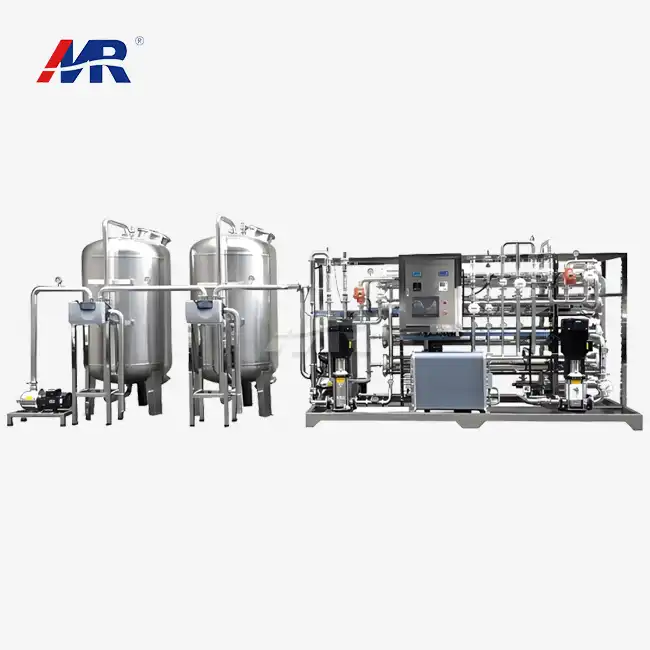
How an RO EDI Water System Works
From Raw Water to Ultrapure Water: The Process Train
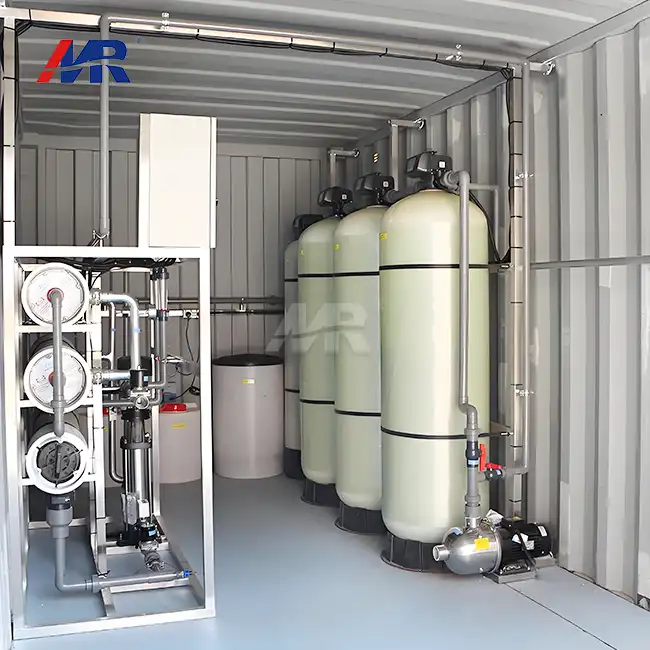
There are five steps in our normal process: pretreatment, reverse osmosis, electrodeionization, final finishing, and storage and delivery. Solids, chlorine, and hardness that could damage membranes are taken out during pretreatment. The RO stage then gets rid of up to 99% of the bulk ions, organics, and particles. EDI does the work. It has ion exchange membranes, ion exchange resin, and a direct electric current that pulls the last few ions that are dissolved from the product stream into a concentrate stream. Since the resin is always being renewed by the same current, production never stops for a renewal cycle. The water is then kept safe until it is time to use it by polishing and a holding loop.
Feed-Water Limits That Protect the EDI Stage
EDI modules can handle a lot more contamination than ro membranes, so the RO permeate needs to be in good shape when it gets there. Some ions, like calcium, can build up on RO membranes and EDI concentrate channels, which makes them less effective and shortens their useful life. That can't happen with a softener or antiscalant dose. Adding a degasser before the EDI stage is often suggested because the final resistance can go down if there is dissolved CO2 in the RO filtrate. For feed water with a lot of salt, double-pass RO is usually needed. This lowers the conductivity to below 40 µS/cm, which is the range that EDI can handle. I bring these up early because they determine the scope of the pretreatment, and the cost is determined by the scope of the pretreatment.
Product Data and Target Applications
Our EDI water plant can handle flow rates of up to 100 m³/h and makes water with a resistivity of more than 18 MΩ·cm. To give you an idea, the resistivity of pure water in theory is 18.18 MΩ·cm at 25 °C, and ASTM D1193 Type I reagent water is above 18 MΩ·cm. Recovery can go as high as 95%, energy use stays below 0.1 kWh/m³, and the pressure ranges from 2 to 6 bar. The small size saves floor space, and the dimensions can be changed based on the capacity. Pharmaceutical, semiconductor, power generation, electronics, and food and beverage plants are some of the most common users. For each use, there are different limits on conductivity, TOC, particles, and cleanliness, so before I size the train, I always make sure I know what the goal standard is.
RO EDI Water System CapEx and OpEx
What Sets the Initial Purchase Price?
CapEx for a ro edi water system goes up when there are goals for water quality, volume, and technology. Usually, a full quote includes things like pretreatment, cartridge filters, pumps, RO membranes, EDI modules, instruments, PLC controls, tanks, and distribution gear. Costs go up for things like double-pass RO, clean building, UV or UF stages, validation work, and tracking from afar. Things that happen on the site are also important, like the foundations, piping, electrical work, factory and site acceptance testing, training, and commissioning. Ask all bidders to quote the same way, whether it's EXW, FOB, CIF, or shipped. This way, you won't be surprised by freight and installation costs after you sign. We have one factory where we build RO, EDI, and UF lines. This lets us offer both process design and manufacturing as a single scope.
Where Long-Term Operating Costs Come From
The six main lines of business that make up OpEx are water, electricity, cleaning supplies, membranes, cartridge filters, and maintenance labor. Most of the power goes to UV lamps, transfer pumps, RO high-pressure pumps, and EDI power sources. The price of water is based on RO recovery, EDI concentrate flow, flushing, and backwashing. Our EDI stage says that it can collect up to 95% of the water and use less than 0.1 kWh/m³ of energy. You should ask other bids for the same two numbers in similar units, like kWh and cubic meters per cubic meter of product water. If you treat the RO water properly, EDI modules should last between three and five years. Put one replacement in your five-year model.
A Five-Year TCO Checklist for Comparing Quotes
First, make sure that all of the quotes are in line with each other when it comes to volume, water quality, pretreatment, storage, automation, paperwork, guarantee, and water quality. Then, make a table that shows how much it will cost to use the equipment, have it installed, get electricity, water, chemicals, consumables, labor, spare parts, deal with wastewater, and have downtime. Next, change the prices of electricity, water, chemicals, operating hours, and feed-water conductivity. Then, see if the order of the bidders changes. The cheapest price doesn't always mean the cheapest over time. A little more capital expenditure can pay off when it leads to less chemical use, less work, and fewer shutdowns. This comparison can be defended because there are clear performance guarantees.
Chemical Savings and Technology Comparison
Where the 30–50% Chemical Savings Come From
With conventional ion exchange, sodium hydroxide and hydrochloric or sulfuric acid are used to regenerate resin. A ro edi water system regenerates itself with water and power all the time, so you don't have to spend money on chemicals, storage, dosing tools, neutralization, operator time, or dealing with wastewater. A lot of chemicals are still there after EDI, though. Antiscalant or pH change may still be needed after pretreatment, and RO membranes need to be cleaned in place every so often. To be sure of 30–50% at your site, compare the same feed water, output, operating hours, and water quality. Then, add up the costs of chemicals and wastewater each year on both sides. If the numbers are lower, believe that it is just your case and not a promise for everyone.
RO EDI Compared with Mixed-Bed DI and Distillation
For small or intermittent demand, RO plus mixed-bed DI may cost less up front. On the other hand, you have to deal with handling acids and caustics, replacing resin, renewal downtime, and wastewater. Distillation can meet some goals for quality, but it usually uses more power. An RO EDI water system is best for steady, ongoing demand, where higher initial cost is justified by better quality, less labor, less waste, and fewer chemicals. Batch regeneration also lets the quality of the water change over the cycle, while EDI makes water all the time. Look at capacity, compliance, available utilities, and run hours all at the same time, and compare them based on lifetime cost instead of purchase price.
Choosing a Supplier and Keeping Costs Down
A good provider should have worked with similar volumes, feed water, and quality goals before. Ask for design calculations, process flow diagrams, performance guarantees that can be measured, acceptance test procedures, operating manuals, and a list of spare parts. For projects in the US, you should also get test reports and certificates for treated water and materials early on. Check the pressure, flow, conductivity, recovery, and EDI current after startup. If filters get blocked, scale builds up, or fouling happens, act quickly. Morui has more than 14 branches, 500 employees, 20 engineers, and its own factory that makes membranes as well as several factories that process equipment. We also sell Shimge water pumps, Runxin valves, and Createc tools. We also set up remote tracking, so one team takes care of the whole system, from the membrane to the finished plant.
Conclusion
The best way to judge a RO EDI water system is by its lifetime cost. CapEx is based on capacity, preparation, automation, and paperwork. OpEx is based on water, electricity, filters, membranes, and replacing modules every three to five years. People often say that EDI saves 30–50% on chemicals because it uses electric current instead of acid and caustic renewal. However, that number only holds true when output, water quality, and feed water are all compared on an equal basis. Mixed-bed DI may be cheaper at first if demand is low or only happens sometimes, while RO EDI water systems are better for constant use. Feed-water limits, like hardness, CO2 levels, and conductivity below 40 µS/cm, keep performance safe. A five-year TCO table made up of matched quotes is the best way to make a choice.
FAQ
Q1: Why does an ro edi water system need a softener or antiscalant?
A: Ca2+ and other hardness ions can damage RO membranes and EDI concentrate channels. Scaling makes things less efficient and shortens the life of the membrane and module, so softening or antiscalant treatment keeps both steps safe for the RO EDI water system.
Q2: How often do EDI modules need replacement?
A: An EDI module should last between 3 and 5 years with the right RO preparation. That time frame should be added to your five-year cost model so that the replacement doesn't come as a surprise to your budget.
Q3: Does CO2 affect the final resistivity?
A: Yes. I usually suggest putting a degasser before the EDI stage because high CO2 levels in the RO permeate can lower the resistivity of the final water.
Q4: Can the system handle high-salinity feed water?
A: For EDI to work, the feed conductivity must be less than 40 µS/cm, which can only be achieved with a double-pass RO configuration. Send us your feed-water analysis so that we can figure out the right size for the stages.
Q5: Does the system require manual cleaning?
A: The EDI stage can regenerate itself, but RO membranes need to be cleaned in place on a regular basis, which is usually caused by a 10–15% drop in flux, to get rid of organic fouling and bio-growth.
Request an RO EDI Water System Quote from Morui
Looking for a company that makes RO EDI water systems and gives you both CapEx and OpEx quotes? Morui has a factory where they build RO, EDI, and UF lines. This means that we can charge for planning, manufacturing, and testing all at the same time. Our EDI plant can grow back without using chemicals and has a small footprint. Send your feed-water analysis, goal resistivity, flow rate, and working hours to benson@guangdongmorui.com. We will send you a proposal that breaks down the capital costs, operating costs, and chemical savings.
References
1. United States Pharmacopeia, General Chapter <1231> Water for Pharmaceutical Purposes, 2023
2. ASTM International, ASTM D1193 Standard Specification for Reagent Water, 2006
3. Desalination, "Production of Ultrapure Water by Continuous Electrodeionization," 2010
4. MWH, Water Treatment: Principles and Design (3rd Edition), 2012
5. Nalco Water Handbook (3rd Edition), 2009
6. ISPE Baseline Guide Volume 4: Water and Steam Systems (3rd Edition), 2019
 VIEW MOREultrafiltration machine
 VIEW MOREhome sewage treatment plant
 VIEW MORE200m3/hour ultrafiltration equipment
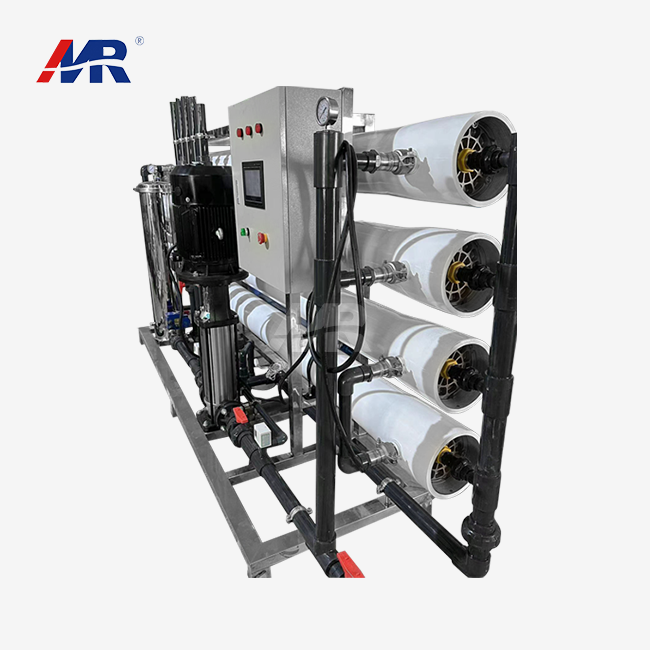 VIEW MOREunder counter reverse osmosis water system
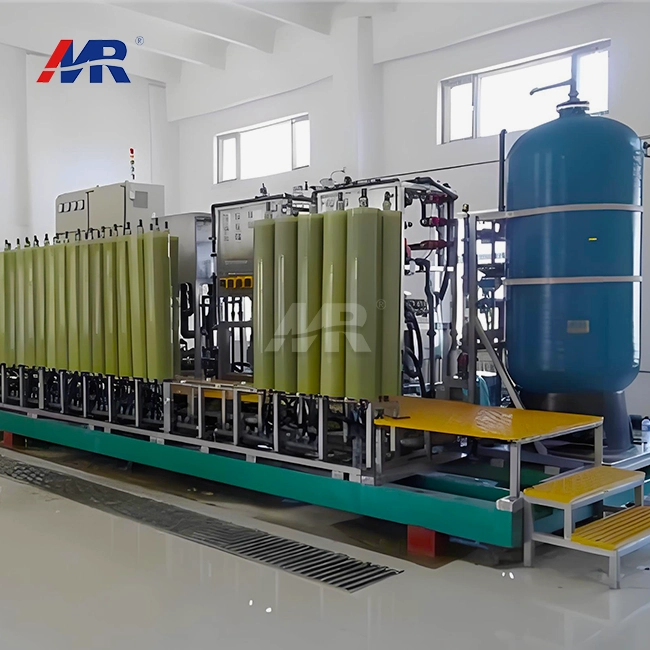 VIEW MOREDTRO system
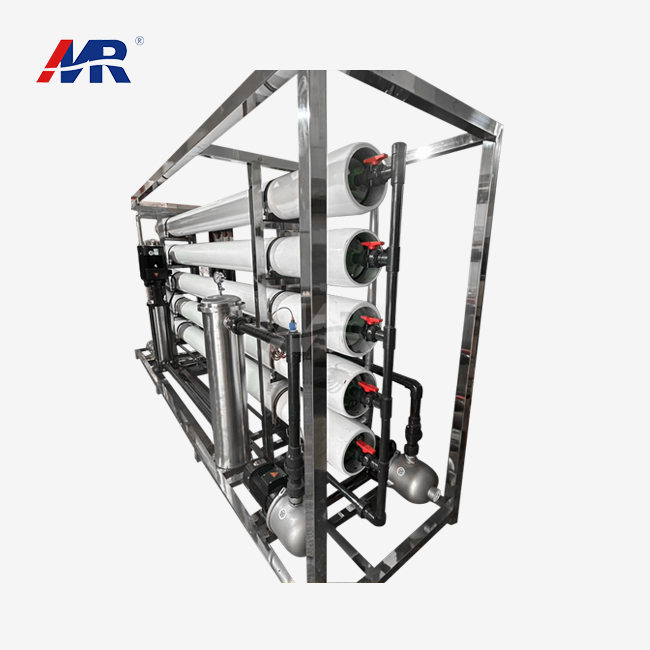 VIEW MOREreverse osmosis water treatment equipment
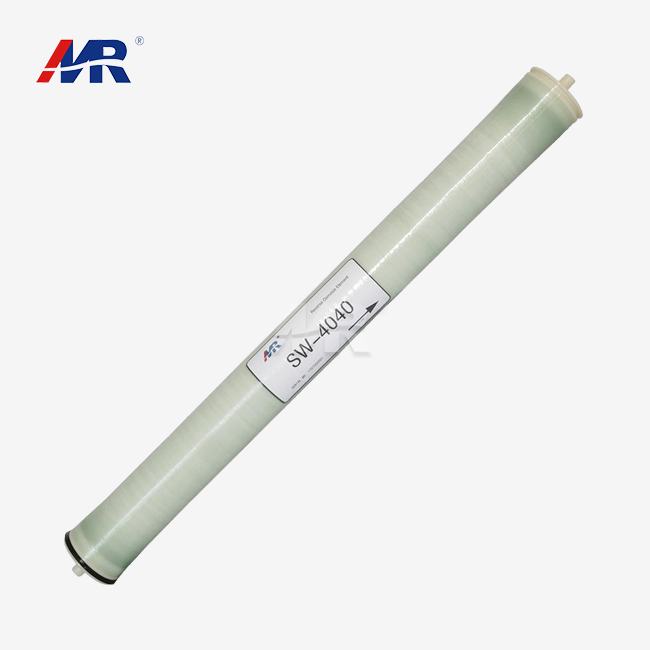 VIEW MORE4040 seawater reverse osmosis membrane
 VIEW MOREcontainer type 3m3/hour RO equipment