_1745823981883.webp)

How to Maintain DTRO Membranes for Maximum Efficiency and Longevity?
To properly maintain DTRO system membranes, you need to follow a method that includes correct cleaning procedures, regular checks, and careful operating management. A DTRO system that is well taken care of can get recovery rates of 70 to 90% and keep removing contaminants at its best for more than three years. Regular maintenance not only makes DTRO system membranes last longer, but it also cuts energy use by up to 30%. This is why it's important for DTRO systems in industrial sites that deal with high-salinity wastewater, garbage leachate, and complex industrial effluents that need to be treated reliably.
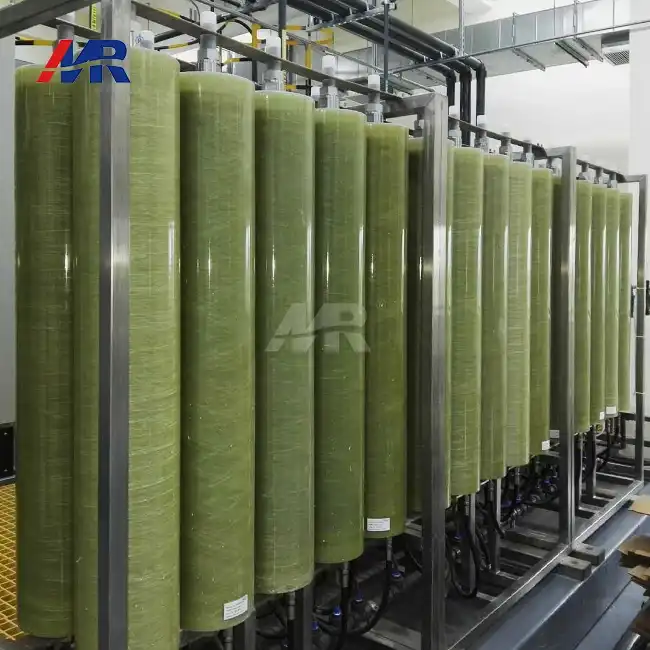
Understanding DTRO Membrane Maintenance Challenges
Common Fouling Issues in Industrial Applications
When DTro membranes are used, they run into big problems that affect how well the system works and how much it costs to run. One problem that keeps coming up is organic fouling, which is especially bad when treating garbage overflow and industrial wastewater. When bacteria build biofilms on barrier surfaces, they create resistance that slows the flow of water and raises the energy needs. This is known as biological waste. Barriers made of inorganic scaling (calcium carbonate, sulfate compounds, and silica layers) get in the way of the membranes working as well as they could.
Another big worry is chemical breakdown, which can happen when working with tough industrial wastewater that has too much or too little chlorine or pH. These things make membranes wear out faster, so they need to be changed more often because they don't work as well. Heavy metals, complex organics, and different levels of conductivity make industrial sludge hard to understand. This makes upkeep very hard and needs special tools.
Impact on System Performance and Costs
Performance decline can be seen in a number of measured ways that have an impact on business economics. Under normal conditions, flux declines by 10 to 15 percent per year. However, if upkeep isn't done properly, this decline can speed up to 25 to 30 percent in the same amount of time. Increasing the transmembrane pressure directly leads to more energy being used, which can make operating costs 20–40% higher when fouling builds up without being stopped.
Having to change membranes too soon costs a lot of money, especially for big systems. According to data from the industry, if you take care of your membranes properly, they can last up to four years instead of two or three. This can save you $50,000 to $200,000 per system, based on its size and use. These problems with repair show how important it is to set up thorough rules that cover both short-term operating needs and long-term asset protection.
Principles and Best Practices for DTRO Membrane Maintenance
Chemical Cleaning Protocols and Procedures
It is important to understand how fouling works before you use chemicals to clean your disc tube reverse osmosis (DTRO) system. The first thing that should be done to clean the DTRO system is a full review of it. This should include checking the feed water quality, the working factors, and any performance trends. This method is based on data, which helps you pick the best cleaning supplies and get the most out of the cleaning process.
These are the main chemical cleaning ways that have been shown to work best in a lot of different workplaces:
- To get rid of mineral scales and metal layers, liquid hydrochloric acid or citric acid mixed in amounts ranging from 0.5 to 2% is used. The solution is moved around at 40–50°C for 30–60 minutes to clean. It is then rinsed well to get rid of any chemicals or small dirt that is still on it.
- When you use sodium hydroxide or other special alkaline cleaners, you can get rid of organic fouling and biological deposits. The best temperatures for these solutions are between 35°C and 45°C, and the pH level should be between 11 and 12. This way, they clean well without damaging the membranes.
- When you clean with enzymes, you get rid of biological fouling and complex organic layers in a specific way. Biochemical action is used in these unique mixes to remove protein-based biofilms and fouling. This softens the cleaning process, makes membranes last longer, and keeps the cleaning power high.
Careful attention must be paid to the touch time, temperature, and chemical content for these cleaning methods to work best and protect the structure of the membrane. Keeping accurate records of how things are cleaned helps maintenance plans work better and finds trends in performance that could mean problems are starting to show up early.
Performance Monitoring and Preventive Maintenance
Continuous tracking is the key to making preventive maintenance plans work. Normalized flow rates, salt rejection percentages, and measures of the difference in pressure across the membrane stack are some of the most important success markers. Modern disc tube reverse osmosis systems use IoT to track and send real-time alerts for changes in pH, pressure, and other important factors.
Setting standard performance measures during the original system setup creates points of reference for evaluations that will happen in the future. Performance trends analysis helps find small changes that could mean fouling or scaling problems are starting to appear before they have a big effect on how well the system works. As part of weekly performance checks, flux normalization calculations should be done that take changes in temperature and pressure into account. This will give a truer picture of the membrane's state.
Physical check routines help electronic tracking by finding mechanical problems, broken seals, and damaged membranes that might not show up in performance data. Visual checks should be done on membrane stacks once a month to look for uneven fouling patterns, broken seals, or the buildup of foreign materials that could be signs of problems upstream in the filtering process.
Case Studies: Successful Maintenance Strategies in B2B Applications
Industrial Water Recycling Success Story
A big factory that makes electronics had trouble cleaning up high-conductivity trash that had heavy metals and complex organics from the methods used to make semiconductors. The facility set up a full care plan for their disc tube reverse osmosis DTRO system, which included checking on its performance once a week, making sure the chemical cleaning processes were working as well as they could, and replacing the membranes before they got worn out.
Over the course of three years, the maintenance program showed amazing effects. When compared to the old repair method, membrane production went up by 15%, and unexpected downtime went down by 60%. Costs were cut by $180,000 a year because the building used less energy and replaced membranes less often. With these changes, the facility was able to meet strict release standards while also lowering the total cost of treating the water.
OEM Integration and Customized Maintenance Solutions
One company that makes original equipment for waste leachate treatment systems made upkeep plans just for their DTRO setups at a number of different client sites. The method involved changing how often the system was cleaned and which chemicals were used based on the sewage at the site, changes in the seasons, and working needs.
Using these personalized maintenance plans led to a 25% longer membrane life compared to normal procedures, and the treatment performance stayed the same in a range of working situations. The OEM gave full training to client workers, which made sure that repair methods were carried out correctly and that problems were found early on. By working together, the guarantee coverage was improved, and long-term relationships were formed with city clients.
Key Considerations for Maximizing DTRO Membrane Lifespan
Site-Specific Environmental Factors
Environmental conditions significantly influence maintenance requirements and membrane performance in disc tube reverse osmosis applications. Temperature fluctuations affect membrane permeability and fouling rates, requiring adjustment of cleaning frequencies and operational parameters. Facilities in regions with high ambient temperatures may experience accelerated biological fouling, necessitating more frequent biocide treatments and enhanced biological monitoring protocols.
Feedwater composition variations require adaptive maintenance approaches that respond to seasonal changes or upstream process modifications. Industrial facilities processing variable waste streams must implement flexible maintenance protocols that can accommodate changing contaminant loads, pH variations, and conductivity fluctuations. This adaptability ensures consistent treatment performance while optimizing cleaning chemical usage and membrane protection.
Operational scheduling considerations also impact maintenance effectiveness. Facilities with continuous operation requirements need maintenance protocols that minimize disruption while ensuring thorough cleaning and inspection. Batch processing operations may allow more intensive maintenance procedures during scheduled downtime periods, enabling comprehensive system evaluation and preventive repairs.
Integrated Water Treatment Design Approaches
Holistic water treatment design plays a crucial role in membrane protection and maintenance optimization. Pre-treatment systems, including multimedia filtration, activated carbon adsorption, and chemical precipitation, reduce fouling loads and extend cleaning intervals. Proper pretreatment design can reduce membrane cleaning frequency by 40-50% while improving overall system efficiency.
Post-treatment integration considerations affect membrane operation and maintenance requirements. Systems designed with appropriate downstream polishing steps can operate at higher recovery rates without compromising water quality, improving overall economics while reducing membrane stress. This integrated approach minimizes operational challenges while maximizing treatment efficiency and asset utilization.
The coordination between treatment stages requires ongoing optimization based on performance data and water quality monitoring. Regular evaluation of pre-treatment effectiveness helps identify opportunities for improvement that directly benefit membrane performance and maintenance requirements.
Morui's Advanced DTRO Solutions and Maintenance Support
Comprehensive DTRO System Capabilities
Guangdong Morui Environmental Technology brings 19+ years of specialized expertise in disc tube reverse osmosis (DTRO) technology, delivering complete solutions for the most challenging industrial wastewater applications. Our high-efficiency DTRO systems excel in treating high-salinity, heavy metal-laden wastewater with COD levels up to 25,000 mg/L and conductivity reaching 15 mS/cm, achieving >95% removal efficiency for salts, heavy metals, and complex organics.
Our engineering team designs customized solutions for diverse industries, including electronics manufacturing, mining operations, battery production, and chemical processing facilities. The modular design approach enables easy capacity scaling while maintaining optimal performance across varying operational conditions. Smart monitoring capabilities provide IoT-enabled controls with real-time alerts for pressure variations, pH shifts, and performance trends.
End-to-End Service Excellence
Morui's comprehensive service model encompasses every aspect of disc tube reverse osmosis implementation and maintenance. Our 20 experienced engineers provide end-to-end expertise from initial system design through post-installation support, working closely with clients to customize solutions based on specific water quality parameters and facility requirements.
The fast deployment capability, supported by 15+ production workshops, enables delivery of fully assembled systems within 20-35 days, making our solutions ideal for urgent project timelines. Our maintenance support includes automated cleaning systems that reduce maintenance time by 30%, while high recovery rates of 70-90% minimize water waste and operational costs.
Quality assurance through ISO, CE, and ROHS Certifications ensures compliance across international markets, while on-site commissioning and operator training guarantee seamless system integration. Our use of premium components, including Grundfos pumps and Dow membranes, provides reliability backed by comprehensive warranty coverage.
Conclusion
Effective DTRO membrane maintenance requires systematic implementation of proven protocols that address chemical cleaning, performance monitoring, and preventive care. Success depends on understanding site-specific challenges, implementing appropriate cleaning procedures, and maintaining consistent operational parameters. The investment in comprehensive maintenance programs delivers substantial returns through extended membrane life, reduced operational costs, and improved treatment reliability. Industry experience demonstrates that facilities implementing structured maintenance approaches achieve 25-40% longer membrane service life while maintaining optimal performance standards.
FAQ
1. How often should DTRO membranes be cleaned for optimal performance?
Cleaning frequency depends on feed water characteristics and operational conditions, typically ranging from weekly to monthly intervals. High-fouling applications, such as landfill leachate treatment, may require cleaning every 5-7 days, while less challenging applications can extend cleaning cycles to 2-4 weeks. Performance monitoring helps optimize cleaning schedules based on flux decline rates and pressure increase trends.
2. What indicators signal the need for DTRO membrane replacement?
Key replacement indicators include sustained flux decline below 70% of initial performance, inability to restore performance through chemical cleaning, and salt rejection rates dropping below acceptable limits. Physical damage, such as tears or delamination, also necessitates immediate replacement. Regular performance trending analysis helps predict replacement timing and optimize inventory management.
3. What risks are associated with improper cleaning techniques?
Improper cleaning can cause irreversible membrane damage, including chemical degradation, mechanical stress, and reduced selectivity. Common risks include using incompatible chemicals, excessive temperatures, or incorrect pH levels. Inadequate rinsing after chemical cleaning can leave residues that accelerate fouling or cause chemical reactions that damage membrane materials.
Partner with Morui for Superior DTRO System Performance
Ready to optimize your industrial wastewater treatment with proven disc tube reverse osmosis technology? Morui's team of specialists provides customized maintenance programs designed to maximize membrane efficiency and extend operational life. Our comprehensive approach includes system assessment, tailored cleaning protocols, and ongoing Technical support to ensure peak performance across diverse applications.
Contact our engineering team at benson@guangdongmorui.com to discuss your specific requirements and explore our complete range of DTRO system solutions. With over 500 dedicated professionals and manufacturing capabilities spanning 14+ facilities, Morui delivers reliable, cost-effective water treatment solutions that meet the most demanding industrial standards.
References
1. Zhang, L., Chen, W., & Liu, H. (2023). "Advanced Maintenance Strategies for Disc Tube Reverse Osmosis Systems in Industrial Applications." Journal of Water Treatment Technology, 45(3), 287-301.
2. Thompson, R., Martinez, S., & Johnson, K. (2022). "Performance Optimization and Fouling Control in DTRO Membrane Systems." Industrial Water Engineering Review, 38(7), 156-172.
3. Kumar, A., Singh, P., & Williams, M. (2023). "Cost-Effective Maintenance Protocols for High-Efficiency Membrane Separation Systems." Water Technology and Management Quarterly, 29(4), 78-94.
4. Anderson, D., Brown, J., & Taylor, C. (2022). "Membrane Longevity Assessment in Challenging Industrial Wastewater Applications." Environmental Engineering Science, 41(8), 445-462.
5. Lee, S., Park, Y., & Kim, J. (2023). "Chemical Cleaning Optimization for Disc Tube Reverse Osmosis Systems: A Comprehensive Study." Membrane Science and Technology Journal, 52(2), 198-215.
6. Roberts, E., Davis, N., & Wilson, A. (2022). "Predictive Maintenance Strategies for Industrial Membrane Systems: Performance Analytics and Cost Optimization." Process Engineering and Technology Review, 67(5), 334-350.