_1745823981883.webp)

Reverse Osmosis RO Plant: How It Works and Why It's Essential
Molecularly pure water from reverse osmosis facilities assists numerous companies worldwide with water quality issues. RO technology may safely remove pollutants from commercial wastewater and saltwater dissolved salts. A containerized reverse osmosis plant uses this proven technology in a transportable, self-contained device that fits within a shipping container. Businesses may now deploy modern water treatment technology on isolated offshore platforms and temporary disaster assistance areas without compromising performance or purity.
Understanding Containerized Reverse Osmosis Plants
What Makes Containerized Systems Different
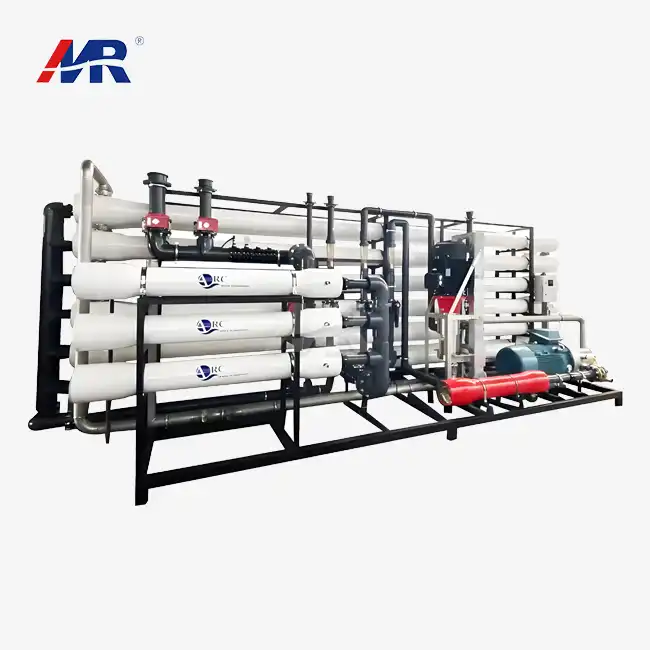
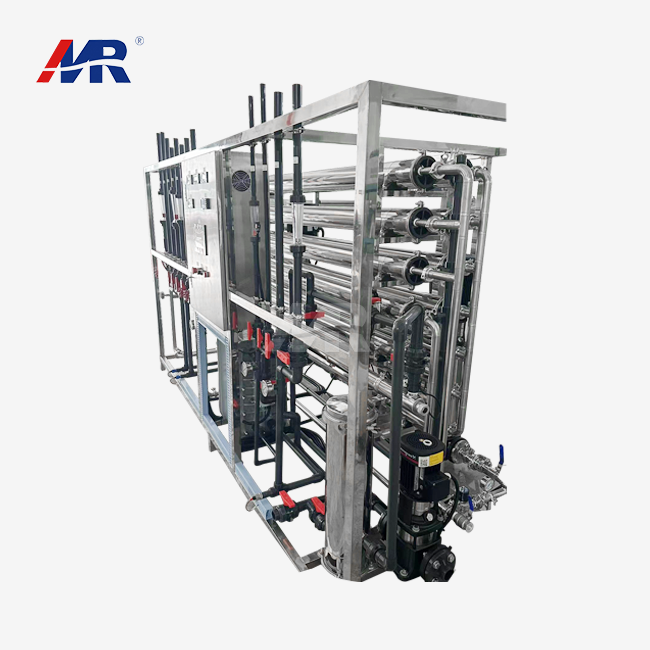
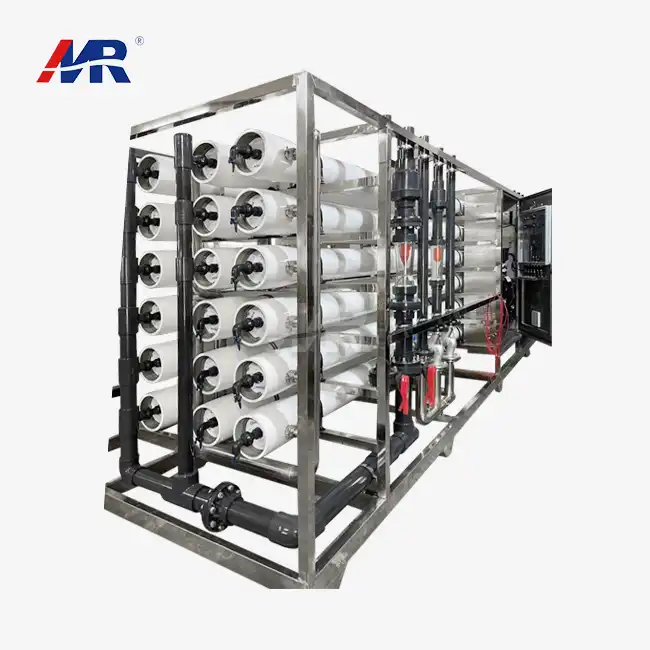
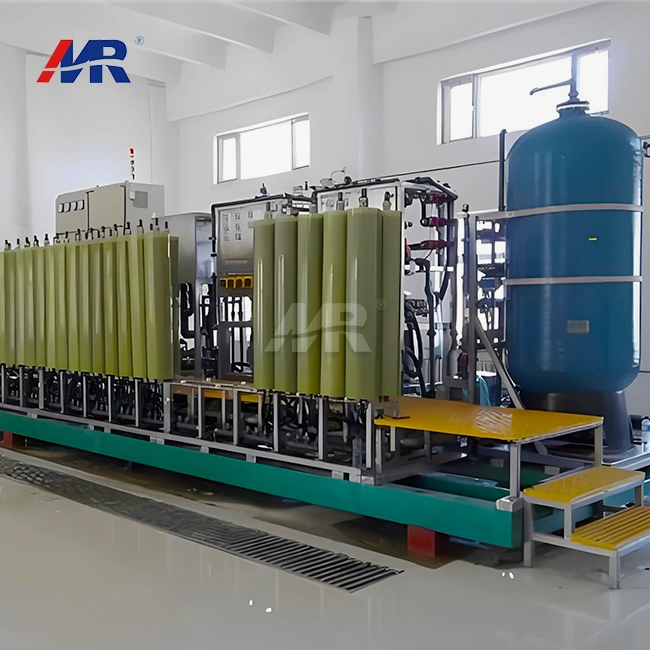
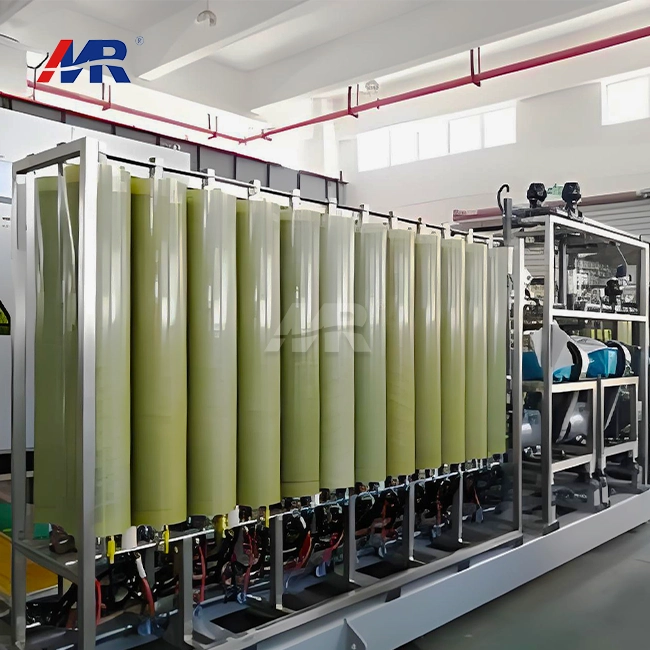
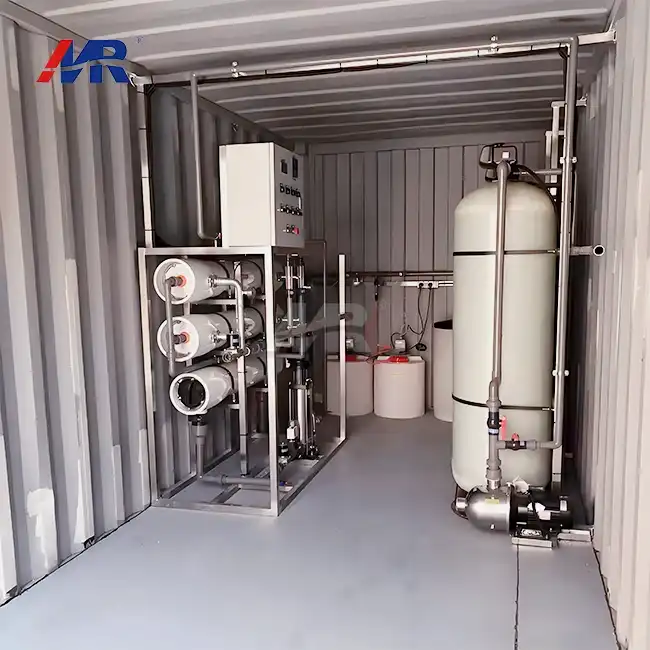
Containerized reverse osmosis plants have pretreatment systems, high-pressure pumps, membrane tanks, control panels, and post-treatment equipment constructed within shipping containers. This concept simplifies a complex industrial setup into a portable plug-and-play solution. Protecting delicate equipment from adverse weather and maintaining optimal operating conditions, the container manages temperature and structure.
constructed in modules, these systems arrive at your location, conceived, constructed, and tested. Pharmaceutical businesses have reduced construction timeframes from months to weeks, utilizing this strategy. These little plants are ideal for limited spaces or those that need temporary water treatment while growing.
The RO Purification Process Explained
Raw water is prepared using multimedia filters to collect particles and activated carbon units to remove chlorine and organic pollutants. Chemical dosing alters pH and prevents membrane growth. This combination protects delicate ro membranes against early contamination.
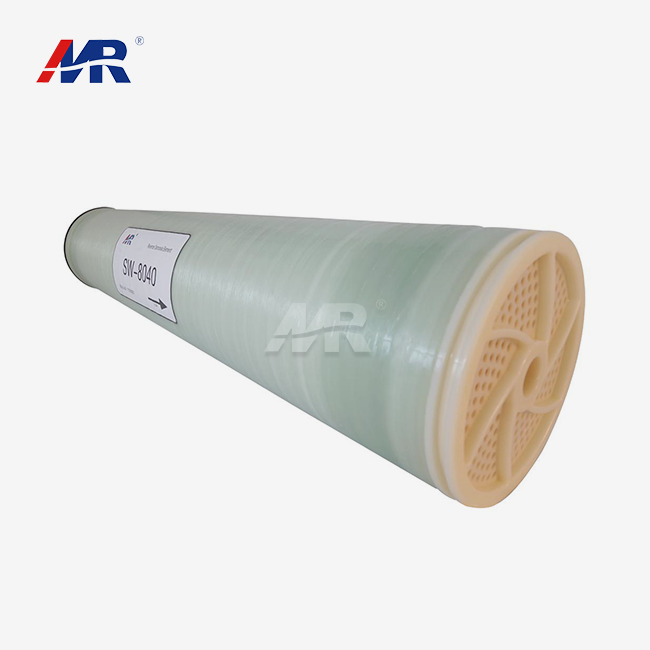
After cleaning, water enters the high-pressure pump, the heart of every RO system. This pump forces water molecules through partly porous barriers, leaving dissolved salts, metals, and other pollutants. Only water molecules pass through the thin-film hybrid membranes' tiny pores. They inhibit 99% dissolved solids.
The machine produces containerized reverse osmosis plant reject water with eliminated impurities and filtered permeate to your specifications. Recent designs utilize energy recovery devices that take the reject stream pressure. This reduces power utilization by 30–40% over earlier technology.
Comparing Containerized RO Plants with Traditional and Other Systems
Structural and Installation Differences
Traditional built-in-place RO systems need civil engineering to create foundations, walls, and complex pipe networks to link equipment rooms. The building is usually used 8–12 months after construction. Containerized reverse osmosis plants are exempt from these regulations. The container arrives ready to connect to electricity, feed water, and product water storage.
Although skid-mounted systems are easier to move, they still need secure enclosures and temperature control systems. Containerized plants save on-site work and personnel expenses by including safety features. We've helped food processing factories open in under 30 days using containerized solutions, which is impossible with traditional building methods.
Trailer-mounted systems are transportable yet unreliable. They can handle crises, but not continual duty in industry. Portable containerized plants can be employed 24/7 in difficult settings.
Performance and Efficiency Metrics
The cost of running a business depends on energy utilization. Containerized systems with high-efficiency membranes and energy recovery devices employ 2.5 to 4 kWh per cubic meter to desalinate saltwater, similar to the most efficient stationary installations. The integrated design reduces pipe runs and pressure dips, which reduces the spread system efficiency.
Uptime and operational expenses depend on maintenance ease. Containerized designs store equipment in an appropriate room and include built-in lighting for convenient maintenance. Quick-connect connections simplify filter replacement in membrane tanks. The regulated environment protects pumps, valves, and instruments from external corrosion and pollution, according to maritime installation site data. This extends equipment life by 30–50%.
How to Choose the Right Containerized Reverse Osmosis Plant
Defining Your Technical Requirements
Test your feed water for a containerized reverse osmosis plant first to see how it is. Total dissolved solids, hardness, silica concentration, organic loading, and temperature impact membrane selection and preparation for a containerized reverse osmosis plant. A pharmaceutical facility treating municipal water with a containerized reverse osmosis plant has distinct issues from a desalination plant treating 35,000 mg/L TDS saltwater with a containerized reverse osmosis plant. Accurate feed water studies for a containerized reverse osmosis plant prevent costly redesigns and ensure compliance.
Determine your daily production needs and allow for mistakes. Consider peak demand, growth, and staffing needs. Higher recovery rates reduce water waste but increase energy costs and membrane fouling, affecting system size. Environmental regulations on concentrate disposal may limit local recycling rates.
Quality control requirements for water drive membrane design and post-treatment. Making boiler feedwater and bottled water requires different levels of cleanliness. Membrane systems used in pharmaceuticals must meet GMP criteria and have documented performance evaluation procedures. Laboratory ultrapure water systems feature electrodeionization processes that increase resistance over 18 megohm-cm.
Budget Considerations and ROI Analysis
Containerized reverse osmosis plant pricing ranges from $150,000 for small brackish water units to over $2,000,000 for big saltwater desalination facilities with high-tech robots. Considering civil work, building enclosures, and lengthier construction durations, initial capital costs are 15–25% lower than those of identical permanent systems.
Over 5–10 years, examine running expenditures including power, membrane replacement, chemical consumption, and maintenance. Designs that consume less energy and have feed water-specific recovery rates will save you money over time, even if they cost more upfront. How effectively pretreatment and use affect the membrane lifespans of 3–7 years.
Consider the whole cost of ownership, including interest, insurance, and automobile value after payment. Containerized systems are more valuable than permanent configurations since they are portable. Leasing is an alternative to buying new equipment. Instead of large upfront investments, they become operating costs that enable you to upgrade technology as needed.
Operation, Maintenance, and Troubleshooting for Containerized RO Plants
Daily Monitoring and Performance Tracking
Successful operations need thorough monitoring of key performance parameters. Operators should record feed pressure, filtrate flow, concentrate flow, and system recovery rates regularly. Sudden changes often indicate issues worsening before shutdowns. Permeate conductivity measurements reveal membranes are intact, but increasing values signal damage or seal failure, which should be investigated.
Temperature-adjusted flux calculations demonstrate that membrane fouling before output is reduced significantly. Normalized data that accounts for temperature and pressure variations allows meaningful comparisons between working times. Fouling increases the membrane channel differential pressure. This signals maintenance at particular levels.
Automatic control systems collect operational data and produce trend reports showing performance decline. Modern HMI touchscreens display real-time alert conditions, flow lines, and equipment status in simple visuals. Remote monitoring allows off-site specialists to diagnose and fix issues. This reduces downtime in locations without numerous technological instruments.
Preventive Maintenance Best Practices
Cleaning the membrane is the most critical daily maintenance. Chemical cleanings occur once a month to three times a year, depending on feed water quality and operation circumstances. During cleaning, specific mixes dissolve scale layers, remove bacterial fouling, and restore membrane permeability. The pumps, heaters, and chemical dosing instruments in containerized reverse osmosis plant clean-in-place (CIP) systems simplify this operation.
Pretreatment portions must be examined often to preserve membranes. Multimedia filters need backwashing to remove particles. When activated carbon beds stop absorbing, they must be replaced. If the differential pressure exceeds the manufacturer's recommendation, which is normally every two to four weeks in severe settings, cartridge filters that protect membrane inlets should be changed.
Pumps, motors, and valves need regular checkups. Sound analysis, seal inspection, and lubrication can detect issues before they become major. Maintenance greatly affects high-pressure pump reliability. Trained professionals should inspect impellers, bearings, and mechanical seals annually to ensure optimal performance.
Energy Efficiency and Future Trends in Containerized RO Technology
Factors Affecting Energy Consumption
Energy needs depend on feed water salinity. Desalinating seawater at 800-1000 psi consumes more power than treating salty water at 150–400. Every 1000 mg/L feed TDS increase requires the equivalent pressure increase. Effectiveness also depends on temperature. Warmer feed water has less viscosity, requiring less pressure to obtain desired flow rates.
Different formulae's permeability and salt rejection impact membrane energy utilization. High-rejection screens filter water better but require higher pressures. Cleanliness and energy costs should be balanced to boost the economy. When defining recovery rate targets, better recovery reduces water waste but requires more pressure due to higher salt concentration.
Pipe layouts, pump efficiency, and energy recovery devices impact power usage. When pumps are almost efficient, they use less energy than when they are too large and operate less. Pumps can meet demand with variable frequency motors, saving energy on decreasing valves.
Technological Advances Improving Performance
New membranes in a containerized reverse osmosis plant are 30% more permeable than older ones. Goal production rates in a containerized reverse osmosis plant can be achieved at reduced pressure. Fouling-resistant coatings in a containerized reverse osmosis plant reduce cleaning and prolong membrane life under severe conditions. These enhancements in a containerized reverse osmosis plant reduce energy usage and operating expenses.
By collecting concentrated stream pressure, energy recovery devices may currently work 95% or more. Positive displacement tanks in pressure exchangers transfer energy from high-pressure water being discarded to new water. This reduces high-pressure pump power. This technique is being used in large brackish water and seawater systems.
Advanced oxidation processes in cleaning systems help control biological fouling in membrane systems. UV reactors and precisely regulated oxidants kill microorganisms without harming membranes. These adjustments allow for long chemical cleaning intervals without affecting production.
Emerging Industry Trends
Environmental concerns are driving an increase in renewable energy use. Solar and wind power are increasingly powering off-grid containerized reverse osmosis plant systems. Battery storage systems shield unreliable green energy sources, providing 24/7 water production. Our hybrid systems use diesel engines and solar panels. While maintaining stability, these technologies reduced fuel usage by 40–60%.
Smart applications with AI and monitoring improve real-time systems. Predictive analytics allows reactive maintenance to be replaced with proactive maintenance. Machine learning systems analyze prior data to optimize machine productivity, quality, and energy economy.
Circular economic themes underpin new concentration management techniques. Newer technologies extract minerals from concentrate and produce almost no liquid. Containerized systems with crystallization and evaporation can transform waste into sellable commodities. This makes environmental issues profitable.
Conclusion
Reverse osmosis cleans items for pharmaceutical, electronics, food, public water, and other industries. Containerized reverse osmosis plant systems offer this proven technology in flexible, fast-deployment, and efficient forms for modern organizations. Containerized solutions are useful for temporary installations, distant sites, and flexible infrastructure since they are easier to transfer and perform better.
You must consider feed water qualities, output demands, quality standards, and supplier capabilities to determine the correct approaches. Project success is best achieved by working with competent makers who provide engineering, production, and support. Regular maintenance and repair improve system performance and lifespan, while new technologies improve efficiency and sustainability.
FAQ
1. Can containerized RO plants be customized for specific industrial applications?
A firm may customize a containerized reverse osmosis plant in many ways. varied membrane designs suit varied feed water and cleaning goals. Scalable pretreatment designs can handle difficult pollutants. The product is then treated with UV disinfection, remineralization, and pH alteration to fulfill application requirements. Control system programming can operate with building automation, and container design can manage arctic cold to tropical heat.
2. What is the expected lifespan of RO membranes under typical operating conditions?
Membrane life relies on feed water quality, preparation, and maintenance. Well-maintained public water systems endure 5–7 years. In severe fouling or pH conditions, parts may need to be changed every three to four years. Chemical cleaning, proper system shutdown, and recommended operating parameters extend membrane life. Before the system breaks, performance tracking reveals when productivity drops and needs maintenance.
3. How long does installation and commissioning take for a containerized system?
Depending on complexity and site setup, the system takes two to four weeks to install from container arrival to full functionality. Site planning includes foundations, utility lines, and product water storage. Commissioning involves flushing, turning on, testing performance, and training operators. Installations with ready-made sites and convenient service access can take less than two weeks. Complex projects using several containers take longer.
Partner with Morui for Your Containerized Reverse Osmosis Plant Needs
After 10 years in business, Guangdong Morui Environmental Technology can solve your hardest water treatment issues. Our engineers design containerized reverse osmosis plant solutions for electronics, food processing, pharmaceuticals, and manufacturers worldwide. We provide comprehensive assistance from the initial meeting to continuing operations with 14 branches, 500 dedicated personnel, and 20 specialist engineers.
We create membranes, tools, and finish projects. We ensure product performance with leading component suppliers, including Shimge Water Pumps, Runxin Valves, and Createc Instruments. We provide containerized reverse osmosis plant systems that desalinate seawater, create ultrapure water for semiconductors, or treat wastewater while meeting rigorous quality requirements and optimizing lifetime costs. Contact our experts at benson@guangdongmorui.com to discuss water cleaning. As a leading manufacturer of containerized reverse osmosis plants, we can provide competitive pricing, flexible delivery periods, and continuous Technical support to ensure your investment pays off.
References
1. Greenlee, L.F., Lawler, D.F., Freeman, B.D., Marrot, B., and Moulin, P. (2009). "Reverse Osmosis Desalination: Water Sources, Technology, and Today's Challenges." Water Research, 43(9), 2317-2348.
2. Elimelech, M. and Phillip, W.A. (2011). "The Future of Seawater Desalination: Energy, Technology, and the Environment." Science, 333(6043), 712-717.
3. Voutchkov, N. (2018). "Energy Use for Membrane Seawater Desalination – Current Status and Trends." Desalination, 431, 2-14.
4. Fritzmann, C., Löwenberg, J., Wintgens, T., and Melin, T. (2007). "State-of-the-Art of Reverse Osmosis Desalination." Desalination, 216(1-3), 1-76.
5. Wilf, M. and Bartels, C. (2005). "Optimization of Seawater RO Systems Design." Desalination, 173(1), 1-12.
6. Kim, J., Park, K., Yang, D.R., and Hong, S. (2019). "A Comprehensive Review of Energy Consumption of Seawater Reverse Osmosis Desalination Plants." Applied Energy, 254, 113652.