_1745823981883.webp)

Is an EDI System in Water Treatment Better Than Ion Exchange?
When looking at different ways to clean water, one of the main questions that comes up a lot is whether an edi system in water treatment is better than ion exchange. The answer relies on your business goals. EDI systems get rid of the need to handle chemicals, work nonstop without regeneration downtime, and have a hugely positive effect on the environment. In the meantime, standard ion exchange is still a good way to save money for some types of feed water and smaller businesses. Both methods produce very pure water, but EDI is better when long-term reliability, reduced labor needs, and steady ultrapure output are very important for power plants, electronics factories, and pharmaceutical plants.
Introduction
In the pharmaceutical, semiconductor, power generation, and food preparation industries, industrial water treatment is a key part of making sure that processes are efficient, Products are safe, and companies are environmentally responsible. Choosing between electrodeionization and traditional ion exchange systems has a direct effect on your facility's carbon footprint, running costs, and ability to meet legal requirements. At Morui, we've seen procurement managers deal with this choice for more than ten years, and as global water quality standards get stricter, the risks keep going up.
This piece explains the main differences between EDI and ion exchange systems. It gives technical leaders, plant engineers, and chief financial officers useful information. We will look at operational concepts, total cost of ownership, and situations where each tool provides the most value. Whether you're in charge of a small pharmaceutical startup or the water treatment for a global tech company, knowing these differences will help you make better capital investments and save money in the long run.
Understanding Ion Exchange and Electrodeionization Systems
How Do Traditional Ion Exchange Systems Operate?
Ion exchange devices have been used successfully in many fields for many years. They work by using synthetic resin beds to attract and hold dissolved ions through chemical bonds. While the feed water moves through these resin beds, negatively charged anions and positively charged cations swap places with hydrogen ions. This process keeps going until the glue runs out and needs to be regenerated with strong acids and caustic chemicals. The recycling cycle stops production, makes dangerous trash, and requires careful rules for handling chemicals, which raises the cost of labor and the risk of accidents.
The Electrodeionization Advantage
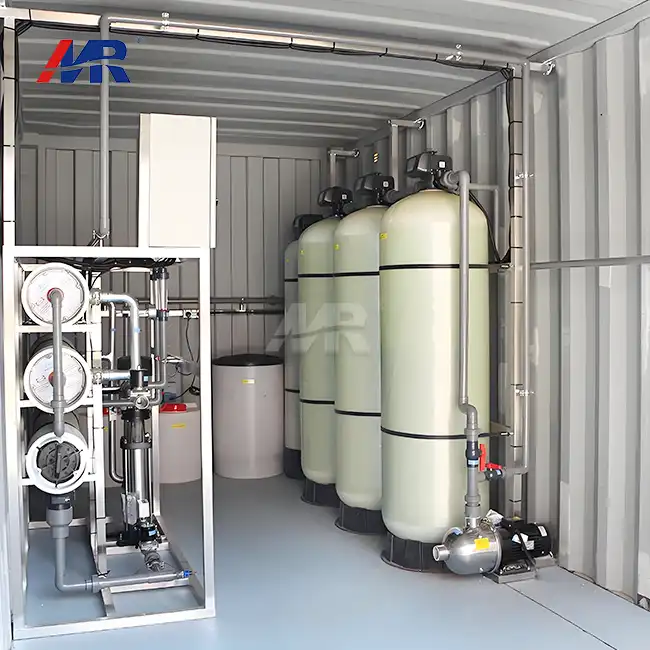
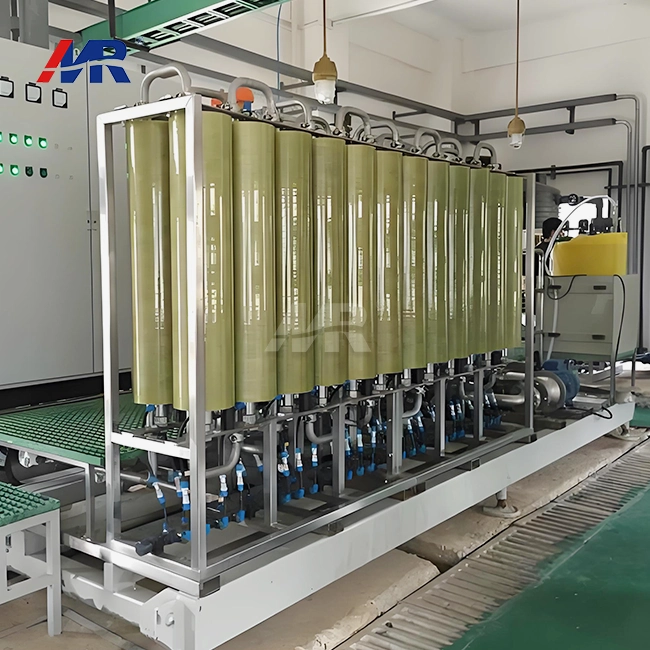
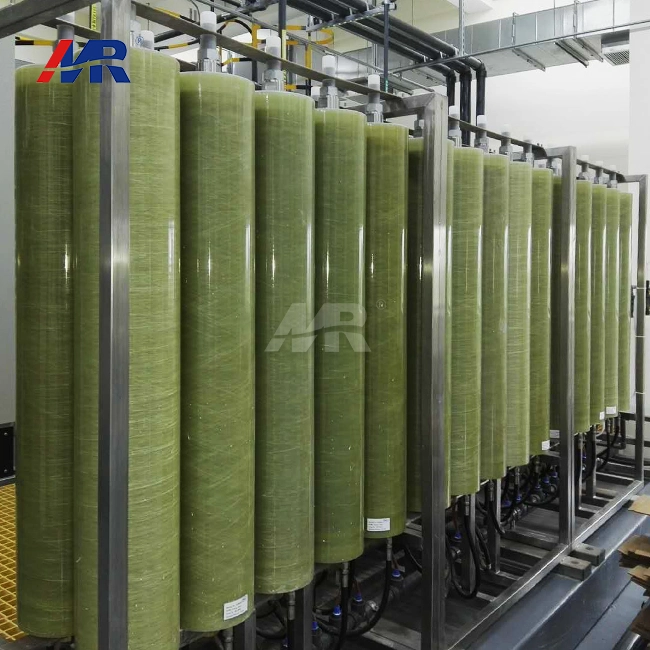
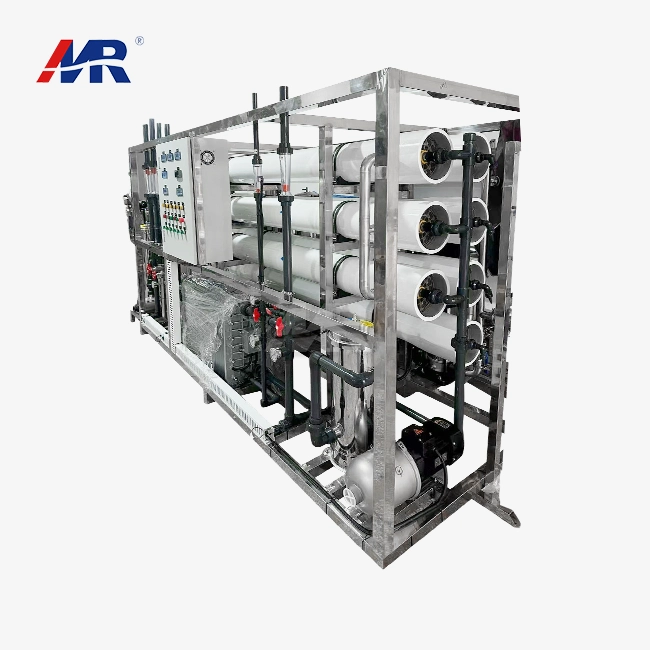
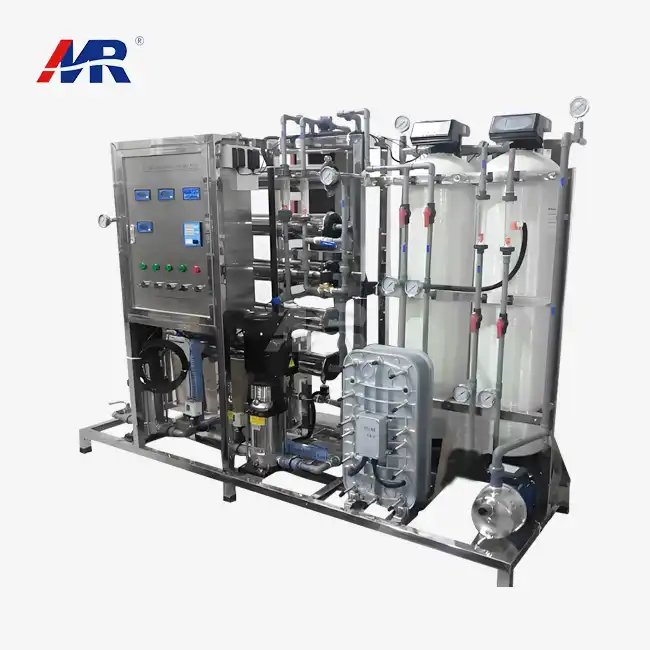
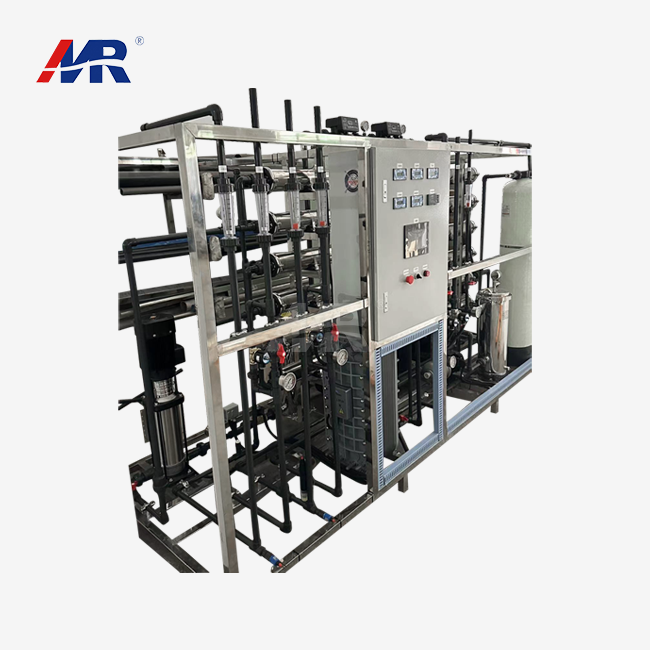
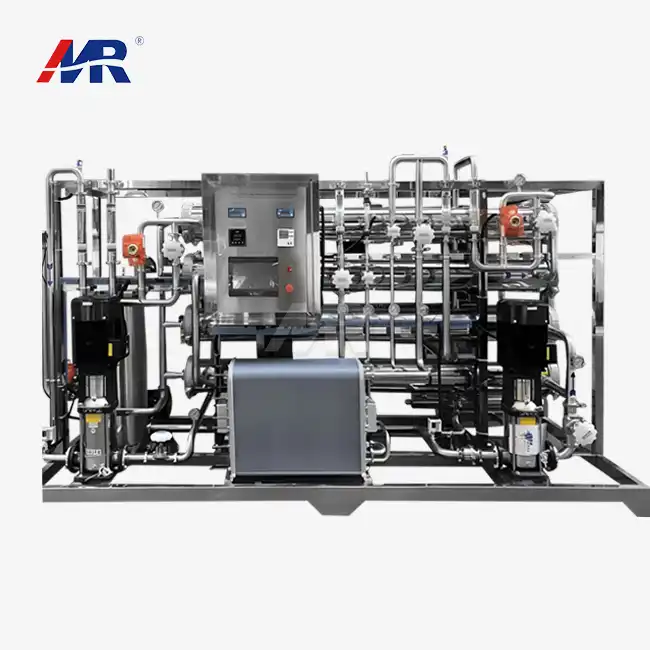
In order to achieve constant deionization without chemical regeneration, an EDI system in water treatment uses ion-selective membranes, ion exchange resins, and direct current electrical fields. Before water goes into the EDI module, our Morui systems include pre-treatment steps, which are usually silt filters and reverse osmosis. Ions are pushed through selective membranes and into concentration chambers by the electrical potential inside. The resin beads keep their ability to regenerate by electrolytically splitting water. This electrolytic regeneration and cleaning happen at the same time, so the system can work 24 hours a day, seven days a week, and regularly reach resistivity levels of up to 18.2 MΩ·cm.
Core Operational Differences That Matter
The difference between batch and ongoing operation changes how facilities are planned in a basic way. For continuous service, traditional ion exchange needs more than one resin vessel—one for cleaning water and another for regeneration—which doubles the amount of space needed for equipment and costs more money. Because they are self-regenerating, EDI units get rid of this confusion. Another important difference is the amount of chemicals used. Ion exchange facilities need to keep up with acid and caustic storage tanks, spill control systems, and neutralization equipment. EDI sites, on the other hand, only need electricity and regular membrane cleaning. Instead of handling dangerous chemicals, maintenance tasks now include keeping an eye on conductivity, pressure differences, and electrical factors. This is a better and safer way to run a business.
Comparative Analysis: EDI System vs. Ion Exchange System
Water Purity and Consistency Performance
In situations where ultrapure water is required, EDI systems in water treatment show better performance consistency. Our systems always provide product water with a resistivity of more than 17 MΩ·cm and a silica removal level below 1 ppb. This meets ASTM D5127 standards for electronic-grade uses and USP standards for pharmaceutical purified water. Ion exchange could possibly reach the same level of purity right after renewal, but quality gets worse over time as resins run out. This variety makes it harder to ensure the quality of rinsing semiconductor wafers or making injectable drugs, because even short-term spikes in contamination can lead to expensive batch rejects.
Environmental Impact and Sustainability Metrics
Every year, tighter rules on waste release and carbon reduction make the environmental case for EDI technology stronger. Using traditional ion exchange creates large amounts of concentrated brine that is full of acids, caustics, and shifted toxins. These waste streams need to be treated in an expensive way before they can be released into the environment. EDI concentrate streams only have middling amounts of rejected ions, which means they are usually safe for sewer release with little pH change. Based on data from pharmaceutical clients, EDI systems cut the cost of chemicals by 100%, get rid of the need to declare hazardous waste, and lower the facility's carbon footprint by around 30% compared to similar ion exchange setups. These measures directly lead to better ESG reports and following the rules.
Total Cost of Ownership Analysis
Buying things requires weighing the initial cost against the costs that come up over time. Ion exchange systems have lower starting capital costs, which makes them a good choice for projects with limited funds or that need to run on a limited schedule. The continued costs add up quickly: buying acids and caustics, paying to get rid of toxic waste, replacing the resin every 3 to 5 years, and paying people to watch over the renewal process. EDI systems cost more to set up at first, but they save a lot of money in the long run. With flow rates between 0.5 and 50 m³/h and power needs between 0.1 and 0.3 kWh/m³, our EDI units get recovery rates that are higher than 90%. If you do the right RO preparation and keep the feed conductivity below 40 µS/cm, the module can last for 5 to 7 years. Facilities that use EDI all the time usually get their money back within 18 to 36 months because they don't have to pay for chemicals and workers.
When to Choose an EDI System Over Ion Exchange?—Practical Scenarios
Industries Requiring Continuous Ultrapure Water
For making injectable drugs, pharmaceutical manufacturing needs water quality that has been tested and proven to be stable. EDI's constant operation and stable output quality make approval processes a lot easier. Microelectronics manufacturing is another great use for EDI. Chipmakers can't stand when quality changes during wafer processing, and EDI's ability to keep ionic purity at parts-per-trillion levels stops yield losses that cost millions of dollars every year. EDI's ability to remove silica from high-pressure boilers is very helpful for power plants because it keeps amounts below 5–10 ppb, which keeps turbine blade deposits from forming, that lower performance and shortens equipment life. Some things that all of these applications have in common are high daily numbers, strict purity standards, and processes where downtime costs a lot of money.
When Does Traditional Ion Exchange Remain Relevant?
EDI technology has realistic limits for facilities that treat feed water with total dissolved solids above 1,000 ppm. This is because high ionic loads cause too much current draw and faster membrane fouling. In these situations, ion exchange works well as the first treatment, and EDI cleaning could be used afterward if a very pure output is needed. Ion exchange may be more cost-effective for small companies that occasionally produce less than 1 m³/h, especially if they already have chemical handling systems in place. Some facilities keep ion exchange capacity as a backup for mission-critical EDI systems. This keeps operations going while modules are being serviced or when something unexpected goes wrong.
Scalability and Modular Flexibility
Modern EDI technology (edi system in water treatment) is very flexible because it is built in modules. Our installations include small lab units that can make 20 liters of water per hour and large industrial arrays that can send 50 m³/h to pharmaceutical sites. This modularity lets capacity grow in stages to match business growth without having to make too many investments at first. The small footprint—often 40–60% smaller than similar ion exchange trains—is helpful for retrofits where choices are limited by floor room. Customization options let you target specific contaminants, like getting rid of more silica for power uses, lowering TOC for pharmaceutical compliance, or creating unique membrane designs for difficult feed water chemistry.
Maintenance, Troubleshooting, and Best Practices for EDI and Ion Exchange Systems
Routine Maintenance Protocols
No matter what technology is used, maintaining top performance needs disciplined tracking. Ion exchange systems need to check the resin bed for channeling on a regular basis. Channeling causes escape flows that lower the effectiveness of treatment. It's important to check the amounts of regeneration chemicals because diluted solutions leave resins only partially renewed, and too much power breaks down the structure of resins. EDI maintenance checks a number of different factors, such as keeping an eye on the voltage and current of the stack to see if it's fouling or scaling, keeping an eye on the drop in pressure across modules to see if particles are building up, and checking the conductivity of the concentrate stream to make sure the membrane is still intact. As part of our service procedures, we suggest eye checks once a week, performance tests once a month, and full diagnostics every three months.
Common Issues and Practical Solutions
Ion exchange operators often have to deal with resin running out too quickly because it doesn't regenerate properly or because organic fouling stops active exchange sites. Some solutions are to improve the amount of regenerant used, clean the resin on a regular basis with special soaps, or improve the prep to get rid of organic precursors. EDI systems have their own problems. For example, membrane fouling from poor RO preparation calls for better upstream filtration and antiscalant doses. When the feed CO₂ level is high, the output resistivity goes down because the carbon dioxide doesn't ionize enough for EDI to remove it. This is fixed by degassing the membrane or adjusting the pH before the EDI step. Electrode wear happens slowly over the years but speeds up when the water chemistry is bad. System problems can be avoided by inspecting and replacing the electrodes on time.
Quality Assurance and Testing Standards
Following industry standards shields both the quality of the goods and their standing with the government. We use ASTM D1976 testing methods for ICP-OES trace element analysis to make sure our EDI systems (edi system in water treatment) keep the ionic cleanliness needed for semiconductor and pharmaceutical applications. Under cGMP rules, pharmaceutical plants must validate their water systems and show that they work the same way across all operating areas. Inline conductivity monitors, TOC analyzers, and bacterial monitoring ports are all part of our setups and help with constant quality testing. Compared to ion exchange, where quality changes during renewal cycles and needs more testing and paperwork, EDI is easier to validate because it works all the time.
Conclusion
If you want to choose between EDI and ion exchange systems, you need to carefully look at your business needs, water quality goals, and long-term sustainability goals. When chemical elimination and environmental compliance are important factors in decision-making, EDI systems are clearly the best choice for ongoing processes that need ultrapure water that is always the same. Traditional ion exchange is still useful for operations that happen only sometimes, when the feed water has a high TDS, or when money is tight and operating complexity is still okay. Our experience in the medicine, electronics, power generation, and food processing industries shows that success depends on a lot more than just the technology choice. It also depends on how well the system is designed and how well it is put into place. Putting money into the right water treatment facilities will protect product quality, make sure regulations are followed, and help operations run smoothly for decades to come.
FAQ
1. Can EDI completely replace traditional ion exchange systems?
EDI can be used instead of ion exchange in most continuous ultrapure water uses as long as the feed conductivity is lowered to less than 40 µS/cm by RO preparation. The technology works great for cleaning water for pharmaceuticals, water used to rinse semiconductors, and boiler feed. If the feed water has a high TDS level of more than 1,000 ppm or if the facility doesn't have the right electricity equipment to support DC rectifiers, replacement isn't an option. Some operations keep mixed setups where ion exchange is used for the first treatment, and then EDI cleaning is used to combine the best parts of both technologies.
2. How often do EDI modules require replacement compared to ion exchange resins?
When used correctly and maintained, EDI units can last up to seven years. Ion exchange resins, on the other hand, need to be replaced every three to five years. Both systems depend a lot on the quality of the water they use and how they are operated. When RO pretreatment regularly gives low-conductivity, low-fouling feed water, EDI life is greatly extended. Ion exchange resins don't last as long when they get organic fouling, oxidant exposure, or mechanical breakdown from bad backwashing, but some specialty resins can last up to ten years in perfect circumstances.
Partner with Morui for Advanced Water Treatment Solutions
Guangdong Morui Environmental Technology brings over a decade of specialized experience delivering engineered water treatment systems to demanding industrial applications. As an established EDI system in water treatment manufacturing, we design, manufacture, and commission complete purification solutions spanning reverse osmosis, electrodeionization, and supporting technologies. Our portfolio includes successful installations across pharmaceutical production, microelectronics manufacturing, power generation, and laboratory research facilities throughout North America and beyond.
We operate our own membrane production facility and multiple equipment processing plants, ensuring quality control throughout the manufacturing process while maintaining competitive pricing. Our technical team includes 20 dedicated engineers providing application analysis, system design, and ongoing Technical support that transforms water treatment from an operational burden into a strategic advantage. Whether you need compact laboratory systems producing 20 liters hourly or industrial installations delivering 50 m³/h with customized purity specifications, we configure solutions matching your exact requirements.
Contact Our Team at benson@guangdongmorui.com to discuss your water quality challenges and explore how our chemical-free, energy-efficient EDI technology can enhance your operations. We provide detailed technical proposals, competitive quotations, and comprehensive commissioning services backed by our extensive service network.
References
1. American Society for Testing and Materials. (2021). ASTM D5127-13: Standard Guide for Ultra-Pure Water Used in the Electronics and Semiconductor Industries. ASTM International.
2. United States Pharmacopeia. (2023). USP <1231> Water for Pharmaceutical Purposes. United States Pharmacopeial Convention.
3. Wood, J., & Gifford, J. (2018). Electrodeionization for Industrial Water Treatment: Principles and Applications. Water Treatment Technology Journal, 15(3), 112-128.
4. International Society for Pharmaceutical Engineering. (2019). ISPE Good Practice Guide: Water and Steam Systems. ISPE Publications.
5. Ganzi, G.C., & Egozy, Y. (2020). The Evolution of Electrodeionization Technology in Ultrapure Water Production. Industrial Water Treatment, 42(6), 45-61.
6. Environmental Protection Agency. (2022). Best Management Practices for Industrial Water Reuse and Recycling Systems. EPA Technical Report Series.