


How to Match a Desalination Machine Portable to Feedwater Conditions
To begin the process of selecting the most suitable desalination machine portable for your project, you must first answer the following question: what does the feedwater genuinely look like? There is a considerable difference in salinity, turbidity, temperature, and organic load between an intake from a coastal resort, an offshore platform, and a brackish well from a mining site. Due to the fact that this match is incorrect, membrane fouling will occur more quickly, energy expenses per cubic metre will increase, and the life of the equipment will be reduced. This manual provides procurement managers, engineers, and original equipment manufacturer purchasers with a realistic framework for aligning brackish-water RO and small SWRO systems to the circumstances that really exist at the site.
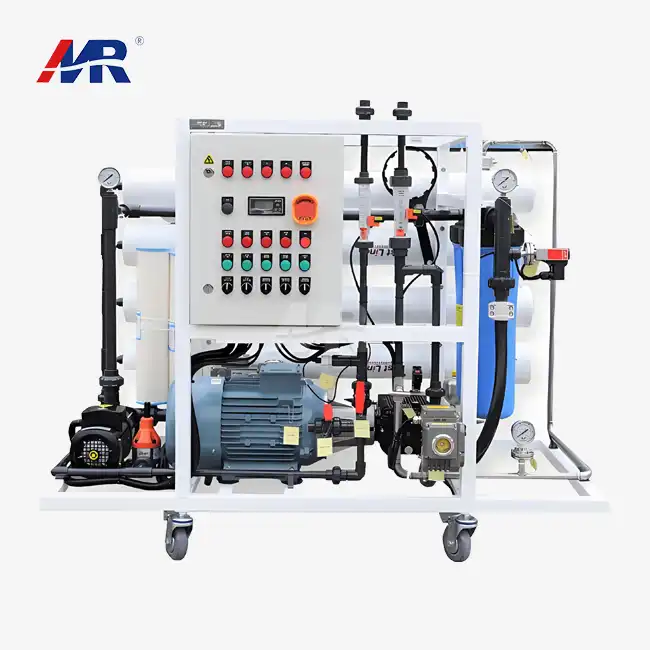
Understanding Feedwater Conditions for Portable Desalination Machines
Seawater vs. Brackish Water vs. Surface Water
A significant number of design decisions are derived from these three categories of sources. The total dissolved solids (TDS) of open-ocean saltwater typically ranges from 33,000 to 40,000 mg/L, and it requires pressures of more than 55 bar in order to function properly. There is a TDS level of brackish freshwater that ranges from 1,000 to 15,000 mg/L, and it functions well at pressures ranging from 10 to 25 bar, which indicates that it requires less energy. The surface water of rivers, lakes, and ponds near the coast that have been damaged by floods often has a low salt content but a high turbidity and biological load. With this information, it can be concluded that pre-treatment is more of a design issue than membrane pressure rating.
Key Parameters That Drive Equipment Selection
When selecting a compact machine, the pH, TDS (salinity), SDI (silt density index), and water temperature are the four most significant parameters to take into consideration throughout the selection process. It is necessary to perform ultrafiltration (UF) or multi-media pre-filtration prior to the RO stage if the SDI level is more than 5. Changes in temperature ranging from 5 degrees Celsius to 45 degrees Celsius have the potential to alter the permeability of a membrane by 30–40%, which in turn has a direct impact on the membrane's capability to produce output. A comprehensive water analysis report that covers hardness, iron, silica, and biological oxygen demand should be requested by procurement teams before any equipment specifications are finalised with the intention of implementing them.
On-Site Testing vs. Laboratory Analysis
In the laboratory, you may get a general understanding of the chemistry, but in the real world, things are different. It is possible for factors such as algae blooms, turbidity spikes brought on by the monsoons, and changes in tidal salt to occur more quickly than a lab report from six months ago. A certified laboratory analysis may be combined with portable test kits that are able to detect TDS, pH, and turbidity in real time. This allows procurement engineers to get a comprehensive picture of the situation. Morui recommends doing site surveys and pilot testing for projects that utilise more than 50 m3 per day. This is because the information obtained from these surveys and tests is helpful in selecting the appropriate membranes, constructing the pre-treatment train, and selecting the appropriate size energy recovery devices.
Core Principles to Match Portable Desalination Machines with Feedwater Profiles
Technology Selection: RO, Electrodialysis, or Membrane Distillation
When it comes to desalination machine portable systems, reverse osmosis is the best option since it is able to manage the largest variety of total dissolved solids (TDS), and it works well with systems that are capable of handling up to 500 m3/day. Saltwater that is low to medium in salt concentration and can sustain increased turbidity is ideal for electrodialysis. However, if the total dissolved solids (TDS) level exceeds around 5,000 mg/L, electrodialysis loses its energy advantage. It is possible to employ membrane distillation at locations that generate waste heat, such as oilfield camps; however, this procedure makes the process more difficult thermally, which in turn makes it less portable. The majority of business-to-business purchasers continue to find that SWROs that come equipped with energy-recovery devices are the most suitable option for seawater sources.
Capacity Sizing and Power Supply
Having a mobile unit that is undersized means that it must operate continuously without any buffer, while having a mobile unit that is oversized means that you waste money and money on energy costs. In order to guarantee that there is sufficient water, the peak daily demand should be increased by 1.25. Next, determine whether or not the local power system is capable of managing the additional demand of energy. In order to generate electricity, remote locations often depend on diesel generators or solar-hybrid arrays. When energy-recovery devices are introduced to seawater RO, the amount of energy that is used is around 3.5 to 5 kWh/m3 less than when they are not used, but it is approximately 6 to 8 kWh/m3 more. Over the duration of one year of operation, this is a significant change that has occurred.
Pre-Treatment and Maintenance Planning
Fouling that is particular to feedwater is the primary cause of membrane failure before its time in units that are now operating in the field. For inputs that have a high level of turbidity, it is necessary to use multi-media filtration or ultrafiltration membranes prior to the RO step. It is necessary for the high-iron dirty water to settle and oxidise. Dosing with antiscalant is necessary for hard water that has a tendency to scale. The creation of a maintenance plan that is based on the kind of fouling (biological, colloidal, or mineral scale) makes cleaning more predictable and extends the usable life of the membrane beyond the typical three to five years that is proposed by the Water Research Foundation (2022).
Comparing Portable Desalination Machines: How to Choose the Best for Your Feedwater
Performance Metrics That Matter in B2B Procurement
Pay attention to three ratios when comparing units: recovery rate (product water ÷ feedwater), salt rejection (usually ≥99% for good SWro membranes), and specific energy consumption (kWh/m³). With a higher recovery rate, less brine needs to be thrown away, which is very important on ships or in rural areas that are cut off. Units that are NSF/ANSI 58 certified or have CE water-contact approvals give buyers in the US and EU the proof of compliance they need for their projects. Always ask for third-party test results along with data sheets from the maker.
Portable Units vs. Fixed Systems: Flexibility vs. Scale
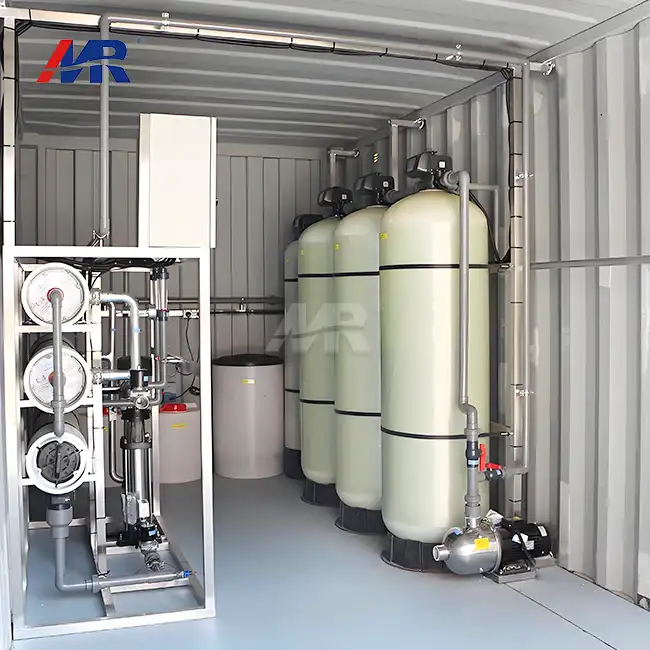
A desalination machine portable in a container or on a skid can be set up in days and moved if the project changes, which is an advantage that no fixed plant can match. Most movable SWRO systems can only process less than 500 m³ per day, but fixed plants can process tens of thousands of cubic meters per day. When time is of the essence, the freedom of a portable or containerized unit usually wins out over the size advantage of a fixed installation. This is especially true for crisis response, island resorts, offshore platforms, and mine camps.
Supplier Evaluation Criteria
It's just as important to choose a provider as it is to choose the tools. Before signing a purchase order, you should make sure of these important things:
- Manufacturing integration: Suppliers with their own membrane plant and equipment factory—like Morui—can control component quality and shorten lead times without dependence on third-party membrane suppliers.
- Certifications and documentation: NSF, CE, and water-contact material approvals are non-negotiable for US and EU government tenders; request copies before negotiating price.
- After-sales network: Ask specifically about spare-parts stocking, remote monitoring capability, and on-site commissioning support in your region.
These three things tell the difference between sellers who can keep a project going for its whole life and those who can only support the original sale.
Real-World Case Studies: Matching Portable Desalination Machines to Diverse Feedwater Conditions
Coastal Emergency Response
Within three days after receiving the equipment following a storm, a utility company on a Caribbean island installed a containerised SWRO unit with a capacity of fifty cubic meters per day. The total dissolved solids (TDS) concentration in the feedwater was 34,500 mg/L, and the turbidity was high as a result of storm runoff. During the emergency operation that lasted for six weeks, a two-stage pre-treatment train composed of cartridge filtration and antiscalant dosages ensured that the membranes were safe and maintained a salt rejection rate of more than 99.2%. This particular instance demonstrates that the design of the pre-treatment, and not simply the brand of membrane, is the primary factor that affects how effectively a rapid-deployment unit functions under circumstances that are less than ideal.
Remote Mining Camp Brackish Supply
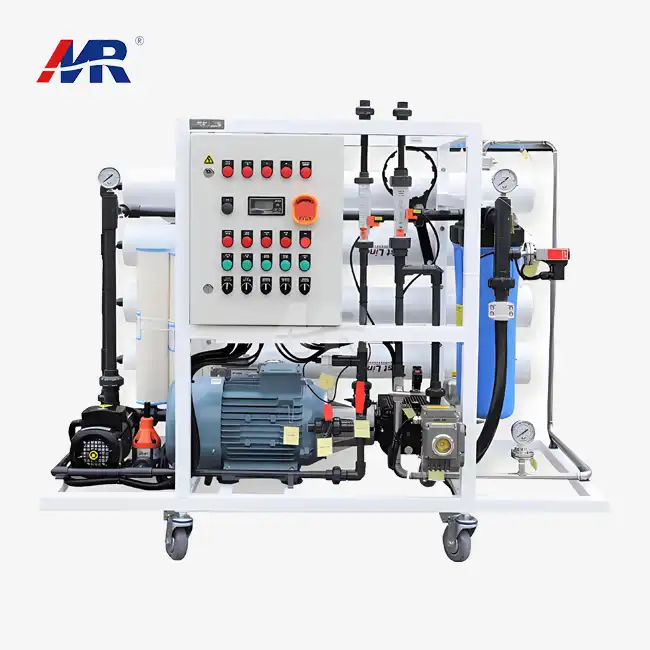
Drinking water was being brought in by a copper mine in an arid region at a cost of almost $12 per cubic metre from the mine. When the expenses of electricity, chemicals, and maintenance were taken into consideration, this cost was reduced to less than $1.50 per cubic metre. The system was mounted on a skid frame and used 100 cubic metres per day of brackish water that was drawn from a groundwater well with a total dissolved solids concentration of 4,800 mg/L. Instead of employing a system that was rated for saltwater, which would have placed an excessive amount of pressure on the membranes and wasted energy, the most essential design option was to match the operating pressure and recovery rate (which was set at 75%) to the actual TDS.
Offshore Platform Freshwater Supply
In Southeast Asia, a manufacturing platform eliminated the need for daily water boat deliveries by installing a marine SWRO unit that had a capacity of 30 cubic meters per day. This machine was installed in a weatherproof shell that was capable of withstanding temperatures of up to 45 degrees Celsius and salty air. Morui's anti-fouling membrane technology and corrosion-resistant duplex stainless steel pipes were selected after the first feedwater analysis revealed that the warm tropical saltwater had a significant amount of biological activity. The platform became completely water-independent after three months of being placed into operation, and the running expenses decreased by sixty percent when compared to the quantity of boats that were supplied.
Conclusion
Matching a portable RO system to the conditions of the feedwater is not a single choice, but a series of technical checks that must be made in a certain order: source-water analysis, technology selection, pre-treatment design, capacity and power sizing, and supplier verification. Every step builds on the last one. If you don't analyze the water, you'll use the wrong pre-treatment, and fouling will happen faster. Fouling costs more energy and shortens the life of the membrane. Buyers who take the time to fully understand the feedwater before choosing a desalination machine portable always report lower total cost of ownership and fewer operational shocks over the span of the project.
FAQ
1. How often should I test feedwater once a system is running?
At least once a month, check the TDS, pH, and turbidity. During warm seasons, biological tracking should be done every two weeks in tropical or seaside areas that are prone to algae.
2. Can a portable SWRO unit handle highly turbid floodwater?
The answer is yes, but only if the right pre-treatment is done upstream. Before the RO membranes, a multi-media filter or uf membrane stage must get rid of the solids that are floating in the water. If you run high-turbidity water straight through RO membranes, the feed channels will get blocked within hours, and most of the warranty will not be valid.
3. What certifications should I look for when buying for a US project?
Give NSF/ANSI 58 (for RO systems) and NSF 61 (for things that come into contact with water) the most weight. If necessary, also give UL electrical approval. These are normal needs for contracts with cities and the government in the US.
4. What warranty coverage is typical?
Most good SWRO systems come with a warranty that covers the mechanical parts for one year and the membranes for one to two years as long as they are used correctly. Morui has options for longer warranties and a global network of extra parts to help with long-term projects.
Partner with Morui for Your Next Portable Desalination Project
Morui backs up every desalination machine portable we sell, from single skid units to fully containerized SWRO systems. We own our membrane production plant and equipment factory, which lets us directly control quality and speed up delivery. We are both a maker of portable desalination machines and a system integrator. Our 20-person engineering team has worked on projects for mining camps, offshore platforms, and island utilities. To get a proposal that is tailored to your needs, email us at benson@guangdongmorui.com.
References
1. Water Research Foundation. Membrane Biofouling in Reverse Osmosis Systems. Water Research Foundation, 2022.
2. Elimelech, M., & Phillip, W. A. "The Future of Seawater Desalination: Energy, Technology, and the Environment." Science, 2011.
3. International Desalination Association (IDA). World Desalination Report. IDA, 2023.
4. Voutchkov, N. Desalination Engineering: Planning and Design. McGraw-Hill, 2012.
5. World Health Organization. Guidelines for Drinking-Water Quality, 4th Edition. WHO, 2017.
6. Fritzmann, C., et al. "State-of-the-Art of Reverse Osmosis Desalination." Desalination, 2007.