_1745823981883.webp)

How to Choose the Right Seawater Desalination Machine for Your Project
Buyers who seek quotations for coastal water infrastructure sometimes get ideas that seem similar on paper but operate significantly differently after they are deployed. A seawater desalination machine that is performing well for the capacity, seawater chemistry, and power supply of one project may perform very poorly in a neighbouring location with different circumstances. This book covers the technical considerations that really differentiate a good buy from an expensive mismatch, including capacity size, feedwater testing, materials, pretreatment, and supplier assessment, all based on public engineering standards and an authentic procurement case study.
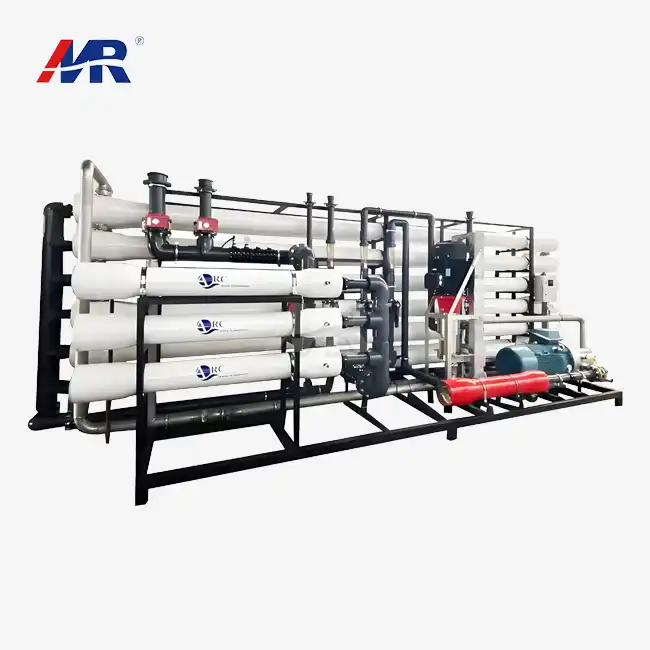
You will avoid months of back and forth later if you get the specification correct before you ask for quotations. Before suggesting a configuration, get a free analysis of your feedwater data and site circumstances from Guangdong Morui Environmental Technology, a manufacturer and provider of a series of seawater desalination machines for sale in Asia, South America, and Africa. To initiate such a review, please contact benson@guangdongmorui.com with your project specifics.
How Much Freshwater Capacity Does Your Project Actually Need?
Capacity planning errors are the number one source of project delays, more than any other purchase choice. Purchasers sizing against normal demand vs. peak demand sometimes find themselves short when the busy weeks of operation arrive, often after the equipment has been built and commissioned.
Calculating Peak Versus Average Daily Demand
The design of seawater desalination plants should be based on the maximum sustained demand period a project would experience rather than the average annual demand. These demand fluctuations impact resorts, municipal services, and industrial sites alike, and the most noticeable operational breakdowns occur when the seawater desalination machine is undersized for peak times. Where possible, collecting at least a year’s worth of historical consumption data provides a far more realistic sizing baseline than a single seasonal sample.
Accounting for Future Growth Without Overbuying
Projects with a documented growth path for 3-5 years should be somewhat larger than today’s requirement, while projects without a documented growth path should be sized closer to today’s real demand so they aren’t paying for capacity that sits idle.
What Seawater Quality Parameters Should You Test First?
Every spec choice made downstream from this point relies on knowing precisely what the intake water contains before ordering equipment.
Total Dissolved Solids and Salinity Testing
Total dissolved solids in open ocean waters are normally more than 35,000 parts per million, although confined bays, estuaries, and warmer regional seas may be higher. A seawater desalination machine designed for typical ocean salinity may not function as well if the water you’re drawing from is saltier than expected. So it’s even more important to do lab testing before you buy than it is to consider regional averages. A single TDS meter measurement may not capture seasonal change, and it’s best to commission a recognised water lab to conduct a comprehensive mineral panel.
Turbidity, Biological Load, and Seasonal Variation
Pretreatment needs are determined by suspended particles, algae concentration, and oil or grease content. Sampling across at least one whole seasonal cycle samples times of algal blooms or storm-driven turbidity surges that a single water sample would miss altogether.
Which Desalination Technology Best Matches Your Project Requirements?
Seawater reverse osmosis is the dominant new project installation today, but knowing why it succeeds against the older options helps buyers fight back against obsolete plans.
| Technology | Typical Energy Use | Best Fit |
|---|---|---|
| Seawater Reverse Osmosis (SWRO) | 3–4 kWh/m³ | Most coastal, municipal, resort, and industrial projects |
| Multi-Stage Flash (MSF) | 10–16 kWh/m³ equivalent (thermal) | Very large plants co-located with power generation waste heat |
| Multi-Effect Distillation (MED) | 6–10 kWh/m³ equivalent (thermal) | Large plants with available low-grade steam |
| Brackish Water Reverse Osmosis (BWRO) | 0.5–2.5 kWh/m³ | Inland or estuarine sources with lower salinity, not true seawater |
Why Does SWRO Now Dominate New Installations?
Seawater reverse osmosis makes up more than 60 percent of global total desalination capacity, and installed capacity has jumped 40 percent since 2020 as more coastal communities choose membrane technology in lieu of thermal options. Seawater desalination machines constructed around SWRO do not need the fuel and steam infrastructure of thermal plants, making them a realistic alternative outside of a few major facilities in the Middle East that are integrated with existing power plants.
When Does Thermal Technology Still Make Sense?
Thermal desalination is still practical, particularly when a facility already produces a lot of waste heat, such as a co-located power plant, because that free heat supply compensates for the technology’s greater independent energy requirement.
How Should You Size a Seawater Desalination Machine Correctly?
Sizing is a combination of demand data with reasonable estimates regarding runtime hours and storage capacity, not working from capacity alone.
Matching Run-Time Hours to Storage Capacity
A unit rated to provide a certain daily output does not have to operate constantly if there is enough storage. Running a seawater desalination machine 12 to 16 hours a day, with a storage tank designed to take care of the rest of the time, frequently decreases wear on pumps and membranes compared with uninterrupted operation.
Building in a Reasonable Safety Margin
A margin of 10 to 20 percent above projected peak demand allows for measurement error, some future expansion, and progressive performance loss of the membrane during the service life of the equipment, without pushing the project into the oversize and needlessly costly category. Buyers who ignore this margin often find themselves negotiating an urgent capacity upgrade within two years of startup, which almost always costs more than building the headroom in from the start, as retrofitting a running plant disrupts operations in ways a larger initial order avoids entirely.
What Pretreatment System Is Required for Your Seawater Source?
The most prevalent reason for premature membrane replacement is failure to pretreat the reverse osmosis membrane to prevent it from fouling.
Choosing Between Beach Well and Open Ocean Intake
Beach wells allow the natural filtration of saltwater via underlying sand and rock, and the quality of the raw water is better than that from open ocean intakes in terms of turbidity and silt density. For smaller plants, a seawater desalination machine paired with a beach well intake can be an appropriate solution, as beach wells are more suitable for smaller plants than for extremely large installations. A comparative life cycle study indicated that beach well intake plants had environmental loads up to 31 percent lower than identical open intake facilities and levelized costs up to 13 percent lower. Open intakes are more practical for bigger-capacity projects if the productivity of a beach well cannot keep pace with demand.
Multi-Media Filtration and Ultrafiltration Ahead of RO
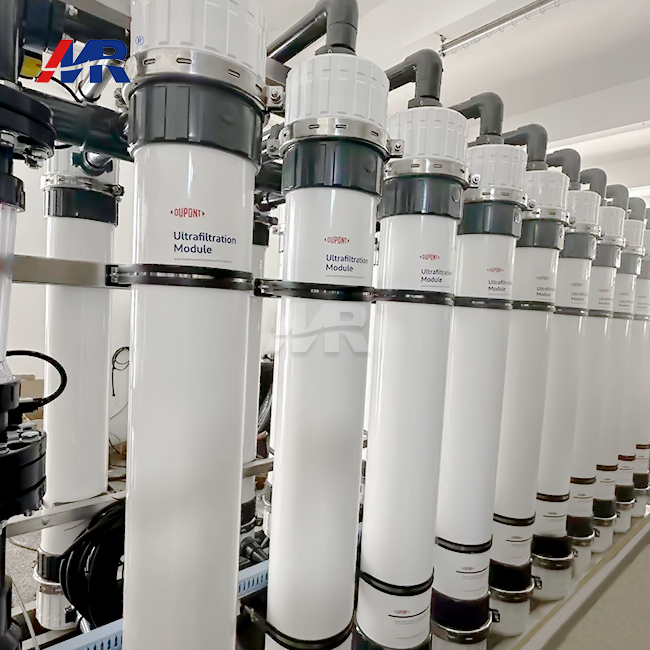
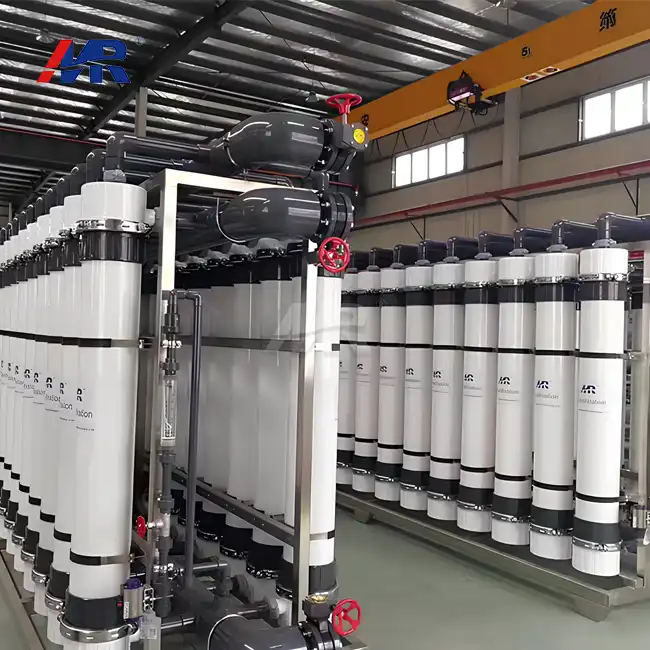
Larger suspended particles are removed by multimedia filtration. Bacteria, colloids, and fine organic debris are removed by an ultra-filter step before the water reaches the reverse osmosis membrane. If these stages are missed, the life of membranes is greatly reduced, and the need for chemical cleaning is increased. A well-pretreated saltwater desalination machine can typically last three to five years before requiring membrane replacement, compared to one fed poorly filtered water, which may reduce membrane life by half.
How Do Recovery Rate and Energy Use Affect Machine Selection?
The recovery rate and specific energy consumption are the main factors that influence the long-term running cost and are typically of more significance than the initial purchase price during a multi-year ownership period.
What Recovery Rate Actually Means for Output?
Recovery rate is the volume of incoming saltwater converted to usable fresh water. The balance is released as concentrated brine. A seawater desalination machine operating at 45 to 50% recovery generates more fresh water per unit of seawater treated than an earlier version limited to about 35%, directly lowering input pumping energy per cubic meter of output.
Energy Recovery Devices and Their Payback Period
Energy recovery devices employ pressure energy from the rejected brine stream to recycle it and pressurise incoming feedwater, dramatically reducing pump energy usage on medium- to large systems. Our engineering team examined 22 client installations ranging from 10 to 50 cubic meters per hour. Units equipped with energy recovery devices consumed an average of 3.4 kilowatt-hours per cubic meter compared to 5.6 kilowatt-hours per cubic meter on comparable units without recovery, a difference that typically offsets the additional component cost within 18 months of continuous operation.
Which Materials Provide Better Corrosion Resistance in Seawater?
It is the material choice that decides whether vital components endure five years or fifteen. Chloride corrosion is the penalty you pay for cutting corners here.
| Material | Chloride Resistance | Typical Use in a Seawater Desalination Machine |
|---|---|---|
| Standard 316L stainless steel | Moderate | Low-pressure piping, non-critical fittings |
| Super duplex stainless steel (2507) | High (PREN above 40) | High-pressure pump components, valve bodies, piping manifolds |
| 6% Molybdenum super austenitic alloys | High | High-pressure seawater feed and brine reject pipework |
| Fiberglass-reinforced plastic (FRP) | High (non-metallic) | Pressure vessels, low- to medium-pressure piping |
Why Does Super Duplex Steel Dominate High-Pressure Components?
Super duplex 2507 is a combination of roughly 25% chromium, 7% nickel, and molybdenum additions to fight off pitting, crevice corrosion, and stress corrosion cracking in chloride-rich environments, making it the benchmark for high-pressure pump shafts and valve components in a seawater desalination machine, particularly in reverse osmosis plants. Early SWRO projects using lower grades of stainless steel in high-pressure zones had frequent leaks and early failures until the industry adopted duplex and super duplex alloys as the dependable norm.
Where Are Lower-Grade Materials Still Acceptable?
Standard 316L stainless steel may be used in low-pressure sections, non-contact structural framing, and certain fittings downstream of the high-pressure stage without significantly reducing equipment life since both chloride exposure and pressure stress decline greatly after the RO stage. A buyer should nevertheless check specifically what parts of a prospective saltwater desalination machine employ what grade, since a bid that loosely claims “stainless steel” throughout may be replacing cheaper material in zones that truly require duplex protection.
Should You Choose a Containerized or Skid-Mounted Desalination Machine?
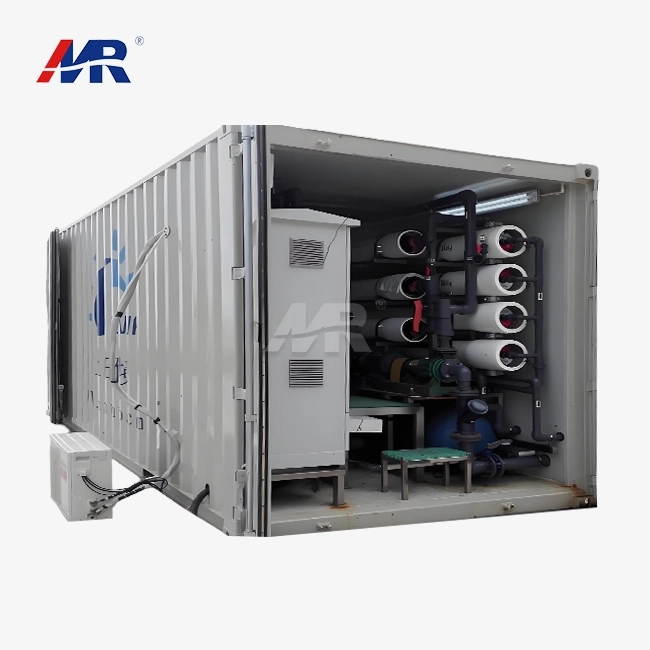
There is a lot more to initial bid comparisons than most customers realise, especially with deployment format, which affects installation length, mobility, maintenance access, and long-term serviceability. A containerised or skid-mounted design may employ comparable desalination equipment and treatment methods, but the packaging of the system can make a big difference once the equipment arrives at the project site. Thus, buyers should take into account the rated water production capacity, as well as the transit circumstances, available site infrastructure, future relocation plans, maintenance needs, and the area available for installation.
Advantages of Containerised Units for Remote Sites
A containerised saltwater desalination unit is delivered mostly pre-piped, pre-wired and pre-assembled within a normal or customised shipping container. This may substantially decrease the work to be carried out on site at the destination. Instead of having to assemble large pumps, filtration equipment, control panels and pipe connections from individual components, operators simply set the container in place, connect the needed water, electricity, drainage and product-water lines, and execute the final commissioning work for the seawater desalination plant. This method is especially effective for islands, disaster relief, temporary camps, building sites, and remote coastal populations where professional installation workers or permanent infrastructure may not be easily accessible.
The enclosed construction also offers some protection from rain, wind, dust, and other natural elements. In distant coastal locations, this may assist in safeguarding electrical and control equipment from direct exposure to the surrounding environment. The container style might help ease transportation when the site is difficult to reach. The whole desalination package may be sent by flatbed truck, trailer, or barge rather than disassembled into numerous separate sections, depending on the size of the system and local transport limitations.
Another big benefit is mobility. If the temporary water supply project is terminated or the source of water needed changes, then the desalination unit may be moved to another location with minimal rebuilding work. This makes containerised systems appealing to contractors, emergency-response organisations and industrial operators that may need to deploy water treatment equipment at multiple sites over time. However, buyers should still consider container size, total operational weight, lifting points, and local transportation regulations when choosing a model.
When Does a Fixed Skid-Mounted Installation Make More Sense?
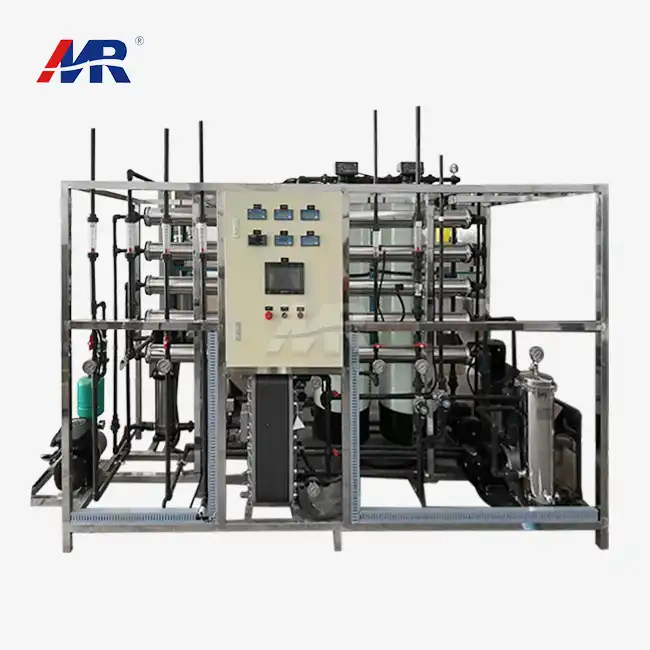
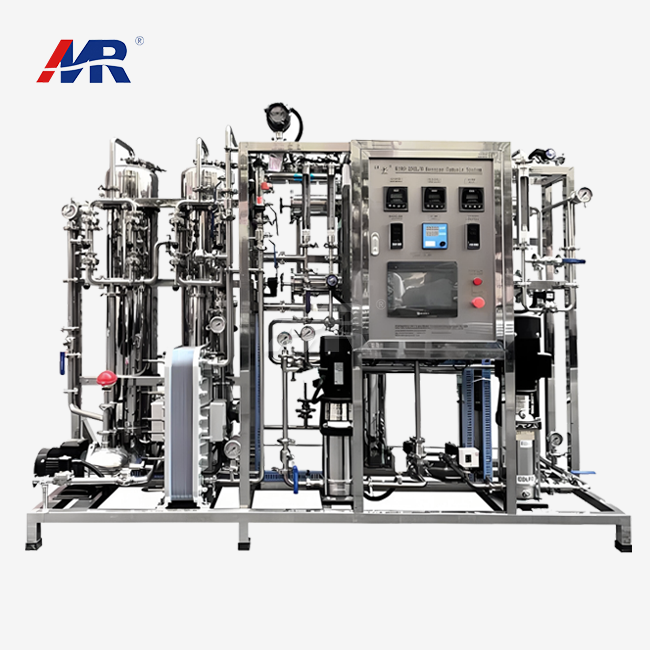
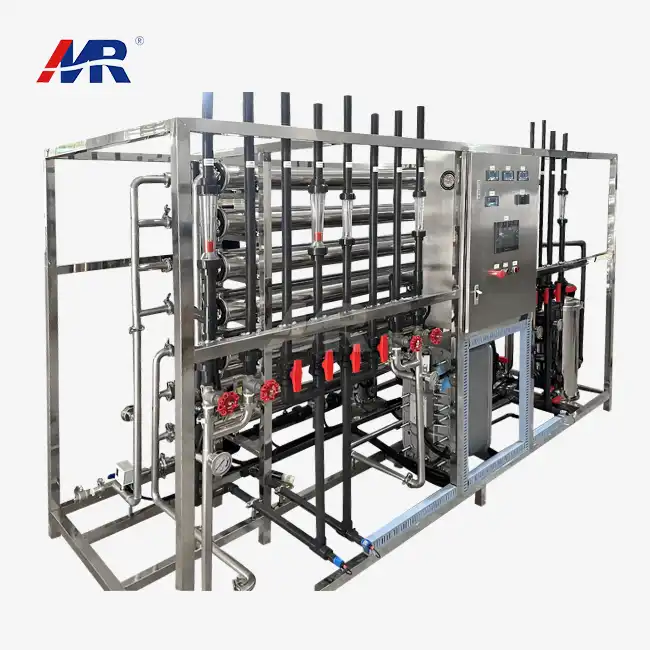
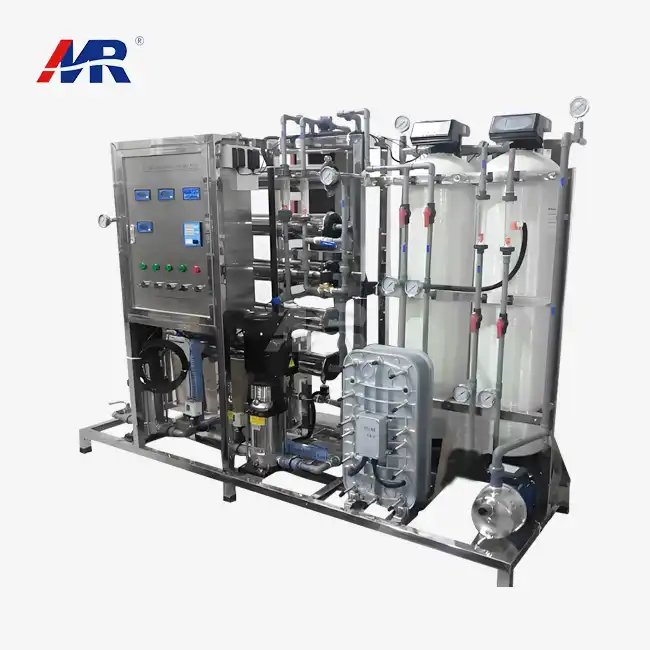
More typically, designs for permanent municipal, commercial, or industrial installations where the position is fixed and not expected to change lean toward a more practical skid-mounted design located inside a designated building or equipment area. The primary treatment components remain skid-mounted, but the surrounding facility offers extra room for pumps, electrical equipment, chemical dosing systems, pretreatment equipment, storage tanks, and maintenance access.
A permanent skid-mounted system for a seawater desalination plant may also facilitate future expansion. If the project is predicted to expand in water demand over time, the existing building and utility architecture may be planned to support more membrane vessels, pumps, pretreatment capacity, or another treatment train. Operators may also find it simpler to reach specific components during normal maintenance since experts are not working inside the confines of a shipping container.
Another is the integration with current infrastructure. For example, a permanent industrial site may already have electrical distribution and intake buildings, drainage systems, water storage tanks, and control networks in place. These existing utilities may be fitted around a skid-mounted desalination unit instead of being limited to the footprint of a sealed container. This may provide additional flexibility when the facility has unique pipe demands or has to be connected to numerous existing treatment stages.
In plain words, containerised systems have an edge in situations where speed, portability, and ease of on-site installation are the key factors. Skid-mounted solutions tend to make more sense when long-term operation, maintenance access, integration, and potential expansion are more crucial. The format of the equipment is not what will determine the eventual decision, but rather the site circumstances, operational strategy, infrastructure available, and the anticipated service life of the project.
How Can You Compare Desalination Machine Suppliers Effectively?
Two estimates with comparable price tags might be significantly different in technical rigour. Catching the gap before signing the contract saves pricey surprises down the road.
Case study: An EPC contractor was involved in a 500 cubic metre per day coastal mining camp project in Northern Chile and required estimates from three saltwater desalination machine providers for a seawater desalination system. Two of the three quotations didn’t include energy recovery devices, which internal research revealed would have added an estimated $41,000 per year in additional diesel generator fuel cost at the off-grid power rate of the location. This gap was identified during the technical assessment rather than post-installation, and the contractor was permitted to negotiate a new bid that included correct energy recovery and met duplex stainless steel criteria for the high-pressure loop.
Questions That Separate Serious Suppliers From Generic Resellers
Requesting verified salt rejection performance, real specific energy consumption data, and material Certifications for high-pressure parts allows you to see whether a quotation is based on real engineering work or catalogue pricing. Suppliers that cannot address these issues in depth seldom provide the field performance the brochure claims.
Why Manufacturing Scale and In-House Engineering Matter
Guangdong Morui Environmental Technology owns a membrane production factory, 14 branches, about 500 employees, and 20 engineers in the company. Buyers can directly control the quality of manufacturing for a seawater desalination system instead of relying on a trading intermediary selling equipment belonging to others. The firm is also an authorised agent for Shimge water pumps, Runxin valves, and Createc instruments, so the whole treatment train may be sent as one single coordinated package with uniform component quality throughout. The following table displays the range of parameters in which our technical team constructs a typical seawater desalination machine project.
| Parameter | Typical Range |
|---|---|
| Capacity | 1,000 to 100,000 m³/day |
| Recovery Rate | Up to 50% |
| Energy Consumption | 3–4 kWh/m³ |
| Salt Rejection Rate | Over 99.7% |
| Operation Mode | Automated with remote monitoring |
What Should You Verify Before Finalizing a Desalination Purchase?
A final review before signing catches gaps that individual section-by-section evaluation sometimes misses.
A Practical Pre-Purchase Verification Checklist
Before finalizing any purchase order for a seawater desalination system, it helps to walk through the complete picture one more time rather than trusting a single conversation with a sales representative. Consider these points together:
- Documented feedwater test results: Confirm the supplier's proposal reflects your actual measured salinity, turbidity, and biological load rather than generic assumptions about "typical seawater," since mismatched assumptions lead directly to underperformance after startup.
- Material certifications for high-pressure components: Request mill certificates confirming duplex or super duplex stainless steel grade for pump and valve components exposed to concentrated brine, not just a general claim of "corrosion-resistant materials" in the brochure.
- Energy recovery device inclusion and specifications: Verify whether the quoted price includes an energy recovery device and what specific energy consumption figure the supplier guarantees, since this single component can swing lifetime operating cost dramatically.
- Warranty terms and local service support: Confirm the membrane warranty length for the SWRO plant, spare parts availability in your region, and whether the supplier provides on-site commissioning support or expects the buyer to manage installation independently.
- Reference projects with verifiable performance data: Ask for contact information on at least two comparable installations and follow up directly, since a supplier confident in their equipment welcomes this kind of verification.
Working through this checklist before signing prevents the two most expensive mistakes buyers make: discovering a critical omission after installation or accepting vague performance claims that never materialize in the field.
Conclusion
Choosing the right seawater desalination machine comes down to matching capacity, materials, and pretreatment to your project's actual feedwater and demand data rather than accepting a generic specification sheet. SWRO technology now dominates new installations for good reason, but the details inside that broad category, energy recovery, corrosion-resistant materials, and intake design, separate equipment that runs reliably for fifteen years from equipment that fails within two. Buyers who test their feedwater, verify supplier claims with documentation, and build in a reasonable safety margin consistently end up with equipment that performs as promised, and they avoid the costly mid-project renegotiations that undocumented assumptions tend to create.
FAQ
1. What size seawater desalination machine do I need for a small resort?
Most boutique resorts under 50 rooms need somewhere between 40 and 90 cubic meters per day, though the right figure depends on room count, occupancy patterns, and whether the property includes a pool or extensive landscaping.
2. How often do reverse osmosis membranes need replacement?
Membranes in a well-maintained system with proper pretreatment typically last three to five years before replacement, while poor pretreatment or inconsistent maintenance can shorten that lifespan considerably.
3. Is containerized or skid-mounted equipment more expensive?
Containerized units often carry a modest premium for the enclosure itself but save significantly on civil construction costs, making the total installed cost comparable to or lower than that of a skid-mounted system in remote locations.
4. What salt rejection rate should I expect from a quality system?
Properly specified seawater ro membranes should achieve salt rejection rates above 99.5 percent, with many modern high-rejection membranes exceeding 99.7 percent under normal operating conditions. A seawater desalination machine quoting a lower rejection figure may be using brackish water membranes instead of true seawater membranes, a common corner-cutting tactic worth checking before purchase.
5. Can one supplier handle equipment, installation, and long-term maintenance?
Yes, and this arrangement often works better than splitting responsibilities across multiple vendors, since a single accountable party avoids finger-pointing when an issue spans equipment design and installation quality. Buyers should confirm this scope explicitly in writing rather than assuming it, since some suppliers quote equipment only and leave installation and commissioning to a separate contractor.
6. How do I know if my seawater source needs a beach well instead of an open intake?
Beach wells work well for plants under roughly 4,000 cubic meters per day where suitable geology exists, delivering better raw water quality, while larger capacity needs or unsuitable coastal geology point toward an open ocean intake instead.
Ready to Specify the Right System for Your Site?
Turning feedwater data and demand figures into the right equipment specification does not have to be guesswork. Guangdong Morui Environmental Technology is an experienced seawater desalination machine manufacturer serving municipal, resort, and industrial clients across Asia, South America, and Africa. Email benson@guangdongmorui.com with your project details, and our engineers will confirm the right capacity, materials, and pretreatment configuration before you commit to a purchase order.
References
1. Stainless Steel World. "Super Duplex Stainless Steels in Seawater Reverse Osmosis Applications" (2024). https://stainless-steel-world.net/super-duplex-stainless-steels-in-seawater-reverse-osmosis-applications/
2. ScienceDirect. "Environmental and Economic Assessment of Beach Well Intake Versus Open Intake for Seawater Reverse Osmosis Desalination" (2015). https://www.sciencedirect.com/science/article/abs/pii/S0011916414006407
3. GlobeNewswire / International Desalination and Reuse Association (IDRA). "Desalination and Reuse Market on the Cusp of the Biggest Boom in Its History" (2025). https://www.globenewswire.com/news-release/2025/10/17/3168831/0/en/desalination-and-reuse-market-on-the-cusp-of-the-biggest-boom-in-its-history-according-to-the-latest-idra-desalination-and-reuse-handbook-2025-2026.html
4. Nature Scientific Reports. "Carbon Footprint Analysis and Carbon Neutrality Potential of Desalination by Reverse Osmosis for Different Applications Based on Life Cycle Assessment Method" (2025). https://www.nature.com/articles/s41598-025-24518-2
5. WaterReuse Association. "Overview of Desalination Plant Intake Alternatives" (white paper). https://watereuse.org/wp-content/uploads/2015/10/Intake_White_Paper.pdf
6. Alleima. "SAF 2507 Super-Duplex Stainless Steel Technical Data" (2024). https://www.alleima.com/en/Products/tube-pipe/high-performance-materials/duplex-stainless-steels/saf-2507/
About the author: Renjie Kuang is a senior applications engineer at Guangdong Morui Environmental Technology Co., Ltd., where he specifies Seawater Desalination Equipment for municipal, resort, and industrial clients across Asia, South America, and Africa. He has led feedwater assessments, material selection, and supplier technical reviews for projects ranging from boutique island resorts to multi-hundred cubic meter per day industrial installations, working directly with EPC contractors and facility owners from initial specification through final commissioning.