_1745823981883.webp)

How to Choose the Right RO EDI System for Your Facility
Choosing the right RO edi system for your facility is one of the most consequential decisions a plant engineer or procurement manager will make. A well-matched reverse osmosis electrodeionization system delivers 18.2 MΩ·cm ultrapure water continuously, without acid or caustic regeneration, cutting chemical costs and regulatory headaches at the same time. This guide walks you through what to look for—from feed-water analysis and flow-rate sizing to compliance documentation and total cost of ownership—so you can match a specific model, such as Morui's MR-EDI-10TH, to your facility's exact requirements.
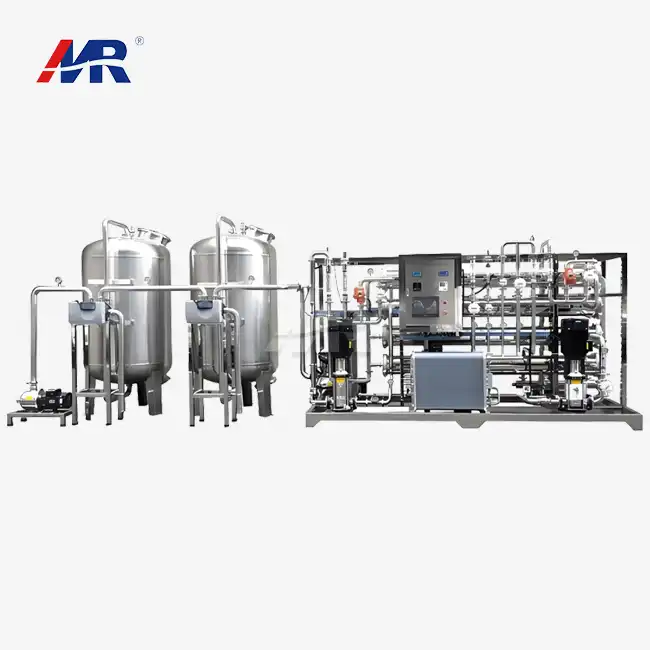
Understanding How an RO EDI System Works
Learn about the science behind the goods you want to compare before you do so. An RO+EDI train has two separate processes connected in a row. Understanding how each one works makes it easier to make decisions about specifications further down the line.
Reverse Osmosis: The First Stage
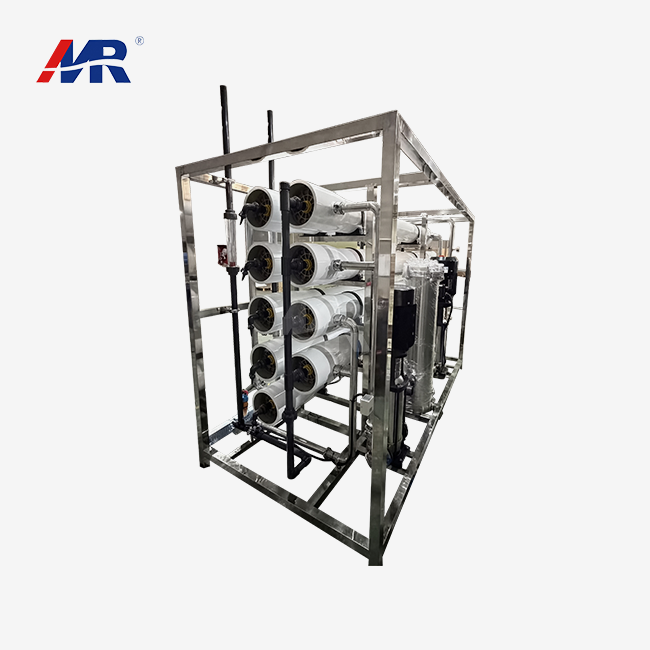
Reverse osmosis uses pressure to push feed water through a barrier that lets some things through but not others. This process gets rid of dissolved salts, organics, and particles. A well-designed RO stage can usually get rid of 95–99% of the salt and give you a permeate with a conductivity of 1–10 µS/cm.
Electrodeionization: The Polishing Stage
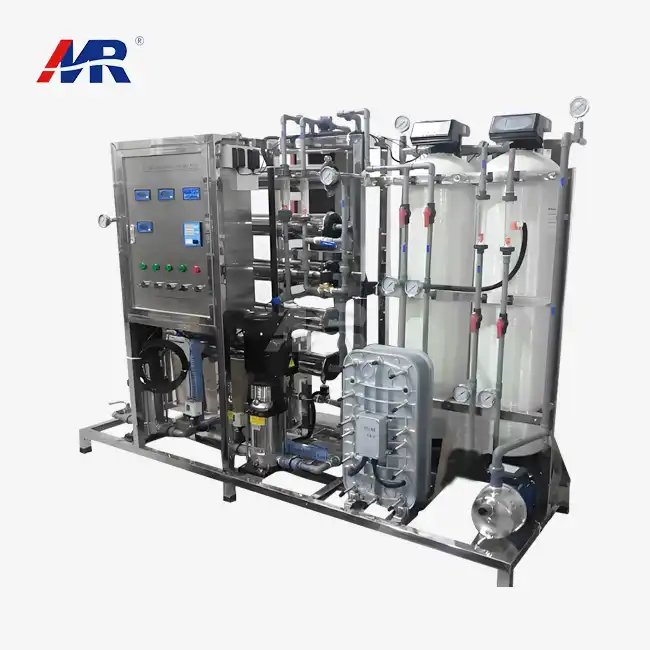
The EDI stack gets its water from the permeate. The EDI cell uses ion-exchange membranes and a low-voltage DC field to keep pulling leftover ions out of the water. The electric field renews the resin beads inside the cell in real time, so there is never a need for group chemical renewal. The output resistivity usually ranges between 15 and 18.2 MΩ·cm, which is in line with ASTM Type I and SEMI Grade 1 standards.
Why the Combination Matters
Neither stage by itself is a cost-effective way to get ultrapure water. RO gets rid of the bulk ion load, and EDI smooths out what's left. Together, they lower running costs compared to a separate mixed-bed deionizer, get rid of the need to store dangerous chemicals, and allow for 24/7 production, which is needed in places like semiconductor factories, pharmaceutical cleanrooms, and power plant boiler rooms.
Identifying Your Facility's Specific Requirements
The feed water profile, flow needs, and regulatory context are all different for each RO EDI system plant. The most common reason an electrodeionization device doesn't work well after placement is that the needs weren't properly evaluated.
Know Your Feed-Water Quality
Total dissolved solids (TDS), silica, and free chlorine are some of the things that affect how long an EDI stack lasts. Free chlorine should be less than 0.05 ppm, TDS should be less than 50 mg/L, and hardness should be close to zero after softening. If the water from your city's main line has 300 mg/L TDS, the RO stage needs to be the right size and set up before the EDI module can touch it.
Define Your Output Specification
Are you aiming for UPW that meets USP standards at 18.2 MΩ·cm or UPW that meets semiconductor standards at ≥1 MΩ·cm? The answer changes which membranes to use, how many stages to use, and whether or not live resistivity tracking is needed. People who use pharmaceuticals also need sanitary-grade pipes, TOC tracking, and IQ/OQ validation papers. A normal industrial setup doesn't come with these things by default.
Estimate Flow Rate and Recovery
Recovery rate directly impacts the amount of raw water used and the cost of running the business. For example, the Morui MR-EDI-10TH has a return rate of 55%. That means that 55 liters of product water leave the machine for every 100 liters of feed water that goes into it. A 1% increase in recovery means that a plant that processes a lot of material will save money every year on water and chemicals used for cleaning.
Key Criteria for Selecting the Right System
You can use a consistent set of factors to judge goods once you know what you need. The points below talk about the things that US buyers care about most when they decide to buy a capital asset.
Before you sign a buy order, you should look at these important technical and business factors:
- Salt rejection rate: It is the MR-EDI-10TH's 99.99% salt rejection rate that tells you how much ionic load the EDI stack has to handle. When the rejection is higher, the EDI module lasts longer, and the product resistance stays stable.
- Power consumption: Using 25 kW of power per hour is a set cost of running the MR-EDI-10TH. Don't just look at the rated capacity on a spec sheet; compare this number across competing units at the same flow rates.
- Module lifespan and replacement cost: Most EDI modules last between five and seven years with the right RO pretreatment. When you make your three- and five-year TCO models, you should include the cost of a new stack.
- Compliance documentation: US buyers usually need NSF/ANSI 61 water-contact approval, CE marking for any exported parts, and UL-listed electrical panels. Before you ask for a quote, make sure you have these.
- Remote monitoring capability: Facilities that are always making things can't have resistivity drops that go unnoticed. Online resistivity monitors and outputs that work with SCADA systems are now expected features, not extras that can be added if needed.
These criteria are a good way to narrow down the list of RO EDI system vendors. Before making a promise, systems that can't provide clear, third-party-verified data against each criterion should be looked at more closely.
Evaluating Manufacturers and Suppliers
Technical details are needed, but they're not enough on their own. How well a system works over its entire service life depends on the manufacturer's planning skills, customer service, and documentation methods.
One-Source vs. Multi-Vendor Supply
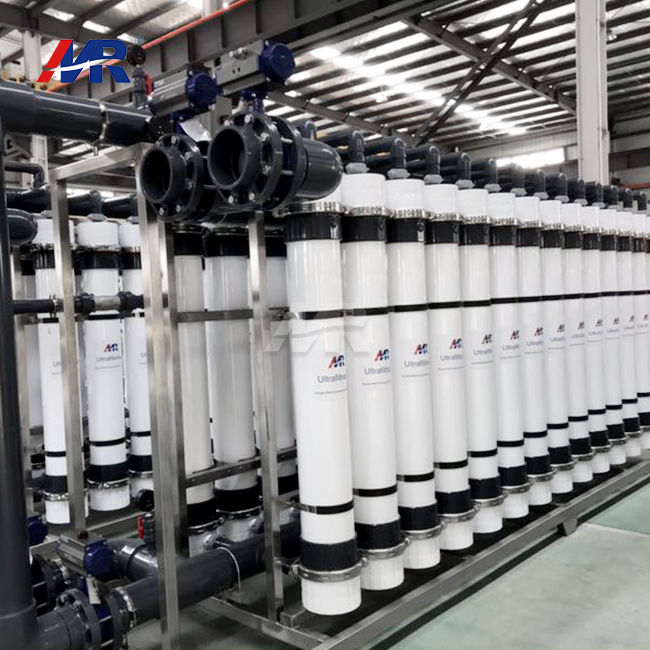
It's possible for installers to get RO filters, EDI stacks, pumps, and instruments from different companies and put them together on-site. Others, like Morui, make RO, EDI, and UF lines all in the same plant. This means that they do everything from designing the process to checking the end quality all in one place. Single-source supply cuts down on wait times, makes it easier to file guarantee claims, and makes sure that parts work together by design, not by accident.
Customization Depth
Standard list systems work well for simple tasks. For UPW circuits used in semiconductors or pharmaceuticals, on the other hand, the system needs to be customized based on the feed-water analysis, goal resistivity, pipe material (often 316L electropolished stainless steel or USP-grade PVDF), and proof needs. Before committing to a configuration, ask the manufacturer if they can give you data from a pilot run, material certificates, and IQ/OQ documentation.
After-Sales Support for US Facilities
The lead time, the availability of spare parts, and Technical support in English are all important to US plant engineers. Check to see if the seller keeps new parts in stock, gives help with setup, and can answer technical questions within an acceptable amount of time. From its dedicated project team in North America, Morui's engineering team helps North American customers with system design, FAT testing, and remote troubleshooting.
Conclusion
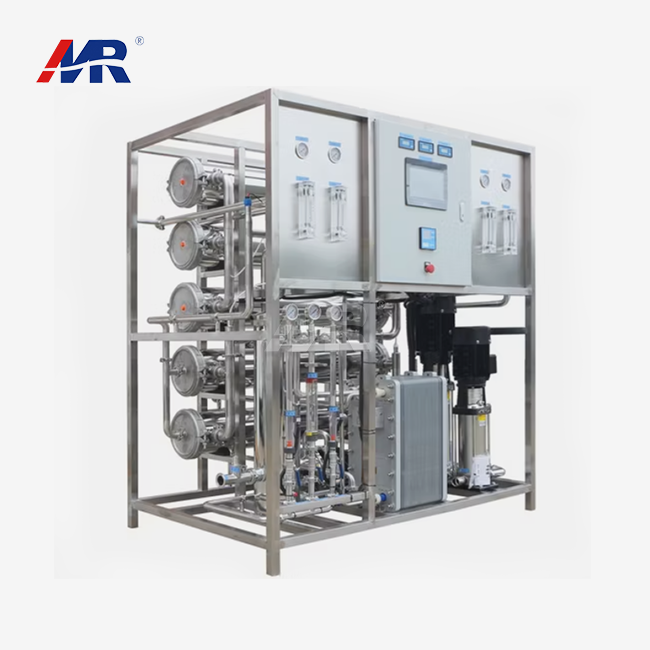
To choose the best ultrapure water system, you need to make sure that its technical specs—such as salt rejection, recovery rate, power draw, and output resistivity—match the feed-water conditions and production needs of your facility. The MR-EDI-10TH RO EDI system can reject 99.99% of salt, recover 55% of it, and use 25 kW/h of power in a chemical-free, continuous-operation mode that works well in laboratories, semiconductors, pharmaceuticals, and power generation. Follow the steps in this guide for assessing needs, make sure providers follow written compliance standards, and ask for data from sample runs when application risk is high.
FAQ
1. What pretreatment does an EDI system require?
EDI feed water needs to be softened to get rid of hardness, carbon filtered to get rid of free chlorine, and have an RO stage to lower the TDS below 50 mg/L. A lot of places also add a membrane degasser to get rid of the dissolved CO₂. This CO₂ ionizes inside the EDI cell and fights with other ions, making the resistance not meet the goal.
2. How does RO+EDI total cost of ownership compare to mixed-bed DI resin?
An RO EDI system has a higher initial investment cost. But because EDI doesn't need acid or caustic regeneration, the costs of buying chemicals and getting rid of hazardous waste are almost nothing. Most facilities get their extra cost back in two to three years, and the extra output time that comes from not having to wait for recovery is something that mixed-bed systems can't do.
3. Can the MR-EDI-10TH meet pharmaceutical purified-water standards?
The base system makes water with levels of resistance that meet USP standards for pure water. For pharmaceutical setups, you need clean pipes, TOC tracking, endotoxin control methods, and proof of IQ/OQ validation. You can get these as engineered choices; send Morui your USP or EP specification sheet for a full configuration request.
4. What is the typical service life of the EDI module?
As long as the RO preparation keeps the quality of the feed water within the design limits, EDI stacks should last between five and seven years before they need to be replaced. The main reason membranes fail too soon is that they get clogged up with hardness or oxidants. This is why the design of the pretreatment is just as important as choosing the EDI.
Get a Custom RO EDI System Quote from Morui
For semiconductor, pharmaceutical, power, and laboratory sites across North America, Morui offers full RO EDI system options, ranging from single modules to full ultrapure-water skids. We offer water quality test results, compliance paperwork, and commissioning assistance as a direct RO EDI system manufacturer with in-house membrane production and over 20 application engineers on staff. To get a plan that is tailored to your building, email our technical team at benson@guangdongmorui.com.
References
1. ASTM International. ASTM D5127: Standard Guide for Ultra-Pure Water Used in the Electronics and Semiconductor Industries. ASTM International, 2022.
2. United States Pharmacopeia. USP General Chapter <1231>: Water for Pharmaceutical Purposes. USP, 2023.
3. Strathmann, H. Ion-Exchange Membrane Separation Processes. Elsevier, 2004.
4. Water Quality Association. Electrodeionization Technology: Performance and Application Guide. WQA, 2020.
5. International Semiconductor Industry Association (SEMI). SEMI F63: Guide for the Use of UPW in Semiconductor Processing. SEMI, 2021.
6. Electric Power Research Institute (EPRI). High-Purity Water Chemistry Guidelines for Combined-Cycle Power Plants. EPRI, 2019.