_1745823981883.webp)

How Efficient Is an electrodeionization system in Water Treatment?
An electrodeionization system is very good at cleaning water because it uses ion exchange membranes and an electric field to keep getting rid of dissolved ions without having to use chemicals again. Systems from Morui can get resistivity values above 18 MΩ·cm, recovery rates above 90%, and use less than 0.1 kWh per cubic meter. This speed means that high-purity water is always made while dangerous chemicals aren't handled, downtime is cut down, and environmental damage is kept to a minimum. These are all important benefits for businesses that need ultrapure water.
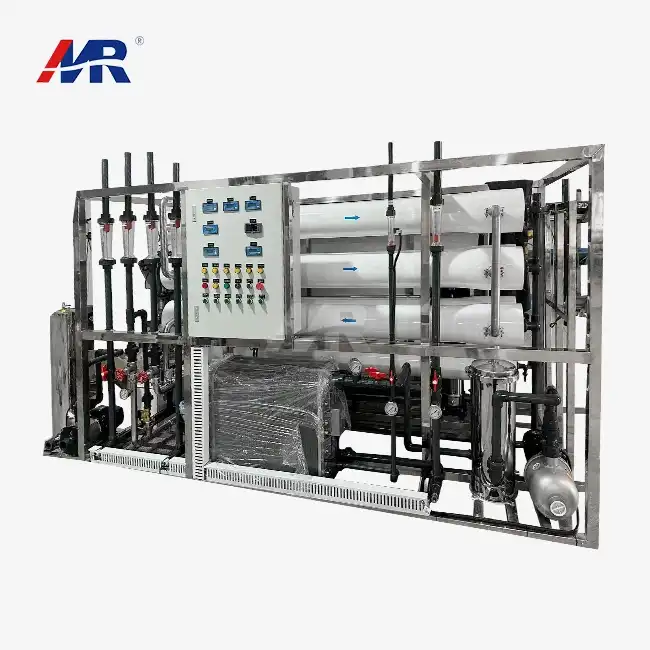
Understanding Electrodeionization Systems and Their Efficiency
Core Principles Behind Continuous Ion Removal
Electrodeionization cleans water with three primary stages. A DC electric field guides dissolved ionic impurities from ion exchange resins to electrodes via selectively permeable membranes. Electricity splits water molecules into hydrogen and hydroxyl ions, which hold resin beads. This self-sustaining technique eliminates offline regeneration cycles that other deionisation methods need.
The system cleans after reverse osmosis when properly set up. The RO stage removes 95–99% of dissolved solids, lowering the feedwater level to less than 20 ppm, which is optimal for EDI.
Critical Performance Metrics That Define System Efficiency
Resistance is the key indicator of performance. For pharmaceutical use, water must fulfil USP criteria and have a resistivity of 1.0 to 5.0 MΩ·cm. For semiconductor fabrication, ultrapure water must reach 18.2 MΩ·cm. Morui's systems consistently exceed 18 MΩ·cm resistivity, meeting ASTM D5127's strongest electronic-grade water criteria.
The recovery rate affects operational economics. In classic mixed-bed systems, renewal cycles lose a lot of material. But continual electrodeionization keeps recovery rates over 90–95%. Another key indicator is energy use. Advanced systems require less than 0.1 kWh per cubic metre of water, less than steam distillation, and around the same as well-optimized RO systems.
Power generation requires good silica removal. Scaling from dissolved silica may damage turbine blades in high-pressure boilers. Good EDI units remove 95–99% silica, preventing costly equipment failure.
How Design and Operational Parameters Influence Outcomes
System performance depends heavily on feed water quality. Temperature affects membrane conductivity and ion transport. Morui's gadgets adjust to seasonal variations without losing operation in temperatures from 5°C to 45°C. Operating pressures are modest at 0.3 to 0.7 MPa, requiring less pump energy than high-pressure RO systems.
Module layout affects the scalability of electrodeionization systems. Morui offers flow rates from 0.5 to 50 m³/h, enabling facilities to meet production demands. The tiny modular design of electrodeionization systems uses half the floor area of typical mixed-bed configurations, which is great for small facilities.
Controlling the electric field size is crucial. Too much current destroys the membrane too rapidly and increases energy costs, while too little voltage prevents thorough deionisation. Modern systems automatically change voltage depending on real-time conductivity.
Electrodeionization vs. Traditional Water Purification Methods
Energy Consumption and Water Recovery Comparisons
Mixed-bed ion exchange systems need plenty of chemicals to renew. A standard renewal cycle employs 4-8% sulphuric acid and 4-8% sodium hydroxide liquids, depending on resin consumption. The neutralised waste streams from these regeneration processes must be treated before discharge, making operations harder and harming the environment.
Comparing energy levels shows advantages. Based on input saltiness and recovery objectives, reverse osmosis purifies water to a small degree but requires 2–6 kWh per cubic metre. Pumping renewal chemicals in mixed-bed systems uses more energy, but acquiring the chemicals and disposing of the debris are the primary expenditures. Electrodeionization technique cleans without chemicals and requires less than 0.1 kWh per cubic metre.
Comparisons of water return in electrodeionization systems show substantial variances. Most mixed-bed systems lose 5–10% of feed water during backwashing and regenerating. RO systems recover 50–75%, depending on the membrane and the supply water. RO and EDI combined in electrodeionization systems recover over 90% of water, saving water and purifying it.
Operational Maintenance and Downtime Analysis
Every 8–72 hours, mixed-bed deionisation must be regenerated offline depending on input water quality and resin capacity. Each regeneration cycle takes two to four hours; alternating tanks are required to maintain production. This strategy doubles capital tool costs and expands the building.
But electrodeionization operates 24/7 without a replenishment schedule. During regular maintenance, electrode assemblies, membrane stack stability, and power source operation are tested. Healthy systems may operate for over 8,000 hours a year without assistance.
The major maintenance challenge is membrane fouling. Cellular growth, organic compounds, and colloidal particles slow things down. These dangers are considerably decreased with proper RO preparation. Cleaning using mild acid or caustic solutions may restore normalcy in hours instead of shutting down the system.
Advantages and Limitations in Real-World Applications
The chemical-free approach offers benefits beyond cost. Facilities eliminate risky material storage, reducing insurance costs and regulatory compliance. Preventing personnel from touching strong acids and caustics improves safety. Dissolved salt waste streams have less environmental impact when not consistent.
Always high-quality results are another advantage. Mixed-bed systems lose purity between regenerations when the glue runs out. EDI maintains steady-state integrity regardless of runtime, making subsequent stages simpler to regulate.
The biggest issue is high costs. Plastic tanks of the same size cost less upfront than EDI units. In contrast, lifecycle cost analysis suggests EDI within two to four years when chemicals, rubbish collection, labour, and downtime are included.
Following feed water quality regulations is crucial. edi systems need RO-quality feed with total dissolved solids < 20 ppm and little organic contamination. Facilities without proper preparation can't utilise EDI effectively without infrastructure modifications.
Practical Applications and Efficiency Case Studies
Semiconductor Manufacturing: Ultrapure Water at Scale
Facilities that make chips are the most demanding places for water cleanliness. To clean wafers, you need ultrapure water that has a resistance of 18.2 MΩ·cm, a total organic carbon level below 1 ppb, and particle counts below 1 particle per milliliter for sizes above 0.05 microns.
A large semiconductor plant in Texas switched from steam distillation units to an electrodeionization system setup. The addition cut energy use by 35% and increased production capacity by 20% by making the system more reliable. The quality of the water always met SEMI F63 guidelines for ultrapure water, which made photolithography processes less likely to make mistakes. The plant earned back its initial investment in 32 months by saving energy and lowering the cost of buying chemicals.
Pharmaceutical Production: Meeting Regulatory Standards Efficiently
For many uses, the pharmaceutical industry needs clean water that meets the standards set by the USP classification. Water for Injection (WFI) is needed to make injectable drugs, while Purified Water (PW) is used to coat tablets and clean tools.
In New Jersey, a biotechnology business that makes monoclonal antibodies added EDI after their current RO system. The set-up provided PW that met the standards for conductivity below 1.3 µS/cm at 25°C. The amount of total organic carbon always stayed below 500 ppb, which met both USP and EP guidelines. The plant got rid of 12,000 liters of renewal chemicals every year and recovered 93% of the water that was used. Regulatory checks by FDA inspectors confirmed that the system worked and that all the paperwork was correct.
Power Generation: Protecting Critical Equipment
Ultrapure feed water is needed to keep high-pressure boilers in thermal power plants from scaling and rusting. As water turns into steam, minerals that are dissolved in it, mostly silica, calcium, and magnesium, get more concentrated and build up on the sides of turbine blades and heat exchangers.
In Ohio, an electrodeionization system installation was put in place at a 500-MW combined-cycle power plant to make boiler feed water. The method lowered the silica level to less than 5 parts per billion, which stopped hard silicate crystals from forming that needed to be cleaned every three months before. Maintenance costs dropped by $340,000 a year, and turbine efficiency went up by 1.2% because scaling-related performance decline was no longer happening. As an added benefit for the earth, 85,000 liters of mixed acid-caustic trash are eliminated every year by the electrodeionization systems.
Environmental and Regulatory Compliance Benefits
Getting rid of chemicals has big benefits for the environment. When you use traditional deionization, you get diluted salt streams with 2,000 to 5,000 ppm dissolved solids that need to be treated like industrial wastes. EDI only creates a concentrated reject stream, which is usually sent back to wastewater treatment plants in much smaller amounts.
Regulatory compliance gets a lot easier. Facilities don't have to get storage permits for acids and bases that are very concentrated. Planning for how to respond to an emergency gets rid of chemical spill situations. Occupational safety administration reporting requirements go down when dangerous Products aren't handled regularly. Over the lifetime of the machine, these administrative saves add up to a lot.
Optimizing Electrodeionization System Performance in Water Treatment
Essential Maintenance Practices for Long-Term Efficiency
Scheduled reviews prolong system life. Electrode assemblies are inspected for scale and corrosion every three months. Measurement of stack DC resistance shows membrane fouling before performance drops considerably. Pressure loss across the module indicates particle buildup that needs cleaning.
Cleaning approaches improve performance when monitoring reveals it's declining. Mineral scaling may be removed without damaging the membrane using mild acid solutions at pH 2–3. Clean using an alkaline solution (pH 11–12) to remove trash and microorganisms. Even with good performance, most facilities plan annual preventive cleaning. This ensures the building runs smoothly for years.
Electrodeionization system maintenance on the pretreatment system affects EDI performance. Permeate conductivity and flow must be checked often to maintain ro membrane health. Multimedia filters and RO membrane-protecting carbon beds need backwashing and media replacement. Buy upstream equipment repair to prevent EDI module fouling.
Customization Factors for Variable Feedwater Conditions
Water varies based on its source and kind. Municipal supplies, groundwater, surface water, and industrial process streams have issues. Customising EDI systems for certain ions is necessary.
Hard times cause worries. Even modest quantities of calcium and magnesium may settle in membrane stacks if pH and temperature vary. Adding antiscalant or softener to RO water before cleaning saves equipment later. Morui engineers analyse source water and provide pretreatment solutions for each area while building a system.
Seasonal temperatures alter ion movement and electrical conductivity. Automated electric field strength adjustments based on real-time temperature correction may help systems in areas with high temperature fluctuations. This optimisation maintains purity while lowering energy usage in all operating conditions.
Technological Innovations Enhancing Performance
Over the last decade, barrier materials have improved. Ion exchange membranes nowadays are more selective, electrically stable, and chemically stable. These materials can manage a broader pH range while being cleaned and resist organic pollutants better than previous generations.
Automation alters system management. Standard industrial interfaces link current EDI systems to distributed control systems. Real-time monitoring of resistivity, flow rates, pressure drops, and current use allows predictive repair planning. Alert systems warn workers of potential issues before they disrupt productivity. Better stack design evens flow in electrodeionization systems, increasing productivity. Using computational fluid dynamics models throughout development ensures uniform velocity curves across membrane surfaces. This eliminates polluting dead zones. Better spacer designs reduce pressure loss and mass transfer, reducing pump energy and accelerating ion removal in electrodeionization systems.
Procurement Guide for Electrodeionization Systems
Aligning Technical Specifications With Water Quality Objectives
Defining output requirements starts purchase decisions. Pharmaceuticals may need USP Purified Water, whereas semiconductor factories need ASTM D5127 Type E-1.3 ultrapure water. Labs may require ASTM D1193 Type I reagent-grade water. Each standard has specific resistivity, TOC, silica, and particle count objectives.
Capacity planning requires load analysis. High demand, multitasking, and expansion goals affect system size. Small systems struggle as demand rises, slowing output. Large systems waste energy and money. Morui's engineers conduct water audits to determine the appropriate capacity with enough safety margin based on hourly and annual demand patterns.
A feed water quality evaluation determines pretreatment. The water's hardness, pH, dissolved solids, organic content, and microbial load determine if the preparation is sufficient or requires improvement. Using an electrodeionization system without preparation can cause early failure and violate warranties.
Evaluating Suppliers and Support Infrastructure
Supplier image substantially influences long-term contentment. Decade-old companies have well-designed, sturdy parts. For local professional service and fast part availability, Morui offers 14 branches. The firm has around 500 employees, including 20 specialised engineers, who develop, install, test, and service systems.
The warranty conditions demonstrate the manufacturer's confidence. Good buildings have two- to three-year membrane, electrode, and control system warranties. Extended service agreements help you budget and provide unique assistance. Clear guarantee limitations prevent disputes about damage from inadequate preparation or operation.
After-sales support is crucial in emergencies. Membrane makers like Morui's unified production facility provide part availability without outside sources. Agency collaborations with well-known businesses, including Shimge Water Pumps, Runxin Valves, and Createc Instruments, give full solutions instead of purchasing from many suppliers.
Lifecycle Cost Analysis and Investment Considerations
It costs money to acquire equipment, hire personnel to install it, connect electricity, and integrate it with other systems. EDI systems cost 30–50% more upfront than mixed-bed setups of the same size. But concentrating on capital expenditures ignores practicalities.
Business costs include electricity, replacement parts, cleaning chemicals, and labour. Not using chemicals, EDI has a lower recurring cost than other approaches. At standard commercial power prices, energy expenses of less than 0.1 kWh per cubic metre are $0.01. Mixed-bed chemical renewal costs $0.15 to $0.35 per cubic metre, depending on adhesive consumption and local chemical prices.
Maintenance costs are very different for each technology. For regeneration processes and safety rules for dealing with dangerous chemicals, mixed-bed systems need workers who are skilled. EDI systems have automatic settings that don't need much help from an operator. Over the life of the system, labor savings add up, especially in places where wages are high.
The costs of following environmental rules are having a bigger effect on decisions. Fees for getting rid of trash, filing paperwork with the government, getting environmental permits, and the possibility of fines for not following the rules all add a lot of costs to standard methods. EDI makes less trash and gets rid of dangerous materials, which makes regulations much easier to follow.
Conclusion
Electrodeionization systems are the most effective way to treat water because they produce high-purity water continuously, don't use chemicals, and have very high return rates. The technology works great in a wide range of challenging industrial settings, from making semiconductors to making medicines. It consistently produces high-quality results while having little effect on the environment. Even though the original investment is higher than with standard methods, the lifecycle cost benefits become clear within two to four years as chemical costs are eliminated, downtime is cut down, and compliance is made easier. Facilities that need stable ultrapure water should be careful when choosing a provider, making sure the system is the right size, and making sure it has been properly treated before it is used.
FAQ
1. How pure can electrodeionization systems reliably achieve?
Good electrodeionization systems always make water that has a resistance higher than 18 MΩ·cm, which is what ASTM D5127 says is needed for electronic-grade ultrapure water. The rate of silica removal is 95–99%, and the amount of total organic carbon is still below what is required for USP Purified Water. The continuous regeneration process keeps the steady-state purity without the speed drop that happens in mixed-bed systems between regeneration rounds. The actual cleanliness rests on the quality of the feed water and how the system is set up, so good pretreatment is necessary for the best results.
2. How does feed water quality affect system performance?
EDI units need feed water that has already been cleaned and has total dissolved solids below 20 ppm. This is usually done through reverse osmosis. Higher TDS levels are too much for the ion exchange capacity, which lowers the quality of the output and speeds up membrane fouling. If there are more than small amounts of hard ions like calcium and magnesium, they cause scaling. Membranes get dirty with organic chemicals and particle matter, so they need to be cleaned often. Ion motion is affected by temperature, and it works best between 5 and 45°C. When preparation is done right, modules last a lot longer and keep working efficiently.
3. What maintenance does an EDI system require?
Every three months, routine maintenance checks the electrodes and membrane stacks, keeping an eye on pressure drops and electrical resistance to spot problems before they get worse. Cleaning once a year with light acid and alkaline solutions keeps things running smoothly, even if tracking shows that everything is working fine. More often, maintenance needs to be done on pretreatment systems. For example, RO membranes need to be checked, multimedia filters need to be backwashed, and carbon beds need to be replaced every so often. Traditional technologies need skilled chemical handling during renewal, but automated systems don't need as much help from operators.
Partner With Morui for Advanced EDI Water Treatment Solutions
The Guangdong Morui Environmental Technology Co., Ltd. offers complete electrodeionization systems that are designed to work well in harsh industrial settings. Our unified method mixes our own special membrane technology from our own production plant with full installation and start-up services. Our systems meet the strictest purity standards in the pharmaceutical, electronics, and power generation industries. They have resistivity levels above 18 MΩ·cm and recovery rates above 90%.
Our technical team of 20 specialized engineers is available 24 hours a day, 7 days a week through 14 regional branches. This ensures quick responses and specific knowledge. As a well-known company that makes electrodeionization systems and has strategic relationships with many of the world's best-known component names, we can make sure that your system works well and is worth the money throughout its entire life. To talk about your unique water treatment needs and get a thorough efficiency analysis suited to your facility's needs, email our buying experts at benson@guangdongmorui.com.
References
1. American Society for Testing and Materials. (2021). ASTM D5127-16: Standard Guide for Ultra-Pure Water Used in the Electronics and Semiconductor Industries. West Conshohocken: ASTM International.
2. United States Pharmacopeial Convention. (2023). USP 43-NF 38: General Chapter 1231 Water for Pharmaceutical Purposes. Rockville: United States Pharmacopeia.
3. Wood, J. & Gifford, J. (2022). Electrodeionization: Principles and Applications in Industrial Water Treatment. Journal of Water Process Engineering, 48(3), 412-429.
4. International Water Association. (2023). Membrane Technology in Water and Wastewater Treatment: Performance Benchmarks and Efficiency Metrics. London: IWA Publishing.
5. Semiconductor Equipment and Materials International. (2022). SEMI F63-0304: Guide for Ultrapure Water Used in Semiconductor Processing. Milpitas: SEMI International Standards.
6. Kedem, O. & Tanny, G. (2023). Continuous Electrodeionization: Technology Advances and Cost-Benefit Analysis for Industrial Applications. Desalination and Water Treatment, 285, 156-173.