_1745823981883.webp)

EDI water system for ultrapure water production plants
Cutting-edge technology is needed to make ultrapure water that meets the strict quality standards of power generation, electronics, and medicines. EDI water systems are the only chemical-free way to turn regular cleaned water into ultrapure water with resistivity values up to 18.2 MΩ·cm. Traditional ion exchange methods are hard to run and bad for the environment. This technology gets rid of those problems and lets production go on continuously and steadily without using chemical regenerants. Procurement managers, plant engineers, and technical decision-makers who want to get the most out of their ultrapure water production facilities while keeping total ownership costs low need to understand how electrodeionization works and choose the right setup.
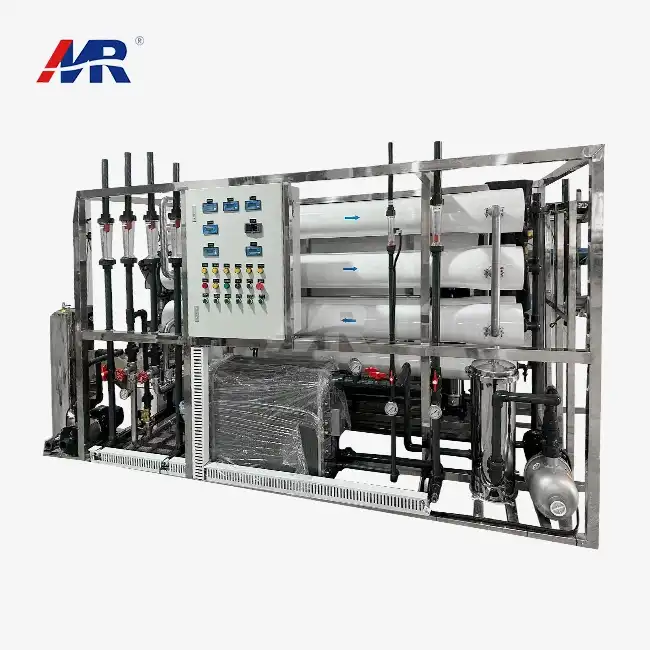
Understanding EDI Water Systems and Their Role in Ultrapure Water Production
Combining ion exchange resins with electrical currents, electrodeionization is a big step forward in cleaning water. It always produces very clean water. EDI technology uses an electric field to constantly remove charged impurities through ion-exchange membranes. This is different from reverse osmosis, which physically filters impurities, or distillation, which boils water. In this method, you don't need to use dangerous chemicals like hydrochloric acid or sodium hydroxide, which are usually needed in regular deionization systems to regenerate plastic.
The Chemical-Free Advantage
The best thing about current electrodeionization devices is how easy they are to use and how well they protect the environment. Traditional ion exchange beds need to be regenerated on a regular basis using harsh chemicals, which makes it hard to get rid of wastewater and raises safety issues at work. EDI works all the time without this problem, which greatly reduces business downtime and regulatory compliance issues. Companies that use this technology say they don't have to store as many chemicals and their risk insurance rates are lower.
Industrial-Scale vs. Compact Configurations
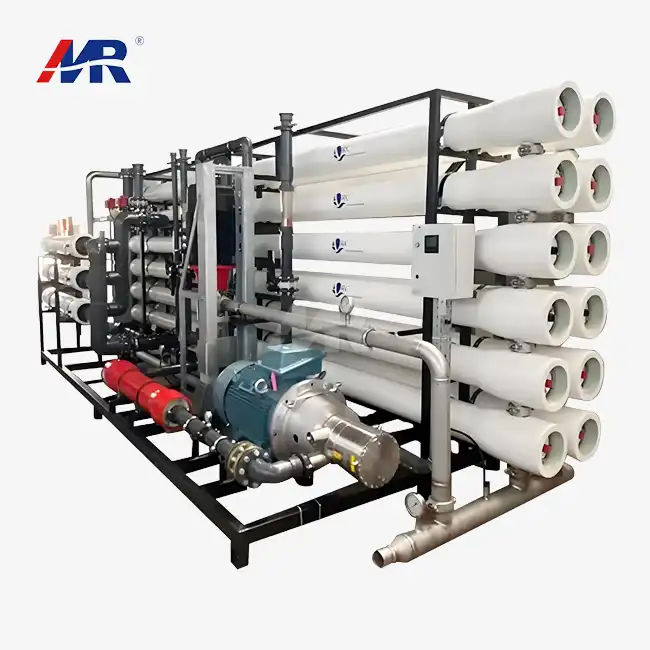
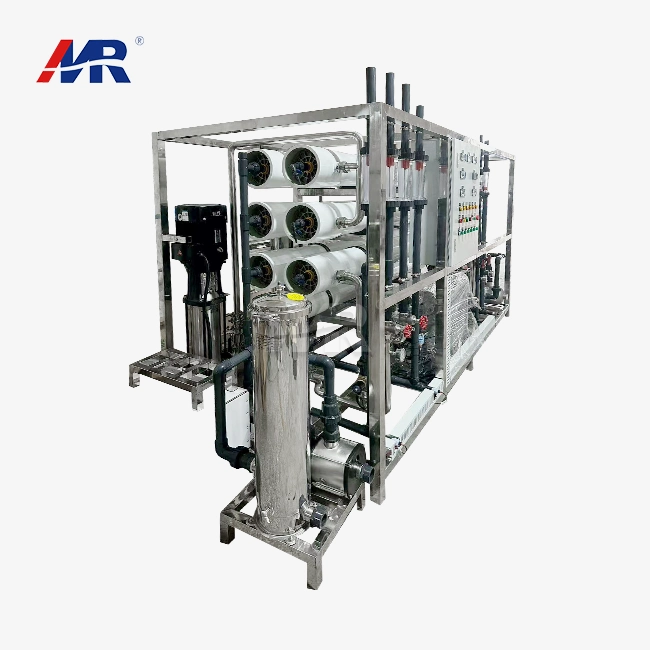
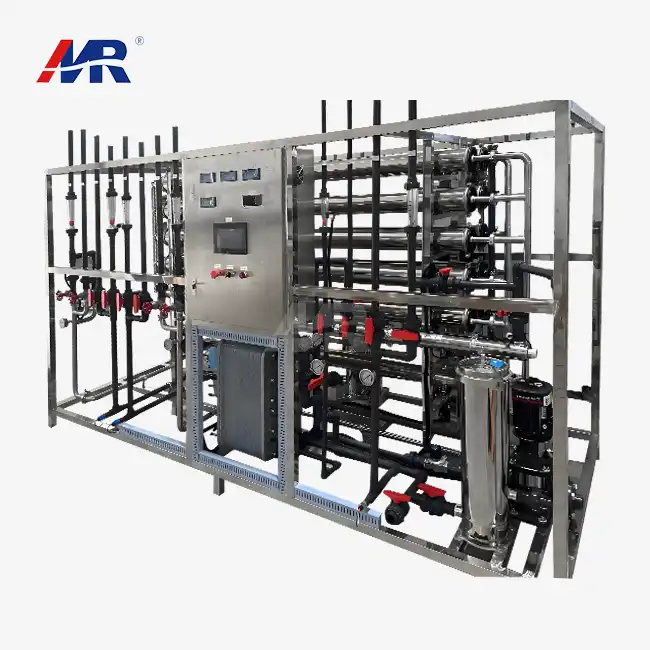
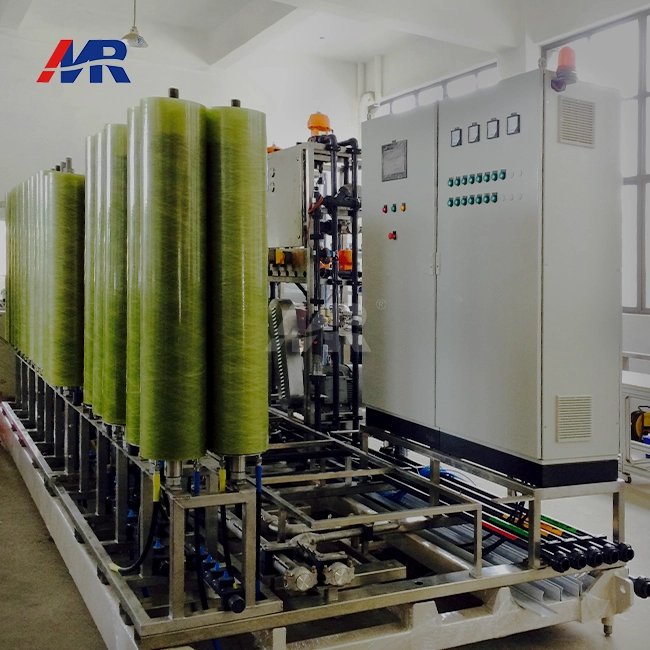
Electrodeionization units come in different sizes to fit the needs of each location. Large pharmaceutical factories or semiconductor fabs usually use industrial-scale stacks that can handle 10 to 50 cubic meters per hour. On the other hand, labs and small-batch manufacturing operations can use tiny units that can handle 0.5 to 2 cubic meters per hour. Because they are modular, facilities can start out with less space and add on gradually as production grows. This protects capital investment and keeps working freedom.
Comparing EDI with Traditional Methods
When looking at different ways to clean water, reverse osmosis gets rid of about 95–99% of dissolved solids, but it can't get the resistance levels that are needed for ultrapure uses. Distillation makes high-quality water, but it uses a lot of energy—usually 50 to 80 kWh per cubic meter—, so it can't be used continuously in industry. EDI water systems use less than 0.5 kWh per cubic meter and produce better end water quality, making electrodeionization the best step to finish after RO preparation.
How Does an EDI Water System Work? A Step-by-Step Breakdown
Knowing how things work on the inside helps buying teams make smart choices about system needs and how they should be integrated. Each electrodeionization unit has a core made up of alternate dilute and concentrate compartments that are divided by cation and anion exchange membranes and filled with mixed-bed ion exchange resin.
Critical Pre-Treatment Requirements
For every high-performance electrodeionization system to work at its best, reverse osmosis preparation is needed. The ionic load that goes into the EDI stack is cut by 95–98% when RO gets rid of the bulk dissolved solids. This preparation keeps the pricey ion-exchange membranes from getting dirty too soon and greatly increases the stack's useful life. The water that goes into the electrodeionization module should have a conductivity of less than 20 to 30 µS/cm, be almost completely soft, and have very little biological matter in it.
The Continuous Deionization Process
Water molecules split into hydrogen (H+) and hydroxyl (OH-) ions when electricity flows through the stacks. This is known as water dissociation. These ions keep the resin beads alive by exchanging with cations and anions that are dissolved in the feed water. Separated ions are pushed by the electrical field through the selective membranes and into the concentrate pathways, where they are washed away. This self-regenerating system lets the tank work 24 hours a day, seven days a week, without the exhaustion cycles that happen with regular DI tanks.
Performance Metrics That Matter
When purchasing, people look at EDI water systems, people should pay attention to three important factors. Product water resistivity shows how pure it is—usually 10-15 MΩ·cm is needed for medicine uses, while 18.2 MΩ·cm is needed for semiconductor manufacturing. Recovery rate, which is the amount of feed water that turns into product water, is usually between 85 and 95%. This has a direct effect on running costs. Power companies need to be able to get rid of silica as efficiently as possible because even small amounts can cause turbine scaling.
Selecting the Right EDI Water System for Your Ultrapure Water Plant
To pick the right EDI water systems configuration, you need to carefully consider your current wants as well as your goals for growth in the future. Everything is affected by the choice, from the initial investment to the long-term costs of doing business and the dependability of production for EDI water systems.
Defining Your Water Quality Targets
Different fields need different amounts of cleanliness. For pharmaceutical companies to make Water for Injection (WFI), the resistance must always be 15+ MΩ·cm, and the total organic carbon must be less than 10 ppb. Facilities that work with semiconductors need the highest possible resistivity of 18.2 MΩ·cm and a silicon percentage of less than 1 ppb. For power production, the goal is to keep conductivity as low as possible (usually below 0.1 µS/cm) to keep boilers from growing. Making these goals clear helps choose the right system size and material.
Scalability and Future Capacity
When sizing electrodeionization systems, we suggest that buying teams think about growth forecasts for the next 5 to 7 years. As production goes up, modular designs let you add stacks at the same time, but the original installation should have enough power infrastructure and room to grow. Undersized systems always work at full capacity, which shortens the life of the equipment and makes it harder to adjust operations during times of high demand.
Supplier Evaluation Framework
Certifications are the first thing you should look for in possible EDI water system providers. Look for ISO 9001 quality management and ISO 14001 environmental compliance. Stack guarantee terms show how confident the maker is; reputable sellers offer warranties that last between 5 and 8 years with proper care and pretreatment. How quickly Technical support responds is very important. Ask current customers in your business for examples and find out how long it usually takes for technical problems to be fixed.
Total Cost of Ownership Analysis
The price of the tools at the start is only one part of the financial picture. Figure out how much energy you need by looking at how much you are making. Good electrodeionization systems use between 0.3 and 0.5 kWh per cubic meter. Think about how much it will cost to change the membrane, which is usually needed every 5 to 8 years for the stack. Think about things that you'll need for pretreatment, like new ro membranes and cartridge filters. Many places find that the slightly higher initial cost of buying high-quality electrodeionization equipment pays for itself in lower operating costs and a longer service life.
Maintenance, Troubleshooting, and Quality Assurance of EDI Water Systems
Disciplined repair plans and regular quality checks are needed to make sure that ultrapure water output is reliable. Structured maintenance plans help facilities report 99%+ uptime and stack lifespans that are longer than what the maker says they should be.
Routine Maintenance Protocols
Product water resistance, concentrate flow rates, and pressure differences across stacks should all be checked every day. As part of weekly jobs, pretreatment systems need to be inspected. The performance of the RO membrane has a direct effect on the life of the electrodeionization. As part of monthly upkeep, cartridge filters need to be cleaned, and the accuracy of conductivity meters needs to be checked. Electrical connections, control systems, and a written trend study of performance factors should be checked every three months.
Common Challenges and Solutions
Most of the time, membrane fouling shows up as a slowly decreasing product water resistance or a rise in pressure drop across stacks. This usually happens because the preparation wasn't done right, especially when there are hardness leaks or organic pollution. Adding more softening or activated carbon filters upstream typically fixes the problem. When resin breaks down, it usually shows up as unstable product quality or higher concentrate conductivity. This is usually a sign of chlorine exposure or activity outside of the suggested temperature ranges.
Quality Testing Parameters
To stay in line, tests must be done regularly, according to business standards. In pharmaceutical plants, resistance is usually tested all the time, and TOC levels are confirmed once a week in the lab. Semiconductor companies constantly check for resistivity, silica, and particle counts, and every month they do a full ionic study. Every hour, readings of cation conductivity and dissolved oxygen are taken for power production purposes. Test records that are written down show that you are following the rules and give you an early warning of performance problems that might be happening.
Procurement and Installation Guide for EDI Water Systems
To successfully use EDI water systems technology, you need to think about both the business side of things and the technical side of installing it. Cost management, quality assurance, and long-term operating dependability of EDI water systems should all be taken into account during the buying process.
Cost Considerations and Financial Planning
Industrial-scale electrodeionization systems usually cost between $50,000 and $500,000 or more for big semiconductor fabrication setups and $50,000 for small lab units. Installation costs, which include wiring, plumbing, and setting the control system, add 20 to 40 percent to the price of the equipment. A lot of providers offer flexible ways to pay, like operating leases or performance-based contracts that link payments to confirmed water quality delivery.
Professional Installation Requirements
To work as expected, electrodeionization systems need to be installed exactly as the manufacturer specifies. Electrical lines need to provide steady DC power with little voltage fluctuation. We suggest using dedicated circuits that have the right surge safety. To keep things clean, piping should be made of high-purity materials like PVDF or stainless steel 316L. Integrating the control system with the facility's current tracking lets the system automatically react to changes in parameters, which lowers the chance of production that doesn't meet specifications.
Customization for Specific Applications
Standard electrodeionization setups work well for many uses, but sometimes it's necessary to make changes to fit specific needs. For places where flow needs change a lot, systems with automatic staging that turn on stacks as demand rises are helpful. Businesses that deal with difficult feed water may need special membrane formulas that don't get fouled up by organic matter. Often, pharmaceutical plants need extra paperwork, like Factory Acceptance Testing (FAT) and Installation Qualification/Operational Qualification (IQ/OQ) procedures.
Warranty and After-Sales Support
When you get a full guarantee, it should cover the EDI stack for 5 to 8 years with the right prep work, the power sources for 2 to 3 years, and the control systems for 1 to 2 years. Make it clear what kinds of actions usually void the warranty, like operating outside of the allowed range or using cleaning Products that aren't approved. Check out the supplier's service network. Locations that are far from technical support centers should talk to the seller about online diagnostics and keeping an inventory of important spare parts.
Conclusion
Electrodeionization technology produces ultrapure water that meets the strict needs of modern industrial processes and gets rid of the problems that come with using chemical-heavy methods. EDI water systems are the best choice in the electronics, pharmaceutical, and power generation industries because they don't use chemicals, produce high-purity products all the time, and take up little space. For execution to go well, the quality of the pretreatment must be carefully considered, the system must be the right size for both present and future needs, and strict upkeep rules must be followed. When purchasing teams, carefully check out providers based on their technical skills, warranty terms, and after-sales support. They set up their facilities to produce ultrapure water in a stable and cost-effective way for decades.
FAQ
1. Does electrodeionization require reverse osmosis pretreatment?
Yes, reverse osmosis preparation is necessary for electrodeionization to work correctly. RO gets rid of 95–98% of the dissolved ions, which keeps the expensive EDI membranes from getting clogged and scaling up too quickly. Without the right preparation, the stack's life span drops from the usual 5 to 8 years to 12 to 18 months, which makes the technology economically unviable.
2. What is the typical lifespan of an electrodeionization stack?
If you use the right RO preparation and follow the upkeep instructions, a good EDI stack should last between 5 and 8 years before it needs to be replaced. Facilities that keep the conductivity of the feed water below 20 µS/cm and keep chlorine out of the water usually get stack lifespans near the top of this range.
3. What effect does carbon dioxide in the feed water have on performance?
Ionic load from dissolved CO2 has a big effect on the water resistance of the product. When CO2 levels go above 5–10 ppm, we suggest putting degasification tools, which are usually membrane contactors, before the electrodeionization system. This step of preparation keeps the system running at its best and lowers the amount of electricity it uses.
4. Is electrodeionization energy-intensive?
No, electrodeionization is one of the most energy-efficient ways to make ultrapure water—it usually uses less than 0.5 kWh per cubic meter of water made. This is a much better option than distillation (50–80 kWh/m³), and when you add up the total system energy, it's even more efficient than using regular ion exchange with chemical recovery.
Partner with Morui for Your Ultrapure Water Production Needs
With 14 locations across China and a technical team of 20 expert engineers, Guangdong Morui Environmental Technology offers a wide range of EDI water systems options. Our integrated method combines making equipment at our own membrane production plant with full installation and commissioning services. This makes sure that the whole project goes smoothly, from planning to starting up. As a well-known EDI water system provider with more than 500 committed workers, we know how important it is for your business to have reliable ultrapure water production. Email Our Team at benson@guangdongmorui.com to talk about your unique needs and get a thorough technical proposal with reasonable prices.
References
1. American Society for Testing and Materials. (2018). ASTM D1193-06: Standard Specification for Reagent Water. West Conshohocken, PA: ASTM International.
2. Ganzi, G.C., Jha, A.D., DiMascio, F., and Wood, J.H. (1997). Electrodeionization: Theory and Practice of Continuous Electrodeionization. Ultrapure Water Journal, 14(3), 64-69.
3. Strathmann, H. (2010). Electrodialysis, a mature technology with a multitude of new applications. Desalination, 264(3), 268-288.
4. United States Pharmacopeial Convention. (2020). USP 43-NF 38: General Chapter on Purified Water. Rockville, MD: United States Pharmacopeia.
5. Semiconductor Equipment and Materials International. (2016). SEMI F63-0307: Guide for Ultrapure Water Used in Semiconductor Processing. San Jose, CA: SEMI International Standards.
6. Wood, J., Gifford, J., Arba, J., and Shaw, M. (2010). Production of Ultrapure Water by Continuous Electrodeionization. Desalination, 250(3), 973-976.