


What Is a Double-Stage Reverse Osmosis Water Purification System?
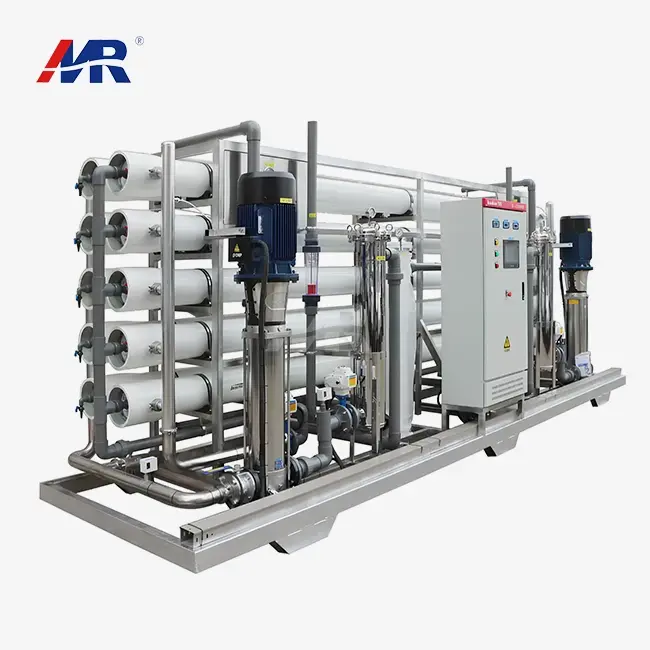
A 2 stage reverse osmosis system is a membrane purification setup that treats water in two steps to remove dissolved salts and other contaminants. In many industrial designs, the concentrate from the first array of pressure vessels feeds a second array, which recovers more clean water from the same feed. Some suppliers use the term for pre-filtration followed by an ro membrane, or for RO followed by a polishing step. Because the label covers several designs, I always check the exact treatment sequence first. This guide explains how the system works, what it delivers, and how to choose one, using our MR-BWRO-50TH as a reference.
What Is a Double-Stage Reverse Osmosis Water Purification System?
Three Common Meanings of "Two-Stage"
There are three options for people who buy under this name. The first one has one stage of RO membrane and pre-filtration. In the second, two membrane arrays are linked together in a row. Water that was thrown away from the first array goes into the second one to help it heal faster. After the third step, which is RO, there is a polishing step that improves penetration. A two-pass method is another name for this. Send me a process-flow diagram before we talk about price. This is because different layouts solve different problems. If there is a clear picture, people will know what to expect about the water quality, healing, and amount of trash.
Core Components and What They Remove
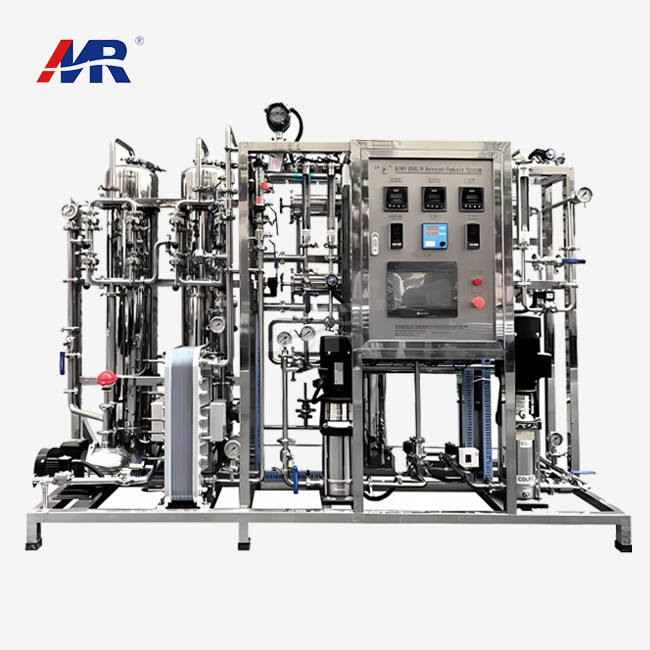
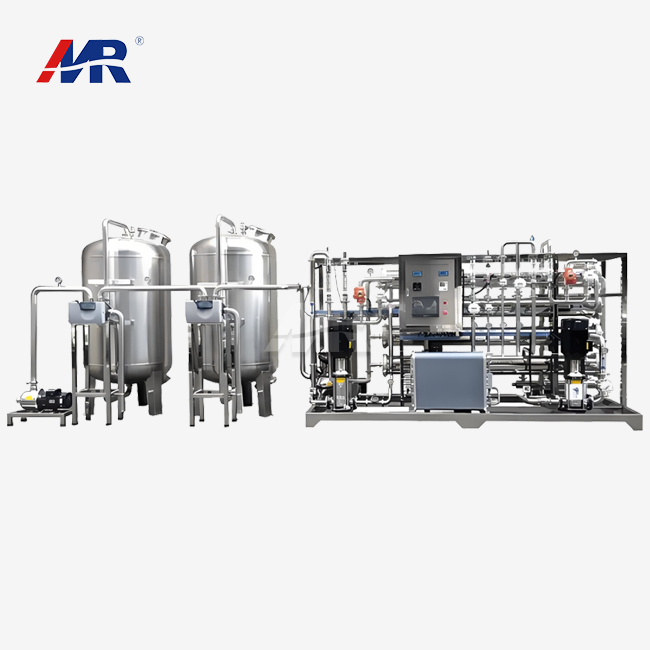
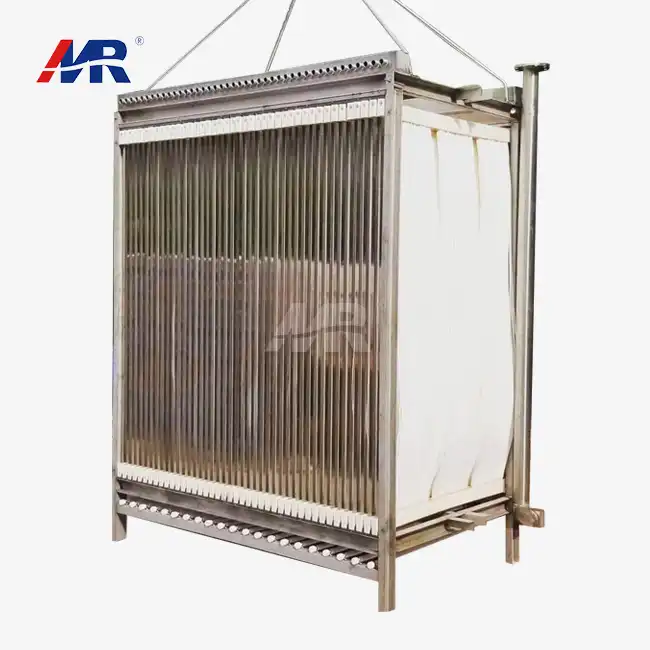
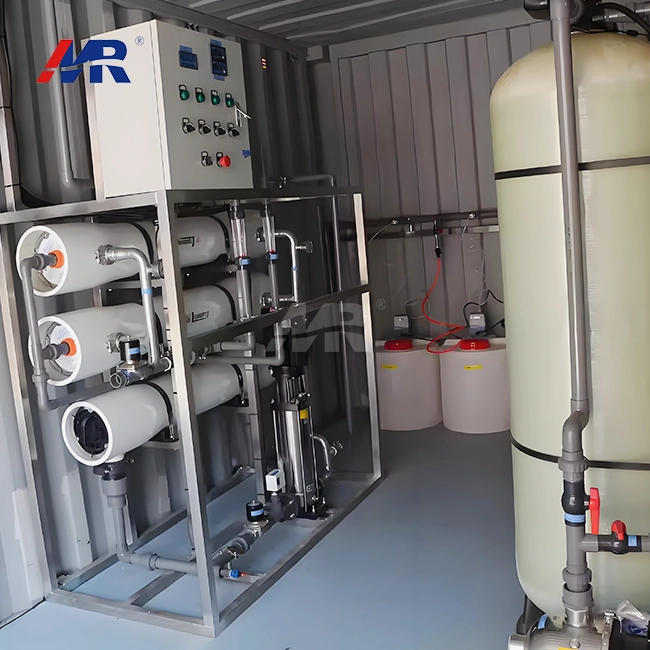
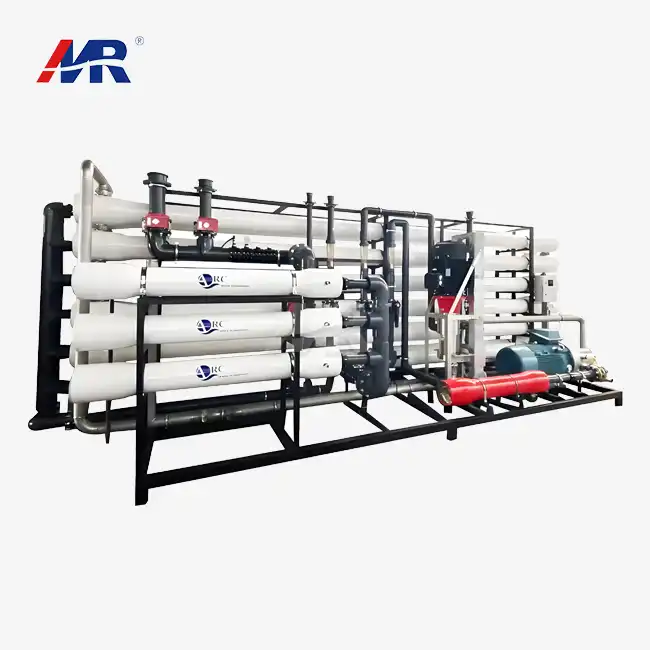
Parts of a skid that are often seen are pre-filters, high-pressure pumps, membrane housings, valves, tanks, and measuring tools. Pre-filters stop solids in suspension, rust, and sand. Doses of carbon or chemicals are used to get rid of chlorine. The membrane then gets rid of the hardness crystals, the salts that have been broken down, and a lot of other bad stuff. Flow meters, conductivity monitors, and pressure gauges all check to see if every part works right. At Morui, we work with Shimge pumps, Runxin valves, and Createc instruments, so we can find parts that will work with your feed water.
What to Confirm Before You Buy
I always check four things before I buy something: how it will be treated, what the material specs are, how much it can hold, and what I plan to use it for. A unit made for salty groundwater is not the same as one made for tap water with low TDS. In the US, projects also need water-contact approvals, such as NSF/ANSI/CAN 61 for system parts, and test reports for treated water in order to get drinking water. The EPA sets TDS at 500 mg/L as a backup rule. This is a good goal to use when planning output that can be drunk. Ask that all of the papers be put down.
How Does a 2-Stage Reverse Osmosis System Work?
Feed Water, Pre-Treatment, and Membrane Separation
The 2 stage reverse osmosis system filters the raw water that comes into the skid. Grit, rust, sand, and chemicals that could damage or foul the membrane are removed during pre-treatment. A high-pressure pump then forces the water through a barrier that lets some water through but not all of it. The salts stay in the concentrate while the clean permeate flows through. This concentrate is sent in stages to a second array, which pulls out more permeate before the system lets the rest out. The water is saved until it is needed after it has been cleaned.
What Changes Performance
Here are five things that can change output and quality. The flow goes up when the water is warm and down when it is cold. It is true that osmotic pressure goes up when TDS does. This helps the pump do its job better. When the rate of healing is high, membranes may start to scale. They let more salt through and less water through when they get old or dirty. First, I get a rated number, and then I compare it to data I've kept track of about the feed water. An early sign is a drop in the pressure across filters and an increase in the broad conductivity.
MR-BWRO-50TH Process Data
Our ready-to-use RO machine for making drinking water is the MR-BWRO-50TH. It uses 55 kW of power and has a recovery rate of 55–65% and a salt rejection rate of 99%. In this case, 55 to 65 parts of the feed are turned into product water. This is what a recovery of 55 to 65% means. We know which pre-treatment and membrane stage to use based on the chemistry of the feed water from your water quality report.
Benefits and Capacity of a Two-Stage Reverse Osmosis System
Practical Benefits
When I match the design to the feed water, I see these main benefits:
- Water quality: Because the membrane cuts down on the amount of salts and hardness minerals that dissolve, it tastes, smells, and looks better. The MR-BWRO-50TH can get rid of 99% of salt if the feed and test results are good. This helps drinking water projects meet the EPA's 500 mg/L goal for TDS.
- Membrane protection: It protects the membrane by getting rid of dirt, rust, and chemicals before they reach the membrane. Fouling is less likely to happen, and membranes may last longer, which lowers the cost of replacing them. This will save time and money over the life of the plant because it will be cleaned less often.
- Cost control: The whole price of owning one includes water, electricity, filters, membranes, service, and wastewater. You can only reject up to 65% of the energy that you send, and the 55 kW power rating lets you know how much energy you can use before you commit.
These benefits fix common issues in production, like water quality that changes quickly, membranes that don't last long, and it's not clear how much it costs to run.
Reading Capacity and Water Quality
The 2-stage reverse osmosis system can handle LPD, GPD, LPH, or m³/h. Change the units before you look at the quotes side by side. It is important to note that the rated output is only valid under certain test conditions. These are usually a set TDS, pressure, and temperature for the feed. The filtrate flow, salt rejection, recovery, reject ratio, energy use, and output TDS are all things that I have to keep an eye on. When using a 2 stage reverse osmosis system for drinking water, send samples to a qualified lab rather than relying solely on a handheld meter.
Two-Stage Versus Other Filtration Options
A one-stage cartridge filter can get rid of sediment or chlorine, but it can't get rid of salts that have been dissolved in the water. RO is the best way to lower TDS. Some plans have three or four steps, and they add carbon, polishing, or disinfecting. This might make the taste better or protect the membrane, but it also means there are more parts to fix and maintain. Value isn't just based on how many stages there are. The plan should be based on the study of your feed and the type of water you want to get.
Choosing, Installing, and Maintaining a 2-Stage RO System
Selection and Supplier Checklist
First, write down the goal, daily volume, peak demand, business hours, and growth plans. Take a look at the feed water for signs of TDS, turbidity, hardness, pH, chlorine, iron, manganese, silica, and bacteria. Then, compare the membranes' real features, such as their size, Certifications, pressure, power, and capacity. Along with MOQ, guarantee, wait time, and spare parts supply, these are the other things I ask about for OEM and wholesale sales. Morui runs its own membrane plant and equipment companies with 500 workers, 20 of whom are engineers. On top of that, we can help with private-label builds and unique boxes for each 2-stage reverse osmosis system.
Installation and Commissioning
Before delivery, make sure that the temperature, load, power supply, floor space, and service clearance are all correct. For the first time, installers clean the system, connect the feed line, and make sure the filters and membranes are in the right place for the flow. They also set up the extract and concentration lines. Tests for leaks, pressure and flow readings, TDS readings, shut-off checks, electrical safety checks, and training for workers should all be a part of commissioning. You can find changes later if you keep track of standard data. We also set up and test things as part of our one-stop service.
Maintenance and Troubleshooting
The amount of time between replacements depends on the feed's quality, how often it is used, and the pressure drop. Most of the time, the carbon and sediment filters need to be changed before the membrane. If the flow is low, there may be fouling, scale, damage, or a bad fit that makes the TDS rise or the pressure drop. First, check the pump and the filters that let air in when the pressure drops. When you open the housings, lower the pressure first, then check the O-rings, flush after making changes, and clean the membrane when the readings start to change. Take samples of the product water often and write down what you find.
Conclusion
What kind of 2 stage reverse osmosis system it is is important because it can have pre-filtration and RO, two membrane arrays connected in series, or RO with cleaning. To protect the membrane, it is pre-treated. Pressure drives separation, and feed pressure, temperature, TDS, and hardness shape the results. The MR-BWRO-50TH shows these points. It throws away 99% of the salt, recovers 55–65% of it, and needs 55 kW of power to make water that is safe to drink. To figure out how much water a system can hold, don't just look at its rated numbers. Also, remember that stage count and feed-water analysis are two different things. You can guess the water quality and operating costs if you choose carefully, install it correctly, and keep up with the upkeep.
FAQ
1. What is a 2-stage reverse osmosis system?
It's a place for RO that treats water in two steps, like staged membrane arrays or pre-filtration plus RO. Take a look at the flow chart.
2. Can it produce drinking water?
Yes, as long as the plan works with the water source and the local rules. The MR-BWRO-50TH is made to produce water that you can drink. To be sure of the results, lab tests should be done.
3. How is capacity measured?
In LPD, GPD, LPH, or m³/h when certain test conditions are met. The age, temperature, pressure, and TDS of a membrane can all change how much it really pumps.
4. How often do filters and membranes need replacement?
The feed type and how it is used play a role. Keep an eye on the TDS, flow, and pressure drop.
5. Are two stages better than three or four?
Not all the time. How it's set up will depend on how much water you feed it and your quality goals.
6. Can Morui customize a system?
Yes. We can do OEM and ODM work for things like pipes, pumps, instruments, controls, and options for online monitoring.
Request a Quote for a Morui 2 Stage Reverse Osmosis System
In addition to having its own membrane plant and 20 engineers, Morui also offers full OEM/ODM service for its 2 stage reverse osmosis systems. Send an email to benson@guangdongmorui.com with your feed-water report, the amount of capacity you need, and the market you want to reach. We'll send you a price quote for the MR-BWRO-50TH or a custom skid, along with a datasheet and a process flow plan.
References
1. Science, 2011. "The Future of Seawater Desalination: Energy, Technology, and the Environment," Elimelech and Phillip.
2. Water Research, 2009. "Reverse Osmosis Desalination: Water Sources, Technology, and Today's Challenges," Greenlee et al.
3. MWH's Water Treatment: Principles and Design, 3rd Edition, Wiley, 2012.
4. AWWA Manual M46: Reverse Osmosis and Nanofiltration, 2nd Edition, American Water Works Association, 2007.
5. NSF/ANSI/CAN 61: Drinking Water System Components – Health Effects, NSF International, 2020.
6. Secondary Drinking Water Regulations: Guidance for Nuisance Chemicals (EPA 810/K-92-001), U.S. Environmental Protection Agency, 1992.