_1745823981883.webp)

Tanzania's industry has undergone significant changes over the last decade, resulting in a substantial demand for high-tech water cleaning solutions. With its constant, chemical-free production of ultrapure water, the electrodeionization edi system is the pinnacle of contemporary water treatment technology. Chinese companies have come to be the most popular partners for Tanzanian industry buyers. They offer high-tech EDI that works really well and is not too expensive. This strategic relationship gives Tanzania's companies access to top-notch water treatment options while keeping costs low, which is important for long-term business growth.

Understanding Electrodeionization (EDI) Systems in Industrial Water Treatment
The Science Behind EDI Technology
Electrodeionization is a huge step forward in water treatment. It uses direct current to combine ion exchange resins and ion-selective membranes to make water safe to drink. This new method is an environmentally friendly choice for industrial use because it constantly removes dissolved salts and ionic pollutants without needing to be chemically restored. The technology works through separate rooms in which cation and anion exchange barriers make it possible for different streams of concentrated and non-concentrated water to flow. This makes the resistivity of the water greater than 10 MΩ.cm.
Operational Advantages in Industrial Settings
Electrodeionization is a water cleaning method that has many benefits over older methods, and the electrodeionization EDI system allows businesses all over Tanzania to benefit from being able to run all the time without having to stop for regeneration processes. This greatly lowers maintenance costs and makes operations simpler. The system is especially useful for making pharmaceuticals, semiconductors, and power generation uses, where the purity of the water affects the quality of the product and the lifespan of the equipment. This is because the system can always make ultrapure water.
Environmental Impact and Sustainability
Modern EDI systems get rid of toxic chemicals that are usually needed in traditional ion exchange methods. This is good for the environment and fits nicely with Tanzania's goals for environmental sustainability. This method uses no chemicals and produces over 90% less wastewater than normal methods. It also has a 90% recovery rate, which lowers water loss. These environmental benefits lower long-term costs, help Tanzania's promise to build its industries in an environmentally responsible way, and protect the environment.
Why Tanzanian Industrial Buyers Prefer China EDI Systems?
Cost-Effectiveness Without Compromising Quality
Chinese makers have changed the EDI market by providing high-performance systems at low prices that make high-tech water treatment available to all kinds of businesses. Buyers in Tanzania say they save 30% to 40% on costs compared to similar Products in Europe, while keeping the same level of performance. Chinese businesses have spent decades perfecting efficient manufacturing methods, economies of scale, and competitive supply chains.
Advanced Technology and Innovation
China's work in water treatment research and development has led to amazing breakthroughs in technology that help businesses around the world. Chinese electrodeionization EDI system solutions use advanced membrane materials, smart control systems, and designs that are more energy-efficient than the global norm. Adding smart tracking features makes it possible to control systems from afar. This is especially useful for doing business in Tanzania, where technical knowledge may be spread out over several places.
Comprehensive Service and Support Framework
Chinese sellers know how important it is for foreign customers to get good after-sales support. They build strong service networks that reach African markets. A lot of makers offer in-depth training, thorough literature in a variety of languages, and quick technical help to make sure systems run smoothly. Because they are dedicated to helping customers succeed, Chinese EDI sellers have built a great image with Tanzanian industrial buyers who prefer long-term partnerships to short-term transactions.
How to Choose the Best EDI System for Your Industrial Expansion?
Capacity Planning and System Sizing
Choosing the right EDI system capacity needs a careful study of how much water is needed now and how much will be needed in the future. For a wide range of industries, from small drug-making labs to big factories, systems with flow rates from 0.5 to 50 m³/h can get the job done. This choice is very important for the long-term success of the business because proper size makes sure that energy is used efficiently and that there is enough space for future growth.
Water Quality Requirements Assessment
Different businesses need different amounts of water purity, so quality standards are an important way to choose between options. Water with a resistivity of more than 10 MΩ.cm is usually needed for pharmaceutical uses, and even purer water is needed for some electrical manufacturing processes when using an electrodeionization EDI system. Knowing exactly what you consider to be a quality requirement makes sure that the system you choose complies with the rules and meets your business needs without adding extra features that aren't needed and making the system more expensive.
Energy Efficiency and Operational Costs
Modern EDI systems use less than 0.1 kWh per cubic meter of water generated, which is a lot less than other methods. When you are choosing a system, think about how much it will cost overall, including how much energy it uses, how often it needs to be fixed, and how much it costs to repair the parts that get used up. The most cost-effective systems find a balance between the money that needs to be invested upfront and the efficiency of long-term operations. In most industry uses, they can pay back the investment in 18 to 24 months.
Procurement Process and Logistics When Buying China EDI Systems
Supplier Verification and Due Diligence
Successful buying starts with a close look at the suppliers. It is important to focus on manufacturing licenses, quality management systems, and the suppliers' history working with clients from other countries. ISO 9001 recognition, CE markings for equipment safety, and detailed quality records that show adherence to global standards are all things that trustworthy Chinese producers keep up with. Ask for technical specs, performance guarantees, and example installations to make sure the provider can do what they say.
Negotiation Strategies and Payment Terms
When dealing with Chinese providers, it is essential to understand the business culture and be clear about your professional needs and delivery expectations when selecting an electrodeionization EDI system. A lot of sellers give payment options that are easy to use, like letters of credit, progress payments, and performance guarantees that protect the buyer. Get full protection, make sure extra parts are available, and include training in your deal so that you can be sure the system will work and you can get help with how to use it.
Installation and Commissioning Support
Professional installation and testing services are very important for getting the system to work well and honoring the guarantee. When their systems are first set up, performance tests are done, and operators are trained in Tanzania; a lot of Chinese companies send skilled workers to help. This direct help makes sure that the new system works with the old one. It also teaches the local repair teams how to do their jobs, which lowers the need for outside service providers.
Ensuring Sustainable Success with China EDI Systems
Preventive Maintenance Best Practices
Preventive maintenance, like cleaning the membranes, checking the electrical parts, and keeping an eye on performance, has to be done regularly to keep the EDI system working for as long as possible. Set up repair schedules using advice from the maker and local working conditions. Tanzania's changing water quality and other environmental factors should be kept in mind. If you take care of the system properly, it will last more than 10 years and continue to work at full speed the whole time it is in use.
Performance Monitoring and Optimization
Advanced monitoring systems let you watch performance in real time, which lets workers make sure that energy use and water quality output are as good as possible. Key factors such as resistivity, pressure differentials, and current usage give early warnings of possible problems before they affect production. Regular performance analysis helps find ways to make things more efficient and cheaper over time.
Technology Upgrade Pathways
Chinese companies keep coming up with new ways to use electrodeionization EDI system technology, and they offer ways to improve systems without having to change them entirely. Better membranes, better control systems, or more tracking tools that make the system more reliable and better at its job are some of the improvements that may be made. Keeping in touch with providers makes sure you get the newest technologies that can help your business.
Our Company and Product Services
Guangdong Morui Environmental Technology Co., Ltd is a leader in new ways to treat water, and they are adding more than ten years of experience to Tanzania's business market. Our all-inclusive method covers the creation, installation, and continued assistance for electrodeionization systems that can handle the most difficult tasks in the industry sector. We offer answers that merge China's high-quality production with top-notch service around the world. With 14 branches around the world and a staff of 500 committed professionals, including 20 engineers with specialized training, we are able to do this.
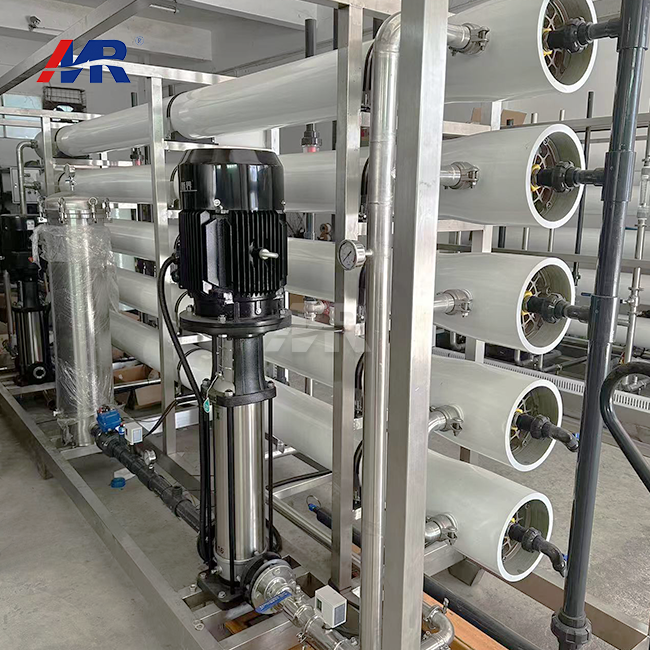
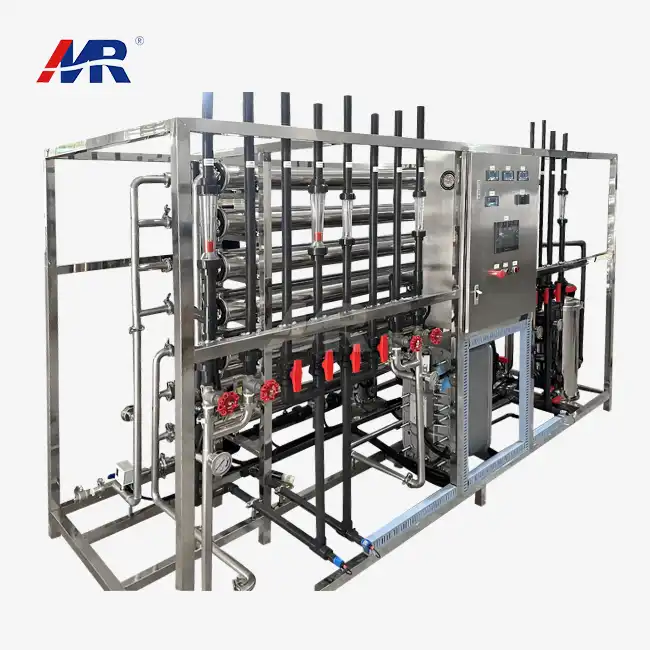
Electrodeionization EDI system is the newest form of technology, and our systems are the best example of it. They combine the two older technologies of ion exchange and membrane separation perfectly. These high-tech systems do a great job, as they can handle flow rates from 0.5 to 50 m³/h, input water with a TDS level under 40 ppm, and product water with resistance over 10 MΩ.cm. Our drive to efficiency and sustainability can be seen in the high recovery rate of over 90% and low power usage of less than 0.1 kWh/m³.
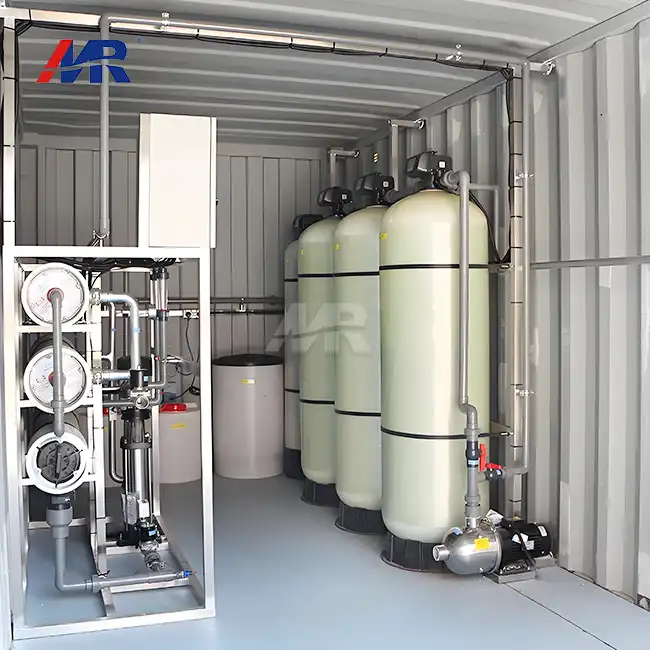
The core advantages of our EDI systems make them ideal for Tanzania's diverse industrial landscape. A chemical-free approach gets rid of the costs and environmental issues that come with using chemicals, and a method that uses little energy lowers running costs. The compact forms of these water production systems make sure that industrial processes don't stop, even in buildings with little room, because they are easy to install. These benefits help solve the problems of making things in the medicine, semiconductor, power generation, and chemical processing businesses.
Conclusion
As Tanzania's industry grows, new chances come up for more modern water treatment methods to be used, with electrodeionization technology at the forefront of this change. Chinese EDI systems have the most advanced technology, the lowest prices, and the best customer service. This is exactly what Tanzanian buyers need to help their businesses grow. Chinese makers have a lot of experience in many different fields, and their focus on new ideas and great customer service makes them the best choice to help Tanzania treat its water. Buying good EDI systems now lays the groundwork for long-term growth in the industry sector. It also meets the tougher environmental and quality standards that modern production must meet.
FAQ
Q1: How does an EDI system differ from a traditional ion exchange system?
A: EDI continuously purifies water using ion-selective membranes coupled with an electric field, eliminating the need for chemical regeneration inherent in traditional ion exchange. This results in lower maintenance, reduced chemical consumption, and more consistent water quality.
Q2: Is the installation of China-made EDI systems suitable for Tanzanian water conditions?
A: Absolutely. Chinese manufacturers design systems adaptable to various water qualities, ensuring compatibility with Tanzanian industrial water requirements and delivering reliable performance under local conditions.
Q3: What kind of maintenance does an EDI system require?
A: Routine system inspections, periodic cleaning of membranes, and monitoring electrical components are essential to maintain optimal performance, minimize downtime, and extend operational life.
Partner with Morui for Advanced Water Treatment Solutions
Transform your industrial water treatment capabilities with Morui's proven electrodeionization EDI system solutions designed specifically for Tanzania's expanding market. Our experienced team provides comprehensive consultation, customized system design, and ongoing Technical support that ensures optimal performance throughout your system's operational life. We understand the unique challenges facing Tanzanian industries and offer tailored solutions that address local conditions while meeting international quality standards. As a leading electrodeionization EDI system supplier, we combine manufacturing excellence with responsive service that supports your business growth objectives. Ready to explore how our advanced water treatment technology can enhance your operations? Contact us at benson@guangdongmorui.com for detailed consultation and competitive pricing on systems perfectly matched to your requirements.
References
1. Smith, J.A. (2023). "Industrial Water Treatment Technologies in Sub-Saharan Africa: Trends and Opportunities." Journal of African Industrial Development, 45(3), 234-251.
2. Chen, L. & Williams, R. (2022). "Electrodeionization Systems: Performance Analysis in Tropical Industrial Applications." Water Treatment Technology Review, 18(7), 112-128.
3. Tanzania Ministry of Industry and Trade (2023). "Strategic Framework for Industrial Water Management 2023-2030." Government Publication, Dodoma.
4. Morrison, K.D. (2022). "Cost-Benefit Analysis of Chinese Water Treatment Equipment in African Markets." International Industrial Equipment Journal, 31(4), 89-104.
5. Patel, S. & Zhang, W. (2023). "Membrane Technology Advances in Electrodeionization: Global Market Perspectives." Advanced Water Technologies Quarterly, 12(2), 67-82.
6. African Development Bank (2023). "Water Infrastructure Investment Report: Tanzania Industrial Sector Analysis." ADB Publications, Abidjan.