

_1745823981883.webp)

How Do Containerized RO Systems Reduce Installation Time?
Containerized RO systems completely change the time it takes to install because they come as fully assembled and tested units from the plant, so they don't need to be put together on-site like they usually do. Unlike regular water treatment plants that need months of planning and a lot of groundwork, these turnkey solutions that are built inside ISO shipping containers can connect to utilities and start working within days. The modular design combines pre-treatment, membrane filtration, pumping systems, and automated controls into climate-controlled units. This cuts installation time by 30–50%, lowers labor costs, and lowers project risks in the food processing, pharmaceutical, and industrial manufacturing sectors.
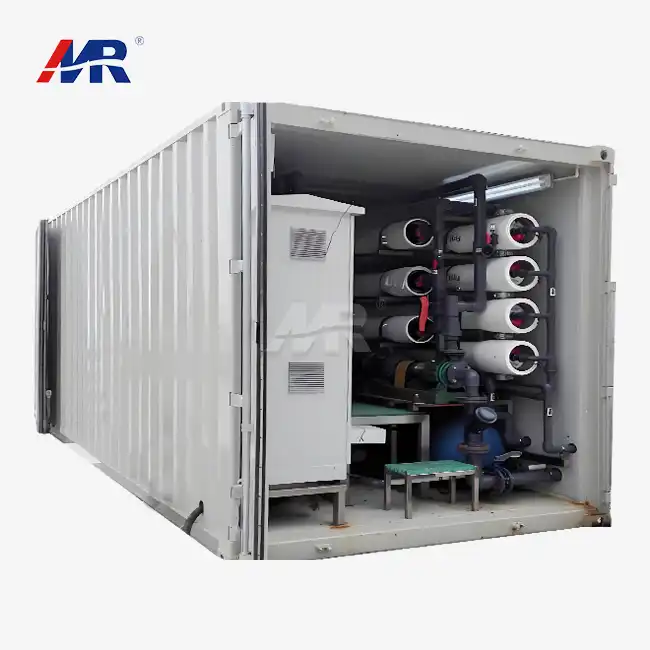
Understanding Containerized RO Systems and Installation Challenges
Water cleaning projects usually run into big problems that make them take longer and cost more than planned. By looking at typical reverse osmosis setups, we can see right away how complicated they are by seeing how many problems are linked.
What Makes Containerized Systems Different?
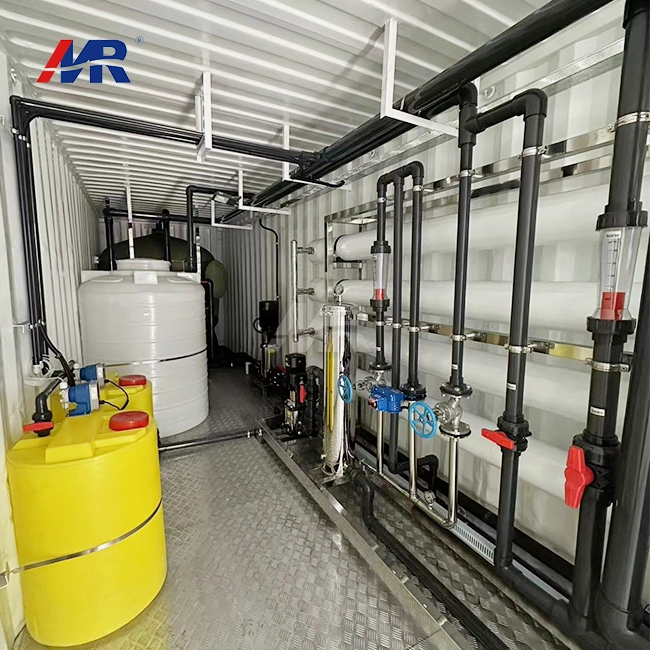
A containerized RO system is a complete water treatment plant that fits inside normal 20- or 40-foot ISO shipping containers. These units combine all the important parts—pre-treatment multimedia filters, high-pressure pumps, membrane tanks, control systems, chemical dosing equipment, and post-treatment stages—into a single structure that can be moved around. The design theory is based on finishing in the workplace instead of building in the field, which completely changes how projects are carried out.
The engineering method turns treating water from a job that requires a lot of building work into one that is more focused on logistics. Full assembly is done in factories under controlled conditions, where exact welding, electrical integration, and pipe configurations meet high-quality standards. This controlled environment gets rid of delays caused by bad weather, limited access to the site, and the coordination problems that come with handling many subcontractors on different building sites.
Traditional Installation Obstacles
When installing a conventional RO plant, purchase managers and project engineers have to deal with a lot of tough problems. Permanent treatment facilities need strong concrete supports, equipment buildings with HVAC systems, and large underground pipe networks to connect parts that are spread out. In traditional construction, things happen in a certain order: the base hardens, the structure is finished, equipment is delivered, parts are put in place, pipes are connected, electricity is installed, and finally, the building is commissioned. This creates dependencies that cause delays that affect the whole project timeline.
These time constraints are made worse by the need for specialized workers. Installing a membrane system needs workers who know how to put together pressure vessels, process engineers who know how to program control systems, trained welders who know how to work with stainless steel sanitary pipes, and electricians who know how to use industrial automation protocols. For medium-capacity systems, installation takes between 3 and 6 months because of the time it takes to coordinate all of these skills and keep quality standards high. When local workers don't have the right skills, these problems are made worse by being in remote areas, which requires expensive professional deployments and longer on-site durations.
Unpredictability is increased by environmental factors. When building something outside, the weather can stop work, and when putting it together on-site, dust, water, and high temperatures can damage sensitive parts before the machine can start up. As a result, installation times regularly go over what was originally planned, which is frustrating for people who were looking forward to a smooth project finish.
How Containerized RO Systems Streamline Installation Processes
Moving from traditional building to containerized release completely changes how projects are carried out and saves time by making sure that processes are optimized in a planned way.
Factory Pre-Assembly Advantages
The vast majority of system integration is done in manufacturing sites before shipments. The people who work in production put membrane elements into pressure tanks, set up multistage pumping systems with precise flow controls, combine PLC-based automation with touchscreen interfaces, and set up chemical feed systems with dosing pumps that are regulated. In this factory setting, things can be done at the same time that can't be done on a building site. For example, electrical panels get wired and programmed while pipes are being made at the same time, and quality checks happen at every stage of integration instead of waiting until everything is put together.
Pre-delivery testing is a key way to set your business apart. Manufacturers do full-scale operating tests with water sources that are similar to the conditions at the final spot. These tests at the plant make sure that the membrane works properly, that the automated control processes work as expected, that the chemical doses are correct, and that the safety interlocks can handle stress. When problems are found during factory tests, they are fixed right away without affecting site plans or costing more for field workers. When units are shipped, buyers get systems whose performance has been recorded instead of equipment that needs to be debugged on-site.
Simplified Site Requirements
When containerized RO systems come, they don't need as much site planning as standard installations. The self-contained design gets rid of the need to build a separate building. The container itself protects against weather, stores equipment, and controls the temperature through built-in HVAC systems. The base needs to be much simpler, and compacted gravel pads or simple concrete floors are often enough instead of complex structural foundations that support loads that are spread out across multiple pieces of equipment.
Standardized sites are created for utility hookup points. Feed water coming in, cleaned water going out, power, and getting rid of waste concentrate all join through specific container holes made for quick coupling. By standardizing things, site teams can set up connection equipment at the same time that containers are being shipped, making sure that everything is ready when the containers arrive. With the plug-and-play design, installation goes from taking weeks to just a few days of connecting utilities and checking that the system works.
Documented Time Reductions
There is strong proof from many different businesses that installation speeds up a lot. Beverage processing plants that use containerized RO systems to clean product water say they can start using them within 5 to 7 days of placing the containers, compared to 12 to 16 weeks for similar standard setups. Pharmaceutical companies that want GMP-compliant pure water systems can get them validated in 10–14 days, compared to 4–6 months with traditional building methods.
A semiconductor factory in Arizona kept track of the installation of its containerized ultrapure water system. They noted that the containers arrived on Monday, the utilities were connected on Wednesday, and they had their first production water by Friday afternoon. This 5-day deployment replaced their previous 18-week conventional system installation. The operating freedom was especially helpful when capacity was increased, and production had to be stopped, which meant they lost a lot of money.
Engineering teams always stress the benefits of lowering risks and shortening timelines. Factory-built systems are predictable, so they don't have to deal with common installation problems like incompatible parts, mistakes that need to be fixed, and delays during testing, while problems with the combined system performance are being looked into. This makes it possible for project schedules to go from optimistic predictions with large buffers for what could go wrong to sure timelines based on maker track records.
Comparing Containerized RO Systems With Traditional and Skid-Mounted Solutions
Knowing the differences between deployment methods helps procurement workers choose technologies that meet the needs of the project and work within the limits of the business.
Traditional Stick-Built Systems
Conventional setups give designers the most freedom to make plans that work best with each site's shape and easily connect to existing infrastructure. This method works well for fixed buildings with stable capacity needs and flexible construction schedules. The distributed component design makes it easier to add on in the future and makes it easy to do repairs on individual pieces of equipment.
The main drawback is the length of time it takes to install. Construction delays of 3 to 6 months lengthen the time it takes to see the benefits of a project and get your money back. Because it requires a lot of work, it raises prices and makes quality vary depending on how skilled the field crew is. Exposure to weather during building can damage tools and cause delays that are out of the project's control.
Skid-Mounted Configurations
Skid-mounted systems are between the two options: standard and containerized. Manufacturers pre-assemble major parts onto solid steel frames. This cuts down on the time needed for installation in the field while still allowing for some customization. These solutions usually need 4 to 8 weeks to be installed and put into use on-site. They are better than stick-built solutions, but they don't work as well as containerized solutions.
In most areas, the open-frame design needs protective buildings, which brings back some building standards that containerized systems get rid of. Because of transportation issues, skid sizes are limited to those that fit inside containers. For bigger installs, you might need more than one unit. While the partial pre-assembly is useful, it is not the same as the full integration that defines containerized solutions.
Containerized System Advantages
Containerized RO systems technology makes construction go as quickly as possible without losing how well it works. Fully integrated in the factory, waterproof housing, and standard sizes make distribution more efficient than any other method. Another strategic benefit is that facilities can move systems when production changes, switch out equipment between yearly operations, or sell units when they no longer need them.
Scalability through flexible addition lets you increase capacity by adding more containers instead of building bigger facilities. A company that processes food might put in one containerized unit at first and then add a second one during busy times. Either system could work on its own or with the other one running in parallel. This gives you the freedom to match capital investments with real demand instead of having to build too much capacity up front.
Key Factors Influencing Installation Time Reduction
There are many technical and practical factors that make it possible for containerized RO systems to dramatically speed up the building process.
Integrated Component Design
Manufacturing integration brings together thousands of connection points, such as pipe fittings, electrical contacts, control wires, and sensor calibration, into units that are already put together in the factory. This combination cuts down on the amount of work that needs to be done on-site to just connecting the utility interfaces. Standardized container sizes let makers make better layouts that make the best use of component placement, pipe routes, and servicing access by improving the design over and over again on multiple units.
Quality control measures put in place during plant assembly make sure that all supplied systems work the same way. With the help of special test tools, welding inspection, pressure testing, electrical continuity checks, and device tuning can be done in a controlled environment. This methodical quality assurance stops problems with field installations that usually happen during completion, when fixing them costs more and has bigger effects on schedules.
Streamlined Logistics and Compliance
The standard ISO container format uses the world's already-established shipping infrastructure to make foreign travel easier by working with container ships, train systems, and truck trailers. Customs procedures take into account standard container sizes, which speeds up border crossings compared to shipping oversize equipment that needs special permits and route limits.
The fact that containerized systems come with documentation packages shows that they are ready to use. Manufacturers give out detailed technical guides that include performance data that has been checked, electrical schematics, P&ID diagrams, and repair methods that were put together during plant integration. This full set of paperwork helps with quick launching and makes it easier for businesses that need water quality Certifications to get regulatory approvals.
Maintenance-Oriented Design
Installation efficiency goes beyond the initial rollout and includes ongoing assistance for operations. Containerized designs take service access into account, with control panels placed so that technicians can easily reach them and chemical tanks that are big enough to be refilled at regular intervals. The placement of membrane vessels means that cartridges can be replaced without taking the system apart. These maintenance features cut down on the time the system is down for regular maintenance, which helps keep operations going and supports the quick startup investment.
The climate-controlled environment inside the container keeps sensitive parts from breaking down in harsh environments. This means that the equipment lasts longer than when it is installed outside, where it is subject to changes in temperature, humidity, and airborne pollution. This protection cuts down on the number of maintenance tasks and the time they take, which improves total working efficiency.
Future Trends Enhancing Containerized RO System Deployment
Innovations keep making containerized RO systems for water treatment better, which means that future projects will be even easier to set up and run more efficiently.
Smart Automation Integration
Advanced control systems with Industrial Internet of Things sensors allow for repair planning and tracking from afar. Today's containerized units send real-time performance data to cloud platforms. This lets makers offer technical help from afar during setup and ongoing operations. This connection speeds up the startup process by allowing virtual expert help, so there are no delays caused by having to wait for experts to come to remote places.
Machine learning algorithms that look at operational trends can automatically improve system performance by changing chemical dosing, cleaning processes, and operating pressures based on changes in the feed water. With these smart systems, commissioning experts aren't needed on-site as much because human optimization steps are replaced by automated tuning.
Energy Efficiency Advancements
Containerized saltwater distillation systems now come with energy recovery devices that take pressure energy from concentrate streams to lower the total amount of power used. Systems that use brackish water have variable frequency drives that make the best use of pump speeds for changing demand trends. These improvements in efficiency lower running costs and support business sustainability efforts that are becoming more important across all industries.
The small containerized size makes it easier to use green energy. Solar panel systems or wind turbines can power remote sites that can't connect to the power grid. This means that placement options can be expanded to places that aren't connected to the power grid. Battery storage devices smooth out the fluctuations of renewable energy sources, allowing for continuous operation even when production changes.
Growing Market Adoption
Containerized systems are becoming more and more popular in the industrial and local sectors as quick and easy ways to treat water. Disaster aid groups keep containerized desalination equipment on hand for quick use in an emergency. Pharmaceutical companies use modular purified water systems that can be scaled up or down depending on production needs, and mine operations use portable treatment systems as rock bodies grow.
This growing use encourages manufacturers to keep coming up with new Products and lower prices to stay competitive. This makes the value offers for buyers in all application groups better. The rise of containerized technology from a niche market to a common answer shows that it works well and reliably in many different operating systems.
Conclusion
Containerized RO systems make installation much more efficient by integrating fully in the plant, using standard deployment processes, and being ready to go with just a plug. The 30–50% time savings seen across industries directly lead to faster project finish, lower labor costs, and faster returns on investment in water treatment. In addition to being faster to install, these flexible solutions offer operating freedom, easier logistics, and consistent performance that can't be found with traditional building methods. As industrial skills improve and smart technologies make systems smarter, containerized water treatment is the best option for businesses that want to set up quickly without lowering standards for reliability or performance.
FAQ
1. How much installation time do containerized systems actually save?
When compared to standard installations, real-world operations always show 30–50% time savings. A standard 100 GPM industrial RO system usually takes 12 to 16 weeks to build and start up the first time. Within 5 to 10 days of receiving the container, the equivalent containerized capacity is ready to be used. Certain factors affect specific timelines, such as the readiness of the site's power infrastructure, the need for permits, and the complexity of the system. However, the relative edge is still big in all Cases.
2. Can containerized RO systems handle different water qualities?
Customized pre-treatment setups allow containerized designs to work with a range of feed sources. Brackish groundwater, seawater, city supply water, and industrial process water can all be treated in containers as long as the right filtration, chemical dosing, and membrane selection are set up by the maker. The benefit of factory integration actually makes the feed more adaptable because engineers can improve system design for specific water chemistry before shipping instead of having to make changes in the field during installation.
3. What after-sales support do reputable suppliers provide?
Comprehensive support packages usually include technical help over the phone or video chat, new membranes with installation instructions, and service visits to the customer's location when needed. Equipment with longer membrane performance promises comes with a warranty that lasts between 12 and 24 months. Training programs make sure that operator teams know how to do regular maintenance and repairs, which keeps systems running as much as possible throughout their useful lives.
Partner With Morui for Rapid Water Treatment Deployment
Working with an experienced containerized RO systems manufacturer who knows your business pressures and time limits will make installation more efficient. Guangdong Morui Environmental Technology brings more than 20 years of experience treating water to every project. They have 14 regional branches, 500 committed workers, and 20 specialized engineers who plan, build, and test whole systems. Our integrated services include making equipment at our membrane manufacturing plant, getting all the parts you need through relationships with Shimge Water Pumps and Runxin Valves, and installing everything for you. Whether your pharmaceutical operation needs pure water that meets GMP standards, your food processing facility needs product water that is safe for drinking, or your industrial plant needs reliable process water, our containerized solutions get you up and running quickly when project deadlines matter. Get in touch with our technical team at benson@guangdongmorui.com to talk about your unique needs and find out how our tried-and-true systems can help you meet your release deadlines and perform even better than you expected.
References
1. Al-Karaghouli, A., & Kazmerski, L. (2013). Energy consumption and water production cost of conventional and renewable-energy-powered desalination processes. Renewable and Sustainable Energy Reviews, 24, 343-356.
2. Greenlee, L. F., Lawler, D. F., Freeman, B. D., Marrot, B., & Moulin, P. (2009). Reverse osmosis desalination: Water sources, technology, and today's challenges. Water Research, 43(9), 2317-2348.
3. Khawaji, A. D., commissioned by I. K., & Wie, J. M. (2008). Advances in seawater desalination technologies. Desalination, 221(1-3), 47-69.
4. Voutchkov, N. (2018). Energy use for membrane seawater desalination–current status and trends. Desalination, 431, 2-14.
5. Wilf, M., & Bartels, C. (2005). Optimization of seawater RO systems design. Desalination, 173(1), 1-12.
6. Zhao, S., Zou, L., Tang, C. Y., & Mulcahy, D. (2012). Recent developments in forward osmosis: Opportunities and challenges. Journal of Membrane Science, 396, 1-21.
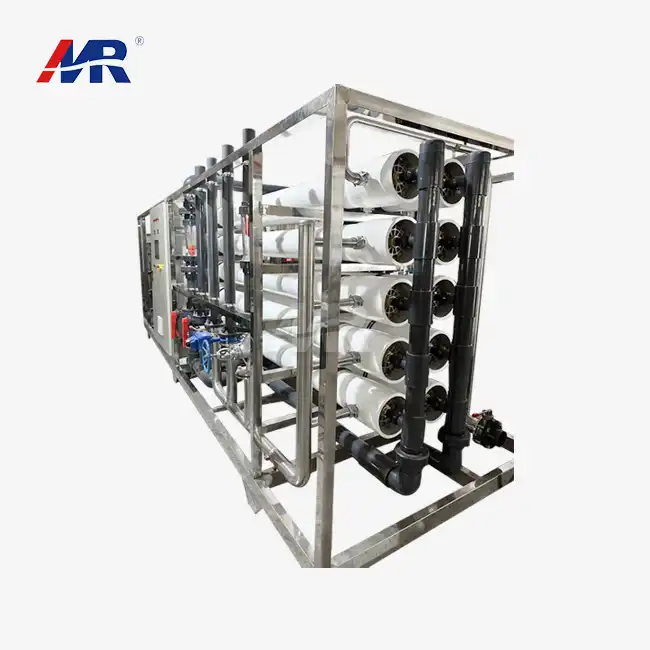 VIEW MORE50m3/hour reverse osmosis equipment
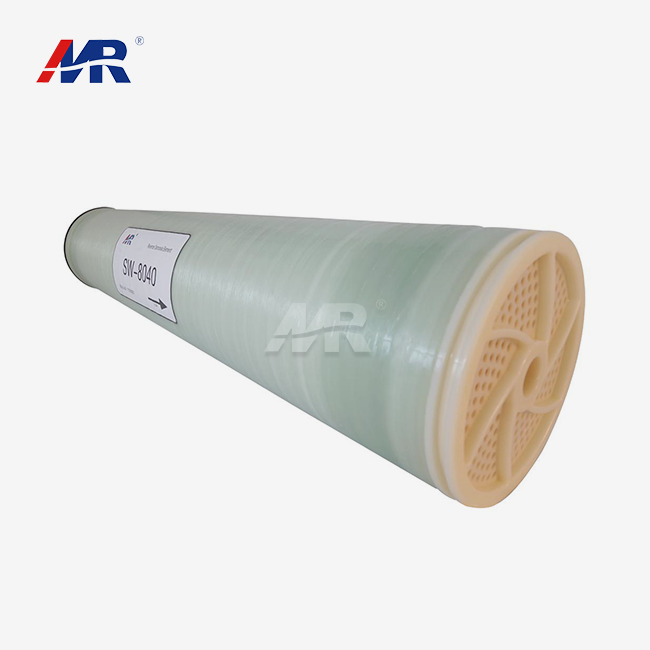 VIEW MOREreverse osmosis membranes
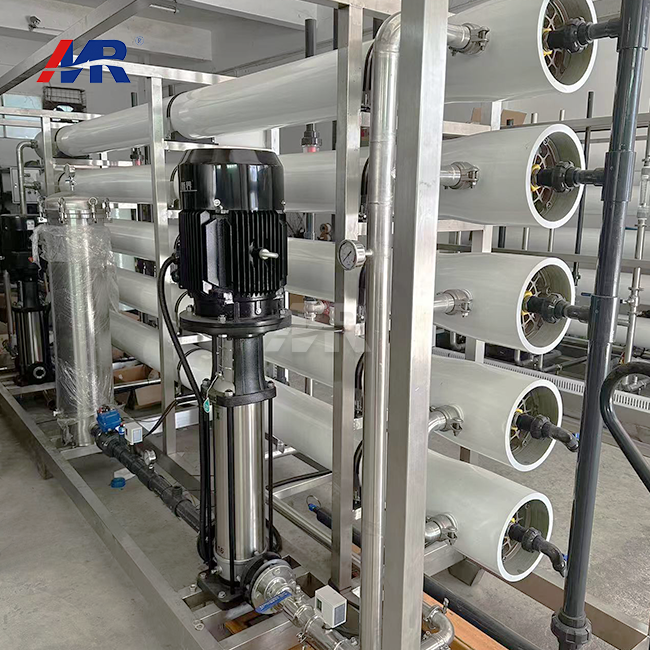 VIEW MOREosmosis water purification system
 VIEW MOREwater ultrafiltration system
 VIEW MOREultrafiltration water treatment system
 VIEW MOREwastewater treatment plant units
 VIEW MOREultrafiltration membranes for water treatment
 VIEW MOREcontainerized desalination plant
