

_1745823981883.webp)

RO EDI System vs. Mixed-Bed Deionization: Which Is Better?
When evaluating ultrapure water production for your facility, the choice between an RO edi system and Mixed-Bed Deionization (MBDI) shapes your operational costs, water quality consistency, and regulatory compliance for years ahead. An RO EDI system integrates reverse osmosis with electrodeionization to deliver continuous, chemical-free ion removal—achieving resistivity levels above 18 MΩ·cm without scheduled resin regeneration. MBDI can reach comparable purity peaks but demands periodic chemical regeneration and introduces downtime risk. For most industrial-scale operations, the RO EDI system offers a more sustainable, lower-maintenance path to ultrapure water.

Understanding RO EDI and Mixed-Bed Deionization
How Does an RO EDI System Actually Work?
Two steps are followed by an RO EDI system. The reverse osmosis membrane gets rid of 95–99% of the solids that are dissolved. Next, a low DC voltage is used by the electrodeionization stack to push any leftover ions through ion-exchange membranes and into a waste stream. The glue in the EDI stack keeps renewing itself with this electrical current, so acidic or harmful chemicals are not needed. This self-regenerating feature keeps the system running all the time, which is very helpful in places like pharmaceutical cleanrooms, chip factories, and power plants where downtime is expensive.
What Is Mixed-Bed Deionization and Where Does It Fit?
In Mixed-Bed Deionization, water that has already been treated goes through a vessel that has both cation and anion exchange resins in it. These resins hold on to dissolved ions until they run out. When that happens, hydrochloric acid and sodium hydroxide must be used to regenerate the bed offline. Regeneration usually takes between 4 and 8 hours per cycle and creates dangerous chemical waste that needs to be disposed of in a certain way. MBDI works best in places with low throughput, like polishing loops in laboratories, small medical facilities, or places where short-term practical savings are more important than capital budget limits.
Comparison of RO EDI System vs. Mixed-Bed Deionization
A structured side-by-side evaluation helps procurement teams cut through vendor claims and focus on metrics that actually affect the bottom line.
| Evaluation Criteria | RO EDI System (e.g., MR-EDI-10TH) | Mixed-Bed Deionization |
|---|---|---|
| Output Purity | Up to 18.2 MΩ·cm resistivity | Up to 18.2 MΩ·cm (post-regeneration peak) |
| Salt Rejection Rate | 99.99% | Varies with resin age |
| Chemical Regeneration | None required | HCl + NaOH every cycle |
| Operational Continuity | Continuous, 24/7 | Offline during regeneration |
| Power Consumption | ~25 kW/hour (MR-EDI-10TH) | Low electrical, high chemical input |
| Water Recovery Rate | ~55% (MR-EDI-10TH) | 85–95% per pass |
| Environmental Impact | Low—no chemical waste | Significant chemical disposal burden |
| Typical Lifespan | EDI module: 5–7 years | Resin: 1–3 years per cycle |
| Maintenance Complexity | Periodic RO CIP every 3–6 months | Frequent resin handling and disposal |
| Scalability | Modular, easily expandable | Limited by vessel sizing |
The data shows a clear pattern: the RO EDI system outperforms MBDI in terms of operational continuity, environmental compliance, and long-term cost predictability. MBDI still has a higher initial capital cost and a higher water collection rate per pass, which is important for projects with low volumes or limited budgets.
Procurement Considerations for Selecting Water Purification Systems
What Should Drive Your Total Cost of Ownership Calculation?
The purchase price is often what procurement professionals base their choices on, but the three-year total cost of ownership (TCO) tells a more complete story. The main ongoing costs for a RO EDI system are the power used and the replacement of the ro membrane, both of which are known and easy to handle. Changes in regulations affect the prices of buying chemicals, the number of hours needed for regeneration, and the fees charged for getting rid of trash in MBDI systems. When throughput is more than 500 liters per hour, industry research consistently shows that RO EDI has a lower total cost of ownership (TCO) within 24 to 36 months of operation compared to MBDI installations of the same size.
Vendor Credibility and Post-Sale Support
In addition to the system specification sheet, you should check to see if the supplier has local service engineers, quick access to spare parts, and written instructions for installation and commissioning. Misaligned vendor support is one of the main reasons why systems break down too quickly. Ask for examples from setups in the same industry as you, and make sure that the guarantee covers the performance of the EDI stack as well as the mechanical parts.
Industry-Specific Use Cases and Benefits
Pharmaceuticals and Biotechnology
The 21 CFR Part 211 and USP 1231 guidelines from the FDA say that water must be clean and that Water for Injection must be made under strict bacterial control. An RO EDI system meets the standards for USP-grade purified water without adding the chemical pollution risks that come with regenerant leftovers. Continuous operation also helps validated manufacturing processes where tracking batches depends on water quality that doesn't change.
Semiconductor and Electronics Manufacturing
Ionic contamination amounts must be less than ppb for chip cleaning methods to work. Even very small amounts of sodium or chloride ions on the top of the wafer cause output drops. Manufacturers of semiconductors put RO EDI systems into ultrapure water loops because the system keeps the same resistivity output even when the feed water changes. This is something that MBDI can't do reliably between regeneration cycles.
Power Generation
In thermal and nuclear power plants, high-pressure boilers need feed water that has a conductivity of less than 0.1 µS/cm to keep the turbines from scaling and rusting. With a salt rejection rate of 99.99%, the MR-EDI-10TH reliably meets this need. Continuous operation gets rid of the risk that a regeneration cycle will happen at the same time as high load demand, which has caused expensive power outages in facilities that rely on MBDI.
Food, Beverage, and Other Industries
RO EDI is used by beverage companies to make sure that the purity of their production water meets FDA and NSF guidelines and doesn't contain any chemicals. Electrodeionized water is used in chemical processing and electroplating to make the bath more consistent and cut down on pollution from drag-out. Hospitals and dialysis centers need medical-grade pure water systems, and any regenerant residue is a direct threat to patient safety. This is why chemical-free EDI is the best specification.
Future Trends and Innovations in Water Purification Systems
Where Is Ultrapure Water Technology Heading?
Modular systems that are digitally integrated are becoming more and more popular in the water treatment industry. IoT-enabled conductivity and resistivity sensors are now built into modern RO EDI systems. These sensors send real-time data to cloud dashboards, which lets maintenance professionals know before performance starts to drop. This is exactly in line with buying plans for Industry 4.0, where downtime costs money in terms of lost production.
A growing trend is also for hybrid setups, which use RO EDI as the main polishing stage and MBDI as a backup or peak-demand cushion. These designs allow big facilities to have the operational reliability of redundancy without having to fully commit to MBDI's chemical overhead. Suppliers that offer modular EDI stack designs let businesses grow without having to replace their whole systems. This lowers the risk of losing money when the business grows.
Environmental rules in the US and Europe are getting stricter about how chemical waste from industrial water treatment can be dumped. Compliance costs are going up for facilities that are still using old MBDI systems. Moving to RO EDI during the next buying cycle is a smart business move.
Conclusion
The RO EDI system is better than Mixed-Bed Deionization in a number of ways, including producing pure water all the time, not using chemicals, and saving money in the long run. MBDI can still be used in situations with low turnover or limited budgets. The practical and legal benefits of RO EDI make the investment worth it for most corporate users, especially those in the pharmaceutical, semiconductor, power generation, and food production industries. Before you make your final choice about what to buy, you should carefully consider your throughput needs, your TCO plan, and the legal environment.
FAQ
1. What is the primary advantage of an RO EDI system over Mixed-Bed Deionization?
The main benefit is that it can work continuously without using chemicals. An RO EDI system regenerates its ion-exchange resin electrically, so it doesn't need acidic or caustic chemicals or the downtime that comes with MBDI regeneration cycles.
2. How long does an EDI module typically last?
As long as the RO preparation keeps the hardness low and the CO₂ levels under control, an EDI module should work well for 5 to 7 years before it needs to be replaced.
3. Does an RO EDI system require any scheduled downtime?
The EDI stage works all the time. Depending on the quality of the feed water and the amount of fouling, the RO membrane stage may need to be cleaned with chemicals every three to six months.
4. What pretreatment does an RO EDI system need?
Water softening to get rid of hardness and degasification to lower free CO₂ are important steps that must be taken before treatment can begin. When hardness or CO₂ levels rise, scaling happens inside the EDI stack, which lowers the resistance output.
5. Is Mixed-Bed Deionization ever preferable to RO EDI?
Yes, MBDI may work well enough for lower initial costs in situations where daily flow needs are very low, capital budgets are tight, or a current MBDI system can be kept as a backup.
Partner with Morui for Reliable RO EDI System Solutions
On every job, Guangdong Morui Environmental Technology brings more than 500 workers, 20 expert engineers, and its own facility for making membranes. The MR-EDI-10TH is designed to work in harsh industrial environments and can continuously produce ultrapure water while rejecting 99.99% of salt. Morui is a trusted company that makes RO EDI systems and can supply, install, and commission equipment all in one place. Please email benson@guangdongmorui.com to get a custom price right away.
References
1. Journal of Membrane Science — 2021. "Electrodeionization Performance in Ultrapure Water Production for Semiconductor Applications."
2. Desalination — 2020. "Comparative Analysis of Continuous Electrodeionization and Mixed-Bed Ion Exchange in Industrial Water Treatment."
3. Water Research — 2022. "Total Cost of Ownership Modeling for Industrial Deionization Technologies."
4. Ultrapure Water Journal — 2019. "EDI Module Longevity and Pretreatment Requirements in High-Purity Water Systems."
5. Industrial Water Treatment (Water Reuse Association) — 2023. "Emerging Trends in Modular RO-EDI Systems and Industry 4.0 Integration."
6. American Journal of Environmental Sciences — 2021. "Environmental Impact Assessment of Chemical Regeneration in Mixed-Bed Deionization Versus Continuous Electrodeionization."
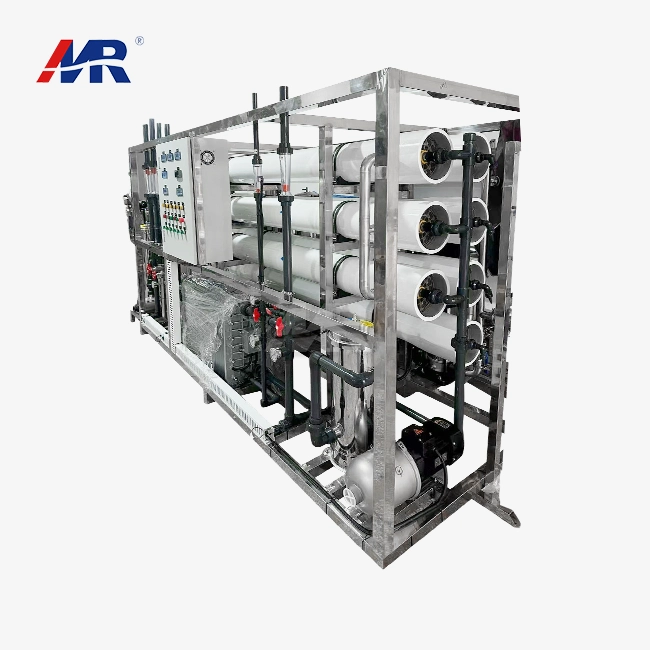 VIEW MOREedi module water treatment
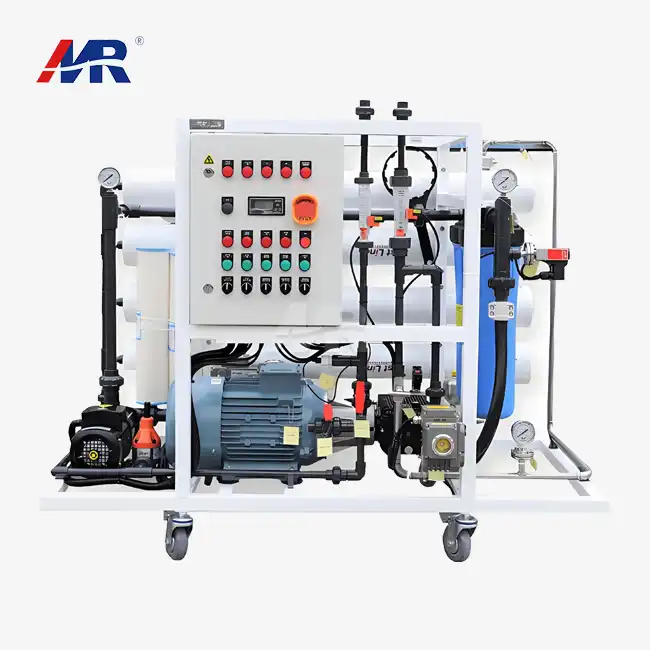 VIEW MORE2m3/hour seawater desalination equipment
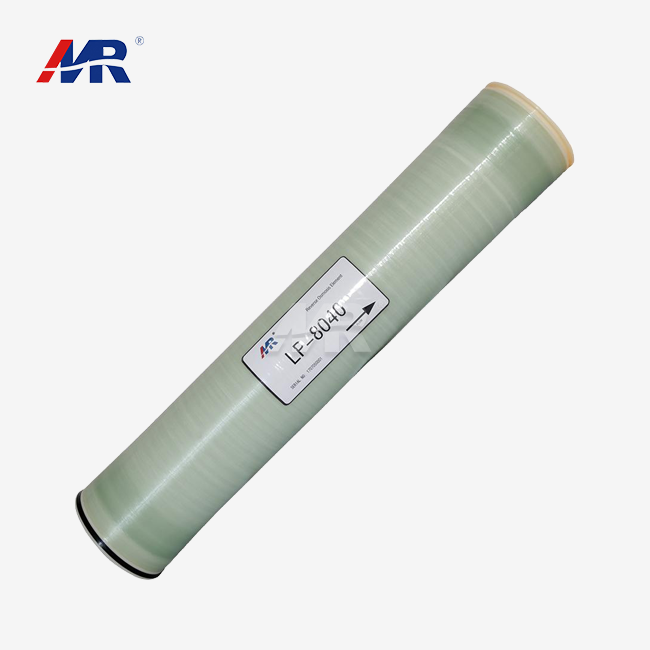 VIEW MOREreverse osmosis membrane
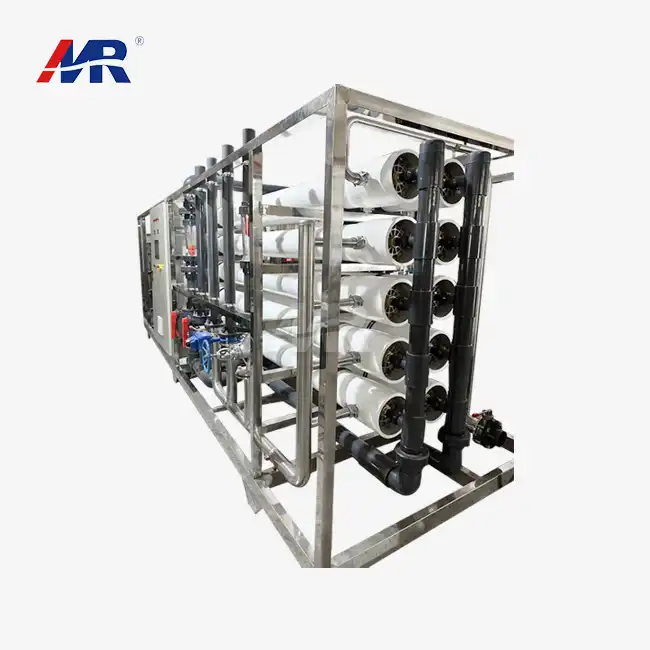 VIEW MORE50m3/hour reverse osmosis equipment
 VIEW MORE12m3/hour seawater desalination equipment
 VIEW MOREmembrane bioreactor mbr
 VIEW MORE45m3/hour seawater desalination system
 VIEW MOREsewage treatment plant MBR system
