_1745823981883.webp)

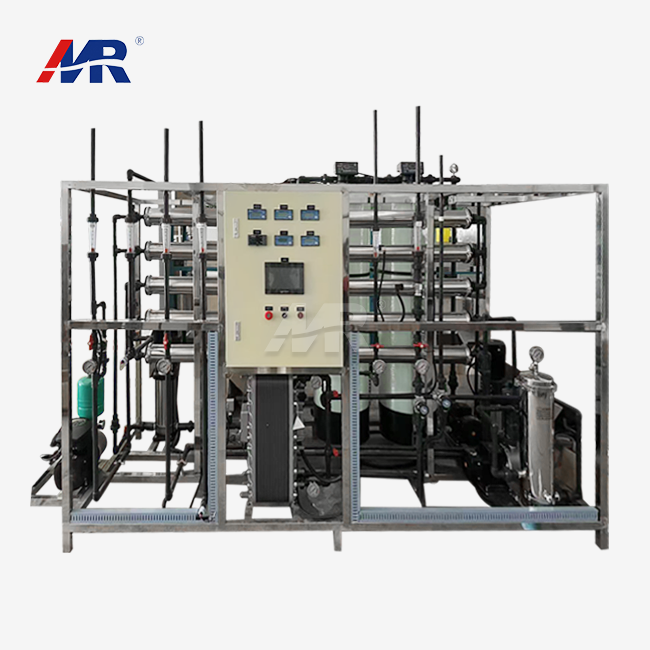
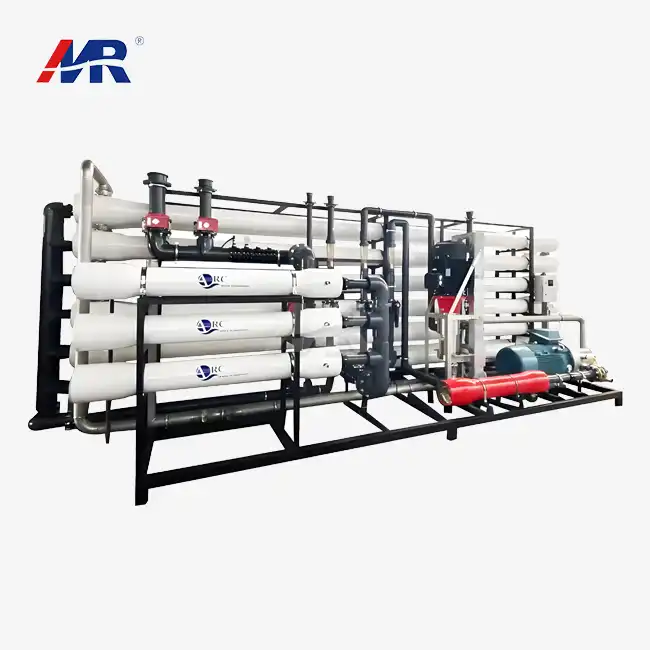
A two-stage reverse osmosis system takes the reject stream from the stage 1 membrane array and delivers it to a downstream array where the clean water that a single-stage unit would send to the drain is collected. A 2 stage reverse osmosis system has better water recovery, a wider range of pollutant removal of pollutants, and a lower cost for waste disposal in the long run compared to single-stage reverse osmosis, ultrafiltration, and activated carbon, but requires more careful pressure and antiscalant control to prevent membrane fouling. In this book, we walk you through each comparison using real specification data, industry standards, and a client example from our own production team. Technical purchasers will be able to choose the optimal filtering technique for their water source.
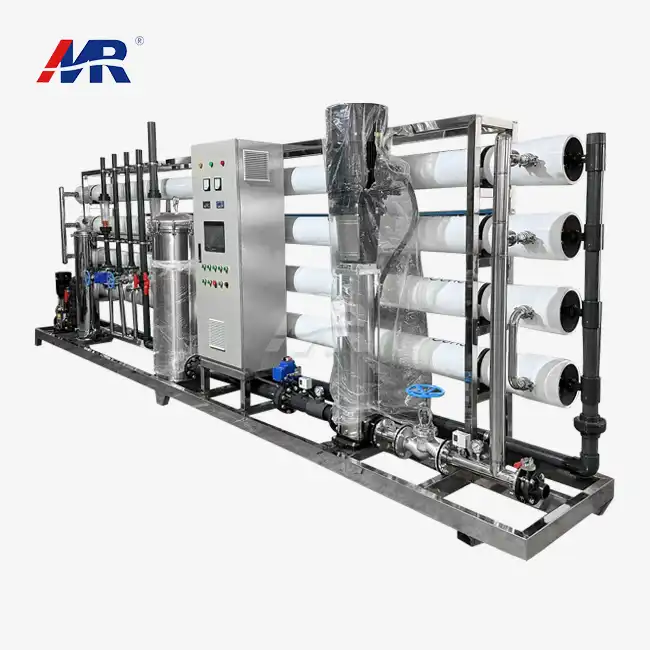
Before purchase, factory owners and plant engineers from Asia, South America, and Africa ask us the same question—is the extra membrane phase really worth it, or does it just add complexity? Guangdong Morui Environmental Technology solves this problem using test data, not sales jargon. This article explains where a 2 stage reverse osmosis system pays its way and where a simpler filter still makes sense. Send your feed water analysis to benson@guangdongmorui.com, and our engineering team will reply with a recovery and cost projection within 3 working days based on more than a decade of combined field data in bottling, power, and agricultural projects.
What is a 2 stage reverse osmosis system designed to remove?
A 2 stage reverse osmosis system is intended to treat the same critical pollutant groups as any RO technology, but the stepped design changes the amount of the input water that actually reaches the consumer as useful output. Reverse osmosis employs a semi-permeable membrane with water forced through it under pressure. The membrane inhibits dissolved salts, minerals, and many organic molecules but lets cleansed water, called permeate, through. Since one membrane step cannot recover all of the usable water from the feed, part of it is always left as concentrate, commonly called reject or brine.
Why Does Adding a Stage Increase Recovery?
In a 2 stage reverse osmosis system, the concentrate is delivered to a smaller stage 2 membrane array rather than the drain. Stage 2 recovers more permeate from otherwise lost water, with a far greater overall system recovery than a single pass.
What Gets Removed at Each Stage?
The membrane filters away total dissolved solids, hardness minerals, heavy metals, nitrates, and most germs and viruses at the interface of both phases. However, stage 2 has a more concentrated feed stream, and hence the membranes need a tighter setup and a higher antiscalant dose to prevent the dissolved salts from crystallizing on the membrane surface. The effect of staging is particularly noticeable in facilities processing high-hardness groundwater or brackish feed where the concentrate arriving at Stage 2 has a substantially higher mineral content than the original feed water.
How Does 2-Stage RO Compare With Single-Stage RO?
The main difference between the two systems is the pace of recuperation. EPA WaterSense data for point-of-use systems indicate that a typical single-stage RO system recovers roughly 50% of the water input as usable permeate, with the other half draining as concentrate (EPA, 2024). With normal operating parameters, a 2 stage reverse osmosis system like our MR-BWRO-50TH may recover 55% to 65% of the feed water; however, optimally configured industrial systems might reach recovery rates of 75% to 85%, depending on feed water chemistry and the size of the membrane array.
| Factor | Single Stage RO | 2 Stage RO |
|---|---|---|
| Typical recovery rate | ~50% | 55% to 85%, configuration dependent |
| Concentrate volume | Higher, roughly equal to permeate | Lower, reduced by up to 50% |
| Equipment footprint | Smaller | Larger, added pressure vessel array |
| Upfront cost | Lower | Higher |
| Best fit | Low-volume or space-limited sites | High-volume industrial or scarce-water sites |
The recovery gap is rapidly widening at an industrial scale. A 2 stage reverse osmosis system can help improve water recovery, allowing water that would otherwise have to be sourced, treated or disposed of separately to be saved in the range of about 7,500 - 17,500 litres per day when switching from single-stage to 2-stage recovery for a facility processing 50,000 litres of feed water per day. For those plants with a high cost of feed water or stringent discharge licenses, the savings translate straight into their utility and compliance budgets.
2 Stage RO vs Ultrafiltration: Which System Fits Better?
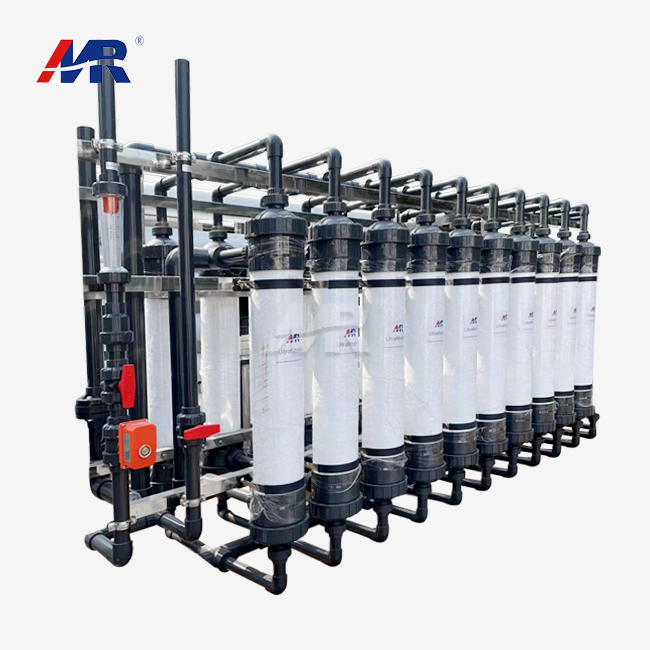
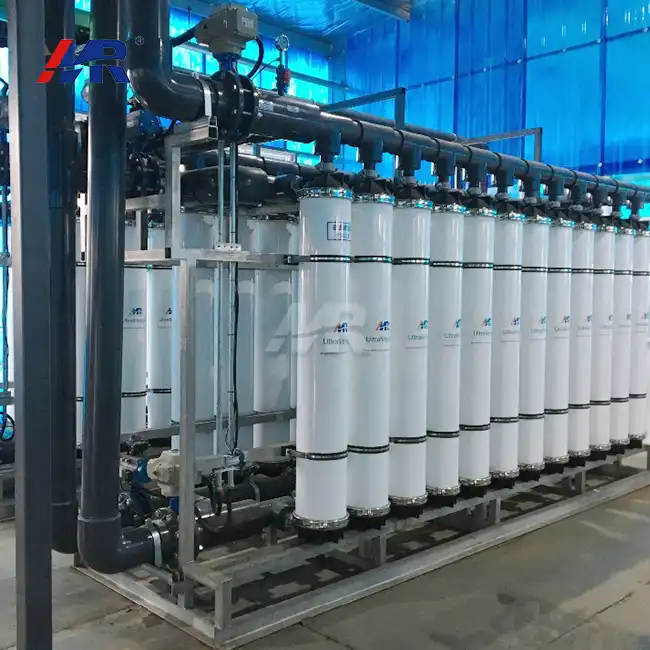
Ultrafiltration and reverse osmosis both employ membranes; however, they have quite different pore sizes and rejection objectives. Ultrafiltration membranes are able to prevent germs, suspended particles, and big organic molecules while allowing dissolved salts to pass through easily. UF is thus a pretreatment or stand-alone process, not a complete desalination technique.
Where Ultrafiltration Wins?
UF systems operate at lower pressure than RO, reducing energy consumption and allowing a UF unit to function in continuous mode without the antiscalant dosing of an RO system. UF is typically employed before RO in pharma and biotech companies to protect the finer ro membrane from fouling as needed in GMP-focused manufacturing lines.
Where does a 2-stage RO win?
A 2 stage reverse osmosis system takes out dissolved minerals and salts that pass right through a uf membrane undamaged. RO’s dissolved-solids rejection, which UF alone cannot give, is needed for any application requiring low-conductivity permeate, such as boiler feed water or semiconductor washing water.
Most industrial water treatment trains employ both methods simultaneously, rather than preferring one technology over the other. UF pre-treats the feed to protect the RO membranes, and the 2-stage RO array offers the low-conductivity permeate that the end application truly requires, integrating UF's fouling prevention with RO's dissolved solids removal in a single treatment train.
How Does a 2-Stage RO Compare With Activated Carbon?
Activated carbon filters function by adsorbing chlorine, organic chemicals, and substances that cause taste or odour onto the surface of carbon granules. Carbon filters use almost all the water that goes through them, producing no concentrate stream at all.
What Carbon Filters Cannot Do?
Carbon medium does not reject dissolved salts, heavy metals, fluoride, or high total dissolved solids values. For applications requiring low-conductivity feed water, a 2 stage reverse osmosis system is needed to remove dissolved ions that carbon filtration cannot target. A plant that uses carbon just for feed water that has to be low in conductivity will find mineral scale building up in boilers, membranes, and process equipment downstream, since carbon is just not intended to take out those dissolved ions.
Where Does Each Technology Fit?
Carbon filtration is a good pre-treatment, eliminating chlorine that might otherwise destroy the polyamide surface of an RO membrane. Then the dissolved solids rejection that carbon can't do is done using a 2 stage reverse osmosis system. This is why most industrial water trains put the carbon filter right in front of the RO membranes instead of treating carbon as a substitute for RO.
Which Water Sources Benefit Most From 2-Stage RO?
The value provided by the extra RO stage is really determined by feed water chemistry. Strong returns are shown for phased recovery of brackish groundwater, moderate-hardness municipal water, and process wastewater with recoverable value.
- Brackish groundwater irrigation sources: The volume of usable water recovered from brackish wells in farms located in dry areas is significantly increased when a 2 stage reverse osmosis system recovers permeate from what a single-stage unit would release as concentrate. This directly affects crop yield per litre of water pumped in water-scarce agricultural zones throughout Africa and South America. Marginal groundwater farmers using centre-pivot or drip irrigation frequently make production decisions about the dry season based upon the recovery achieved by adding more.
- Boiler feed water for power plants: Thermal and nuclear power plants require consistently low-conductivity water to avoid scaling on boiler tubes, and the greater recovery from a downstream RO stage minimises the purchase of raw water and increases the thermal efficiency of the plant’s steam cycle. For continuous baseload production plants, this recovery advantage compounds every day, since even a modest percentage gain translates into a large volume of avoided raw water input over the course of a complete year of operation.
- Zero liquid discharge manufacturing sites: Facilities with stringent environmental discharge requirements utilise 2-stage RO as a primary volume reducer to concentrate waste streams prior to an energy-intensive evaporator handling the remaining brine, greatly reducing the size and operating cost of the evaporation step. This reduction in evaporator size is typically referred to by electroplating and chemical processing facilities as the single biggest cost savings in their whole treatment train when trying to meet zero liquid discharge compliance.
All three of these sorts of sources have one thing in common: it takes money to get the water or to get rid of the water or both. A 2 stage reverse osmosis system is the quickest to pay for itself when that dual cost pressure occurs. This is why municipal utilities, power generation, and heavy manufacturing remain the technology's greatest adopters.
What Contaminants Can a 2-Stage RO System Remove?
Salt rejection performance measures how well a system cleanses water, and standards of testing provide a basis for purchasers to evaluate claims of various manufacturers rather than just marketing material.
| Contaminant Category | Removed by 2 Stage RO | Typical Rejection Rate |
|---|---|---|
| Total dissolved solids and salts | Yes | Up to 99% |
| Heavy metals (lead, arsenic, chromium) | Yes | 95% to 99% |
| Nitrates and fluoride | Yes | 85% to 95% |
| Bacteria and viruses | Yes | Greater than 99% |
| Dissolved gases (chlorine byproducts) | Partial | Varies, carbon pretreatment recommended |
Our MR-BWRO-50TH model carries a certified 99% salt rejection rate, verified through factory acceptance testing that includes silt density index and conductivity profiling before every unit ships. This testing approach lines up with what NSF/ANSI 58 and EPA WaterSense both require of certified RO equipment, giving buyers a documented rejection benchmark rather than a certified claim. For applications requiring staged treatment, the 2 stage reverse osmosis system can further support consistent contaminant reduction and water quality management. The World Health Organisation's drinking-water quality guidelines set the health-based limits that these rejection rates need to meet across nitrate, fluoride, and heavy metal parameters (WHO, 2017).
Reading a Manufacturer's Rejection Claims
Buyers should ask for third-party test data rather than accepting a rejection percentage printed on a spec sheet at face value. Testing standards such as NSF/ANSI 58 specify exact challenge concentrations and test durations, which means two systems both claiming 99% rejection may have been tested under very different conditions. A 2 stage reverse osmosis system that publishes its silt density index results, challenging water composition, and test duration gives buyers a far more useful basis for comparison than a single headline percentage.
When Is a 2-Stage RO More Cost-Effective Than Other Filters?
Cost comparisons need to include water sourcing, disposal, and membrane replacement, not just the equipment purchase price. A 2 stage reverse osmosis system costs more upfront than a single-stage RO or a standalone carbon system, but the operating math often favours it once volume gets high enough.
Where does a 2-stage RO cost less over time?
Facilities paying for municipal water by volume, or facing wastewater discharge fees based on concentrate volume, can use a reverse osmosis plant to recover the higher equipment cost through reduced water purchases and lower disposal fees. Our own production data shows the added membrane array typically pays back its incremental cost within 12 to 18 months for sites processing more than 20,000 litres of feed water daily.
Where Simpler Filtration Still Wins?
Low-volume applications, such as a small laboratory or a single point-of-use tap, rarely generate enough water throughput to justify the added membrane array's cost and footprint. Carbon filtration or single-stage RO remains the more sensible choice whenever daily water demand stays well under industrial volumes.
Building the Full Cost Picture
A complete cost comparison for a 2 stage reverse osmosis system needs to weigh five line items together: equipment purchase price, installation labour, energy consumption, membrane replacement schedule, and the value of the water recovered or the disposal cost avoided. Buyers who compare only the sticker price on the pump skid consistently underestimate how quickly the added recovery pays for itself once real operating volumes are factored in.
How Do Pressure and Recovery Affect 2-Stage RO Performance?
Operating pressure and recovery rate are linked, and pushing either one too far in a reverse osmosis plant without proper controls damages membranes faster than it saves water.
Pressure Vessel Arrangement
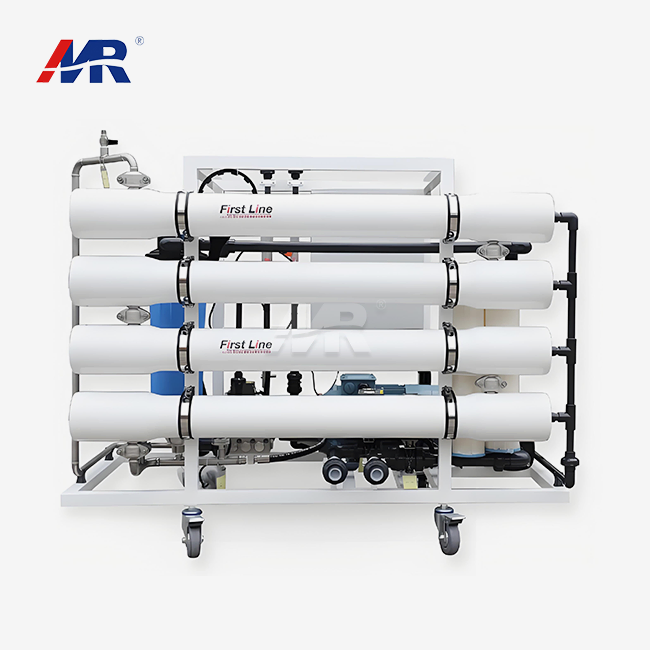
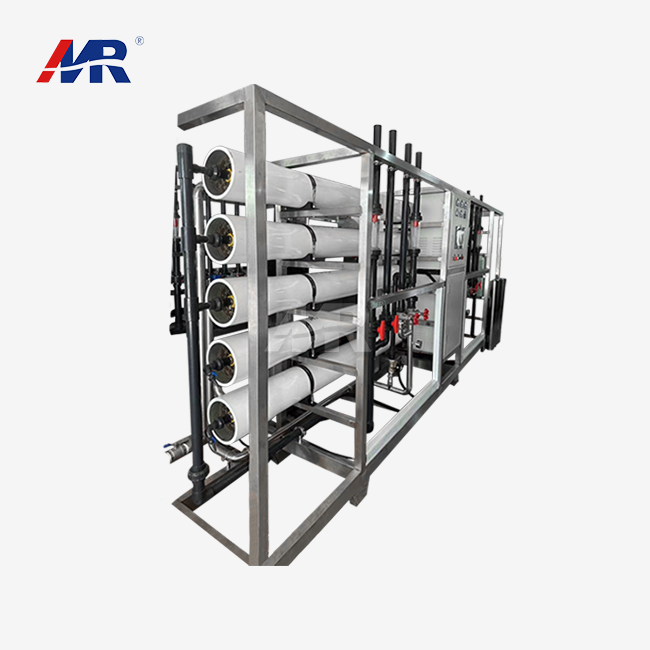
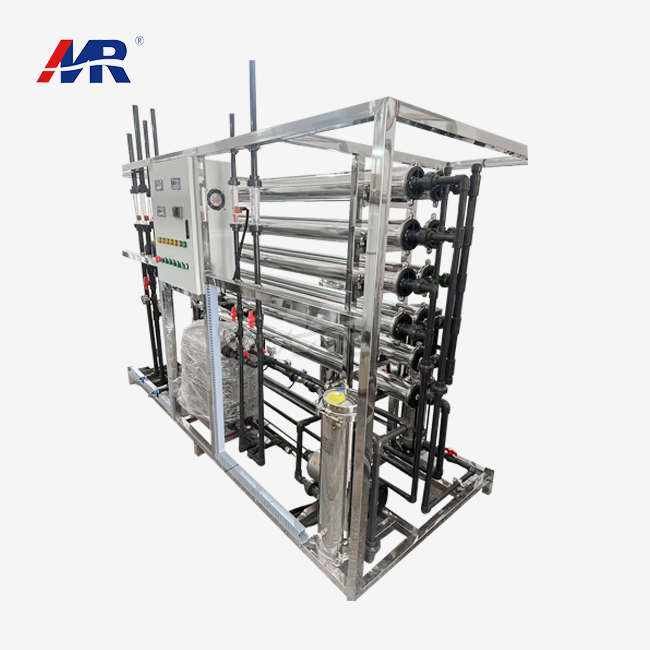
Our MR-BWRO-50TH uses a 2:1 pressure vessel arrangement, meaning two Stage 1 vessels feed concentrate into one Stage 2 vessel. This ratio keeps cross-flow velocity high enough across both stages to prevent particles and scale from settling on the membrane surface, even as the feed becomes more concentrated moving into Stage 2.
Managing Scaling Risk
As water moves through Stage 2, dissolved salts concentrate further, raising the risk of scale formation on the membrane. Antiscalant dosing and Langelier Saturation Index calculations keep the concentrated stream below its scaling threshold, which is why proper chemical dosing matters more in a 2 stage reverse osmosis system than in a single-stage unit.
Temperature and Flux Effects
Membrane flux in a reverse osmosis system drops roughly 3% for every 1°C decrease in feed water temperature, which changes production output across a plant's daily temperature swing. Systems built with variable frequency drives adjust pump speed automatically to hold production steady despite the temperature-driven flux change, keeping downstream processes supplied at a consistent rate.
What Maintenance Does a 2-Stage RO System Require?
An added membrane array means more components to inspect, but the maintenance routine follows the same basic principles as single-stage RO with a few added checks.
Routine Inspection Points
Operators should track differential pressure across each stage separately, since a rising pressure drop in Stage 2 often signals fouling before it becomes visible in permeate quality. Membrane cleaning-in-place cycles need to be scheduled based on that pressure trend rather than a fixed calendar interval, which catches fouling before it damages the membrane permanently.
Chemical Dosing Upkeep
Antiscalant dosing pumps need periodic calibration checks, since underdosing risks scale formation while overdosing wastes chemical and adds unnecessary cost. Facilities running a 2 stage reverse osmosis system around the clock typically schedule a dosing system check every three months alongside routine membrane inspection. Operators should also log conductivity readings after each cleaning cycle, since a permeate reading that fails to return to baseline often points to membrane damage rather than simple fouling, and catching that distinction early prevents a small maintenance issue from becoming a full membrane replacement.
How Should You Choose a 2-Stage RO System for Your Application?
Matching system design to feed water and application needs starts with a proper water analysis, not a catalogue spec sheet. Our engineering team reviews total dissolved solids, hardness, silica content, and daily volume requirements before recommending a configuration, since guessing at these parameters leads to undersized systems that cannot hit target recovery.
Case Study: A Beverage Bottling Plant in Vietnam
A regional beverage bottler in Vietnam approached Our Team in early 2026 after their single-stage RO system could not keep pace with expanding bottled water production. Their existing unit recovered 48% of feed water, forcing the plant to truck in supplemental water during dry-season demand spikes. Our engineers proposed an MR-BWRO-50TH configuration sized to the plant's brackish well water chemistry, with a 2:1 pressure vessel array and automated antiscalant dosing tuned to their specific silica and hardness readings.
After installation, the BWRO plant's recovery rate rose to 61%, cutting daily well water draw by roughly 9,200 litres and eliminating the dry-season trucking cost entirely. Permeate conductivity was held below 18 microSiemens per centimetre across six months of production data, comfortably inside the system's rated performance window. The plant's technical manager confirmed the switch paid back the equipment cost difference within 14 months through reduced water sourcing costs alone.
Questions to Answer Before Ordering
Buyers should confirm their feed water's total dissolved solids level, daily volume requirement, and discharge or disposal cost before finalising a system size. Guangdong Morui's engineering team, backed by 20 in-house engineers and a dedicated membrane production facility, reviews these parameters against our MR-BWRO-50TH's rated specifications to confirm the system matches real operating conditions rather than a generic sizing assumption.
Matching Configuration to Regional Water Conditions
Feed water chemistry varies widely across our target markets, and a 2 stage reverse osmosis system sized for one region often needs adjustment for another. Groundwater across parts of Southeast Asia carries higher silica levels than typical municipal supplies in South America, which changes antiscalant selection and second-array membrane count even when the target output volume stays the same. Buyers ordering equipment for a new region should always request a configuration review against local water quality data rather than assuming a standard package will perform identically everywhere.
Conclusion
Choosing between a 2 stage reverse osmosis system, single-stage RO, ultrafiltration, or activated carbon comes down to what the feed water needs removed and how much that recovered water is worth. Two-stage RO earns its added cost and complexity wherever dissolved solids need thorough removal and water volume runs high enough to make recovery gains matter financially. Facilities with lower volume or contaminant profiles that carbon and UF can already handle often do better with a simpler, lower-cost filtration path instead.
FAQ
1. What recovery rate should I expect from a 2-stage RO system?
Most industrial 2 stage reverse osmosis systems recover between 55% and 85% of feed water, depending on feed water chemistry, membrane array sizing, and antiscalant dosing accuracy.
2. Can a 2-stage RO system replace ultrafiltration entirely?
No, RO and UF solve different problems. UF removes suspended solids and bacteria at low pressure, while RO removes dissolved salts; most industrial trains use both together rather than one in place of the other.
3. How often do RO membranes need replacement in a 2-stage system?
Membrane life typically runs 3 to 5 years with proper pretreatment and antiscalant dosing, though second-stage membranes may need earlier replacement since they process more concentrated feed water.
4. Does a 2-stage RO system use more energy than single-stage RO?
Yes, the added pump and pressure stage add energy draw, though the higher recovery rate often offsets that cost through reduced water sourcing and disposal expenses.
5. What feed water analysis is needed before selecting a 2-stage RO system?
Buyers should test TDS, hardness, silica, pH, turbidity, iron, and organic content before system design. These results determine membrane selection, pretreatment requirements, operating pressure, antiscalant dosage, and the achievable recovery rate.
Talk to Our Engineering Team About Your Water Source
Matching the right filtration technology to your feedwater saves money on both ends, sourcing and disposal. Guangdong Morui Environmental Technology, a 2 stage reverse osmosis system manufacturer with our own membrane feedwater facility and 20 in-house engineers, designs systems around your actual water analysis rather than a generic catalogue spec. Email benson@guangdongmorui.com with your feedwater report, or explore our knowledge base at moruiwater.com for technical reference material on membrane selection and system sizing.
References
1. U.S. Environmental Protection Agency (EPA). (2024). WaterSense Specification for Point-of-Use Reverse Osmosis Systems, Version 1.0. Referenced for recovery rating standards and single-stage RO baseline performance. Products-watersense-ro-systems-specification.pdf">https://www.epa.gov/system/files/documents/2024-11/ws-products-watersense-ro-systems-specification.pdf
2. U.S. Environmental Protection Agency (EPA). (2022). Water Efficient Point-of-Use Reverse Osmosis Systems. Referenced for typical water waste and recovery figures in conventional RO systems. https://www.epa.gov/system/files/documents/2022-12/WS-Products-Specification-RO-Systems-factsheet.pdf
3. World Health Organization (WHO). (2017). Guidelines for Drinking-water Quality, 4th edition. Referenced for health-based contaminant limits relevant to RO rejection performance. https://www.who.int/publications/i/item/9789241548151
4. National Center for Biotechnology Information (NCBI) / PLOS ONE. (2022). Electrodialysis reversal performance for reject brine treatment of a two-stage reverse osmosis desalination system. Referenced for two-stage RO brine concentration and recovery data. https://www.ncbi.nlm.nih.gov/pmc/articles/PMC9401187/
5. Massachusetts Institute of Technology, Technology Licensing Office. Lienhard, J., Wei, Q., & McGovern, R. 2-Stage Reverse Osmosis with High Permeability Membranes for Desalination of Seawater at High Recovery. Referenced for staged RO energy and recovery optimization principles. https://tlo.mit.edu/industry-entrepreneurs/available-technologies/2-stage-reverse-osmosis-high-permeability-membranes
6. Royal Society of Chemistry, Environmental Science: Water Research & Technology. (2017). Enhanced water recovery in the coal seam gas industry using a dual reverse osmosis system. Referenced for dual-stage RO fouling behavior and recovery outcomes. https://pubs.rsc.org/bn/content/articlelanding/2017/ew/c6ew00266h
About the Author
Renjie Kuang is a Senior Applications Engineer at Guangdong Morui Environmental Technology Co., Ltd, where he specifies and troubleshoots reverse osmosis, ultrafiltration, and membrane bioreactor systems for industrial and municipal clients across Asia, South America, and Africa. He works directly with plant engineers to match membrane configurations to feed water chemistry, and he has supported system sizing and commissioning on projects spanning food and beverage, power generation, and agricultural water treatment.