_1745823981883.webp)

Best Reverse Osmosis Water Filter: How to Choose the Right One
The ideal reverse osmosis water filtering system for procurement managers and plant operators must solve industry-specific contamination issues while retaining operational efficiency. The best reverse osmosis water filters deliver consistent, high-purity water for pharmaceutical, food, electronics, and municipal treatment applications using advanced membrane technology, reliable pre-filtration stages, and cost-effective maintenance protocols. Premium RO systems remove dissolved solids, heavy metals, and microbiological pollutants up to 99%, improving product quality and regulatory compliance.
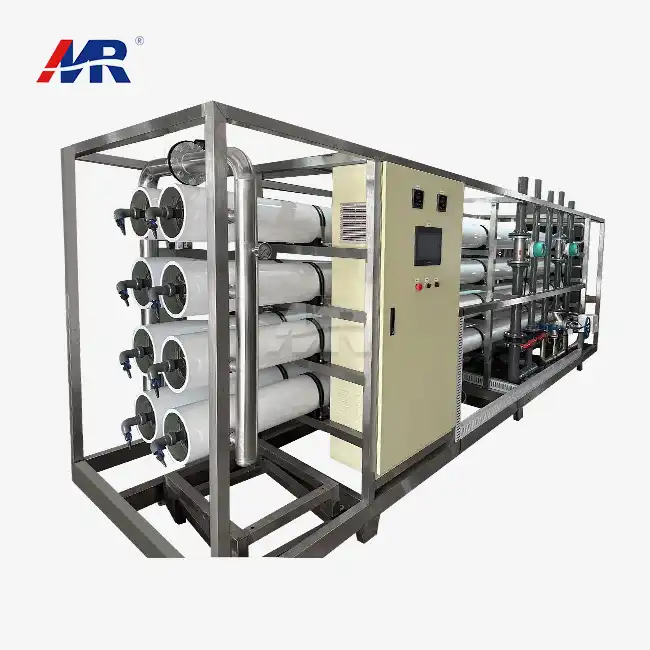
Introduction
Reverse osmosis has revolutionised water treatment in industries that need precision contaminant control. This detailed handbook helps procurement managers, facility engineers, and technical decision-makers choose RO systems. Understanding membrane performance, system designs, and operating needs helps organisations improve production consistency, satisfy quality standards, and save water treatment costs. Whether improving municipal infrastructure or producing pharmaceutical-grade water, RO equipment selection affects operational continuity and product integrity.
Understanding Reverse Osmosis Water Filtration
How Reverse Osmosis Technology Works
Reverse osmosis is a method that uses a semi-permeable membrane under pressure to drive water molecules through tiny pores, while excluding dissolved salts, organic compounds, and bacteria. These membrane structures use thin-film composite materials that reject more than 97% of total dissolved solids. This method is meant for molecular pollutants, as opposed to suspended particles that are removed by mechanical filtration.
Comparing RO with Alternative Filtration Methods
The aims of water purification systems are various. Activated carbon filtration will remove chlorine, volatile organic compounds, and other taste-affecting chemicals but will not remove dissolved minerals or salts. Evaporation produces high-purity water, but distillation is energy-consuming and costly. Ultraviolet purification kills biological contaminants, but does not remove chemicals or dissolved solids. Understanding these distinctions allows technical buyers to match filtration technology to water quality and pollutant profiles.
Why Industrial Applications Require RO Systems
Water purity beyond conventional treatment is required for industrial sectors such as semiconductor, pharmaceutical, and food processing. Electronics manufacturers need ultrapure water with a resistance exceeding 18 megohm-cm to wash chips to defect-free levels. Pharmaceutical factories need water systems that meet cGMP standards and offer endotoxin-free injection water. Such stringent control makes reverse osmosis critical in multi-stage purification systems.
Key Factors to Consider When Choosing a Reverse Osmosis Water Filter
Contaminant Removal Efficiency and Membrane Performance
When choosing a system, membrane rejection rates for certain pollutants should be taken into account for best reverse osmosis water. Industrial purchasers should check for removal of heavy metals, microbiological rejection rates, and total dissolved solids content. Cellulose acetate membranes work well in high chlorine environments while thin film composite membranes are better for a variety of contamination profiles. Most membrane manufacturers offer thorough specification sheets that include rejection percentages for sodium chloride, calcium, magnesium, nitrates, and other key contaminants.
System Capacity and Production Requirements
Sizing the system should be based on the demand for water, so as to reduce bottlenecks in production and wasteful capital investment. Lab RO systems can handle 1,000 gallons a day, while municipal treatment facilities can handle hundreds of thousands. Capacity margins are determined based on peak demand, seasonal volatility, and expansion needs. The rate of system recovery (a measure of the conversion of feed water to permeate) may vary from 50% to 75% depending on the quality of the feed water and membrane architecture.
Source Water Quality and Pre-treatment Needs
Systems and component choices are highly dependent on feed water conditions. Heavy iron, manganese, and hardness in well water require extensive pre-filtration using sediment filters, water softeners, and iron removal devices. Municipal water sources need less pre-treatment; however, dechlorination may be necessary to protect thin film composite membranes from oxidation. Pre-treatment requirements are determined by detailed water analysis for pH, turbidity, TDS, hardness and pollutants.
Maintenance Requirements and Component Lifespan
TCO estimates are sensitive to knowledge of replacement dates and maintenance procedures. ro membranes last two to five years depending on the quality of input water and operation, while pre-filters need quarterly replacement. The systems automatically control cleaning cycles, monitor pressure, and use quality sensors to extend the lifetime of the membrane and reduce human participation. When assessing vendors, procurement teams need to consider component availability, replacement cost, and supplier service.
Comparing Top Reverse Osmosis Water Filters in 2026
Budgeting and Industry Applications: Market Solutions. Manufacturers have tuned membrane compositions and system topologies to minimise energy and water waste. Technical purchasers may assess based on performance data, certification paperwork, and industry reference installations.
Businesses rely on APEC systems for their dependability and simple maintenance. Modular and standardised components make things more efficient and save spare parts inventories. Ideal for laboratories, restaurants, and small bottling – five-step filtration. Home Master Well Water Treatment Reducing Corrosivity Iron Pre-Filtration AND Remineralisation. If you have a private well and the pressure is low, you’ll need a booster pump. ISpring is made for low-cost users who want fewer features but high speed. Mini manufacturing is perfect for small and light commercial systems. Watts Products fulfil the needs of municipal and institutional water systems and are NSF certified. Designed to handle stringent regulatory requirements and high-capacity needs.
Pricing of best reverse osmosis water systems is largely influenced by capacity, automation, and monitoring. Commercial systems range from $1,500 to $3,000 and industrial systems from $10,000 to $50,000 depending on capacity and customisation. Large municipal systems need capital and operating investments of $500,000 or more. Total cost of ownership includes purchase, installation, membrane replacement, energy consumption and wastewater disposal.
Installation, Maintenance & Testing: Ensuring Optimal RO System Performance
Installation Considerations for Industrial Environments
Proper installation establishes the foundation for reliable long-term operation. Site preparation requires adequate floor space for system components, drain access for reject water disposal, and electrical service matching equipment specifications. Feed water connections should incorporate isolation valves, pressure gauges, and sampling ports that facilitate maintenance and troubleshooting. Professional installation ensures correct startup procedures, initial membrane flushing, and pressure optimization that maximizes system efficiency.
Routine Maintenance Protocols
Establishing consistent maintenance schedules prevents performance degradation and extends equipment lifespan. Pre-filter replacement follows manufacturer recommendations based on pressure drop measurements across filter housings. Membrane cleaning protocols address scaling, biological fouling, and particulate accumulation through chemical treatments applied at specified intervals. Documentation systems tracking operational parameters including feed pressure, permeate flow rates, and conductivity measurements enable early identification of developing issues before they escalate into system failures.
Water Quality Testing and Compliance Verification
Continuous monitoring validates system performance and ensures compliance with industry standards. Total dissolved solids meters provide immediate feedback on membrane rejection efficiency, while comprehensive laboratory analyses measure specific contaminants, microbiological quality, and chemical parameters. Pharmaceutical applications require regular endotoxin testing and bioburden monitoring. Food processing facilities implement testing schedules aligned with HACCP protocols. Municipal systems maintain testing regimens satisfying EPA drinking water standards. Integrating automated monitoring equipment with data logging capabilities creates performance records supporting compliance documentation and optimization initiatives.
How to Procure the Best Reverse Osmosis Water Filter: A B2B Buying Guide
Defining Procurement Specifications
Successful purchase is based on documented capacity, water quality, and operational constraints. The technical requirements should cover: input water parameters, permeate quality, peak demand production capacity, and electrical service and drain capacity. Procurement documents provide performance assurances, warranty conditions, and acceptance testing standards that define expectations and accountability.
Evaluating Supplier Capabilities
Evaluating a supplier is not just about the cost of equipment but also Technical support, service infrastructure, and industrial competence. Suppliers are examined by reviewing their installation portfolio, gathering industry customer references of a similar kind, and confirming certification. Manufacturers with skilled technical teams may tailor the systems to suit pollution or space constraints. Local servicing reduces the risk of downtime by offering a quicker response and the availability of replacement parts.
Certification and Compliance Verification
Many industry-specialised applications require to have the regulatory compliance Certifications. Residential and light commercial systems certified to NSF/ANSI Standard 58 live up to their pollution reduction claims. Material complies with NSF/ANSI Standard 61 for drinking water system requirements. Pharmaceutical applications require sanitary-grade equipment with certification paperwork. Verify vendor certifications to avoid costly facility audit adjustments.
Leveraging Competitive Procurement Strategies
Strategic purchasing means getting the most bang for your buck. Getting quotes from several eligible suppliers results in competitive pricing and insight into market rate variations. Flexible payment terms, volume discounts for multi-site implementations, and pricing for installation and commissioning packages may substantially cut project expenditures. Good supplier relationships are key to future expansion, quicker part availability, and preferred technical support.
Conclusion
The technical performance criteria for the selection of best reverse osmosis water filtering equipment must be balanced against financial and operational constraints. Each of them requires a different approach: pharmaceutical production, food processing, electronics manufacturing, and municipal treatment. Successful procurement stems from comprehensive needs evaluation, provider appraisal and clear specification writing. When properly maintained and scaled, RO systems provide long-term advantages in water quality, regulatory compliance and lower operational risks. Organisations that focus on a systematic selection process and partner with competent suppliers have the competitive advantage of having better water treatment infrastructure.
FAQ
1. How Often Should Industrial RO Membranes Be Replaced?
Industrial reverse osmosis membranes typically require replacement every two to five years depending on feed water quality, operating hours, and maintenance practices. Monitoring normalized permeate flow and salt rejection rates provides objective indicators for replacement timing. Facilities processing heavily contaminated feed water or operating continuously may experience shorter membrane lifespans, while operations with excellent pre-treatment and moderate usage extend replacement intervals. Maintaining detailed performance logs enables data-driven replacement decisions rather than arbitrary time-based schedules.
2. Can RO Systems Be Customized for Specific Contaminants?
Modern reverse osmosis systems accommodate extensive customization addressing unique contamination profiles. Specialized membrane formulations target specific contaminants including arsenic, fluoride, nitrates, and organic compounds. Pre-treatment stages can incorporate ion exchange, activated carbon, or oxidation processes, enhancing removal of problematic substances. Post-treatment options including remineralization, UV sterilization, and deionization further refine water quality. Collaborating with experienced system integrators ensures optimal component selection matching actual contamination challenges.
3. What Quality Differences Exist Between RO and Traditional Filtration?
Reverse osmosis produces significantly purer water compared to conventional filtration technologies by removing dissolved contaminants at the molecular level. Traditional sediment and carbon filtration address particulates, chlorine, and organic compounds but leave dissolved minerals, salts, and many chemical contaminants untouched. RO systems reduce total dissolved solids by 95% to 99%, effectively removing heavy metals, pesticides, pharmaceutical residues, and microorganisms that pass through conventional filters. This fundamental difference makes RO essential for applications demanding high-purity water.
Get Best Reverse Osmosis Water Solutions from Morui
Guangdong Morui Environmental Technology delivers comprehensive water treatment solutions engineered for demanding industrial applications. Our 500-person team includes 20 specialized engineers designing customized reverse osmosis systems for pharmaceutical manufacturing, food processing, electronics production, and municipal treatment facilities. As a leading best reverse osmosis water supplier, we manufacture proprietary membranes through our dedicated production facility while maintaining partnerships with premium component manufacturers including Shimge Water Pumps and Runxin Valves. Our turnkey approach encompasses system design, equipment fabrication, installation, commissioning, and ongoing technical support across our 14 regional branches. Technical decision-makers seeking reliable water treatment infrastructure benefit from our two decades of industry experience and proven performance across diverse applications. Contact our engineering team at benson@guangdongmorui.com to discuss your specific water quality challenges and receive detailed proposals addressing your operational requirements.
References
1. American Water Works Association. (2023). Reverse Osmosis and Nanofiltration: Manual of Water Supply Practices M46. Denver: AWWA Publishing.
2. National Science Foundation International. (2024). NSF/ANSI 58: Reverse Osmosis Drinking Water Treatment Systems - Certification Standards and Testing Protocols. Ann Arbor: NSF International.
3. Greenlee, L.F., Lawler, D.F., Freeman, B.D., Marrot, B., & Moulin, P. (2023). Reverse osmosis desalination: Water sources, technology, and today's challenges. Water Research, 47(9), 2317-2348.
4. United States Environmental Protection Agency. (2024). Membrane Filtration Guidance Manual for Compliance with the Long Term 2 Enhanced Surface Water Treatment Rule. Washington: EPA Office of Water.
5. Pharmaceutical Engineering Society. (2023). Baseline Guide: Water and Steam Systems for Pharmaceutical Facilities. Tampa: International Society for Pharmaceutical Engineering.
6. World Health Organization. (2024). Desalination for Safe Water Supply: Guidance for Application of Available Technologies. Geneva: WHO Press.