

_1745823981883.webp)

What Capacity Range Does a Water Sewage Plant Cover?
A water sewage plant can handle as little as 10 cubic meters of wastewater per day for small, decentralized units that serve facilities in the middle of nowhere or as much as 1 million cubic meters of wastewater per day for infrastructure in big cities. The capacity is based on the number of people equivalents, the amount of industry waste, the standards set by the government for discharge, and the expected growth. Choosing the right capacity makes sure that environmental rules are followed, that capital expenditures are minimized, and that the present and future needs for wastewater treatment in residential, business, and industrial settings are met.
Introduction
Taking care of wastewater is an important part of protecting public health and the environment. If you work for a city looking to improve its infrastructure, a drug company that needs to make sure its waste meets GMP standards, or an industrial facility that has to deal with complicated discharge rules, you need to know about capacity ranges in order to successfully complete your project.
As a consultant for many years to engineering teams and procurement professionals, I've seen how practical inefficiencies caused by misalignment between plant capacity and real demand can be very expensive. Undersized systems can cause hydraulic pressure and regulatory violations, while setups that are too big waste money on capital and operating costs that are unnecessary.
This article breaks down the range of capacities of wastewater treatment plants by explaining measurement standards, technology issues, and buying methods. You can get useful information for making specifications, evaluating vendors, and long-term plant optimization by looking at how flow rates, pollution loads, and treatment processes work together at different capacity levels.
Understanding Water Sewage Plant Capacity: A Comprehensive Overview
Defining Capacity Measurement Standards
There are two main ways to measure capacity: hydraulic capacity, which is given in cubic meters per day (m³/day) or million gallons per day (MGD), and organic loads, which are shown by biological oxygen demand (BOD) and chemical oxygen demand (COD) in kilograms per day. A city water sewage plant that treats 5,000 m³ of wastewater per day usually deals with BOD loads of 1,500 to 2,500 kg/day. On the other hand, food processing plants might deal with three to five times higher BOD concentrations at the same hydraulic capacities.
Capacity Classification Across Operational Scales
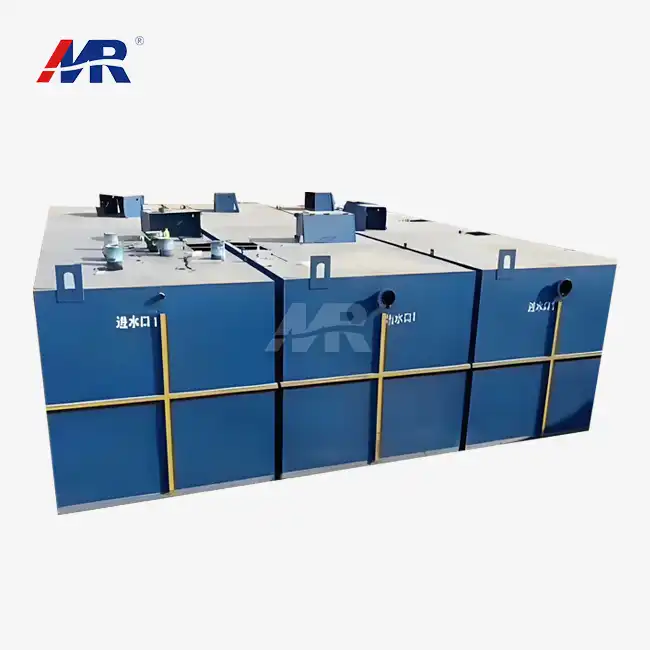
Small systems that handle between 10 and 500 m³/day help rural areas, single businesses, or short-term places like building camps. Sequencing batch reactors (SBR) or package treatment plants are often used in these small systems to balance ease of use with efficiency.
Medium-sized plants that can handle 500 to 50,000 m³/day serve neighborhood towns, medium-sized industrial parks, and college campuses. At this level, activated sludge methods are the most common because they are reliable and can be used in a variety of ways to handle changing loads.
Large-scale infrastructure that serves more than 50,000 m³/day is needed for heavy industry areas and major cities. Cities like Los Angeles and Houston have metropolitan plants that handle more than 1.5 million m³ of wastewater every day. These plants use advanced systems for removing nutrients, recovering energy, and controlling complex features of the wastewater they receive.
Key Factors Influencing Capacity Requirements
Population equivalent estimates give us a basic idea of how big domestic wastewater needs to be, given that each person in a developed country uses 200 to 250 liters of water every day. Industrial inputs need to be carefully characterized. For example, a semiconductor manufacturing facility might only produce 50 m³ of water per day, but it needs to treat ultrapure water first and handle concentrated chemical waste, which reduces the biological treatment capacity.
Minimum holding times and treatment efficiency standards are set by regulations, which have a direct effect on the amount of plant that needs to be built. Nutrient release limits for nitrogen and phosphorus mean that biological treatment steps have to be longer, which lowers the amount of work that can be done in the same amount of space. Facilities on the coast that discharge into sensitive marine environments have to follow tighter rules than plants in the middle of the country that use river absorption capacity.
Demographic changes and economic growth are taken into account when thinking about scalability in a water sewage plant. Modern designs include flexible growth zones that let the capacity grow in stages, from the first 10,000 m³/day installations to the final 30,000 m³/day operations, without stopping the treatment trains that are already running.
Core Components and Treatment Processes Impacting Plant Capacity
Preliminary and Primary Treatment Stages
Screening systems get rid of big solids. The hydraulic discharge is based on the width between the bars in the screen and the speed of the flow. During storms, automated mechanical screens that can handle peak amounts of up to 150% of their design capacity keep things running smoothly. Primary clarifiers set hydraulic dwell times of 1.5 to 3 hours. Surface overflow rates of 30 to 50 m³/m³/day affect how well the sediment settles and how much life is loaded onto the sediment.
Getting rid of grit shields the mechanical tools further down the line and keeps the process moving quickly. Aerated grit tanks with 2–5 minute retention times can handle different flow conditions without lowering the efficiency of removal, directly supporting the water sewage plant's stated capacity across all operating ranges.
Secondary Biological Treatment Configurations
Large to medium-sized setups are mostly made up of activated sludge systems, which work at volumetric loading rates of 0.3 to 1.2 kg BOD/m³/day, based on how they are set up. Conventional plug-flow reactors need bigger basins than extended aeration systems, but they can handle shock loads better, which is important for industry settings where discharge patterns happen in batches.
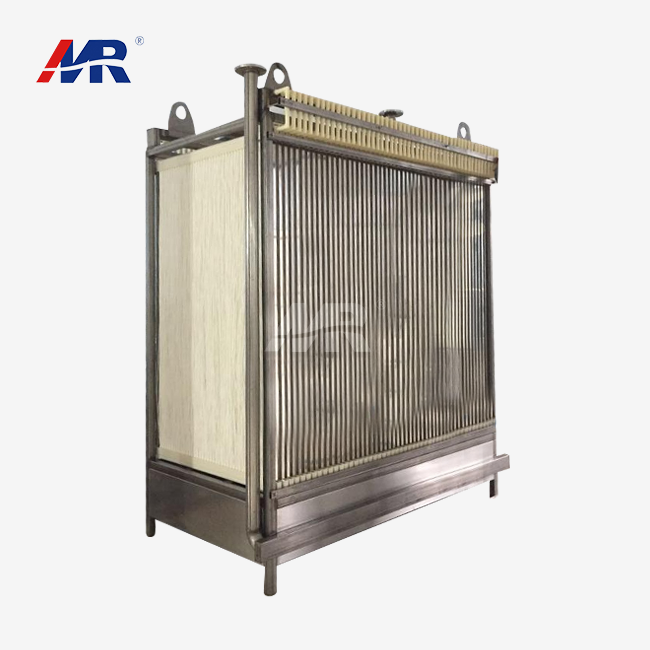
It is possible for membrane bioreactors to produce better wastewater while taking up 30–40% less space than traditional systems. This makes them perfect for increasing capacity in places with limited space. Using mixed liquid suspended solids (MLSS) levels of 8,000–12,000 mg/L instead of 3,000–4,000 mg/L in regular plants, MBR technology can handle the same amount of organic material in a much smaller reactor space.
MBBRs, or moving bed biofilm reactors, are hybrid systems that let you combine connected and floating growth processes. Because they can handle changes in load and temperature, they work well in industrial sites where processes are always changing, because they keep their treatment capacity fixed even when the inputs change.
Tertiary Treatment and Polishing Technologies
Biological nitrification-denitrification or chemical precipitation is used to remove nutrients. These cleaning steps use up more water capacity. When compared to secondary treatment alone, denitrification filters that need to be in contact with the water for 30 minutes and phosphorus removal systems with chemical dosing and flocculation tanks slow down the plant's output by 15 to 25 percent.
The last capacity limit is reached by disinfecting with UV light or chlorine. UV systems that are big enough to deliver 40 millijoules per square centimeter of dose at peak flow must be able to handle hydraulic spikes while still killing microbes, which means they need to be carefully integrated with upstream flow equalization.
Comparing Sewage Plant Capacities Across Different Types and Technologies
Conventional Activated Sludge vs. Biofilm Systems
Activated sludge setups work best in big municipal settings where economies of scale make it worth it to use complex aeration control and sludge handling equipment. Operating costs for a 100,000 m³/day activated sludge sewage water plant are less than $0.15 per cubic meter, thanks to better energy management and biogas cogeneration. However, the plant costs between $800 and $1,500 to build at first.
Biofilm technologies, such as trickling filters and spinning biological contactors, work best for smaller sizes where ease of use and low energy use are more important than leaving a small footprint. Facilities that process 1,000 to 5,000 m³/day profit from operators who don't need as much training and are able to handle breaks in flow, but they need more land to do so.
Modular and Containerized Treatment Solutions
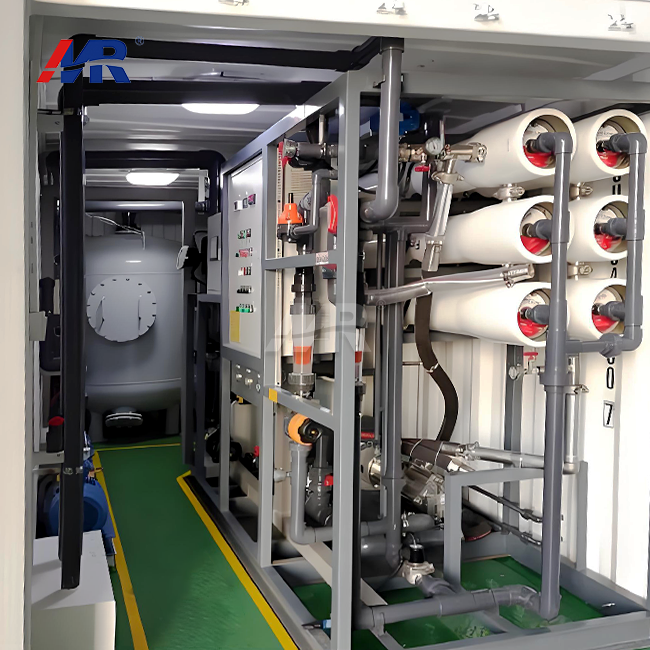
Modular systems change how capacity is used to meet changing needs. Containerized membrane bioreactor units that can treat 50–500 m³/day come already put together, so they can start working in weeks instead of months like traditional buildings do. This method works for mining operations, temporary industrial sites, and situations where cities are growing quickly and need to add capacity right away to avoid infrastructure jams.
Phased expansion lets you match the use of cash with the production of income. A resort building might put in a 200 m³/day module at first and then add more of the same units as the number of guests increases. This way, the investment is spread out over different stages of operation while care stays the same.
Advanced Membrane and Hybrid Technologies
Membrane bioreactor companies that have to meet strict standards for waste water sewage plant show that they are capacity efficient by reducing their footprint. A 10,000 m³/day MBR installation takes up about 40% of the land area needed by traditional activated sludge plants with the same capacity. This makes the installation valuable in cities where property prices are over $500 per square meter.
When you combine MBBR with membrane filtration, you get the best of both biological treatment stability and wastewater quality. This is especially useful for commercial uses. Food processing plants that release 2,000 m³/day of COD with levels ranging from 1,500 to 4,000 mg/L stay in line with regulations by treating biofilms and cleaning membranes, which can handle changes in capacity that would make traditional systems less stable.
Procurement Considerations Based on Sewage Plant Capacity
Assessing Current and Projected Wastewater Volumes
Complete flow tracking and industry discharge studies are the first steps in figuring out the correct capacity. By putting portable flow meters across collection lines, you can see how the flow changes during the day, on the weekends, and during the summer and winter, which helps you set the design parameters. A pharmaceutical production campus might have a base flow of 800 m³/day and occasional spikes of 1,200 m³/day during cleaning cycles. This means that the water sewage plant needs to have the right amount of equalization capacity and space.
The planning horizon is set by growth estimates that include population predictions, plans for industry development, and efforts to save water. A 20-year forecast might predict a 60% rise in population but only a 35% rise in wastewater flow. This is because improvements in water economy will keep capacity from being over-specified.
Capital and Operational Expenditure Analysis
Costs of equipment don't go up or down in a straight line with capacity, showing economies of scale above 10,000 m³/day. Because it buys equipment in bulk and shares infrastructure, a 50,000-m³/day regional facility can get by with $950 per m³/day while a 5,000-m³/day package plant might cost $1,800 per m³/day. Forty to fifty percent of all capital costs go toward civil works like basins, pipes, and getting the place ready. The other thirty to fifty percent goes toward mechanical equipment, instruments, and electricity systems.
Different methods have very different operational costs that are mostly caused by using energy, chemicals, and getting rid of sludge. Normal activated sludge plants need 0.3 to 0.6 kWh per treated cubic meter, but MBR systems need 0.6 to 1.2 kWh/m³ because they need to aerate the membrane. Lifecycle costs over 20 years of operation often show that technologies with better levels of efficiency are worth the higher capital costs because they have lower operating and maintenance costs.
Supplier Landscape and Technology Partnerships
Using well-known technology providers guarantees access to tried-and-true designs and the ongoing help that is necessary for long-term success. Major providers offer standard capacity modules whose performance can be predicted. This makes specifications easier and lowers the risk of buying something. For smaller installations where customization is needed to work around site-specific issues without having to go through foreign supply lines, regional fabricators can save you money.
With a turnkey delivery plan, the project risk is given to experienced workers who take care of everything from digging the foundations to putting in the equipment and starting up the water sewage plant. This method works well for businesses that don't have their own wastewater engineering experts, but it's important to make sure that the contract is carefully written to avoid performance problems and schedule delays.
Conclusion
To figure out what a water sewage plant can handle, you have to think carefully about how much organic and hydraulic waste it can handle as well as how flexible it can be in how it runs. Aligning capacity with current needs and planning for future growth is important for protecting both the environment and money. This is true for both small 50 m³/day systems supporting remote sites and large 500,000 m³/day urban infrastructure.
Choosing the right technology has a big effect on how well it works. For example, membrane bioreactors work better in small spaces, while standard activated sludge works well at scale and doesn't cost much. Capital spending and lifecycle operating costs must be balanced in procurement strategies to make sure that investments last and can react to changing legal landscapes and industry requirements.
By knowing these basic concepts about capacity and maintenance, procurement workers and plant operators can set up their companies for reliable, legal wastewater management that supports growth goals and protects the environment.
FAQ
1. What capacity should I specify for a 5,000-person community?
A neighborhood with 5,000 people usually needs 1,000 to 1,250 m³ of treatment capacity per day, assuming that each person uses 200 to 250 liters of water every day. Adding 20–30% as a safety cushion accounts for seasonal changes and slow growth, suggesting a water sewage plant standard of 1,500 m³/day. There needs to be more capacity analysis based on real flow traits because of industrial or business users in the service area.
2. Can modular plants be expanded as demand grows?
Manufacturers of modular wastewater treatment systems make tools that can be used to build multiple identical treatment trains in parallel, which makes them very scalable. An original 500 m³/day section can be expanded with more units, bringing the total capacity to 1,500 m³/day. Making sure there is enough site room and utility hookups during the initial building phase makes it easier to grow without breaking up current operations and saving money.
3. How do advanced treatment requirements affect capacity?
Using advanced oxidation or third nutrient removal processes lowers plant capacity by 15–30% compared to secondary treatment alone because they need more time to work. If biological nitrogen removal is added to a plant that was built for 10,000 m³/day of secondary treatment, it might only be able to achieve 7,500 m³/day. This means that the plant's capacity will need to be reevaluated when government rules get stricter.
Partner with Morui for Optimized Water and Sewage Plant Solutions
Guangdong Morui Environmental Technology is an expert at finding the best wastewater treatment capacity while keeping technical performance, regulatory compliance, and financial limits all in mind. Our engineering team has experience with everything from small industrial systems to large municipal infrastructure. They can create unique solutions that match your business needs with the right amount of capacity.
As a complete water sewage plant maker, we keep an eye on quality from the time the membranes are made until they are fully operational. Our turnkey services take away the hassle of coordinating, with specialized project managers handling installation, automation integration, and operator training to make sure a smooth start-up.
We offer responsive technical help throughout the lifetime of your plant with 14 regional offices and 20 senior engineers working with clients in the pharmaceutical, food processing, and municipal sectors. Our relationships with top component sources like Shimge pumps and Runxin valves protect your capacity investment by making sure that your equipment is reliable.
Email our technical team at benson@guangdongmorui.com to talk about your unique needs for volume. We will give you full technical proposals, a lifecycle cost analysis, and personalised suggestions that will help you get the most out of your investment in wastewater infrastructure for the long run.
References
1. Metcalf & Eddy, Inc. (2014). Wastewater Engineering: Treatment and Resource Recovery (5th ed.). McGraw-Hill Education.
2. Water Environment Federation. (2018). Design of Municipal Wastewater Treatment Plants: WEF Manual of Practice No. 8 (6th ed.). McGraw-Hill Education.
3. Qasim, S. R. (2017). Wastewater Treatment Plants: Planning, Design, and Operation (3rd ed.). CRC Press.
4. United States Environmental Protection Agency. (2021). Primer for Municipal Wastewater Treatment Systems. EPA Document 832-R-04-001.
5. Judd, S., & Judd, C. (2016). The MBR Book: Principles and Applications of Membrane Bioreactors for Water and Wastewater Treatment (2nd ed.). Elsevier.
6. International Water Association. (2020). Activated Sludge - 100 Years and Counting. IWA Publishing.
 VIEW MOREseawater desalination pre-treatment
 VIEW MOREDisc Tube Reverse Osmosis
 VIEW MOREindustrial reverse osmosis membrane
 VIEW MOREcontainerized RO equipment
 VIEW MOREMBR wastewater treatment plant
 VIEW MOREwastewater treatment plant units
 VIEW MOREmembrane bioreactor mbr
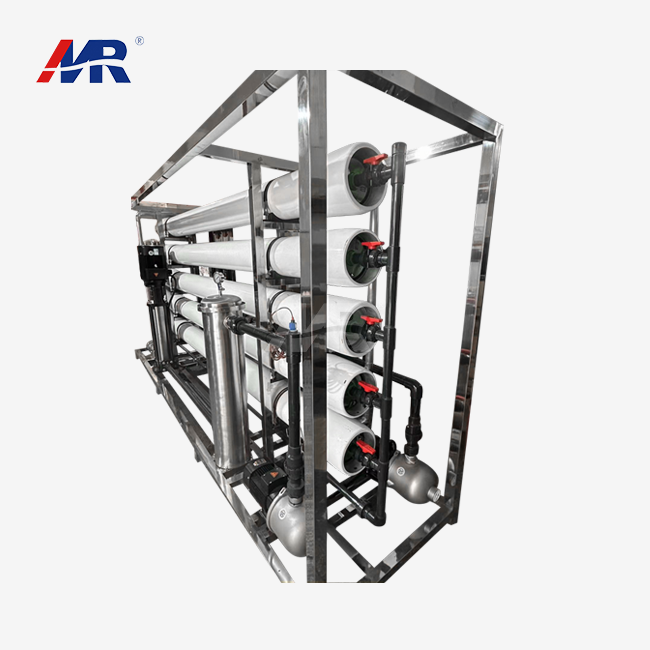 VIEW MOREreverse osmosis water treatment equipment
