_1745823981883.webp)

EDI Module Water Treatment vs Mixed Bed: OPEX Compared
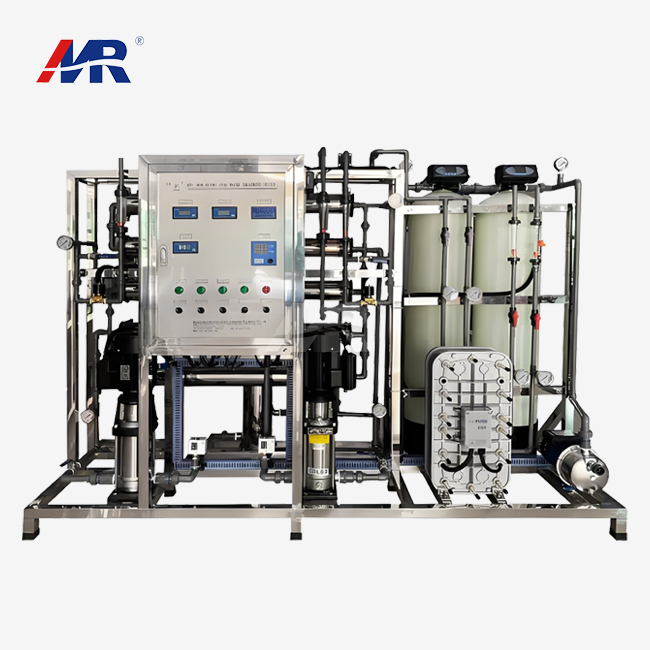
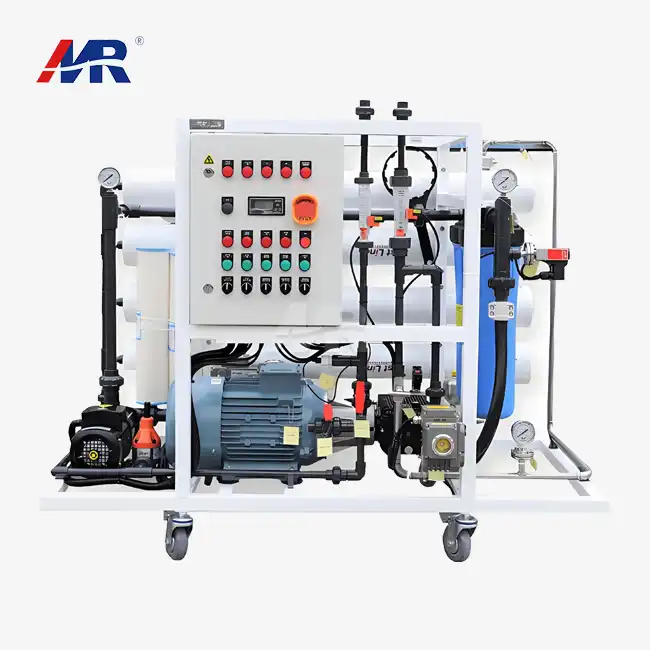
When looking at methods for making ultrapure water, the main difference between EDI module water treatment and mixed bed systems is how much they cost to run. EDI technology gets rid of the need for chemical renewal by constantly eliminating ionic impurities through electrodialysis and ion-exchange processes. This makes it possible to reach resistivity levels of up to 18.2 MΩ·cm without using acids or caustics. Chemical regeneration is needed on a regular basis for mixed bed systems, which means that hazardous materials, waste disposal, and labor are always going to cost money. From an OPEX point of view, EDI usually has lower long-term costs because it requires less chemical handling, less downtime, and consistent water quality. This makes it a more appealing choice for industries that need to make precise Products where purity and cost predictability are very important.
Understanding EDI Module and Mixed Bed Water Treatment Technologies
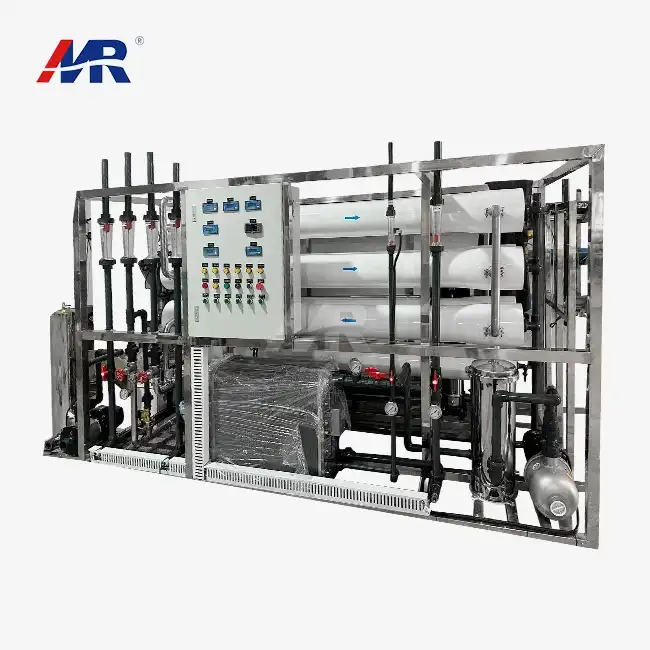
Before you can choose between electrodeionization and standard ion exchange systems, you need to know how they clean water. Both of them are meant to make very clean water, but they work in very different ways that have direct effects on your bottom line.
How EDI Technology Works
An ion-selective membrane and ion-exchange resin in a continuous direct current electrical field produce electrodeionization. This electrochemical reaction splits water into hydrogen and hydroxyl ions. These ions clean resin beds to keep production going. Salts, dissolved gases like carbon dioxide, and weakly ionised pollutants like boron and silica are removed by this approach. Systems typically operate at flow rates of 0.5-50 m³/h and use 0.1-0.3 kWh/m³, resulting in over 90% recovery rates. No batch processing delays or chemical storage are needed with this continuous operation concept.
Traditional Mixed Bed Ion Exchange Principles
Mixed bed deionisers mix cation and anion exchange resins in one tank. Ionic toxins cling to resin beads as feed water passes through the resin bed until they are used up. To clean up using concentrated sulphuric acid and sodium hydroxide, work must cease. Backwashing, adding chemicals, rinsing, and remixing might take hours in the regeneration cycle. Production pauses or switches to backups. During regeneration, a lot of chemical waste must be neutralised before disposal. This makes environmental compliance harder and more expensive.
Key Operational Differences
Main difference is regeneration method. EDI module water treatment uses electricity to refresh itself, thus output quality is maintained without user intervention. Batch-based mixed bed systems perform poorly between regeneration cycles. Controlling chemicals and timing requires competent professionals. Water quality from EDI remains consistent at 10-18.2 MΩ·cm resistivity during operation, while mixed bed output shifts from newly regenerated peaks to pre-exhaustion valleys. Cleaning semiconductor wafers and producing medications requires consistency since even tiny quality changes might result in faulty products or batches being thrown out.
Operational Expenditure Components in EDI vs Mixed Bed
To figure out your total OPEX, you need to look at all the costs that affect your water treatment system over the course of its life. These costs go far beyond the initial cost of buying the equipment and show how the economy really is.
Chemical Costs and Handling
Mixed bed systems need regular regeneration chemicals. How much sulphuric acid and sodium hydroxide is needed depends on feed water quality and system size, but most plants spend thousands to tens of thousands a year on these toxic chemicals. Chemical management is more expensive than the chemicals. Special storage bins, containment systems, personal safety equipment, and staff training are needed. Regulations require strategies to prevent spills, get permits, and handle crises. EDI technology eliminates chemical expenditures, a major OPEX gain. Facilities save material costs and the infrastructure and administrative work of controlling harmful substances.
Energy Consumption Patterns
Many systems use varying quantities of power. EDI modules operate continuously, consuming 0.1-0.3 kWh/m³ of treated water, allowing for cost planning. Pumps, heaters, and mixing equipment require a lot of power during regeneration, but mixed bed systems use less during manufacturing. These high demand periods and any extra heating chemicals need must be considered when calculating energy expenditures. EDI's consistent energy profile is easier to budget and optimise for larger plants processing 20-50 m³/h as part of their power management programs.
Labor and Maintenance Requirements
For regeneration, quality checks between cycles, and chemical inventory management, mixed bed operations need trained workers. Direct pay, training, and safety compliance costs increase OPEX due to work volume. edi systems only need membrane cleaning and module replacement based on performance monitoring. Longer maintenance intervals reduce scheduled downtime and emergency repairs compared to mixed bed systems. The automated design of EDI allows one operator to control several systems. Water treatment becomes more labor-efficient.
Waste Disposal and Environmental Compliance
Chemical renewal produces acid and caustic streams that must be neutralised and discarded. Wastewater treatment expenses vary by location and law, but they always increase mixed bed OPEX. Some charge more for industrial effluent with high total dissolved solids or that needs on-site treatment before release. EDI produces a concentrate stream with rejected ions and no hazardous chemicals. This simplifies disposal and reduces the company's environmental impact. This cleaner operating profile supports firms' environmental initiatives and may help facilities reach ISO 14001 or green building standards.
Comparative Analysis: Cost-Efficiency and Performance Metrics
In the real world, performance data shows how the choice of technology affects both short-term and long-term costs. These measures help people who work in procurement make sure that their business plans are correct.
Short-Term vs Long-Term Cost Trajectories
Mixed bed systems are appealing to buyers watching their initial investment due to their cheaper capital expenses. OPEX study demonstrates that this benefit fades in two to four years, depending on productivity and feed water quality. Chemicals, labour, and rubbish removal cost more each month, creating a rising cost curve. EDI requires a larger upfront investment, but its running costs are stable over time. Facilities that consistently produce ultrapure water usually recover their costs in 18–36 months. After that, lower operating and maintenance costs boost profitability.
A New Jersey pharmaceutical business considered both systems for its filtered water loop that supports multiple production lines. Their investigation found that the mixed bed's yearly OPEX was $47,000, largely owing to chemicals and regeneration labour. The EDI's OPEX was $18,000, largely owing to power and preventive maintenance. The OPEX difference over 10 years exceeded $290,000. This exceeded the $65,000 needed for EDI setup.
Water Quality Consistency and Process Impact
Pharmaceuticals, semiconductors, and lab research require ultrapure water, which is provided by EDI module water treatment. EDI systems maintain resistivity and total organic carbon by regenerating continually. Between regeneration rounds, mixed bed systems lose performance. This uniformity reduces production and quality issues. After converting from mixed bed to EDI, a California microelectronics factory reduced wafer defects by 23%. They said the improvement was due to no longer having water quality changes during crucial rinsing phases. The decrease in flaws improved output and reduced repair costs, saving money.
System Reliability and Uptime
Mixed bed regeneration downtime might disrupt production schedules and require larger or several systems to maintain operations. Regeneration via EDI systems occurs 24/7, maximising equipment use and manufacturing capacity. EDI modules have a 98–99% uptime rate when properly maintained, whereas the mixed bed has 85–92% availability, including regeneration cycles and unforeseen chemical supply outages. This stability advantage is notably useful in power plants where boiler water quality must be maintained and hospitals where dialysis water must constantly be accessible.
Selecting the Right Water Treatment Technology for Your Procurement Needs
Matching the right technology to the way you do business will ensure the best results and lowest costs. There are more than just OPEX comparisons that go into this selection process.
Assessing Your Water Volume and Purity Requirements
Flow rate requirements strongly influence technology choice. Facilities using less than 5 m³/h may benefit from mixed bed systems if they can work in batches that align with their timetable. At scale, EDI's consistent output and lower unit costs benefit businesses with flows exceeding 10 to 15 m³/h. Purity is also crucial. EDI technology is ideal for applications requiring resistivity above 15 MΩ·cm because to its steady, high-quality outputs. Power plants need boiler water, semiconductor factories clean wafers, and biotech firms inject water. All of these regions need pure water, which EDI excels at.
Infrastructure and Space Considerations
Existing facility equipment impacts the application. Mixed bed systems require substantial floor space for chemical storage, containment, and neutralisation. Standard plumbing and electricity connections are all EDI installations need, so they're compact. Texas food and drink processor replaced mixed-bed equipment with EDI modules. Production increased due to 40% of the water treatment space being freed up. Modern EDI technology is compact—mid-range devices are two to three meters long—making it ideal for retrofits and small facilities.
Regulatory Environment and Sustainability Goals
Environmental regulations are tightening on hazardous chemicals and industrial wastewater. Mixed-bed business is more expensive in regions with rigorous permissions or hefty dumping costs. The chemical-free operation of EDI technology protects your facilities from regulatory changes and helps your organization reach sustainability goals. Companies seeking LEED approval, carbon reduction, or zero liquid waste find EDI useful. The approach simplifies environmental reporting and reduces regulatory inspections compared to facilities that handle toxic regeneration chemicals.
Partnering with Experienced Water Treatment Suppliers
Selecting the correct technology is just the start. Implementation requires supplier knowledge and assistance. For decades, Guangdong Morui Environmental Technology Co., Ltd. has treated water in pharmaceutical, computer, power-generating, and manufacturing settings. Our engineering team tailors EDI solutions to feed water characteristics, cleanliness, and flow. Through system design, installation, commissioning, and optimisation for long-term maintenance, we handle it all. We have a membrane production factory and 14 offices with around 500 employees. This gives us technical depth and service infrastructure for complex water treatment projects.
Maintaining and Optimizing Your Water Treatment System to Reduce OPEX
Even the most efficient technology needs to be properly maintained so that it stays cost-effective over its entire life. When it comes to system care, strategic approaches get the best return on investment.
Preventive Maintenance Strategies
Equipment lasts longer and costs less when it is maintained on a regular basis. Regularly checking the performance of EDI modules is helpful. This can be done by measuring the difference in pressure and resistance and looking for signs of scale or fouling. Setting up baseline performance metrics lets you find problems early on, before the quality of the output goes down. Protocols for cleaning membranes with approved agents at regular intervals keep mass transfer working well and stop fouling that can't be fixed. For mixed bed systems to work, the regeneration efficiency must be tracked, the degradation of the resin must be watched, and used media must be replaced before channeling happens. Keeping records of maintenance tasks and changes in performance lets you make decisions based on facts about when to replace consumables and how to make the system work better.
Feed Water Pretreatment Optimization
The grade of the coating is very important for both EDI module water treatment and mixed bed systems. Total dissolved solids should be less than 50 mg/L in reverse osmosis systems that run into EDI, hardness should be close to zero, and organic material should be kept to a minimum. If you don't do enough pretreatment, the EDI membrane and resin will wear out faster, which will increase the number of maintenance visits and the cost of replacement. Putting in the right multimedia filtering, activated carbon treatment, and antiscalant dosing saves devices further down the line and makes repair intervals longer. Problems can be avoided before they affect the production of ultrapure water by replacing filter cartridges, cleaning ro membranes, and replacing UV lamps on a regular basis as part of the pretreatment system maintenance. The small amount of money spent on comprehensive pretreatment cuts the overall system OPEX by a large amount.
Performance Monitoring and Early Intervention
Monitoring systems that are more advanced can spot problems as they start to happen before they become major problems. Monitoring the resistivity of EDI product water on a continuous basis shows performance trends that indicate when preventative action is needed. Tracking the difference in pressure across membrane stacks shows how fouling builds up, so cleaning can be planned instead of having to be done quickly in an emergency. Monitoring temperatures makes sure that systems work within their designed limits so that they are as efficient as possible. By adding these data to building SCADA systems, automatic alerts and troubleshooting by skilled workers from afar are made possible. Morui offers full performance monitoring as part of our service agreements. We look at operational data to suggest preventative maintenance actions that cut down on downtime and increase the life of equipment.
Conclusion
Comparing the costs of running the EDI module water treatment system against the mixed bed system shows that electrodeionization is clearly better in most commercial settings. EDI gets rid of ongoing chemical costs, cuts down on labor needs, makes environmental compliance easier, and provides constant ultrapure water quality that supports high-quality output. While mixed bed technology can still be used for some low-volume tasks, EDI is the better option for making medicines, semiconductors, electricity, and other demanding products because it is more cost-effective and easier to run in the long run. The best way to choose a technology is to carefully think about your needs, such as flow rates, purity levels, infrastructure limitations, and goals for sustainability. When you work with experienced suppliers, you can be sure that the implementation will go smoothly and that the performance will last, which will maximize your return on investment.
FAQ
Q1: What makes EDI more cost-effective than mixed bed systems over time?
Hazardous renewal chemicals like sulfuric acid and sodium hydroxide are no longer necessary thanks to the EDI module water treatment system, which also saves money on their purchase, storage, handling, and removal. Depending on the size of the system, this chemical-free method saves between $20,000 and $50,000 a year. The cost of labor goes down because EDI works all the time and doesn't need trained workers for hand regeneration processes. Without the regular spikes that come with mixed bed renewal, energy use stays steady at 0.1 to 0.3 kWh/m³. All of these things add up to OPEX savings of 40–60% over the course of 10 years compared to mixed bed systems.
Q2: Can EDI systems scale to meet growing production demands?
Modular design makes EDI technology work well on a larger scale. By adding parallel module trains, systems can handle flow rates from 0.5 m³/h for lab use to 50 m³/h or more for industrial settings. This scalability lets capacity grow in stages to match business growth without having to replace whole systems. Mixed bed systems can also grow, but as demand rises, they need more vessels, space for storing chemicals, and equipment for regeneration. This makes the growth process more complicated and takes up more room.
Q3: When might mixed bed systems still be preferable?
Mixed bed technology is still good for situations where very small amounts of water are needed on and off, where EDI's continuous operation doesn't help, for places that already have the right equipment and trained staff to handle chemicals, or when the capital budget doesn't allow for an investment in EDI even though it has a better OPEX profile. Some specific uses that need cleaning after other treatment steps may also benefit from a mixed bed arrangement.
Contact Morui for the Advanced EDI Module Water Treatment Solutions
With our cutting-edge EDI systems, Guangdong Morui Environmental Technology Co., Ltd. is ready to help you get the most out of your water treatment operations while keeping costs low. We are a well-known EDI module water treatment manufacturer. We have our own facilities for making membranes and have been in the business for decades, so we can provide custom solutions for pharmaceutical, semiconductor, power generation, and industrial uses. Our engineering team creates systems that are tailored to your feed water's properties, cleanliness needs, and flow requirements. We also offer full installation and testing services. With more than 500 workers spread out across 14 branches, we can give your important water systems the local help and technical know-how they need. We also sell top brands of equipment, like Shimge Water Pumps, Runxin Valves, and Createc Instruments, which lets us offer fully integrated solutions. Get in touch with us at benson@guangdongmorui.com to talk about how our EDI technology can help you cut costs while also making sure that the water quality is always the same and that you follow environmental rules.
References
1. American Water Works Association. "Electrodeionization for Industrial Water Treatment: Operating Principles and Cost Analysis." Denver: AWWA Research Foundation, 2021.
2. International Water Association. "Comparative Life Cycle Assessment of Ion Exchange Technologies for Ultrapure Water Production." London: IWA Publishing, 2020.
3. United States Pharmacopeia. "Water for Pharmaceutical Purposes: Treatment Technologies and Quality Standards." USP 44-NF 39, Rockville, 2021.
4. Semiconductor Equipment and Materials International. "Ultrapure Water Systems for Microelectronics Manufacturing: Technical Guidelines and OPEX Benchmarks." SEMI Standards, 2022.
5. Electric Power Research Institute. "Boiler Feed Water Treatment Technologies: Performance and Economic Comparison for Power Generation Facilities." Palo Alto: EPRI Technical Report, 2019.
6. Journal of Membrane Science. "Advances in Electrodeionization: Efficiency Improvements and Cost Reduction Strategies for Industrial Applications." Volume 612, Amsterdam: Elsevier, 2020.