

_1745823981883.webp)

What Is an RO EDI System and How Does It Work?
If you manage water quality for a semiconductor fab, a pharmaceutical plant, or a power generation facility, you already know that ordinary purified water simply does not meet your process demands. Even a trace of ionic contamination can ruin a batch, damage equipment, or trigger a compliance failure. That is the operational reality that drives engineers and plant managers to look beyond conventional filtration — and toward an RO edi system technology that delivers resistivity levels measured in megohms.

What Exactly Is an RO EDI System?
An RO EDI system — Reverse Osmosis Electrodeionization — is an integrated water purification system that combines membrane-based separation with an electrically driven ion-removal process to make ultrapure water continuously, without the need for chemical regeneration. The RO stage gets rid of dissolved solids, colloids, and bacteria. The EDI module, on the other hand, uses a direct-current voltage to pick up any remaining ionic species across ion-exchange resin beds and membranes. As a result, there is a regular flow of clean, high-resistance water that meets the strictest industry standards. An RO EDI system completely gets rid of dangerous acid and caustic waste, unlike conventional mixed-bed deionization.
How Does the System Actually Work?
If you know how the process works, you can decide if this technology is right for your location. The path to cleaning has several steps that depend on each other and build on the ones that came before them.
Stage 1 — Reverse Osmosis Pre-Treatment
To keep the ro membranes from getting clogged up and scaling, the feed water first goes through pre-treatment steps. These usually include sediment filters, activated carbon, and a softener. The next step is the RO stage, which uses high pressure to push water through semi-permeable membranes that block up to 99.99% of dissolved salts, bacteria, and organics that are dissolved in the water. With a 25 kW/hour power draw, our Morui MR-EDI-10TH meets that standard for salt rejection. It works at a 55% recovery rate. The RO permeate comes out with a lot less total dissolved solids, and it's now ready to be polished.
Stage 2 — Electrodeionization Polishing
The RO permeate goes into the EDI stack, which has alternate sections for dilute and concentrate. These sections are divided by membranes that pick out cations and anions. A DC voltage moves extra cations toward the cathode and extra anions toward the anode. Ion-exchange resin beads in the dilute compartment catch ions as they move. The electric field constantly renews the resin, which is why there is never a need for chemical downtime. When the EDI stage is well-designed, the output resistance usually hits 15–18 MΩ·cm, which meets the requirements for ultrapure water used in semiconductor and drug production.
Stage 3 — Continuous Output and Monitoring
An RO EDI system operates continuously, unlike batch-based deionization systems. Flow meters, pressure transducers, and resistivity sensors that are built into the line send real-time data to the control panel. This data shows any problems before they affect the quality of the product. This model of ongoing operation can't be changed in high-throughput areas like chip factories or boiler feed water systems, where even short changes in water quality can have expensive effects.
Where Is This Technology Applied?
The MR-EDI-10TH is designed to make ultrapure water, and its performance specs make it a good choice for a number of challenging industries. Here is a list of the main types of applications:
- Semiconductor and microelectronics manufacturing: Wafer cleaning needs ionic purity below ppb. Even small amounts of pollution can lower the result. Without adding regenerant residues, an RO EDI system's continuous, chemically clean output directly addresses this need.
- Pharmaceutical and biotechnology: USP-grade filtered water and Water for Injection (WFI) need strict control over microbes. An RO EDI system helps with GMP compliance by getting rid of chemical renewal processes that could introduce contamination vectors and making water with a confirmed, uniform resistivity.
- Power generation — thermal and nuclear: For both steam and nuclear power plants, the high-pressure boiler feed water needs to have very low conductivity levels to keep the turbines from scaling and rusting. The MR-EDI-10TH provides the steady, low-ionic-load water that safeguards boilers that require a lot of capital.
A big chunk of the world's ultrapure water use comes from just these three industries. Grand View Research estimated that the global ultrapure water market was worth more than USD 8.5 billion in 2023. The semiconductor and pharmaceutical industries were the main drivers of demand.
RO EDI vs. Traditional Mixed-Bed Deionization — Which One Fits Your Operation?
Procurement and engineering teams often compare these two tools side by side. The differences in real life are shown in the table below:
| Criteria | RO EDI System | Mixed-Bed DI Resin |
|---|---|---|
| Chemical regeneration required | No | Yes (acid + caustic) |
| Operational continuity | Continuous | Interrupted for regeneration |
| Waste disposal | Minimal concentrate | Hazardous chemical waste |
| Output purity (resistivity) | Up to 18 MΩ·cm | Up to 18 MΩ·cm |
| 3-Year TCO | Lower (no chemical costs) | Higher |
| EDI module lifespan | 5–7 years (with proper RO pre-treatment) | Resin replaced every 6–18 months |
| Environmental compliance | Easier | Requires waste neutralization |
The initial investment in an RO EDI system is higher upfront, but over the course of three years, the total cost of ownership always comes out better for EDI when you add in the costs of chemicals, labor, and legal disposal. For businesses that have to follow EPA rules or state environmental permits for effluent, stopping acid and caustic discharge is usually not a matter of choice; it's the law.
Key Considerations Before Installation
To get the most out of your investment, you need to pay attention to a few things before delivery. The planning of the pre-treatment is the single most important factor in EDI success over the long term.
Before the EDI stack, calcium and magnesium hardness ions must be lowered below 1 ppm. If they are not, they will stick to the membranes and lower the resistance output. Carbon dioxide interference is also important. CO₂ enters the EDI compartment as a weak acid and fills up the ion-exchange capacity, so the electric field alone isn't enough to get rid of it. The best way to fix this is to put a membrane degasser before the EDI module. The EDI module in the MR-EDI-10TH is designed to work reliably for the 5–7 years that it is rated to last with the right pre-treatment.
Every three to six months, based on the quality of the feed water, the RO membranes should be CIP (Clean-in-Place) to keep the flux and rejection rates fixed. EDI doesn't need to be cleaned with chemicals when it's working normally, which saves a lot of money on maintenance costs for businesses that run multiple jobs.
Conclusion
RO EDI systems are a mature and tried-and-true way to make ultrapure water. They don't require chemical recycling, so they can constantly provide the water purity that processes in semiconductors, pharmaceuticals, and power generation need. With a 99.99% salt rejection rate, a 55% recovery rate, and an energy profile of 25 kW/hour, the Morui MR-EDI-10TH turns these technical ideas into a package that can be used in the field. If the cleanliness of the water is important to the process, this technology gives you peace of mind about compliance and measured cost discipline over the lifecycle of the equipment.
FAQ
1. Why does pre-treatment matter so much for an RO EDI system?
Hardness and dissolved CO₂ are both things that hurt the performance of an EDI stack. Pre-treatment gets rid of them. Calcium and magnesium carbonate scales form on the ion-exchange membranes if they are not softened. This makes the resistance drop below what is needed. A well-thought-out pre-treatment train is the key to consistently producing ultrapure water.
2. How long does an EDI module typically last?
As long as the feed water is properly treated with RO and stays within the design limits, an EDI module should last between five and seven years before it needs to be replaced. This lasts a lot longer than mixed-bed plastic beds, which need to be replaced or regenerated every six to eighteen months.
3. Does an RO EDI system require shutdown for maintenance?
The EDI stage keeps working all the time, with no chemical breaks. Every three to six months, RO membrane CIP may be planned, but it is only for a short time. The overall availability of the system is a lot higher than with traditional DI systems.
4. Can this system handle dissolved CO₂?
Ionized carbonic acid species are removed by EDI, but unionized CO₂ moves through slowly. This problem is fixed by putting a membrane degasser between the RO and EDI steps, which also raises the output resistance.
5. What industries benefit most from this technology?
Manufacturing semiconductors, making medicines, generating electricity, and doing precise chemical handling are the main industries. Any process that needs water with a resistivity of more than 10 MΩ·cm is a good option.
Partner With Morui for Your Ultrapure Water Project
Every project that Morui works on has more than 500 workers, 20 expert engineers, and a facility that makes membranes in-house. Our Team provides tools, installation, and commissioning as a single, accountable service, whether you are looking for an RO EDI system supplier for a new semiconductor factory, upgrading an old pharmaceutical water loop, or creating a boiler feed water system. You can email our engineering team at benson@guangdongmorui.com to look at the specifications and ask for a project consultation.
References
1. Grand View Research. Ultrapure Water Market Size, Share & Trends Analysis Report. 2023.
2. ASTM International. ASTM D5127: Standard Guide for Ultra-Pure Water Used in the Electronics and Semiconductor Industries. 2022.
3. United States Pharmacopeia. USP <1231>: Water for Pharmaceutical Purposes. 2023.
4. Strathmann, H. Electrodialysis, a Mature Technology with a Multitude of New Applications. Desalination, Elsevier. 2010.
5. Water Environment Federation. Membrane Bioreactors: Design, Operations, and Case Studies. WEF Press. 2012.
6. International Society for Pharmaceutical Engineering (ISPE). ISPE Baseline Guide: Water and Steam Systems. 2019.
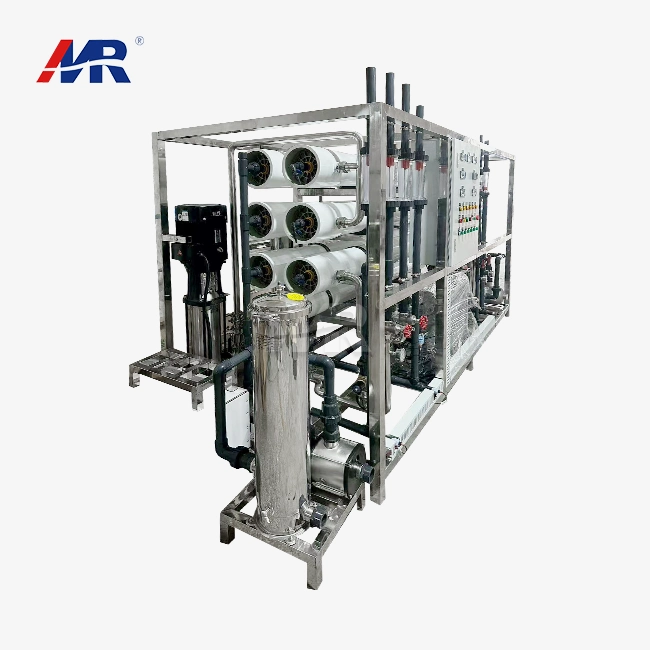 VIEW MOREedi module
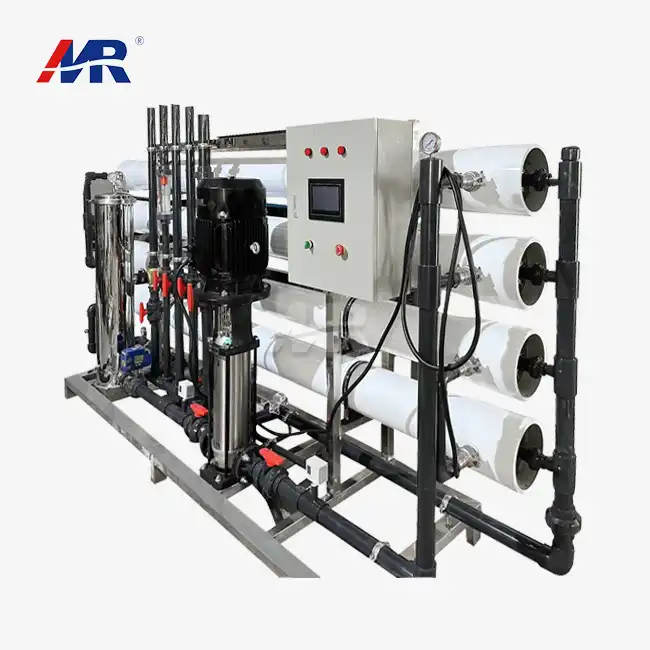 VIEW MORE12m3/hour reverse osmosis BWRO system
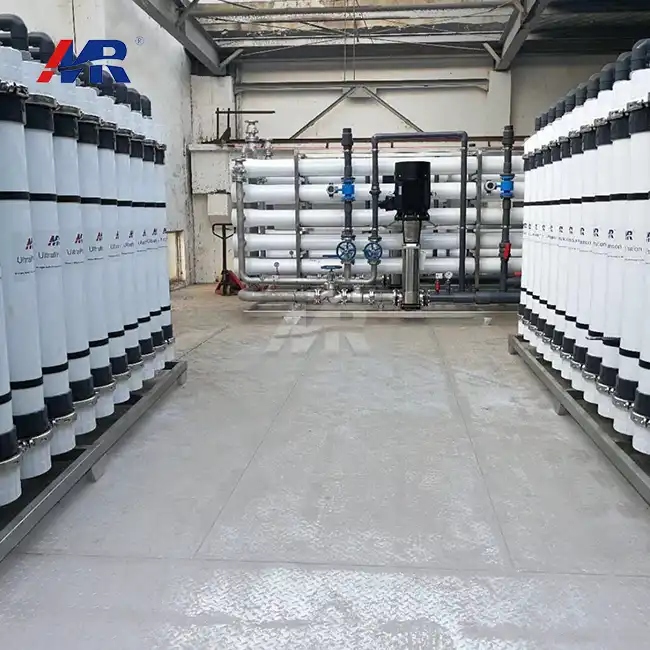 VIEW MORE2000m3/day ultrafiltration equipment
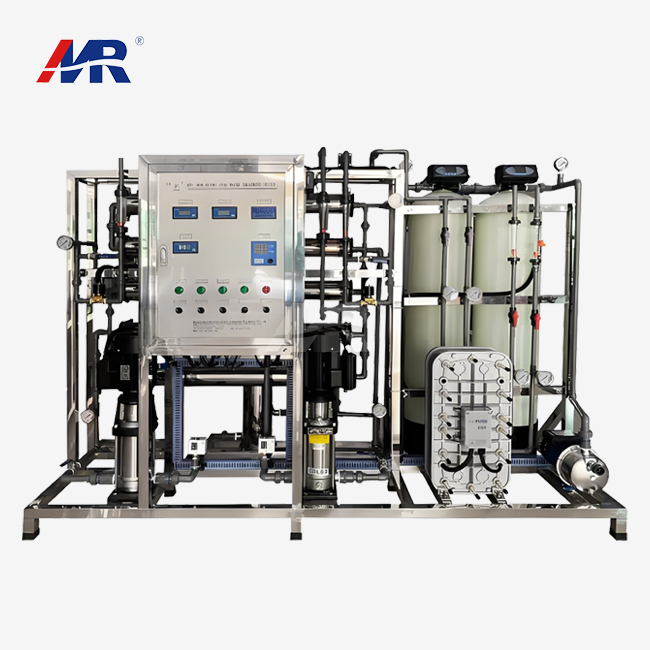 VIEW MORE500LPH EDI equipment
 VIEW MOREsewage treatment plant MBR system
 VIEW MORE5m3/hour seawater desalination equipment
 VIEW MOREultrafiltration membrane system
 VIEW MOREbiological reactor wastewater treatment
