_1745823981883.webp)

Turkey Industrial Buyers: Best-Value China 2000 L/H EDI Units
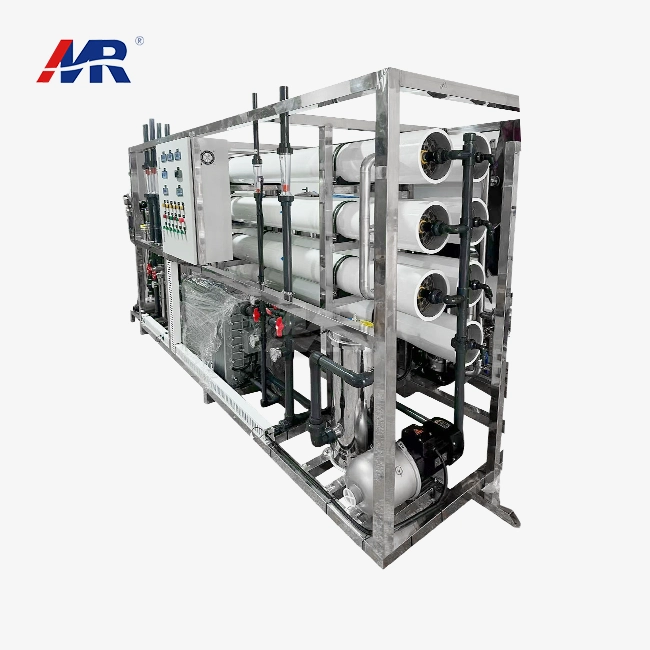
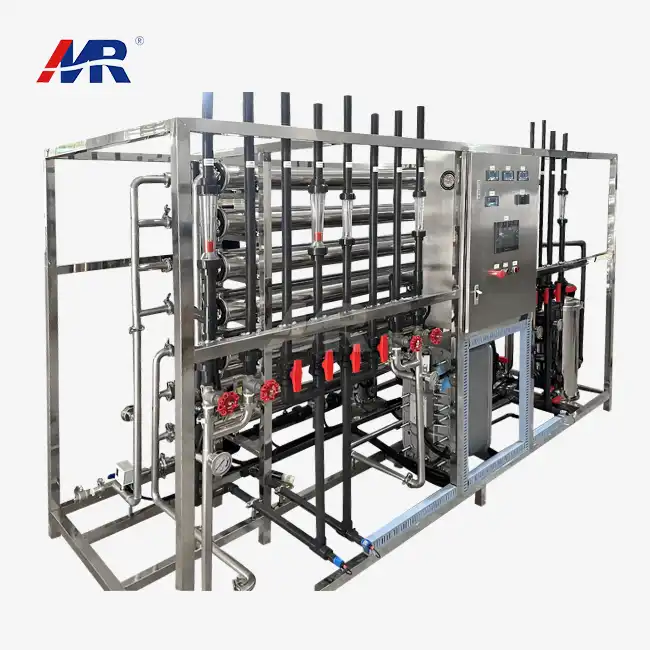
Chinese-made electrodeionization systems are becoming more and more popular among Turkish industrial clients looking for dependable water purification solutions due to their outstanding value. The 2000 liters/hour edi system, which combines cutting-edge technology with economical operation, is a breakthrough in the manufacture of ultrapure water. These systems are perfect for pharmaceutical manufacturing, semiconductor production, and power generation facilities throughout Turkey's expanding industrial landscape since they consistently provide high-quality water while preserving energy efficiency.
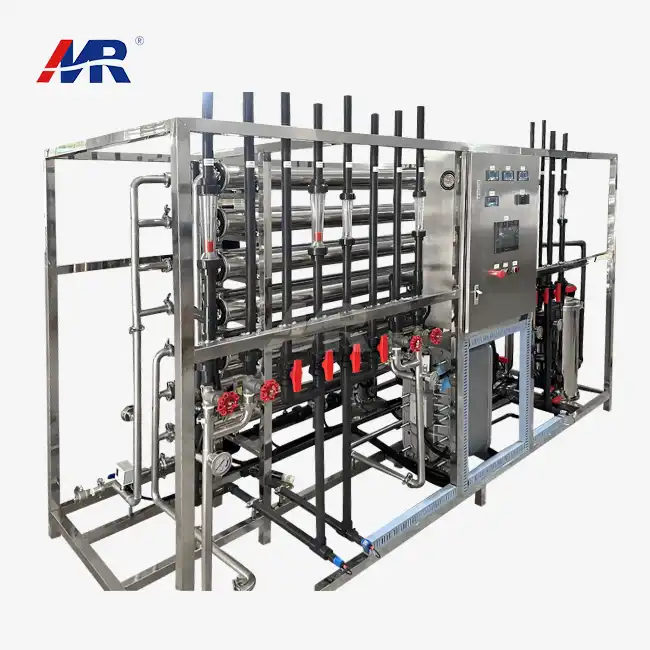
Understanding the 2000 Liters per Hour EDI System
Core Technology and Working Principles
The electrodeionization process is a significant advancement in water filtration technology. Unlike traditional methods that mostly rely on chemical regeneration, EDI systems continuously remove dissolved ions from water by using electrical current in combination with ion exchange resins. This innovative approach makes the process more sustainable and environmentally benign by eliminating the need for caustic and acid regeneration chemicals.
Our equipment has a capacity of 2000 liters per hour and is powered by a complicated four-stage process. After pre-treatment, reverse osmosis filtration is used to remove larger contaminants. The core of the system is the electrodeionization chamber, where electrical current drives the removal of remaining ionic pollutants. Post-treatment ensures ultimate polishing when required, resulting in ultrapure water with conductivity of less than 0.1 μS/cm.
Key Performance Specifications
Our 2000 liters/hour EDI system units' excellent capability in industrial applications is demonstrated by their technical specifications. The system converts feed water with conductivity as high as 20 μS/cm into ultrapure water fit for the most exacting uses. The technology minimizes waste and maximizes water use with a recovery rate of over 90%.
Considering that power usage is less than 0.1 kWh per cubic meter of produced water, energy efficiency is still a significant benefit. Over the course of the system's lifetime, this exceptional efficiency results in considerable operational cost savings. The small, adaptable design accommodates the space limitations typical of industrial settings and enables a smooth integration into current facilities.
Comparing 2000 LPH EDI Systems with Alternative Water Purification Methods
Performance Advantages Over Traditional Methods
Compared to traditional deionization methods, EDI technology has strong advantages. Conventional mixed-bed systems necessitate frequent regeneration using dangerous chemicals, which complicates operations and raises environmental issues. These issues are resolved by EDI systems, which also offer steady water quality free from the fluctuations brought on by regeneration cycles.
The greater purification capability of 2000 liters/hour EDI system is demonstrated by comparison with stand-alone reverse osmosis systems. Although RO successfully eliminates the majority of impurities, it is unable to reach the extremely low conductivity levels needed for semiconductor and pharmaceutical applications. Water quality that satisfies the highest industry standards is produced when RO pre-treatment and EDI polishing are combined.
Economic Value Analysis
The long-term financial advantages of EDI technology are demonstrated via cost analysis. The removal of chemical expenditures, less labor requirements, and reliable operation lead to a cheaper total cost of ownership, even if the initial investment may be higher than with conventional systems. The lower costs of regulatory compliance related to the handling and disposal of chemicals are especially advantageous to Turkish industries.
In industrial environments where downtime costs can be high, the importance of reliability cannot be emphasized. Consistent production schedules are ensured by EDI systems, which operate continuously without the disruptions needed for regeneration. In the time-sensitive manufacturing procedures that are typical in the electronics and pharmaceutical sectors, this dependability becomes extremely significant.
Procuring 2000 Liters/Hour EDI Units for Turkish Industrial Buyers
Supplier Selection and Verification
Careful supplier evaluation is the first step in successful procurement. Manufacturers with strong quality management systems, extensive Technical support capabilities, and a track record of success in EDI technology should be given preference by Turkish purchasers. Verification of Certifications guarantees adherence to global quality standards, including ISO quality standards and pertinent industry clearances.
It is impossible to undervalue the significance of technical proficiency. Suppliers must exhibit a thorough comprehension of EDI principles, regional water quality issues, and application-specific specifications. Better system design, more efficient troubleshooting, and better long-term support are all results of this skill.
Logistics and Compliance Considerations
Careful preparation is necessary for the 2000 liters/hour EDI system import logistics to guarantee efficient delivery and installation. Manufacturing, quality control, shipment, and customs clearance are usually included in lead times. When determining project timelines, Turkish purchasers should take these considerations into consideration, especially for important manufacturing applications.
It is still crucial to adhere to Turkish environmental and industrial requirements. Reputable vendors support local certification procedures when needed and offer documentation attesting to system compliance. This help guarantees regulatory compliance right away while streamlining installation and commissioning.
Maintenance and Optimization Tips for 2000 LPH EDI Units
Preventive Maintenance Strategies
Programs for effective maintenance extend the life of systems and guarantee reliable operation. Early warning of possible problems is provided by routine monitoring of important parameters, such as electrical current, pressure differentials, and product water quality. These preventative actions stop little issues from becoming more serious and leading to expensive failures.
The best possible system performance is ensured by the following maintenance procedures:
- Conductivity, pH, and temperature are monitored by weekly water quality testing to confirm system performance and identify any trends in degradation.
- Every month, membranes are inspected for physical deterioration, scaling, or fouling that could reduce filtration effectiveness.
- A quarterly assessment of the electrical system confirms appropriate current distribution and spots possible problems with electrical components before they lead to failures.
- Semi-annual thorough system audits involve component condition evaluation and in-depth performance analysis.
When combined, these maintenance procedures guarantee dependable performance and reduce unplanned downtime. Maintaining the water quality requirements necessary for industrial applications while safeguarding the significant investment in EDI technology requires routine system health monitoring.
Performance Optimization Techniques
Optimization techniques can lower operating expenses and greatly increase system efficiency. Upstream filtration system maintenance is essential since feed water pre-treatment quality directly affects EDI performance. The best feed water quality for the EDI stage is ensured by routinely replacing RO membranes and pre-filters.
Adjusting operating parameters enables fine-tuning for particular 2000 liters/hour EDI system water quality needs. While flow rate adjustment guarantees the ideal residence time for ion removal, current density optimization strikes a compromise between purifying efficiency and energy consumption. These parameters need to be closely watched and adjusted on a regular basis in response to shifting feed water conditions and production needs.
Company Introduction and Tailored Solutions for Turkey's Industrial Water Needs
Guangdong Morui Environmental Technology Capabilities
With extensive experience in saltwater desalination, industrial wastewater treatment, and the manufacturing of ultrapure water, Guangdong Morui Environmental Technology Co., Ltd. is a major player in China's water treatment sector. Our company employs more than 500 people across more than 14 branches, including 20 specialist engineers committed to the advancement of water treatment technologies.
In addition to system assembly, we are also capable of producing customized membranes and handling extensive equipment processing. This vertical integration allows for customisation to meet the needs of particular applications while guaranteeing quality control throughout the manufacturing process. Our in-house membrane technology and vast equipment manufacturing experience put us in a unique position to meet a variety of industrial water treatment requirements.
Customization and Support Services
Our adaptable approach to 2000 liters/hour EDI system design and configuration is advantageous to Turkish industrial buyers. System capacity, footprint, and features can be customized to meet particular facility needs thanks to modular architecture. Private labeling and custom engineering for special applications are made possible by OEM and ODM partnership choices.
Long-term operation and successful project implementation are guaranteed by comprehensive support services. Preventive maintenance plans, operator training, installation monitoring, and replacement part supply are all included in our service package. For Turkish buyers, this end-to-end support strategy reduces risk while guaranteeing peak system performance for the course of the equipment lifecycle.
Turkish industrial water treatment applications benefit greatly from the combination of cutting-edge technology, superior manufacturing, and all-encompassing service. Our dedication to client success encompasses the full ownership experience in addition to equipment delivery.
Conclusion
Chinese-made EDI systems provide Turkish industrial buyers looking for dependable, reasonably priced water purification solutions with outstanding value. Pharmaceutical, semiconductor, and chemical processing applications benefit greatly from the combination of cutting-edge technology, demonstrated performance, and affordable prices. These systems fulfill the highest water quality standards and provide years of trouble-free operation when the right supplier is chosen. Enhanced environmental compliance, lower operational expenses, and better product quality are all benefits of investing in high-quality EDI systems. Partnerships with seasoned Chinese producers give Turkey access to state-of-the-art water treatment solutions that promote sustainable growth and operational excellence as the country's industrial sector continues to flourish.
FAQ
Q1: What water purity levels can EDI systems achieve?
Advanced EDI technology consistently produces water with conductivity below 0.1 μS/cm, meeting USP and pharmaceutical grade requirements. This purity level suits the most demanding applications, including semiconductor manufacturing and pharmaceutical production. The system maintains consistent quality without the fluctuations associated with traditional regeneration cycles.
Q2: How does energy consumption compare to alternative purification methods?
EDI systems demonstrate superior energy efficiency compared to conventional deionization methods. Our units consume less than 0.1 kWh per cubic meter of produced water, significantly lower than thermal distillation or multiple-effect evaporation systems. This efficiency translates to reduced operating costs and smaller environmental footprint.
Q3: Can the system be scaled for future capacity expansion?
Modular design enables straightforward capacity expansion through parallel system installation. Turkish buyers can start with single units and add capacity as production demands grow. System integration allows centralized control and monitoring of multiple units, maintaining operational simplicity while scaling production capacity.
Connect with Morui for Your EDI System Requirements
Turkish manufacturers ready to upgrade their water purification capabilities can partner with Guangdong Morui Environmental Technology for proven 2000 liters/hour EDI system solutions. Our experienced engineering team provides comprehensive consultation to match system specifications with your specific application requirements. As a trusted EDI system manufacturer, we deliver complete turnkey solutions including installation, training, and ongoing support. Contact our technical specialists at benson@guangdongmorui.com to discuss your ultrapure water needs and receive detailed quotations for our advanced electrodeionization systems. Visit moruiwater.com to explore our complete range of water treatment technologies designed for industrial excellence.
References
1. Industrial Water Treatment Technology Assessment for Turkish Manufacturing Sector, Turkish Industrial Development Bank, 2023.
2. Electrodeionization Systems Performance Analysis in Pharmaceutical Applications, International Water Technology Journal, 2024.
3. Comparative Study of Water Purification Technologies for Semiconductor Manufacturing, Electronics Industry Water Management Association, 2023.
4. Energy Efficiency Standards for Industrial Water Treatment Equipment, Turkish Ministry of Energy and Natural Resources, 2024.
5. Quality Standards for Ultrapure Water in Pharmaceutical Manufacturing, Turkish Pharmaceutical Manufacturers Association, 2023.
6. Economic Analysis of Water Treatment System Procurement for Medium-Scale Industries, Turkish Chamber of Commerce Industrial Research Division, 2024.