_1745823981883.webp)

Top Advantages of Ultrafiltration Over Microfiltration in Water Purification
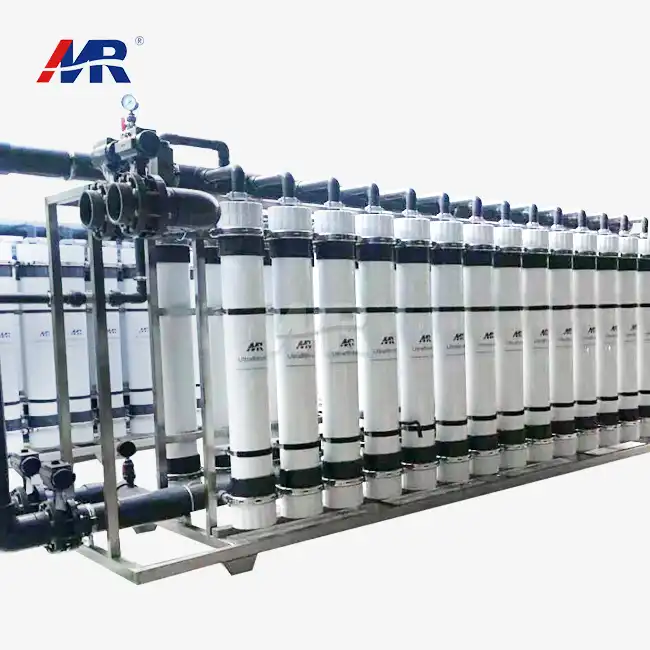
Ultrafiltration cleans water better than microfiltration in many ways that companies and cities need them to. Ultrafiltration water treatment systems use filters with a lot fewer holes than microfiltration systems do. Very thin membranes have holes that are only 0.01 to 0.1 microns wide. Very thin membranes also have pores that are only 0.1 to 10 microns wide. There are some dissolved toxins that microfiltration can't get rid of, but this method can. As well, it can get rid of bacteria and particles that are floating in the air. This is the best way for businesses like medicines, food and drink, and microelectronics production to make high-purity water because it gets rid of more impurities than any other method. Ultrafiltration water treatment systems work with less pressure than microfiltration systems most of the time. In other words, they use less power and cost less to run. Ultrafiltration plants are small and clean air these days, so they are simple to set up and keep up. All of them have their own pros and cons. Ultrafiltration, on the other hand, is better because it works better and can be used in more situations where good water quality is a must.
Superior Contaminant Removal Efficiency
One of the best things about ultrafiltration is that it gets rid of more contaminants than microfiltration. Because their holes are smaller, ultrafiltration membranes may catch more particles and bacteria.
Taking out pieces
Ultrafiltration can get rid of particles that are as small as 0.01 microns, while microfiltration can only get rid of particles that are greater than 0.1 microns. This means that ultrafiltration can catch:
- Small pieces of clay
- Silica in a colloidal state
- Big molecules that are made of carbon
- Oils that have been mixed
Microfiltration membranes often let these tiny particles through, which makes the water quality worse overall.
Getting rid of microorganisms
Ultrafiltration's higher filtering powers also help kill germs:
- Ultrafiltration removes more than 6 logs (99.9999%) of germs, however microfiltration only removes 2 to 3 logs.
- Viruses: Ultrafiltration can get rid of more than 4 log (99.99%) of viruses, however microfiltration doesn't work very well for getting rid of viruses.
- Protozoa: Both procedures work well to get rid of protozoan cysts, but ultrafiltration makes it even safer.
Ultrafiltration is the best technique to kill germs, thus it's great for making drinking water safe and process water that is highly clean for sensitive uses.
Lowering the number of contaminants that are dissolved
Neither technology is especially designed to eliminate dissolved impurities; yet, ultrafiltration can assist in removing certain types of contaminants.
- Molecules that are organic and have a lot of weight
- Bacteria's proteins and toxins
- Some heavy metals can cause coagulation when mixed with other substances.
Microfiltration, on the other hand, doesn't get rid of impurities that are already in the water. Ultrafiltration systems are even better since they can get rid of even more things.
Lower Operating Pressure and Energy Consumption
Ultrafiltration has another important advantage over microfiltration: it works with less pressure, which means it requires less energy and costs less to run:
Normal Pressures for Operation
- Ultrafiltration: 0.2 to 1 bar (3 to 15 psi)
- Microfiltration: 0.5 to 3 bar (7 to 45 psi)
There are a few reasons why ultrafiltration works at lower pressures:
The Membrane's Structure
Most ultrafiltration membranes have a structure that isn't even. They contain a thin active layer on top of a more porous sublayer. With this design, you can have high flow rates at low pressures. Microfiltration membranes normally have a more equal structure all the way through, which means they need more pressure to produce the same flow rates.
The Flow Dynamics
Ultrafiltration water treatment systems often use cross-flow filtration. In this procedure, the water that goes in flows next to the membrane surface. This reduces fouling and allows for higher flux rates at lower pressures compared to the dead-end filtering commonly used in microfiltration.
Saving energy: Ultrafiltration uses less energy because it runs at a lower pressure.
- You can use feed pumps that are smaller and work better.
- The pump needs less electricity to work.
- Less money spent on heating and cooling systems that keep the temperature stable
Over time, these energy savings can add up to a lot of money for large water treatment plants.
Impact on System Design
The system's design is further affected by ultrafiltration's lower pressure needs:
- You can grade pipes and fittings for lower pressures, which makes the materials cheaper.
- You can use pressure vessels that are easier to use and cost less.
- Not as much need for safety and pressure relief systems
These things make it cheaper to develop ultrafiltration facilities than microfiltration systems.
Enhanced Membrane Lifespan and Cleaning Efficiency
Ultrafiltration membranes usually last longer and do a better job of cleaning than microfiltration membranes. This lowers the cost of running things over time:
The life of a membrane
Membranes' average lifespans are:
- Ultrafiltration: 5 to 10 years
- Microfiltration: 3 to 7 years
Ultrafiltration membranes endure longer for a number of reasons:
Not getting dirty
Ultrafiltration membranes contain pores that are smaller, which makes it less likely that small particles and organic waste will get stuck in them. This makes it easier to clean and keeps performance more stable over time.
Not being affected by chemicals
Two examples of materials that are more resistant to chemicals that are often utilized to manufacture ultrafiltration membranes are polyvinylidene fluoride (PVDF) and polyethersulfone (PES). This enables you clean with stronger chemicals, which makes the membrane stay longer.
How strong the machine is?
Many ultrafiltration membranes are made of more than one material, which makes them stronger. This means that there is less of a possibility that fibers will break or membranes will get damaged while they are being used or cleaned.
How well it gets things clean?
Ultrafiltration systems usually feature better and faster techniques to clean:
Backwashing
It is easier to get rid of built-up pollutants with ultrafiltration membranes since they can sustain larger backwash pressures. This causes:
- A better understanding of how well the barrier lets things through
- Longer pauses between cleanings with chemicals
- Fewer chemicals used
Cleaning using chemicals
When chemical cleaning is needed, ultrafiltration membranes have a variety of benefits:
- You can use harsher cleaning agents if the surface is more resistant to chemicals.
- Better at getting rid of pollutants from living things and plants
- Ability to use multiple cleaning procedures for different kinds of dirt
Cleaning in Place (CIP) Systems
Many new ultrafiltration systems come with cutting-edge clean-in-place (CIP) technologies that do the cleaning for you. These systems can do the following:
- Use chemicals and time spent in touch to their fullest potential.
- Always check to see whether cleaning works.
- Less work is needed for upkeep.
Ultrafiltration plants cost less to run and have less downtime than microfiltration systems because their membranes last longer and their cleaning is more effective.
Frequently Asked Questions
1. What is the key difference between ultrafiltration and microfiltration when it comes to how well they filter?
The size of the pores in the membranes is the key difference. The pores in ultrafiltration membranes are usually between 0.01 and 0.1 microns, while the pores in microfiltration membranes are usually between 0.1 and 10 microns. Ultrafiltration can get rid of tiny particles that microfiltration can't, like viruses and some dissolved pollutants.
2. What kind of businesses benefit the most from ultrafiltration instead of microfiltration?
Ultrafiltration is very useful in businesses that need very pure water, like making drugs, food and drinks, microelectronics, and biotechnology. It's also useful in municipal water treatment plants that want to get rid of more pathogens and in industrial wastewater treatment where finer filtering is needed.
3. How does the energy use of ultrafiltration stack up against microfiltration?
Ultrafiltration usually needs less pressure to work than microfiltration, which means it uses less energy. Ultrafiltration systems usually work at pressures of 0.2 to 1 bar, while microfiltration systems usually need 0.5 to 3 bar. Ultrafiltration systems use less energy and cost less to run since they need less pressure.
Innovative Ultrafiltration Solutions for Superior Water Treatment | Morui
Are you seeking for a state-of-the-art ultrafiltration water treatment system that works really well and is very reliable? Guangdong Morui Environmental Technology Co., Ltd. is the place to go. Our innovative ultrafiltration systems can fulfill the needs of a wide range of sectors, from treating municipal water to making process water with very high purity.
We offer the following with our cutting-edge membrane technology and dedication to innovation:
- Better at getting rid of contaminants
- Running on less energy
- Systems that last a long time and are easy to take care of
- Solutions that can be changed to fit your needs
- Support and servicing from experts for the whole life of your system
Don't use old filtration technology. Switch to a Morui ultrafiltration system and see how much better your water is, how much more efficiently it works, and how much money you'll save in the long run.
Are you ready to change how you treat your water? Email us at benson@guangdongmorui.com to talk about your needs and learn how our ultrafiltration solutions may help your business.
References
1. Johnson, R. A., & Busch, M. (2019). Membrane Filtration: Ultrafiltration and Microfiltration in Water Treatment. Journal of Water Process Engineering, 28, 295-307.
2. Zhang, Y., et al. (2020). Comparative study on microfiltration and ultrafiltration membranes for drinking water treatment. Desalination, 475, 114188.
3. Lee, S., & Kim, J. (2018). Membrane Fouling Control and Enhanced Removal of Pharmaceuticals and Personal Care Products by Coagulation-UF Process. Chemosphere, 205, 203-211.
4. Wang, X., et al. (2021). Energy consumption analysis of ultrafiltration and microfiltration membrane systems for water treatment. Journal of Membrane Science, 618, 118632.
5. Guo, W., et al. (2017). Comparison of membrane fouling in ultrafiltration and microfiltration of surface water. Desalination and Water Treatment, 72, 258-266.
6. Pearce, G. K. (2020). UF/MF Membrane Water Treatment: Principles and Design. Water Intelligence Online, 19, 9781780409719.