_1745823981883.webp)

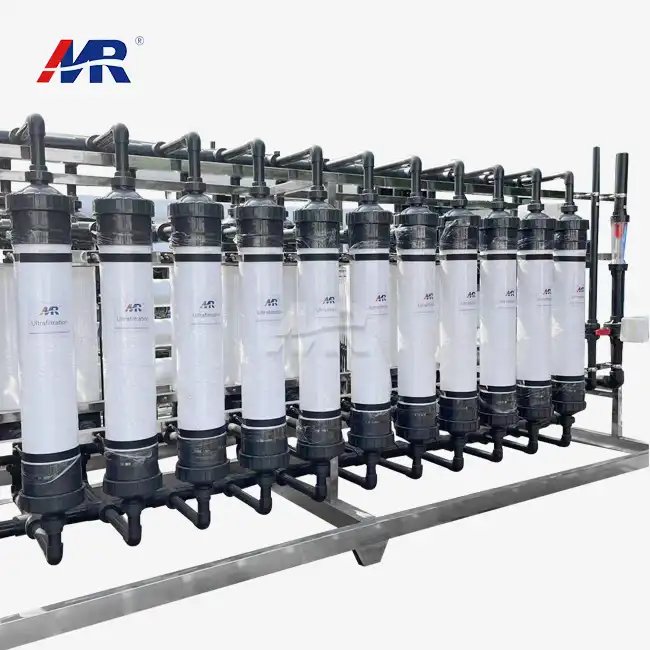
What technical specs should you require from industrial UF suppliers?
When assessing mechanical ultrafiltration system providers, it's vital to center on particular specialized determinations that guarantee the framework meets your needs. Here are a few key angles to consider:
Membrane Pore Size and Material
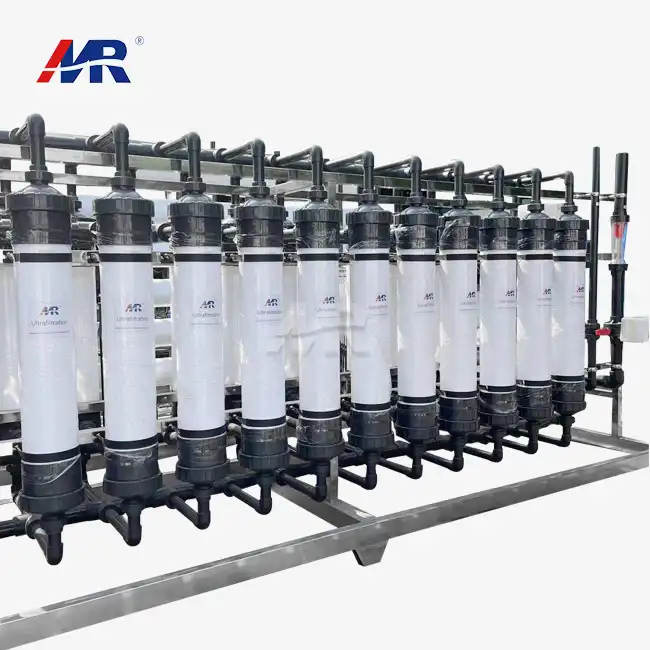
The heart of any ultrafiltration system is its film. See for suppliers publicizing movies with pore sizes expanding from 0.01 to 0.1 μm, which reasonably clear particles, organisms, and without a doubt, a few diseases. The film texture should be strong and secure to fouling, with options like polyvinylidene fluoride (PVDF) or polyethersulfone (PES) being predominant choices for their vigor and chemical resistance.
Filtration Capacity and Flux Rate
Ensure the provider can give frameworks with filtration capacities that coordinate your requirements. Industrial-scale frameworks regularly run from 50 to 1000 m³/h or more. Moreover, ask approximately the flux rate, which measures the volume of penetrate delivered per unit zone of film per unit time. Higher flux rates can demonstrate more proficient frameworks, but be cautious of greatly tall rates that might compromise filtration quality or layer longevity.
Operating Pressure and Energy Efficiency
Efficient ultrafiltration plants ought to work at moderately moo pressures, ordinarily between 0.1 and 0.3 MPa. This low-pressure operation translates to vitality effectiveness, with utilization rates around 0.1-0.3 kWh/m³. Inquire about providers around their system efficiency and any energy recovery highlights they might offer.
Removal Efficiency and Water Quality
High-quality mechanical UF frameworks ought to boast evacuation efficiencies of over 99.9% for particles and microbes. Ask for nitty-gritty data on the system's execution over different contaminants and inquire about third-party test results or Certifications that support these claims.
Automation and Control Systems
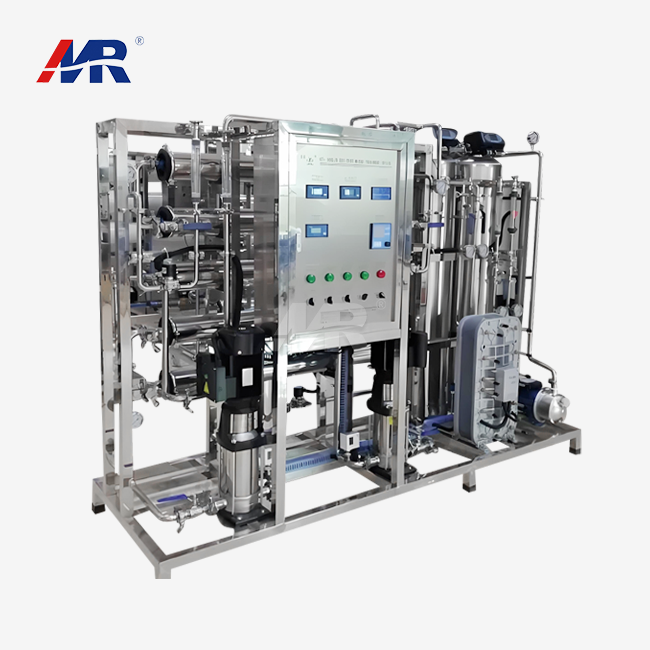
Modern mechanical ultrafiltration systems ought to include progressed computerization and control frameworks. See for providers advertising programmable logic controllers (PLCs) with user-friendly interfacing, accessible observing capabilities, and information logging features. These frameworks improve operational productivity and permit proactive maintenance.
Cleaning and Maintenance Features
Inquire approximately the system's backwashing and chemical cleaning conventions. Proficient cleaning forms are fundamental for keeping up film execution and extending its lifespan. Inquire about the recurrence of required cleanings and the types of chemicals used in the process.
Where to buy industrial UF systems: OEMs, distributors, and EPC contractors?
When it comes to purchasing industrial ultrafiltration systems, you have several options, each with its own advantages. Let's explore the main channels for acquiring these systems:
Original Equipment Manufacturers (OEMs)
Buying directly from OEMs can offer several benefits:
- Directly get to specialized ability and support
- Potential for customization to meet particular needs
- Often, more competitive estimating due to the end of the middlemen
- Assurance of veritable parts and components
However, OEMs may have limited local presence in some regions, which could affect after-sales support and maintenance services.
Distributors and Resellers
Working with distributors can be advantageous in certain situations:
- Local nearness and support
- Ability to offer a run of items from diverse manufacturers
- Potentially speedier conveyance times due to neighborhood inventory
- Value-added services such as establishment and maintenance
Keep in mind that distributors may have less technical knowledge compared to OEMs and might offer limited customization options.
Engineering, Procurement, and Construction (EPC) Contractors
For large-scale projects or complex installations, EPC contractors can provide comprehensive solutions:
- End-to-end extended management
- Integration of ultrafiltration systems with other water treatment processes
- Expertise in system planning and optimization
- Handling of administrative compliance and permitting
While EPC contractors offer a turnkey solution, this option may be more expensive and better suited for larger projects.
Online Marketplaces and B2B Platforms
Emerging online platforms can connect buyers with a wide range of suppliers:
- Easy comparison of diverse providers and products
- Access to client surveys and ratings
- Potential for competitive estimating due to expanded transparency
However, exercise caution when using these platforms and thoroughly vet suppliers before making a purchase.
Trade Shows and Industry Events
While not a direct purchasing channel, trade shows can be excellent opportunities to:
- Meet different providers in person
- See live exhibits of ultrafiltration systems
- Network with industry specialists and peers
- Stay updated on the most recent advances and trends
Attending these events can help you make more informed decisions when it comes time to purchase.
Key procurement criteria: flux, membrane type, footprint, and PLC control
When procuring an industrial ultrafiltration system, several key criteria should guide your decision-making process. Let's delve into these critical factors:
Flux Rate
Flux rate, measured in liters per square meter per hour (L/m²/h), is a crucial performance indicator for ultrafiltration systems. It represents the volume of water that can be processed through a given membrane area in a specific time frame. When evaluating systems:
- Look for systems with optimized flux rates that adjust tall throughput with layer longevity
- Consider how flux rates may shift beneath distinctive water quality conditions
- Ask providers approximately their flux optimization procedures and any exclusive advances they employ
Remember that while higher flux rates can increase productivity, they may also lead to faster membrane fouling and increased energy consumption.
Membrane Type
The choice of membrane type significantly impacts system performance and maintenance requirements. Key considerations include:
- Material: PVDF and PES are common choices, each with particular points of interest in terms of chemical resistance and fouling propensity
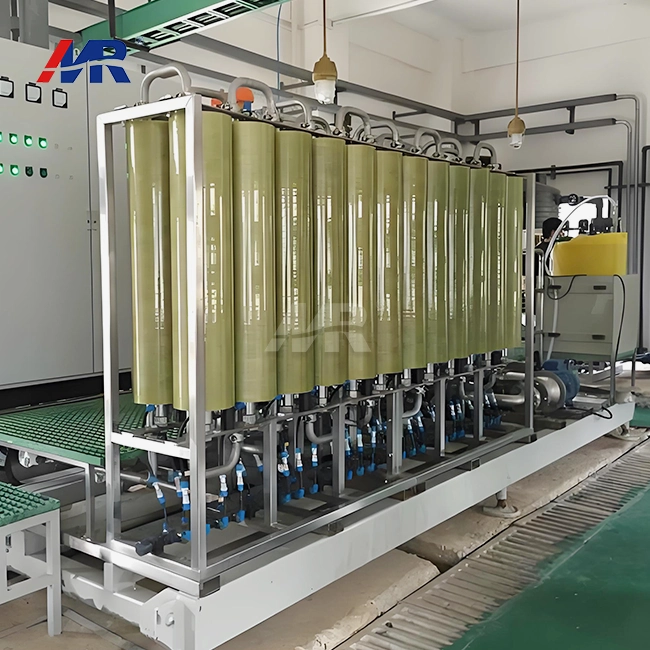
- Configuration: Empty fiber, winding-wound, or level sheet setups offer distinctive benefits in terms of pressing thickness and ease of cleaning
- Pore measure: Guarantee the membrane's pore estimate adjusts with your particular filtration requirements
- Surface adjustment: A few layers highlight hydrophilic or antimicrobial surface medications to improve performance
Discuss these options with suppliers to determine the best membrane type for your application.
System Footprint
The physical size of the ultrafiltration system can be a critical factor, especially in facilities with limited space. Consider:
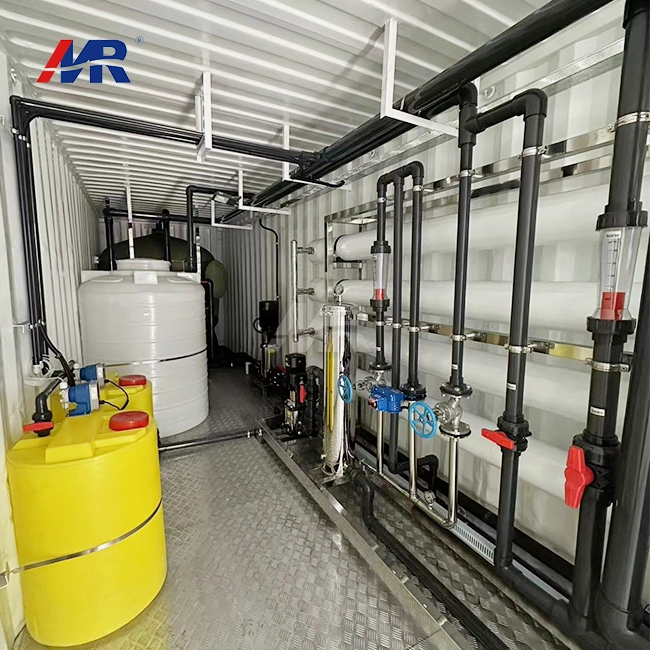
- The sum of the range required for the system, counting auxiliary equipment
- Vertical space necessities, especially for skid-mounted systems
- Accessibility for upkeep and film replacement
- Potential for secluded plans that permit future expansion
Ask suppliers for detailed dimensional drawings and 3D models to better visualize how the system will fit into your facility.
PLC Control and Automation
Advanced control systems are essential for optimizing the performance and efficiency of industrial ultrafiltration plants. Look for systems that offer:
- User-friendly interfacing with natural controls and visualizations
- Remote checking and control capabilities, including portable app integration
- Automated backwashing and cleaning cycles to keep up the layer performance
- Data logging and investigation devices for execution optimization
- Integration capabilities with existing plant control systems
Ensure that the PLC system is robust, scalable, and supported by comprehensive documentation and training.
Energy Efficiency
While not explicitly mentioned in the main criteria, energy efficiency is a critical factor that intersects with flux, membrane type, and control systems. Consider:
- The general control utilization of the system, including pumps and assistant equipment
- Energy recuperation alternatives, such as turbochargers or weight exchangers
- Variable frequency drives (VFDs) for ideal pump control
- Smart control calculations that alter operation based on nourish water quality and demand
Request detailed energy consumption data and life cycle cost analyses from suppliers to make informed decisions.
Maintenance and Serviceability
The long-term success of your ultrafiltration system depends on ease of maintenance and serviceability. Evaluate:
- Accessibility of key components for inspection and replacement
- Availability and cost of spare parts and consumables
- Frequency and complexity of required maintenance procedures
- Supplier support for troubleshooting and emergency services
Consider the total cost of ownership, including maintenance and operational expenses, when comparing different systems.
Conclusion
Selecting the right mechanical ultrafiltration system provider is a basic choice that can altogether affect your operation's effectiveness and water quality. By carefully considering specialized details, obtainment criteria, and obtaining alternatives, you can make an educated choice that aligns with your particular needs and budget imperatives. Keep in mind to prioritize components such as film execution, framework productivity, robotization capabilities, and long-term back when assessing potential suppliers.
For those looking for a dependable accomplice in water treatment arrangements, Guangdong Morui Environmental Technology Co., Ltd. stands out as a chief choice. With our broad expertise in mechanical wastewater treatment, household sewage handling, seawater desalination, and drinking water generation, we offer comprehensive arrangements custom-fitted to your specific needs. Our state-of-the-art ultrafiltration systems, supported by our in-house film generation offices and organizations with driving brands, guarantee top-tier execution and reliability.
Whether you're in the fabricating, nourishment and refreshment, pharmaceutical, or civil segments, our group of master engineers is prepared to help you in selecting and actualizing the idealize ultrafiltration arrangement for your needs. We pride ourselves on giving not fair gear, but a total bundle including establishment, commissioning, consumables, and vigorous after-sales support.
FAQ
Q1: What are the main advantages of ultrafiltration over other water treatment methods?
A: Ultrafiltration offers a few advantages, including high expulsion effectiveness for particles, microscopic organisms, and a few infections, lower energy utilization compared to reverse osmosis, and the capacity to work without chemical additives in numerous applications. It also gives a solid physical boundary against contaminants and can be effortlessly coordinated into existing water treatment systems.
Q2: How often do ultrafiltration membranes need to be replaced?
A: The life expectancy of ultrafiltration films can shift essentially depending on the application, bolster water quality, and support membranes. In well-maintained systems with legitimate pretreatment, layers can final 5-7 a long time or more. In any case, in challenging situations or with imperfect operation, substitution might be essential every 2-3 a long time. Standard checking of film execution and opportune cleaning can help amplify layer life.
Q3: Can ultrafiltration systems handle high turbidity water?
A: Yes, ultrafiltration systems can, for the most part, handle tall turbidity water, but the productivity and film life may be influenced. For reliably tall turbidity levels, it's recommended to implement appropriate pretreatment steps, such as coagulation and sedimentation, to diminish the stack on the ultrafiltration films. This approach makes a difference in keeping up framework execution and amplifies layer life.
Industrial Ultrafiltration System: Advanced Solutions for Water Purification | Morui
Looking for a cutting-edge water ultrafiltration systems industrial ultrafiltration system to meet your water purification needs? Look no further than Guangdong Morui Environmental Technology Co., Ltd. Our advanced ultrafiltration solutions are designed to deliver superior performance across a wide range of applications, from municipal water treatment to specialized industrial processes.
With our state-of-the-art membrane technology and comprehensive support services, we ensure that your water treatment challenges are met with precision and efficiency. Our Team of experienced engineers is ready to work with you to design and implement a customized ultrafiltration system that aligns perfectly with your specific requirements.
Don't settle for less when it comes to water quality. Choose Morui for unparalleled expertise and reliability in industrial ultrafiltration. Contact us today at benson@guangdongmorui.com to discuss your project and discover how we can elevate your water treatment processes to new heights of excellence.
References
1. Johnson, M. (2022). Advances in Industrial Ultrafiltration Technology. Water Treatment Digest, 45(3), 78-92.
2. Zhang, L., et al. (2021). Comparative Analysis of Membrane Materials for Industrial UF Applications. Journal of Membrane Science, 618, 118694.
3. Brown, R. (2023). Energy Optimization in Large-Scale Ultrafiltration Plants. Environmental Technology & Innovation, 29, 102308.
4. Smith, A., & Patel, K. (2022). The Role of PLC Systems in Modern Water Treatment Facilities. Automation in Water Resources Management, 7(2), 145-159.
5. International Water Association. (2023). Global Trends in Industrial Water Treatment: A Market Analysis. IWA Publishing.
6. Chen, X., et al. (2021). Long-term Performance Evaluation of Industrial-scale Ultrafiltration Systems: A Case Study. Desalination, 500, 114865.