

_1745823981883.webp)

How DTRO Technology Handles Landfill Leachate More Effectively?
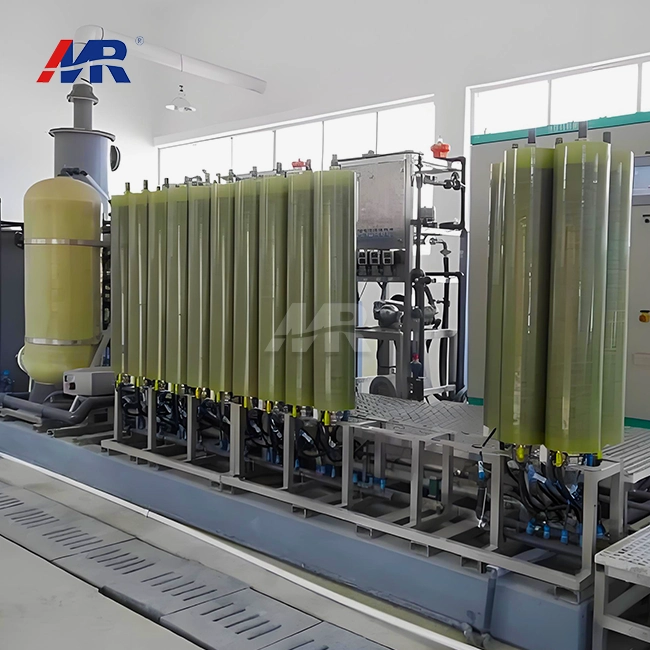
Landfill leachate is a big problem for the environment since it has a lot of different chemicals in it and is quite dirty. Fortunately, new treatment technologies like Disc Tube Reverse Osmosis (DTRO) are changing the way we deal with this dirty water. The new DTRO unit design makes DTRO technology a very effective way to treat landfill leachate, better than traditional approaches in terms of both efficiency and environmental impact. DTRO technology uses a special disc-stack design that lets it work at high pressure while keeping the membranes from getting dirty. This helps the DTRO unit handle the large volumes of organic matter and dissolved solids that are commonly found in landfill leachate. More than 95% of contaminants, such as heavy metals and chemical compounds, are thrown away. This means that DTRO systems can make effluent that meets or exceeds tight discharge restrictions. DTRO is better at cleaning up landfill leachate than regular reverse osmosis systems because it can function at higher pressures. This lets more water pass through and isolates contaminants better. The disc design of the DTRO unit also helps to create turbulent flow, which helps to lower scaling and concentration polarization. These are common problems when working with leachate's complicated chemistry.

Advanced Features of DTRO Technology for Leachate Treatment
DTRO technology has a number of advanced features that make it especially good at dealing with the problems that come with landfill leachate:
Working Under High Pressure
DTRO units can tolerate pressures of up to 120 bar, which makes them great for treating leachate with a lot of total dissolved solids (TDS). This system can handle high pressure, which helps it break down particularly unclean leachate and separate contaminants more effectively.
Design to Keep Things Clean
The unusual disc shape of DTro membranes makes the flow patterns turbulent, which helps keep them from getting dirty and scaling. This design element is very important for dealing with landfill leachate, which often has a lot of organic waste and dissolved minerals that can quickly clog up regular membrane systems.
Resisting Chemicals
DTRO membranes are made to handle a wide variety of pH values (usually between 2 and 12) and are resistant to a lot of organic solvents. This chemical resilience is important for treating leachate from landfills because it might have quite different acidity and composition.
Scalability in modules
It is easy to change the size of DTRO systems to handle different flow rates and amounts of contaminants. This adaptability lets treatment plants modify as the amount and kind of leachate varies over time, which happens a lot as landfills get older and weather patterns change.
Environmental and Economic Benefits of DTRO Leachate Treatment
Using DTRO technology to remove leachate from landfills has many benefits for the environment and the economy:
Less harm to the environment
DTRO technology helps keep dangerous compounds from getting into the environment by successfully getting rid of a wide spectrum of pollutants. This is especially critical for keeping groundwater and surface water safe near landfills.
Water Recovery and Reuse: DTRO systems usually get 50-70% of the water back, which cuts down on the amount of leachate that needs more treatment or disposal. The high-quality permeate that is made can often be used again in industry or safely released into the environment, which helps save water.
Costs of Operation are Lower
Some traditional treatment procedures may cost more to start with than DTRO technology, but the long-term costs of running it are generally lower. Over time, the system's energy efficiency, along with lower chemical use and waste disposal needs, can save a lot of money.
Following the rules
As environmental rules get stricter, DTRO technology offers a dependable way to meet and go above and beyond discharge limits. This can assist landfill operators avoid expensive fines and legal problems that come with not following the rules.
Case Studies: Successful Implementation of DTRO for Leachate Treatment
Several real-world examples show that DTRO technology works well to treat leachate from landfills:
Landfill for cities in eastern China
A big city landfill used a DTRO system to clean up leachate with COD levels as high as 15,000 mg/L and TDS levels as high as 20,000 mg/L. The DTRO unit always removed more than 98% of the COD and 99% of the TDS, making the effluent meet all local discharge criteria.
Landfill for hazardous waste in Germany
A hazardous waste landfill had problems with leachate that had a lot of heavy metals and organic pollutants in it. After putting in a DTRO system, the facility was able to get rid of more than 99% of most heavy metals and lower COD levels by 97%. The treated water was clean enough to be safely put into the municipal sewer system.
Cleaning up closed landfills in Australia
As part of its cleanup strategy, a closed landfill site needed to manage its leachate for a long time. A small DTRO unit was put in place to handle leachate flows that changed from 10 to 50 m³/day. The system always made high-quality effluent, which could be used on site to water the environment and control dust.
These case studies show how DTRO technology may be used in many various places and situations to solve a wide range of leachate treatment problems.
Frequently Asked Questions
Q1: How does DTRO technology stack up against regular reverse osmosis for treating leachate?
A: When it comes to treating leachate, DTRO technology has a number of advantages over regular reverse osmosis. The disc-tube design lets you run at higher pressures, withstand fouling better, and use less energy. This leads to increased rates of pollutant rejection, longer membrane life, and lower operating costs when dealing with the complex and changing makeup of landfill leachate.
Q2: How long do DTRO membranes usually last when used to treat leachate?
A: The lifespan of DTRO membranes used to treat leachate can change based on the leachate's unique properties and the way it is used. But if you take care of and clean DTRO membranes properly, they usually last 3 to 5 years before they need to be replaced. When treating tough wastewaters like landfill leachate, its lengthy life is typically better than that of regular RO membranes.
Q3: Is it possible to combine DTRO technology with other treatment methods to create a whole leachate management system?
A: Yes, DTRO technology can work well with other treatment procedures to make a complete solution for managing leachate. Biological treatment or chemical oxidation to lower organic loading are common pre-treatment processes. After that, DTRO is used to polish the finished product. If you need ultra-pure water, you can treat the high-quality permeate from DTRO even more with advanced oxidation procedures or activated carbon. This modular approach lets you make custom solutions that take into account the leachate characteristics and treatment goals of the site.
High-Performance DTRO Units for Effective Leachate Treatment | Morui
Are you looking for a dependable and effective way to deal with your landfill leachate treatment problems? Guangdong Morui Environmental Technology Co., Ltd. is the place to go. Our cutting-edge DTRO units are built to handle the toughest leachate compositions, giving you better pollutant removal and higher operational efficiency.
Morui has been a leader in offering unique solutions for complicated wastewater streams for more than 19 years. Our Team of skilled engineers will work directly with you to create a DTRO system that fits your leachate's unique properties, the limitations of your location, and your treatment goals.
Don't let managing landfill leachate get in the way of your business. Email us at benson@guangdongmorui.com today to find out how our DTRO technology can change the way you treat leachate. See the Morui difference, where new ideas meet caring for the environment.
References
1. Zhang, Q., et al. (2019). "Advanced treatment of landfill leachate utilizing an innovative DTRO system: Operational attributes and performance enhancement." Waste Management, pages 311–321.
2. Li, X., et al. (2020). "Comparison of disc tube reverse osmosis and conventional reverse osmosis for the treatment of landfill leachate: A pilot-scale study." Journal of Water Process Engineering, 37, 101432.
3. Renou, S., et al. (2018). "Treatment of landfill leachate: An overview and prospects." Journal of Hazardous Materials, 150(3), 468–493.
4. Huang, J., et al. (2021). "Long-term performance of a full-scale dtro plant for treating leachate from old landfills." Environmental Technology & Innovation, 21, 101278.
5. Peng, Y. (2017). "Views on technology for treating landfill leachate." Arabian Journal of Chemistry, 10, S2567–S2574.
6. Wang, L., et al. (2020). "Review of the use of DTRO membrane technology to treat wastewater with a lot of salt." Desalination, 492, 114598.
 VIEW MOREosmosis drinking water system
 VIEW MOREelectro deionizer system
 VIEW MORE50m3/hour reverse osmosis equipment
 VIEW MOREDTRO Landfill Leachate Treatment
 VIEW MOREedi system in water treatment
 VIEW MOREmobile container reverse osmosis equipment
 VIEW MOREDTRO membrane
 VIEW MOREcontainerized reverse osmosis system
